
Analyzing the Effects of Electrostatic Charges on Capacitive Sensor Performance
Understanding sensor behavior and optimizing touch-interaction reliability
Highlights
- Electrostatic Impact: Electrostatic charges can lead to measurement errors and reduced sensor sensitivity.
- Methodology Diversity: Experimental and simulation methods combine to analyze sensor performance under varying conditions.
- Design and Material Adjustments: Optimizing sensor design and using appropriate materials can mitigate adverse effects.
Introduction
Background, Significance, and Research Questions
Background
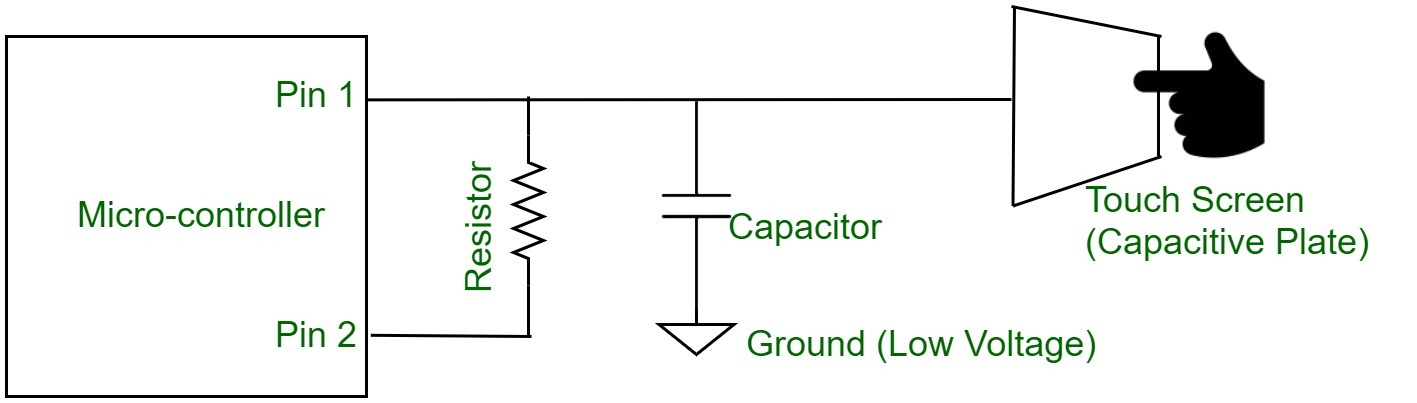
Capacitive touch sensors are pervasive in modern electronic devices, from smartphones to interactive kiosks. These sensors operate based on the principle of measuring capacitance changes triggered by the interaction with a nearby conductive object, such as a human finger. In a typical configuration, an array of electrodes forms the sensor’s active area, which detects variations in the electrostatic field when touched or approached.
The working mechanism hinges on the creation and disruption of an electrostatic field. When a finger or another conductive object approaches, it alters the mutual capacitance between the electrodes. These minute changes are captured by capacitive sensor circuits, allowing the device to interpret touch input with high precision. The reliance on the electrical properties of the human body to serve as a conductive element is an ingenious exploitation of natural electrostatics.
However, this reliance also makes capacitive sensors vulnerable. External electrostatic charges—whether generated by environmental factors or user interactions—can introduce noise and errors in the sensor data. Such interference can lead to inaccurate touch detection and even permanent sensor damage if not carefully mitigated. Advances in sensor design have thus focused on both enhancing sensitivity and developing strategies to counteract these unwanted electrostatic effects.
Significance
The reliability and performance of capacitive sensors are paramount for ensuring a seamless user experience in touch-based interfaces. High sensitivity and quick response times are essential attributes that define the success of consumer electronics, medical devices, and industrial control systems. The presence of extraneous electrostatic charges can compromise these attributes, causing erroneous readings, delayed responses, or even sensor degradation over time.
Since the integration of such sensors into everyday technology continues to expand, increasing the robustness of these devices is of significant interest. Engineering solutions—ranging from improved sensor layouts and modified electrode geometries to advanced shielding techniques—aim to protect these sensors against unwanted electrostatic disturbances. This research is critical in bridging the gap between theoretical sensor performance and practical, real-world application, confronting challenges brought about by environmental variability, user behavior, and even material imperfections.
Research Questions
To deeply understand the influence of electrostatic charges on capacitive sensor performance, several focused research questions are addressed:
- How does the accumulation of electrostatic charges affect the sensitivity, accuracy, and response time of capacitive touch sensors?
- What are the potential mechanisms through which external electrostatic interference introduces measurement errors or structural issues in the sensor?
- Which design modifications, including electrode geometry and material choices, can mitigate the disruptive effects of electrostatic charges?
- How do environmental factors such as humidity and temperature interact with electrostatic forces to further affect sensor performance?
Methodology
Data Collection and Analysis Techniques
Data Collection
The methodologies employed to understand the effects of electrostatic charges on capacitive sensors combine both experimental setups and computational models. A controlled environment served as the testing ground for capturing sensor performance metrics under varying electrostatic conditions.
Laboratory experiments involved subjecting capacitive sensors to predefined electrostatic conditions. Specialized equipment was used to introduce controlled electrostatic discharges and continuously elevate environmental parameters such as humidity and temperature. These controlled tests allowed for the systematic alteration of variables that could normally introduce noise in sensor readings. The primary measurements recorded were the changes in capacitance and the response times of the sensor to various levels of induced charge.
On the simulation front, the Finite Element Method (FEM) was extensively utilized to create detailed models of the sensor environment. Simulation models were developed to mimic the behavior of electrostatic fields around the sensor, identifying points of high field concentration and potential failure zones. Researchers simulated various electrode geometries and material compositions to predict how design modifications could counteract environmental and electrostatic interference.
Data Analysis
Once data collection was complete, the analysis phase integrated both statistical assessments and computational simulations. The empirical data from physical experiments were analyzed using statistical software to determine correlations between sensor performance degradation and the magnitude of electrostatic interference.
Key performance indicators such as sensitivity, accuracy, and response time were plotted against the degree of electrostatic charge introduced during experiments. Additionally, signal-to-noise ratios and real-time sensor response curves provided insights into how environmental factors like humidity influenced performance.
Simulations employed advanced modeling techniques to project how different design modifications might alleviate the effects observed experimentally. For example, by comparing sensors with traditional straight-edge electrodes to those with rounded corners, it became possible to quantify the reduction in peak electric field intensity—a parameter directly related to sensor reliability.
Results and Discussion
Findings, Interpretations, and Practical Implications
Key Findings
The comprehensive analysis revealed several critical insights into how electrostatic forces influence the performance of capacitive sensors:
- Electrostatic Force Effects: Elevated levels of electrostatic charges were found to introduce significant offset errors in capacitance measurements. This error directly translates into reduced sensitivity and increased false touch events. In some cases, the forces exerted by accumulated charges were strong enough to risk the collapse of the sensor's structure.
- Environmental Influences: Humidity emerged as a particularly potent factor, intensifying the effects of electrostatic interference. High humidity levels not only promote charge accumulation but also alter the dielectric properties of the materials used in sensor construction, leading to further performance degradation.
- Material and Design Considerations: The studies consistently pointed out that sensor performance could be markedly improved by adjusting electrode geometries and integrating shielding. Rounded corners on electrodes reduce the concentration of electric fields, thereby limiting the impact of charged particles. Moreover, using materials with higher dielectric constants enhances the capacitive coupling efficiency while simultaneously mitigating unwanted charge interference.
Interpretations and Practical Implications
The experimental and simulation results together highlight the complex interplay between sensor design, environmental conditions, and electrostatic forces. The observed offset errors and signal distortions can lead to misinterpretation of user input on touch-based devices, thereby compromising overall device performance. This is particularly critical in applications where precision and reliability are non-negotiable, such as in medical interfaces or industrial control systems.
A practical outcome of these findings is the clear necessity for designs that are inherently robust against electrostatic disturbances. For instance, sensor manufacturers are now incorporating multi-layer protection strategies that combine physical shielding with real-time environmental calibration algorithms. These strategies ensure that sensors maintain high accuracy even under adverse conditions.
Moreover, the insights indicate that while capacitive sensors offer remarkable advantages in terms of sensitivity and multifunctionality, they also require careful consideration of material properties. The use of innovative materials with controlled dielectric properties and engineered microstructures can greatly enhance performance. By reducing high field concentrations through intelligent geometrical modifications, it is possible to create capacitor arrays that are more resistant to electrostatic interference.
Comparative Summary Table
| Parameter | Observed Effect | Mitigation Strategy |
|---|---|---|
| Sensitivity | Decreased with high electrostatic charge levels | Optimized electrode shapes and material selection |
| Accuracy | Offset errors observed leading to false readings | Enhanced shielding and calibration algorithms |
| Response Time | Affected by charge accumulation and noise interference | Real-time adjustments and environmental controls |
| Environmental Impact | Humidity increases charge accumulation and dielectric fluctuations | Controlled testing environments and adaptive design |
Conclusion and Recommendations with Resources
Final Observations and Actionable Insights
Conclusion
The analysis clearly demonstrates that electrostatic charges have a profound impact on capacitive sensor performance in touch-based systems. Elevated electrostatic forces can induce measurement errors, reduce sensor sensitivity, and, in extreme cases, lead to structural damage. Environmental factors, particularly humidity, further complicate sensor operations by influencing both charge accumulation and the dielectric properties of sensor materials.
With the increasing implementation of capacitive sensors in critical applications, it has become imperative to address these challenges through a combination of optimized sensor design, improved materials, and robust protection measures. The integration of advanced simulation techniques alongside practical experimental setups has provided a comprehensive understanding of these phenomena, paving the way for future innovations.
Recommendations
- Enhanced ESD Protection: Manufacturers should invest in advanced electrostatic discharge (ESD) protection measures during both the design and assembly phases. Incorporating rounded electrode layouts and strategically placed guard rings can reduce electric field concentration.
- Material Optimization: Utilize materials with high dielectric constants and favorable microstructural properties which increase capacitive coupling while minimizing noise and false signals.
- Environmental Calibration: Develop adaptive algorithms for real-time compensation of environmental variations, particularly humidity and temperature, ensuring sensor performance remains reliable under varying conditions.
- Integrated Simulation and Testing: Combine finite element modeling with rigorous experimental setups to predict sensor behavior under diverse electrostatic conditions, thus allowing preemptive design adjustments.
Additionally, further research is recommended in developing nanostructured sensor materials and exploring multi-layer sensor architectures. These approaches may contribute to producing devices that are not only highly responsive but also resilient to the cumulative effects of environmental interference and electrostatic disturbances.
The evolving landscape of capacitive sensing technology necessitates a multidisciplinary approach, combining aspects of materials science, electrical engineering, and computational modeling. This integrated strategy will be crucial in advancing sensor design, ensuring that future devices deliver both high performance and robust reliability.
Resources
For readers seeking further depth on the subject, the following online resources provide detailed technical discussions, empirical studies, and advanced simulation methodologies related to capacitive sensor performance and electrostatic impacts:
- Analyzing Capacitive Touchscreens in Consumer Electronics - COMSOL Blog
- Understanding Electrostatic Discharge (ESD) in Touchscreen Technology - TouchPro
-
Fundamentals of Electrostatics & Capacitance for Capacitive Touch Sensors - Infineon Community
- Recent Advances in Capacitive Sensors: Materials and Microstructure - Wiley Online Library
- Electrostatic Simulation Methodology for Touch-Screen Panels - IET Digital Library
- Capacitive Sensor Operation & Optimization - Lion Precision
-
Electrostatic Forces and Capacitive Sensor Performance - ScienceDirect
- Advances in Sensor Design and ESD Impact Mitigation - MDPI Sensors
- Material Innovations in Capacitive Touch Sensing - Wiley Online
-
Capacitance Sensors: Principles and Applications - ScienceDirect Topics
Recommended Related Queries
Last updated March 1, 2025