
Analyzing Electrostatic Effects on Capacitive Sensors
Exploring how electrostatic charges impact touch-based capacitive sensor performance
Key Highlights
- Measurement Challenges: Electrostatic charges introduce offset errors and parasitic capacitance, complicating accurate detection.
- Structural and Environmental Impacts: Electrostatic forces may affect sensor integrity and sensitivity, influenced by ambient conditions.
- Optimized Design Strategies: Employ material choices, proper grounding, and design optimizations to mitigate adverse effects.
Context
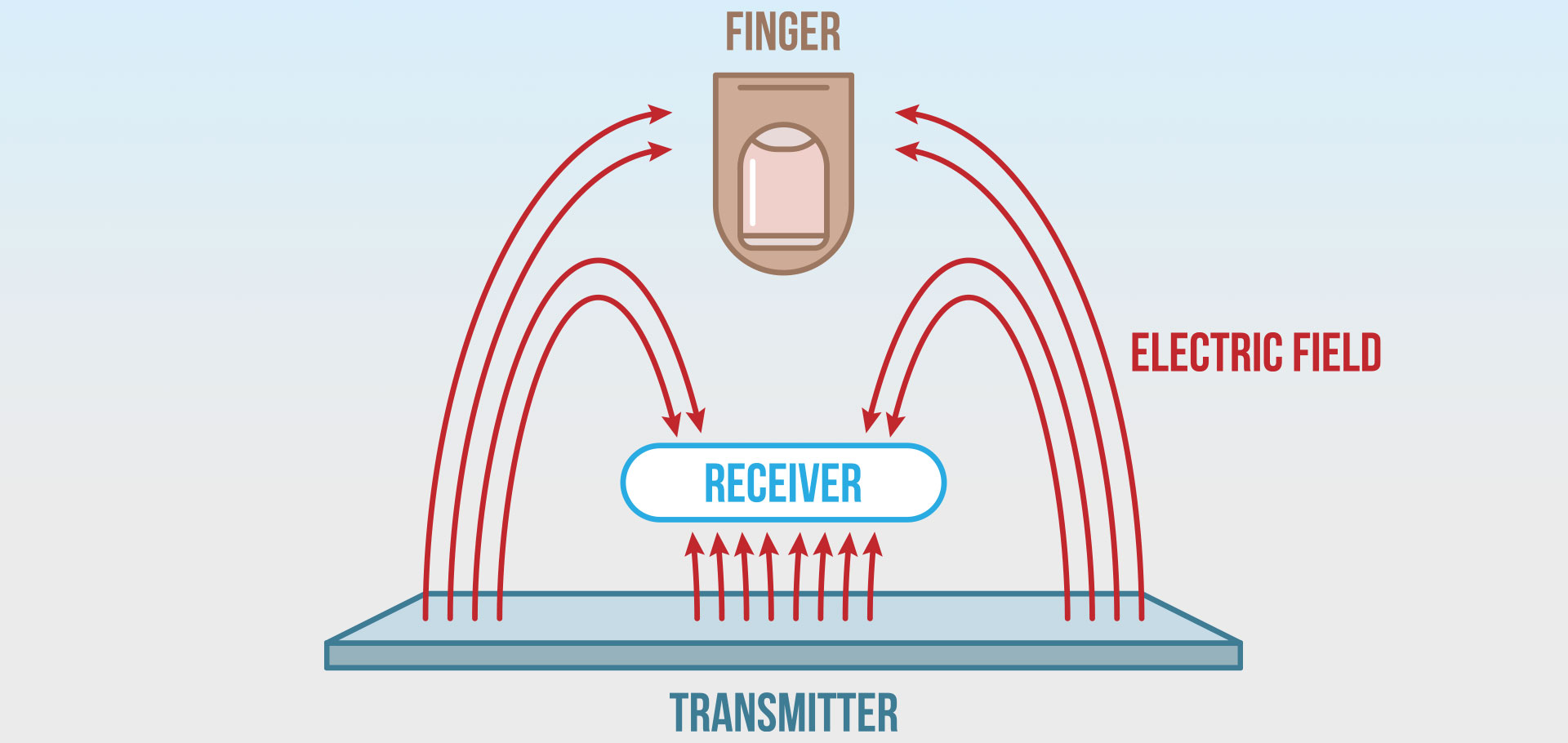
Capacitive sensors are essential components in modern touch-based devices, including smartphones, tablets, and interactive displays. Their ability to detect changes in capacitance relies on the formation of an electrostatic field that is modulated when a conductive object, such as a human finger, approaches or contacts the sensor surface. However, this measurement technique is inherently vulnerable to disturbances caused by extraneous electrostatic charges. These disturbances can result from environmental factors, triboelectric effects, or even the sensor’s operational mechanisms. Ultimately, the presence of unintended electrostatic charges can degrade sensor performance and reliability.
Statement of the Problem
Capacitive touch sensors are engineered to measure changes in capacitance by detecting the proximity or contact of a conductive object relative to the sensor’s electrode. During this process, the electrostatic field generated by the sensor is crucial for accurate measurement. However, the accumulation of extraneous electrostatic charges on device surfaces poses significant performance challenges. The core issue arises from the interaction of these charges with the sensor's operational field, which may lead to the following specific problems:
Measurement Errors
Electrostatic influences can introduce offset errors and distortions in the sensor’s measurement output. These errors occur due to the extra charges altering the expected change in capacitance. As a result, the primary sensing mechanism becomes less reliable, and the sensor may register false touch events or completely miss genuine ones. In an environment laden with stray charges, parasitic capacitance can also vary unpredictably, further complicating the signal processing algorithm.
Structural Integrity Risks
In addition to measurement inaccuracies, strong or prolonged electrostatic forces can mechanically compromise the sensor structure. In some cases, this might lead to the collapse or deformation of delicate sensor elements, particularly when a high differential capacitance (\( \Delta C \)) is required for precise readings. Such mechanical instability undermines not only the sensor’s operational accuracy but also its long-term durability.
Environmental and Material Sensitivity
The performance of capacitive sensors is sensitive to environmental conditions such as humidity, temperature, and ambient electromagnetic interference. Low humidity conditions, for example, tend to favor the build-up of static charges, thereby magnifying electrostatic interference. Similarly, the choice of materials for both sensor electrodes and supporting substrates must consider factors like thermal expansion and electrical conductivity, as these properties can exacerbate or mitigate the impact of stray charges.
Complexity in Sensing Algorithms
The non-linear nature of electrostatic effects adds a layer of complexity to the development of sensing algorithms. Compensating for variable and often unpredictable electrostatic interferences requires advanced calibration methods and robust signal processing techniques. Effective algorithms must distinguish between true touch events and artifacts induced by extraneous electrostatic phenomena.
Core Research Questions
Building on the challenges outlined above, the research on capacitive sensor performance in the presence of electrostatic charges focuses on addressing these key questions:
- How do extraneous electrostatic charges modify the sensor’s capacitance readings, and what magnitude of offset errors should be expected?
- What are the environmental and material conditions that lead to significant accumulation of charges on sensor surfaces?
- How can capacitive sensor designs, including readout circuits and grounding methodologies, be optimized to robustly compensate for these electrostatic disturbances?
Detailed Analysis and Considerations
Electrostatic Field Disruptions and Their Effects
Capacitive sensors rely on a uniform and predictable electrostatic field to detect changes in capacitance accurately. When external electrostatic charges accumulate, they alter the conventional field, resulting in measurement deviations. This can be quantified in terms of displaced capacitance values, causing both offset errors and signal noise. The extent of these offsets depends on the magnitude and distribution of the extraneous charges.
Specifically, the effective capacitance \( C_{\text{eff}} \) of a sensor element may be expressed as:
\( C_{\text{eff}} = C_0 + \Delta C_{\text{touch}} + \Delta C_{\text{static}} \)
where \( C_0 \) is the base capacitance, \( \Delta C_{\text{touch}} \) is the ideal change upon touch, and \( \Delta C_{\text{static}} \) represents the perturbation due to stray electrostatic charges. Accurate measurement requires isolating and mitigating \( \Delta C_{\text{static}} \).
Sensor Structural Considerations
The design and material selection for sensors are critical in minimizing the sensitivity to unwanted electrostatic forces. In high-performance applications, considerations such as dielectric strength, the coefficient of thermal expansion, and surface conductivity play important roles. By selecting materials that exhibit minimal expansion or contraction under temperature variations, engineers can maintain a stable sensor geometry, thereby reducing the risk of electrostatic-induced mechanical collapse or deformation.
Environmental and Material Parameter Control
The operating environment significantly influences electrostatic charge accumulation. Low humidity and dry conditions tend to amplify static build-up, while higher humidity naturally dissipates charges. Sensors can be designed with integrated or external electrostatic discharge (ESD) protection circuits to further mitigate potential interference. This is complemented by grounding strategies that ensure any accumulated charges are safely dissipated.
Design and Algorithmic Mitigation Strategies
The complex interaction between extraneous charges and sensor performance necessitates advanced design and signal processing approaches. Techniques include:
- Optimized electrode geometries that maximize the signal-to-noise ratio.
- Enhanced grounding arrangements to create a stable field configuration.
- Adaptive calibration algorithms that dynamically adjust for detected offset errors.
- Simulation-based design methodologies to predict and compensate for non-linear electrostatic effects.
Comparative Analysis Table
| Aspect | Impact of Electrostatic Charges | Mitigation Strategy |
|---|---|---|
| Measurement Accuracy | Offset errors and parasitic capacitance variations. | Calibration algorithms and noise reduction techniques. |
| Structural Integrity | Potential collapse of sensing structures. | Material selection and sensor design optimization. |
| Environmental Sensitivity | Increased interference in low humidity and extreme temperature conditions. | Environmental conditioning and robust circuit design. |
| Sensing Complexity | Non-linear effects complicating detection algorithms. | Adaptive and simulation-based algorithmic compensation. |
References
-
Electrostatic Forces in Sensors - ScienceDirect
-
Capacitive Sensor Effects - ScienceDirect
- Capacitive Sensing - Wikipedia
- ESD Impact on Touch-Screens - IET Digital Library
-
Performance in Capacitive Touch - Embedded
- Research on Capacitive Sensor Challenges - Springer
- ESD Protection in Sensors - Wiley Online Library
-
Electrostatic Interference Effects - ScienceDirect
-
Capacitive Sensor Overview - Balluff
- Modern Touch Sensor Technologies - Assembly Magazine
Recommended Related Queries
Last updated March 3, 2025