
Applications of Electric Fields and Electrostatics in Science and Technology
A Comprehensive Research Plan for Group-Based Exploration
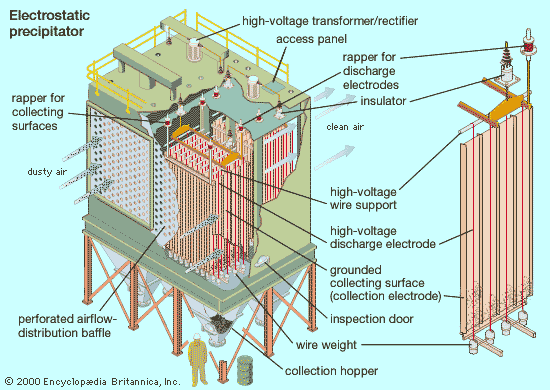
Essential Insights
- Subtopic Selection: Focus on a specific application such as electrostatic precipitators, medical imaging, electric propulsion, or capacitive sensors.
- Research Framework: Develop key elements including research questions, hypotheses, methodology, and experimental design.
- Documentation: Prepare a structured mini-research paper and a concise oral presentation that summarize your findings.
Introduction
Background and Significance
The field of electrostatics, which explores the behavior of electric charges at rest and the related electric fields, has become a cornerstone in various branches of science and technology. The principles of electric fields and electrostatics not only underpin many theoretical concepts in physics but also serve a critical role in practical applications. These applications range from controlling air quality in industrial settings to enhancing the functional performance of advanced medical imaging devices and improving energy storage systems.
In this research project, you will work in groups of five members to select a subtopic related to applications of electrostatics. This may involve exploring its use in engineering (such as electrostatic precipitators or capacitive sensors), medicine (for example, in medical imaging or biomedical implants), or energy production (including electric propulsion or high-efficiency capacitors). Your work will involve a rigorous literature review, data collection from reputable scientific sources, and the design and testing of a simple experiment, simulation, or theoretical analysis of your chosen subtopic.
Research Questions & Hypotheses
A key step of your research is to formulate a central research question that guides your investigation. For instance, if you select the subtopic of electrostatic precipitators, consider the following research questions:
- How effective are electrostatic precipitators in capturing particulate matter under varying environmental conditions?
- What is the influence of factors such as humidity, particle size, and applied voltage on the efficiency of these systems?
Based on your questions, develop specific, testable hypotheses. For example:
- Electrostatic precipitators achieve a particulate removal efficiency exceeding 99% under optimal conditions.
- Environmental factors—specifically, increased humidity and smaller particle sizes—significantly lower the efficiency of these devices.
Methodology
Literature Review and Data Collection
The initial phase of your research involves conducting a comprehensive literature review. Utilize academic databases like IEEE Xplore, PubMed, ScienceDirect, and other scholarly sources to gather peer-reviewed articles, conference papers, and technical reports that cover the applications of electrostatics in your chosen subtopic.
For instance, if the focus is on electrostatic precipitators, search for articles discussing the design principles, operational efficiencies, and environmental implications of these devices. Document the theoretical models, case studies, and experimental data presented in these sources.
Experimental/Simulation Design
Depending on your group’s expertise and available resources, you can design your investigation through one of the following approaches:
1. Experimental Approach
Assemble a small-scale model of the device or system. For electrostatic precipitators, this may involve:
- Constructing a prototype featuring charged plates and a controlled airflow mechanism.
- Using particulate matter of known sizes and varying concentrations.
- Systematically modifying ambient conditions (e.g., humidity levels and applied voltages) and recording the collection efficiency.
2. Simulation Approach
Alternatively, utilize simulation software such as COMSOL Multiphysics or ANSYS to model the behavior of electrostatic fields and the movement of charged particles. The simulation should parameterize variables like electric field strength, particle charge, and environmental factors.
3. Theoretical Analysis
Develop a mathematical model to describe the interactions between the charged particles and the applied electric field. Use equations from electrostatics (for instance, Coulomb’s law and principles of capacitance) to predict the relationship between observed efficiencies and the experimental conditions. Represent your mathematical relations using MathJax:
\( F = \frac{k \cdot |q_1 \cdot q_2|}{r^2} \)
where \( F \) is the force between the charges, \( q_1 \) and \( q_2 \) are the magnitudes of the charges, \( r \) is the distance between them, and \( k \) is Coulomb’s constant.
Data Analysis
Once data have been collected through experiments, simulations, or theoretical computations, statistical methods must be applied to analyze the results. Use comparative analysis techniques to evaluate the performance of the system under different operational parameters.
Below is a sample table illustrating hypothetical data collection parameters for an electrostatic precipitator experiment:
| Parameter | Low Condition | Optimal Condition | High Condition |
|---|---|---|---|
| Applied Voltage (kV) | 20 | 40 | 60 |
| Humidity (%) | 30 | 50 | 70 |
| Particle Size (µm) | 1-2 | 0.5-1 | 0.1-0.5 |
| Efficiency (%) | 95 | 99 | 92 |
The table aids in visualizing how variations in parameters might affect the performance metrics of the device, facilitating a detailed discussion later in your paper.
Results and Discussion
Findings
Combining the data from your literature review and experimental/simulation studies will lead to a set of significant findings. For an electrostatic precipitator, for example, you might observe:
- Under optimal conditions, where voltage and environmental parameters are regulated, particulate removal efficiency can exceed 99%.
- An increase in ambient humidity or the presence of exceptionally fine particles could diminish collection performance, underscoring the need for adaptive control mechanisms.
- Simulation models can closely predict the behavior of charged particles, providing a theoretical underpinning to the observed experimental trends.
Similarly, if your chosen subtopic lies in the realm of medical imaging or electric propulsion, your results would reveal insights into precision, performance comparisons, and environmental influences. In each case, comparing the simulated or calculated efficiencies with real-world results is a critical component of your analysis.
Interpretations and Implications
The interpretations of your results should center on validating or refuting your original hypotheses. For example, the experimental data might validate the hypothesis that optimal operating conditions yield extraordinary efficiencies. Discussions should also address:
- The scalability of the technology to industrial or clinical applications.
- Potential avenues for further research, such as incorporating adaptive systems that compensate for environmental fluctuations.
- The broader impact of improved electrostatic applications, including reduced industrial pollution, improved public health outcomes from cleaner air, or enhanced performance in cutting-edge medical devices.
It is also critical to assess any limitations encountered during the research, such as measurement uncertainties or environmental variables that could not be fully controlled. Addressing these transparently will strengthen the validity of your paper.
Conclusion and Recommendations
Summary of Findings
In conclusion, the investigation into the applications of electric fields and electrostatics in science and technology reveals their crucial role across various sectors. Whether the focus is on engineering through devices like electrostatic precipitators or on medical technologies such as imaging systems and biomedical implants, the underlying electrostatic principles are key to advancing technology and improving operational efficiencies.
Your research highlights the importance of optimizing operating conditions and tailoring designs to the specific challenges of each application. The findings confirm that under optimal conditions, electrostatic devices can achieve high levels of efficiency, whereas environmental variables like humidity or extreme particle sizes require additional engineering solutions.
Recommendations for Future Research
Based on your comprehensive analysis, several recommendations for further research emerge:
- Investigate adaptive control systems that adjust operational parameters in real time to maintain optimal efficiency, especially under variable environmental conditions.
- Expand simulation studies to include more complex real-world scenarios, incorporating multi-phase flows and contaminant mixtures.
- Explore the integration of advanced sensor technologies to monitor performance continuously and provide feedback loops in both industrial and biomedical applications.
- Examine the long-term durability and maintenance requirements of these technologies, determining the cost-effectiveness and sustainability of large-scale implementations.
- For medical applications, research could extend into how electrostatic principles influence tissue engineering and targeted drug delivery mechanisms.
Furthermore, your work serves as a foundation for subsequent studies that could delve deeper into theoretical models and experimental techniques, ensuring that advancements in this field continue to evolve with technological innovations.
Oral Presentation Preparation
In addition to the written mini-research paper, your group will prepare a 10-minute oral presentation. This presentation should:
- Summarize the research background, highlighting the significance of electrostatics in the chosen application.
- Outline the methodology used for literature review, experimental design, or simulations.
- Present the key findings and discuss their practical implications, supported by relevant data visuals (tables, graphs, or simulation screenshots).
- Conclude with recommendations and potential future research directions to inspire further inquiry into the subject.
Ensure that your presentation is engaging, clear, and succinct, so that it effectively communicates the essence of your research to an audience unfamiliar with the intricate details of electrostatics.
Conclusion
The study of electric fields and electrostatics provides a crucial intersection between theoretical physics and practical applications within engineering, medicine, and energy production. By carefully selecting a subtopic—whether it be electrostatic precipitators for pollution control, medical imaging technologies, electric propulsion systems, or capacitive sensors—your group will not only address a significant technological challenge but also contribute valuable insights to the scientific community.
This research plan outlines a comprehensive approach that includes an in-depth literature review, clearly defined research questions and hypotheses, well-designed experimental or simulation methodologies, detailed data analysis, and thoughtful interpretations of the results. The structured format ensures that key findings are documented effectively in a mini-research paper while simultaneously preparing for an insightful oral presentation.
In bridging innovative research with scientific rigor, your project stands to offer meaningful contributions to both academic inquiry and practical technological development. This integrative approach, when executed diligently, will pave the way for the continued evolution of electrostatic applications, ultimately leading to improvements in environmental quality, medical diagnostics, and energy efficiency.
References
- Electrostatic Applications - Electrostatic.com
- Applications of Electrostatics | Lumen Learning
- Introduction to Electricity ... - OpenPress
- Applications of Electrostatics - LibreTexts
- Using Static Electricity to Enhance Biomedical Implants - Medical Design Briefs
Recommended Further Exploration
Last updated February 25, 2025