
Intriguing Self-Awareness in Elephants: Uncovering Mirror Recognition
Exploring how mirror recognition reveals advanced cognitive abilities in elephants
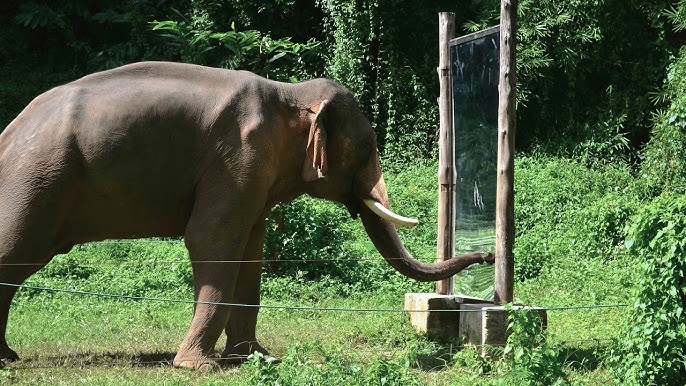
Highlights
- Mirror Self-Recognition Test: Elephants pass the classic MSR test by using mirrors to inspect marks on their bodies.
- Advanced Cognitive Abilities: This self-recognition is linked to high social intelligence, empathy, and problem-solving skills.
- Implications for Conservation and Welfare: Understanding these cognitive traits underscores the need for enriched environments and ethical treatment.
Introduction to Mirror Self-Recognition in Elephants
The discovery that elephants are capable of recognizing themselves in mirrors has fascinated scientists and animal behavior enthusiasts alike. This intriguing ability, often assessed through the mirror self-recognition (MSR) test, suggests a remarkable level of self-awareness in these gentle giants. In this article, we explore the processes behind mirror recognition, the experimental approaches used to evaluate self-awareness, and the broader implications of these findings on our understanding of elephant cognition.
The Mirror Self-Recognition Test: Methodology and Observations
Understanding the Mirror Test
The mirror self-recognition test is an experimental method designed to assess an animal's capacity for self-awareness. The test typically involves placing an animal in front of a mirror and observing its behavior over a series of distinct phases:
Phase 1: Social Response
Initially, when presented with a mirror, many animals may react as though they are encountering another individual. Early responses can include curiosity, social gestures, or even aggressive behavior. For elephants, however, this phase is quickly supplanted by more investigative actions.
Phase 2: Physical Inspection
Once the novelty wears off, elephants begin to inspect the mirror more thoroughly. They use their trunks to approach the mirror, exploring both the surface and, intriguingly, parts of their own bodies that are otherwise hidden from their direct view. This stage signals a shift from perceiving the mirror image as another being to recognizing it as a reflection.
Phase 3: The Mark Test
Perhaps the most definitive phase of the MSR test is the mark test. Researchers apply a visible mark on an area of the elephant's body that is only observable through the mirror. When elephants engage in behavior that suggests they are investigating, touching, or attempting to remove the mark, it is taken as strong evidence that they understand the mirror reflects their own body. For instance, when an elephant named Happy was observed, it used its trunk to examine a mark on its forehead – a behavior that could only result from self-recognition.
Cognitive Implications of Mirror Recognition
Self-Awareness Beyond the Mirror
Self-awareness represents a cornerstone of complex cognitive abilities. For elephants, successfully passing the mirror test is not an isolated skill; it is intertwined with a broader suite of cognitive functions that include problem-solving, empathy, and intricate social interactions.
Emotional Intelligence and Social Complexity
Elephants are known for their deep social bonds and complex relationships within herds. The ability to recognize oneself in a mirror is indicative of an inner awareness that parallels some human emotional capacities. Studies suggest that elephants exhibit behaviors hinting at empathy, such as consoling distressed companions and forming intricate social networks. Self-awareness supports these behaviors by providing the cognitive framework necessary to distinguish one's own emotions from those of others.
Problem-Solving and Body Awareness
In addition to social and emotional understanding, mirror self-recognition is linked to advanced problem-solving abilities. Elephants often navigate environments with obstacles and engage in cooperative tasks. Their ability to recognize their own body parts in a mirror, such as scrutinizing their trunks or checking for marks in concealed areas, signals a keen body awareness. This spatial recognition and motor coordination are crucial for tasks that involve manipulating objects, working together, and ensuring their well-being in dynamic environments.
Comparative Cognition Among Species
The manifestation of self-awareness in elephants places them in an exclusive group of species that share this trait. Primates, dolphins, and certain bird species like magpies have also demonstrated the ability to pass the mirror self-recognition test. This cross-species exhibition of self-awareness prompts deeper questions about the evolution of cognition and the neurological foundations that support such behavior. Comparing elephants with these species enlightens us on the convergent evolution of intelligence in the animal kingdom.
Exploring Studies and Findings
Documented Cases and Experimental Evidence
Several studies have focused on evaluating elephants' ability to recognize themselves. Notable research conducted at reputable institutions such as zoos and academic centers has provided compelling evidence of mirror self-recognition in elephants. For example, researchers observed Asian elephants engaging in behaviors that clearly indicated self-recognition. One observed elephant used the reflection to examine parts of its body which it could not normally see, such as the insides of its mouth or areas like its forehead marked with a visible cue.
Case Study: "Happy" the Elephant
One of the most cited cases involves an Asian elephant affectionately known as "Happy." In a controlled experiment, researchers applied a mark on “Happy” that was only visible via a mirror. The elephant, upon seeing its reflection, immediately directed its trunk towards the mark and made repeated attempts to investigate it. This behavior aligns with the criteria for passing the mirror self-recognition test. It highlights not only the elephant’s visual and cognitive perception but also its understanding of the spatial relationship between itself and its reflection.
Interpreting the Mirror Test in Broader Context
Beyond the immediate experimental outcomes, the mirror self-recognition test has important implications for conservation and animal welfare. Understanding that elephants possess self-awareness encourages initiatives that consider their mental and emotional needs. In captivity, these insights can inform enhancements in enrichment programs, ensuring that enclosures and activities stimulate the mental faculties of elephants, much like cognitive challenges in the wild.
Comparative Analysis Table of Self-Awareness in Animals
| Species | Mirror Test Outcome | Key Cognitive Behaviors | Implications for Social Structures |
|---|---|---|---|
| Elephants | Positive - Recognize marks | Self-awareness, empathy, body awareness | Complex, cooperative social networks |
| Great Apes | Positive - Social and investigatory behaviors | Problem-solving, empathy, self-recognition | Intricate social relationships |
| Dolphins | Positive - Recognize self in reflection | High-level communication, social bonding | Tightly knit social pods |
| Magpies | Positive - Unique among birds | Analogous self-awareness skills | Complex interspecies interactions |
Implications of Elephant Self-Awareness
Advancing Our Understanding of Animal Minds
The fact that elephants can recognize themselves in mirrors fundamentally alters how we perceive animal intelligence and consciousness. For years, cognitive studies in animals were largely limited to primates and cetaceans. However, elephants have emerged as clear examples of advanced cognition, prompting a re-examination of our assumptions about intelligence across species.
Enhancing Conservation Efforts
Recognizing self-awareness in elephants brings to the forefront the ethical considerations in their conservation and management. With levels of self-recognition comparable to those seen in great apes, it becomes imperative to redesign captive environments to provide mental stimulation and social interaction. Improvements in habitat design, enrichment programs, and welfare guidelines are essential. Conservationists argue that understanding an animal’s cognitive capabilities should lead to more compassionate treatment, ensuring both physical and psychological health.
Impact on Research and Ethical Treatment
Self-awareness in elephants also influences interdisciplinary research in psychology, neurology, and even philosophy. Studying how elephants process their environment, emotions, and social interactions can yield insights into the evolution of intelligence. Comparing these mechanisms with those found in humans and other animals deepens our understanding of consciousness. Such research can also support the development of policies that promote the respectful and ethical treatment of animals in both captivity and the wild.
Broader Societal and Scientific Relevance
Shaping Public Perception and Policy
Public awareness of elephant intelligence significantly influences legislative and conservation policies. When the general populace understands that elephants are not simply large animals but beings capable of self-reflection and complex social behavior, there is an enhanced drive to protect their habitats and ensure humane treatment. Educational programs and media reports emphasizing their cognitive abilities encourage support for initiatives that aim to preserve these intelligent species.
Informing Future Research Directions
The exploration of mirror self-recognition in elephants is also paving the way for further studies into animal consciousness. Emerging research focuses on comparative neurobiology, detailed behavioral studies, and observational research in natural habitats. Insights gained from these studies may also contribute to advancements in artificial intelligence, by providing models of decentralized cognition and social learning that can inspire innovative computational approaches.
Educational Outreach and Public Engagement
As these findings reach broader audiences, educational institutions and wildlife organizations are adopting this knowledge to engage the public. Interactive exhibits in museums and zoos now often feature discussions and demonstrations of elephant self-awareness. These initiatives encourage visitors to appreciate the complexity of animal cognition and recognize the importance of supporting conservation efforts. Engaging storytelling and scientifically accurate descriptions help bridge the gap between complex research and public understanding.
References
- Can Elephants See Themselves in the Mirror? - EnviroLiteracy
- Elephants Recognise Themselves in Mirror - National Geographic
- Elephants' Body Awareness and Intelligence - Cambridge
- Self-Recognition in an Asian Elephant - PNAS
- Elephant Intelligence Revealed - Scientific American
Recommended Further Queries
Last updated March 24, 2025