

Key Insights into Elihu Vedder's Legacy
- Pioneering American Symbolist: Elihu Vedder is widely recognized as the first significant American painter to embrace and define the Symbolist movement, introducing its mystical and dreamlike qualities to the American art scene.
- Master of Visionary Art: His works are characterized by imaginative, allegorical, and often fantastical imagery, drawing inspiration from subconscious themes, classical mythology, and poetic narratives.
- Illustrious Illustrator and Muralist: Beyond his paintings, Vedder achieved widespread acclaim for his 1884 illustrations for Edward FitzGerald's *The Rubaiyat of Omar Khayyam* and his impactful murals in the Library of Congress, showcasing his decorative prowess.
In the rich tapestry of early 20th-century art, one name stands out as a foundational figure in American Symbolism: Elihu Vedder. Born in 1836 in New York City and passing away in Rome, Italy, in 1923, Vedder's prolific career spanned over six decades, leaving an indelible mark on the artistic landscape. He is consistently identified as the Symbolist painter with the first name Elihu, a testament to his unique contributions and lasting influence.
From Early Influences to Artistic Maturation
Elihu Vedder's artistic journey was deeply shaped by his extensive time in Europe. After initial studies in New York, he further honed his craft in artistic hubs like Paris and Florence. These formative years exposed him to the grand traditions of Renaissance masters and the innovative spirit of contemporary movements like the Macchiaioli in Italy. Despite living abroad for much of his life, particularly in Rome, which became his permanent residence from 1906 until his death, Vedder maintained strong connections with the American art community, actively participating in exhibitions and fostering relationships with fellow artists and writers.
Defining the American Symbolist Aesthetic
Vedder's art is a captivating blend of Romanticism, Symbolism, and visionary themes. He possessed a remarkable ability to translate inner states, dreams, and allegorical narratives into visual form. His paintings often evoke mystery and introspection, distinguishing him as a pivotal figure who introduced the intricate language of Symbolism to the United States. This innovative approach cemented his reputation as the first American Symbolist painter.
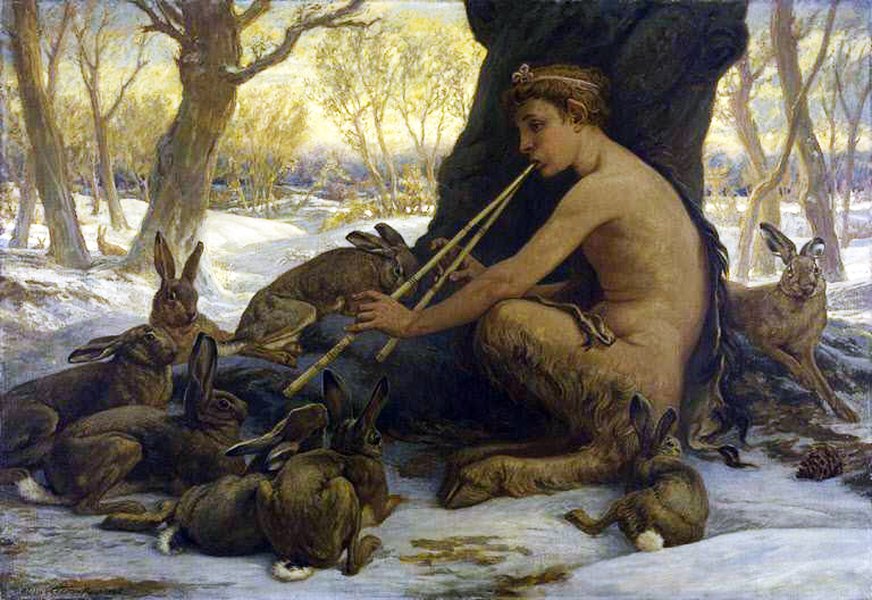
Elihu Vedder's "Young Marsyas," an example of his mythological and symbolic works.
Beyond the Canvas: Illustrations and Murals
While celebrated for his oil paintings, Vedder's genius extended across various artistic disciplines, including book illustration and mural painting. His contributions in these areas are equally, if not more, renowned and demonstrate his versatility and decorative flair.
The Iconic Rubaiyat Illustrations
Perhaps Vedder's most widely recognized work is his series of 55 illustrations for Edward FitzGerald's 1884 translation of *The Rubaiyat of Omar Khayyam*. These illustrations are a tour de force of decorative art, characterized by their intricate detail, imaginative compositions, and profound emotional depth. They perfectly complement the philosophical and poetic themes of FitzGerald's verses, creating a synergistic masterpiece that captivated audiences and significantly influenced the aesthetic movement of the time.

A detail from Elihu Vedder's "Cupid and Psyche," demonstrating his allegorical storytelling.
Architectural Narratives: Library of Congress Murals
Vedder also left a monumental legacy in the form of his murals for the Library of Congress in Washington, D.C. These grand-scale works not only showcased his mastery of composition and color but also contributed to a revival of mural painting in American art. His allegorical and symbolic narratives integrated seamlessly with the architectural grandeur of the Library, reflecting his ability to infuse public spaces with profound meaning.
A Deeper Look into His Art
To further appreciate Elihu Vedder's unique style and thematic depth, viewing his works in motion and hearing expert analysis can provide invaluable insights. The video below offers a focused examination of one of his notable pieces, "The Cup of Death," which powerfully encapsulates his Symbolist sensibilities and allegorical approach.
A short analysis of Elihu Vedder's "The Cup of Death," a quintessential Symbolist work.
This short video provides a concise yet impactful art appreciation of "The Cup of Death" by Elihu Vedder. It delves into the symbolism embedded within the painting, offering viewers a glimpse into Vedder's mind and his approach to conveying complex ideas through visual metaphor. Understanding such key works is essential to grasp the full scope of his contribution to Symbolism and American art history.
A Summary of His Unique Place in Art History
Elihu Vedder's prominence as an early 20th-century Symbolist painter with the first name Elihu is undisputed. His life, divided between the vibrant art scenes of New York and the timeless beauty of Italy, particularly Rome, allowed him to synthesize diverse influences into a highly personal and influential style. He was a prolific artist whose 65-year career saw him create not only captivating oil paintings but also some of the most enduring book illustrations and monumental murals of his time.
His work consistently featured elements of fantasy, allegory, and dreamlike qualities, making him a true pioneer in bringing Symbolism to American shores. The table below summarizes key aspects of his career and artistic identity:
| Aspect | Description |
|---|---|
| Full Name | Elihu Vedder |
| Lifespan | 1836–1923 |
| Primary Artistic Role | Symbolist Painter, Book Illustrator, Muralist, Poet |
| Key Contribution | Pioneering American Symbolist, bringing visionary and decorative art to prominence. |
| Most Famous Works | Illustrations for *The Rubaiyat of Omar Khayyam*, Murals in the Library of Congress, paintings like "Memory" and "The Cup of Death". |
| Geographic Influence | New York, Paris, Florence, Rome (expatriate life in Italy). |
| Artistic Style | Dreamlike, fantastical, allegorical, visionary, influenced by Romanticism and classical themes. |
Frequently Asked Questions (FAQ)
Who was Elihu Vedder?
What is Elihu Vedder most famous for?
Where did Elihu Vedder live and work?
What defines Symbolism in Elihu Vedder's art?
When was Elihu Vedder active?
Conclusion
Elihu Vedder's indelible legacy as a Symbolist painter is characterized by his pioneering vision, his mastery across various artistic mediums, and his ability to infuse his creations with profound meaning and emotional depth. His expatriate life, particularly in Italy, profoundly shaped his unique aesthetic, allowing him to weave together classical themes with a distinctly American sensibility. From the iconic illustrations of *The Rubaiyat of Omar Khayyam* to the majestic murals of the Library of Congress, Vedder's work continues to captivate and inspire, solidifying his place as a cornerstone of American Symbolism and a key figure in early 20th-century art.
Recommended Further Exploration
- Deep dive into Symbolism art movement
- The impact of The Rubaiyat of Omar Khayyam illustrations
- Notable American muralists of the early 20th century
- Expatriate artists in Rome 19th century