
Creating a Powerful Email Marketing Pitch Leveraging Data
Transform your email campaigns with data-driven strategies to maximize engagement and ROI
Key Takeaways
- Data-Driven Personalization: Tailor your email content to individual customer preferences to enhance engagement.
- Advanced Segmentation: Utilize sophisticated data analytics to segment your audience for more targeted messaging.
- Continuous Optimization: Leverage real-time data to continually refine and improve your email marketing strategies.
Introduction
In the competitive landscape of digital marketing, email remains a powerful tool for businesses to connect with their audience. However, the effectiveness of email campaigns hinges on how well they resonate with recipients. Leveraging data-driven strategies is essential to crafting compelling email marketing pitches that not only capture attention but also drive significant engagement and conversions.
The Importance of Data in Email Marketing
Unlocking the Potential of Data
Data is the cornerstone of successful email marketing. By harnessing customer data, businesses can gain deep insights into customer behavior, preferences, and needs. This information allows for the creation of highly personalized and relevant email content, which is crucial in today’s saturated inboxes.
Enhancing Personalization and Segmentation
Personalization goes beyond addressing the recipient by name. It involves delivering content that is specifically tailored to each individual’s interests and behaviors. Data-driven segmentation divides your audience into distinct groups based on various criteria such as demographics, purchase history, and engagement levels. This enables the delivery of targeted messages that resonate more effectively with each segment.
Crafting Your Data-Driven Email Marketing Pitch
1. Introduction
Begin your pitch by introducing your company and the purpose of your email. Clearly state that your focus is on enhancing email marketing efforts through data-driven strategies.
Example: "Hello [Name], I'm reaching out from [Your Company], where we specialize in leveraging data to maximize the impact of your email marketing campaigns. We believe that by harnessing the power of data, we can significantly enhance your email marketing strategy."
2. The Importance of Data in Email Marketing
Explain why data is crucial for successful email marketing. Highlight how data-driven insights can lead to better personalization, segmentation, and overall campaign effectiveness.
Example: "In today's digital landscape, data is the key to unlocking the full potential of your email marketing. By analyzing customer behavior and engagement metrics, we can tailor your campaigns to resonate more deeply with your audience, ultimately driving higher engagement and conversions."
3. Specific Data-Driven Strategies
Detail specific strategies that your company can implement to improve email marketing through data. This could include segmentation, personalization, A/B testing, and automated workflows based on user behavior.
Example: "Our approach includes segmenting your audience based on their interactions with your emails, allowing us to deliver highly personalized content that speaks directly to their interests and needs. We also utilize A/B testing to refine subject lines, content, and calls to action, ensuring optimal performance."
4. AI-Enhanced Targeting and Predictive Analytics
Introduce the use of AI and predictive analytics in refining email marketing efforts. Explain how these technologies can anticipate customer actions, identify engagement patterns, and optimize send times.
Example: "By leveraging AI-powered tools, we can analyze customer behavior, preferences, and purchase history to craft emails that speak directly to individual subscriber needs. Predictive analytics enables us to anticipate customer actions, identify engagement patterns, and optimize send times to increase overall campaign effectiveness."
5. Data Security and Compliance
Address concerns related to data security and compliance. Assure potential clients that their data will be handled with the utmost care and in compliance with industry standards.
Example: "We prioritize the security and privacy of your customer data. Our data management practices are fully compliant with industry standards, ensuring that your data is protected at every stage."
6. Performance Optimization
Discuss how continuous performance tracking and optimization can enhance email campaigns. Highlight the importance of monitoring key metrics and making data-driven adjustments.
Example: "Through continuous, in-depth performance tracking, we not only launch your email campaigns but also constantly refine them using real-time data insights. This ensures that every email performs at its best, driving higher engagement and conversions."
7. Success Stories and Metrics
Provide examples of past successes where data-driven email marketing led to tangible results. Mention specific metrics like open rates, click-through rates, and conversion rates to illustrate the impact.
Example: "For instance, one of our clients experienced a 30% increase in open rates and a 25% increase in conversions after we implemented a data-driven segmentation strategy. We are confident that we can deliver similar results for your brand."
8. Social Proof and Credibility
Include testimonials or case studies to build credibility and trust. Highlight how your expertise has benefited other businesses.
Example: "Our partnership with [Client Name] has been instrumental in transforming their data strategy, leading to significant improvements in their email marketing performance."
9. Call to Action
Conclude with a clear call to action, encouraging the recipient to discuss how your data-driven approach can benefit their specific needs.
Example: "I would love to discuss how our data-driven email marketing strategies can be customized to meet your goals. Could we schedule a call to explore this further? I'm available at your convenience."
Implementing Data-Driven Strategies
Segmentation
Effective segmentation is vital for targeting the right audience with the right message. By dividing your subscriber list into distinct groups based on specific criteria, you can craft emails that are more relevant and engaging.
Key Segmentation Criteria
-
Demographics: Age, gender, location, occupation.
-
Behavioral Data: Purchase history, website interactions, email engagement.
-
Psychographics: Interests, values, lifestyles.
Personalization
Personalization involves tailoring the content of your emails to match the individual preferences and behaviors of your subscribers. This goes beyond simply using the recipient's name; it includes relevant product recommendations, personalized offers, and content that aligns with their interests.
A/B Testing
A/B testing is a powerful method for optimizing your email campaigns. By testing different versions of your emails, such as subject lines, content, and calls to action, you can determine what resonates best with your audience and refine your strategies accordingly.
Automated Workflows
Automated workflows enhance efficiency by triggering emails based on specific user behaviors and interactions. This ensures timely and relevant communication with your audience, improving engagement and conversion rates.
Key Metrics for Success
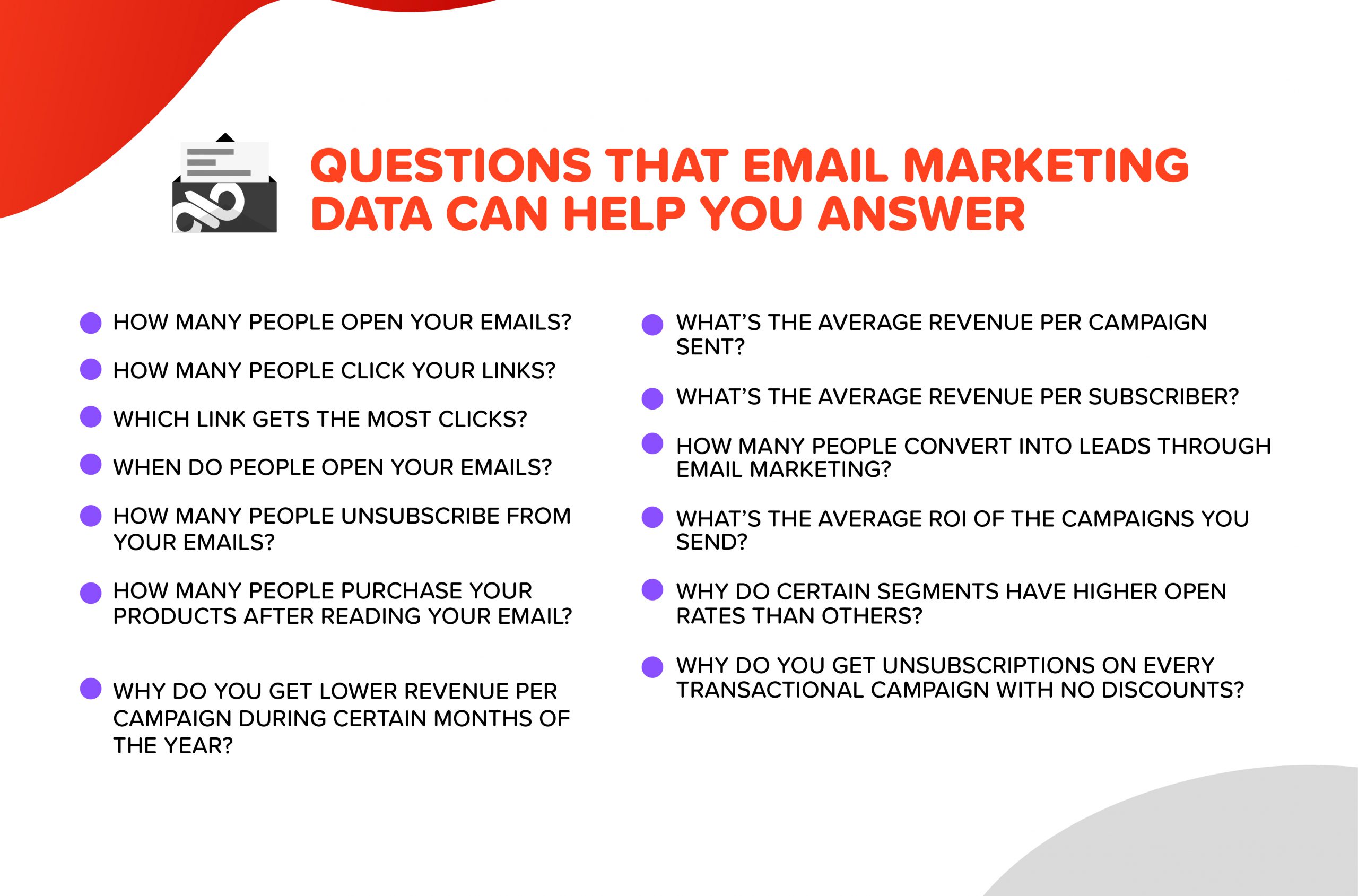
Monitoring key performance metrics is essential to evaluate the effectiveness of your email marketing campaigns. By tracking these metrics, you can make data-driven decisions to continually improve your strategies.
| Metric | Description | Importance |
|---|---|---|
| Open Rate | The percentage of recipients who open your email. | Indicates the effectiveness of your subject lines and the initial interest in your emails. |
| Click-Through Rate (CTR) | The percentage of recipients who click on links within your email. | Measures the engagement level and relevance of your email content. |
| Conversion Rate | The percentage of recipients who complete a desired action after clicking through. | Assess the effectiveness of your call to action and the overall campaign success. |
| Unsubscribe Rate | The percentage of recipients who opt out of your email list. | Helps identify potential issues with your email content or frequency. |
| Bounce Rate | The percentage of emails that could not be delivered to recipients' inboxes. | Indicates the health of your email list and the quality of your data. |
Ensuring Data Privacy and Compliance
Building trust with your audience requires a strong commitment to data privacy and compliance. Adhering to regulations such as GDPR and CAN-SPAM ensures that your email marketing practices respect user privacy and maintain data security.
Transparent Data Usage
Clearly communicate how you collect, use, and protect customer data. Providing transparent data usage guidelines builds trust and assures your audience that their information is handled responsibly.
Secure Data Management
Implement robust data security measures to protect against breaches and unauthorized access. Ensure that all data is stored securely and that access is restricted to authorized personnel only.
Leveraging AI and Predictive Analytics
Artificial Intelligence (AI) and predictive analytics are transforming email marketing by enabling more accurate targeting and personalized content creation. These technologies analyze vast amounts of data to identify patterns and predict future behaviors, allowing for more strategic campaign planning.
Predictive Segmentation
Predictive analytics can forecast customer behaviors and preferences, enabling the creation of highly targeted segments. This ensures that your emails reach the right audience with the right message at the right time.
Optimizing Send Times
AI can analyze when recipients are most likely to engage with emails, optimizing send times to increase open and click-through rates. This ensures that your emails appear in the inbox at the most effective moments.
Social Proof and Testimonials
Including social proof in your pitch enhances credibility and trust. Testimonials from satisfied clients and detailed case studies provide tangible evidence of your expertise and the effectiveness of your data-driven strategies.
Case Studies
Showcase specific examples where your strategies have led to measurable success. Highlight the challenges faced, the solutions implemented, and the results achieved.
Client Testimonials
Incorporate quotes from clients who have benefited from your services. Personal endorsements add authenticity and reinforce the value of your offerings.
Conclusion
Creating an effective email marketing pitch centered on data involves a strategic blend of personalization, advanced segmentation, continuous optimization, and a commitment to data privacy. By leveraging data-driven insights, businesses can craft compelling email campaigns that not only engage their audience but also drive significant ROI. Implementing these strategies ensures that your email marketing efforts are both impactful and sustainable, fostering stronger customer relationships and achieving long-term success.
References
Last updated February 12, 2025