
Unlock Your Self-Hosted LLM's True Potential: Embedding Custom Knowledge
Discover the most effective strategies to infuse your local AI with specialized information for enhanced performance and privacy.
Running a Large Language Model (LLM) on your own infrastructure ("self-hosting") offers significant advantages in privacy, security, and control over your data. However, a base pre-trained LLM often lacks the specific, up-to-date, or proprietary knowledge needed for specialized tasks. "Embedding knowledge" refers to the process of integrating this external information into your self-hosted LLM, making it significantly more accurate, relevant, and useful for your unique requirements. This guide explores the best methods to achieve this as of May 4, 2025.
Essential Insights: Key Takeaways
- Two Core Strategies: The primary methods for embedding knowledge are Fine-Tuning (adjusting the LLM's internal parameters) and Retrieval-Augmented Generation (RAG) (providing external context during generation).
- RAG for Flexibility & Privacy: RAG is often the preferred approach for self-hosted environments due to its ability to handle dynamic knowledge updates, scale effectively, and keep sensitive data separate from the core LLM, enhancing privacy.
- Fine-Tuning for Deep Integration: Fine-tuning allows the LLM to deeply internalize specific knowledge patterns, styles, or domains, but requires significant resources and careful data curation. Parameter-Efficient Fine-Tuning (PEFT) makes this more feasible for self-hosting.
Mastering Knowledge Embedding: Core Techniques Explained
Choosing the right technique depends heavily on your specific goals, the nature of your knowledge base, available resources, and how frequently the information needs updating. Let's delve into the two main methodologies:
1. Fine-Tuning: Teaching Your LLM New Tricks
Fine-tuning involves taking a pre-trained LLM and continuing its training process, but using a specific dataset tailored to your domain or task. This fundamentally alters the model's internal parameters (weights) to better reflect the nuances, terminology, and patterns within your custom knowledge.

AI Training Hardware: Fine-tuning LLMs requires significant computational power, often facilitated by specialized server systems.
How Fine-Tuning Works
The process adapts the LLM's learned representations to become more specialized. By training on examples relevant to your knowledge base (e.g., internal documents, specific technical manuals, customer interaction logs), the model learns to generate responses that are more accurate and contextually appropriate for that domain.
Types of Fine-Tuning
- Full Fine-Tuning: This updates all the parameters of the LLM. It offers the potential for the deepest integration and highest accuracy on the target task but is extremely resource-intensive (compute, memory, time) and requires large, high-quality datasets.
- Parameter-Efficient Fine-Tuning (PEFT): Techniques like LoRA (Low-Rank Adaptation) modify only a small subset of the model's parameters, or add small new layers. PEFT significantly reduces the computational cost and memory requirements, making fine-tuning much more accessible for self-hosting scenarios while often achieving comparable performance to full fine-tuning on specific tasks.
Pros and Cons
- Pros: Deep knowledge integration, potential for high accuracy in specialized domains, adapts model behavior and style.
- Cons: Resource-intensive (especially full fine-tuning), requires careful dataset curation, risk of "catastrophic forgetting" (losing general capabilities), knowledge becomes static within the model (requires retraining for updates), potential for overfitting on small datasets.
When to Choose Fine-Tuning
Consider fine-tuning (especially PEFT) when:
- You need the LLM to deeply internalize a specific style, tone, or complex patterns from your data.
- Your knowledge base is relatively static and doesn't require frequent updates.
- You have access to sufficient computational resources and a well-curated training dataset.
- The goal is to adapt the model's core behavior, not just provide factual recall.
2. Retrieval-Augmented Generation (RAG): Giving Your LLM External Brains
RAG is an increasingly popular approach that avoids modifying the core LLM. Instead, it enhances the LLM's capabilities by providing it with relevant external knowledge *at the time of generating a response*. It dynamically retrieves information from a knowledge base and uses it as context.
How RAG Works: The Process
A typical RAG system involves several key components working together:
- Knowledge Base: Your collection of documents, data records, or other information sources (PDFs, text files, database entries, etc.).
- Embedding Model: A model (often smaller and specialized, which can also be self-hosted for privacy) that converts chunks of text from your knowledge base into numerical vector representations (embeddings). These vectors capture the semantic meaning of the text.
- Vector Database: A specialized database (e.g., Chroma, Milvus, Pinecone, FAISS, Weaviate) that stores these vector embeddings and allows for efficient searching based on semantic similarity.
- Retriever: When a user query comes in, the retriever converts the query into an embedding and searches the vector database to find the text chunks with the most similar embeddings (i.e., the most relevant information).
- LLM Augmentation: The retrieved text chunks are then combined with the original user query and fed as context into the self-hosted LLM.
- Response Generation: The LLM uses this augmented prompt (original query + retrieved context) to generate a more informed, accurate, and contextually relevant response.
Visualizing the RAG Flow
This mindmap illustrates the typical workflow of a Retrieval-Augmented Generation system:
(PDFs, TXT, etc.)"] id5b["Databases"] id5c["Web Pages"] id6["LLM"] id6a["Receives Query +
Retrieved Context"] id7["Augmented Response"] id1 --> id2 id2 --> id3 id3 --> id2b id5 -- Processes --> id4 id4 -- Generates --> id3a id2 -- Retrieves --> id6a id6 --> id7
Pros and Cons
- Pros: Highly flexible (easy to update knowledge base without retraining LLM), scalable to large knowledge bases, better for dynamic/changing information, enhances data privacy (sensitive data stays in external DB), reduces risk of hallucination by grounding responses in retrieved facts, less resource-intensive than fine-tuning the core LLM.
- Cons: Can introduce latency due to the retrieval step, complexity in setting up and tuning the retrieval system, performance depends heavily on the quality of embeddings and retrieval relevance.
When to Choose RAG
RAG is often the preferred method for self-hosted LLMs, especially when:
- Your knowledge base is large, diverse, or frequently updated.
- Data privacy and security are paramount (keeping proprietary data out of the LLM weights).
- You need the LLM to cite sources or base answers on specific documents.
- You want to leverage a powerful pre-trained LLM without the high cost of fine-tuning.
- Reducing hallucinations and grounding responses in factual data is critical.
3. Hybrid Approaches: The Best of Both Worlds?
It's also possible to combine fine-tuning and RAG. For example, you could use PEFT to fine-tune an LLM to better understand your domain's terminology or follow specific instruction styles, and then use RAG at inference time to provide it with the latest factual information from your external knowledge base. This can leverage the strengths of both techniques but adds complexity to the overall system.
Comparing Knowledge Embedding Techniques
The choice between Fine-tuning (FT) and RAG depends on various factors. This radar chart provides a comparative overview based on common considerations for self-hosted deployments. Scores are relative assessments (higher is generally better/more, lower is less/worse) for illustrative purposes.
This table summarizes the key differences:
| Feature | Fine-Tuning (FT / PEFT) | Retrieval-Augmented Generation (RAG) |
|---|---|---|
| Mechanism | Modifies LLM's internal weights via training on custom data. | Retrieves relevant external data and provides it as context to an unchanged LLM. |
| Model Weights | Altered (significantly for Full FT, less for PEFT). | Unaltered. |
| Knowledge Update | Requires retraining the LLM. | Update the external knowledge base (vector DB); no LLM retraining needed. |
| Primary Resource Cost | Training compute, curated datasets. | Vector database infrastructure, embedding computation, retrieval process. |
| Knowledge Location | Internalized within the LLM. | External knowledge base (vector store). |
| Best For | Adapting style/behavior, static knowledge, deep domain understanding. | Dynamic/large knowledge bases, factual recall, data privacy, source citation. |
| Key Advantage | Deep integration, potential for nuanced understanding. | Flexibility, scalability, up-to-date information, privacy control. |
| Key Disadvantage | Resource-intensive, static knowledge, risk of forgetting. | Potential retrieval latency/errors, system complexity. |
Implementing Knowledge Embedding in a Self-Hosted Environment
Successfully embedding knowledge in your self-hosted LLM requires careful consideration of your infrastructure and tooling.
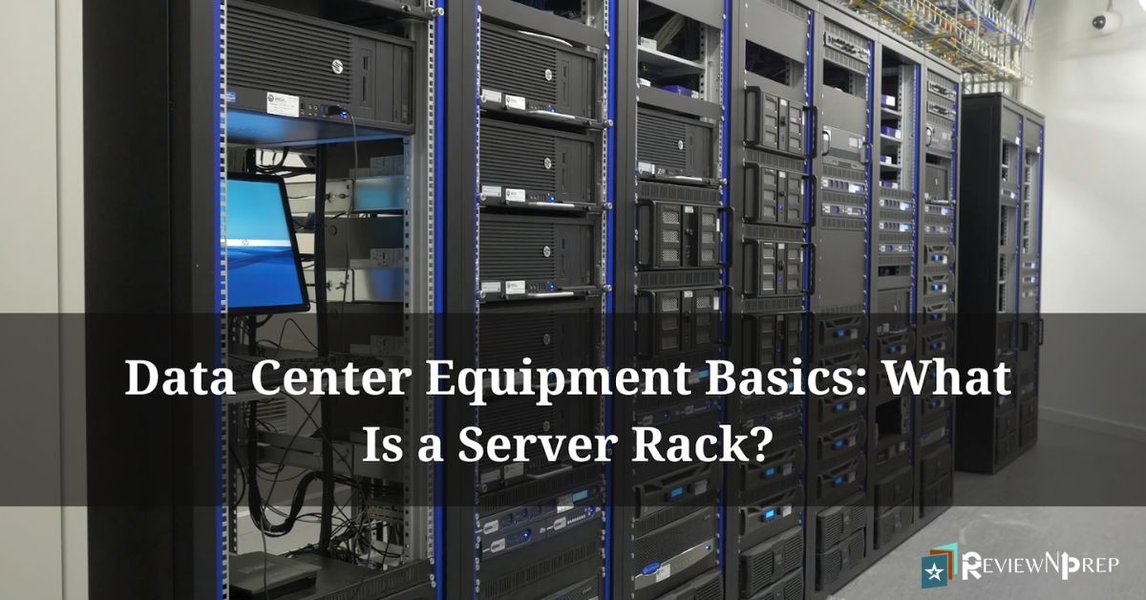
Self-hosting LLMs often involves managing server infrastructure like racks housing compute and storage hardware.
Key Considerations
- Hardware Resources: Both fine-tuning (especially full FT) and running inference for large LLMs demand significant GPU memory and processing power. RAG systems also require resources for the vector database and embedding models. Assess your hardware capabilities realistically.
- Open-Source Ecosystem: Leverage open-source LLMs (e.g., Llama, Mistral, Falcon variants available via platforms like Hugging Face or Ollama), frameworks (LangChain, LlamaIndex), embedding models (Sentence Transformers), and vector databases (Chroma, Milvus, Weaviate, Qdrant) to maintain control and avoid vendor lock-in.
- Data Security and Privacy: A major benefit of self-hosting. For RAG, ensure your vector database and embedding process are also hosted within your secure environment to prevent sensitive data exposure. Host embedding models locally.
- Modularity: Design your system modularly. For RAG, this means potentially using separate, optimized models for embedding, retrieval, and generation.
- Maintenance: RAG systems require ongoing maintenance of the knowledge base and vector index. Fine-tuned models may need periodic retraining to incorporate new knowledge or counteract drift.
Practical Implementation Example: RAG with Ollama and Open WebUI
Many self-hosted setups utilize tools like Ollama to easily run various open-source LLMs locally. Frameworks like LangChain or interfaces like Open WebUI can then be used to build RAG pipelines, connecting the local LLM to a local vector database populated with your custom knowledge.
This video demonstrates setting up knowledge bases using RAG and embeddings with popular self-hosting tools like Ollama and Open WebUI.
The video provides a practical walkthrough of integrating document knowledge into a self-hosted LLM environment. It covers concepts like creating knowledge bases within the Open WebUI interface, the role of embedding models in processing documents, and how the RAG process enables the LLM to answer questions based on the ingested information. This aligns directly with the RAG approach discussed, showcasing a user-friendly way to implement it using readily available open-source tools, which is highly relevant for self-hosting practitioners.
Frequently Asked Questions (FAQ)
What is the main difference between Fine-Tuning and RAG?
Fine-tuning modifies the LLM's internal parameters by training it on new data, essentially changing the model itself to "learn" the knowledge. RAG keeps the LLM unchanged but provides it with relevant external information retrieved from a separate knowledge base during the response generation process.
Is RAG or Fine-Tuning better for privacy in a self-hosted setup?
RAG generally offers better privacy control in self-hosting. Your proprietary knowledge resides in an external vector database, which you control completely. You only feed small, relevant snippets to the LLM as context. With fine-tuning, the knowledge becomes embedded within the model's weights, which might be a concern depending on how the model is handled or potentially shared.
What is PEFT (Parameter-Efficient Fine-Tuning)?
PEFT refers to a set of techniques (like LoRA) that allow fine-tuning an LLM by modifying only a small fraction of its parameters, or by adding small adaptable modules. This drastically reduces the computational resources (GPU memory, time) required compared to full fine-tuning, making it much more feasible for self-hosting setups with limited hardware, while often achieving similar performance on specific tasks.
What is a vector database and why is it needed for RAG?
A vector database is designed to store and efficiently search through high-dimensional vector embeddings. In RAG, text chunks from your knowledge base are converted into these embeddings (numerical representations of meaning). The vector database allows the system to quickly find the stored text chunks whose meanings are most similar to the user's query embedding, which is crucial for retrieving relevant context for the LLM.
Can I use both Fine-Tuning and RAG together?
Yes, hybrid approaches are possible. You could fine-tune an LLM (perhaps using PEFT) to better understand specific jargon or follow instructions tailored to your domain, and then use RAG to provide it with up-to-date factual information from external documents during inference. This can combine the benefits of both methods but increases system complexity.
Recommended Further Exploration
- How do different Parameter-Efficient Fine-Tuning methods like LoRA compare for self-hosting?
- What factors should I consider when selecting an open-source vector database for my RAG system?
- What are the best practices for improving the relevance and speed of information retrieval in RAG?
- What specific hardware is recommended for self-hosting a large model like Llama 3 using a RAG approach?
References
Last updated May 4, 2025