
Classifying EMG Signals with AI
Innovative approaches using artificial intelligence for decoding muscle activity
Highlights
- Advanced AI Techniques: Utilization of machine learning, deep learning, and hybrid models for robust classification.
- Critical Preprocessing and Feature Extraction: Importance of signal filtering, normalization, and extraction to handle noisy EMG data.
- Wide-ranging Applications: Significant roles in prosthetic control, rehabilitation, neuromuscular disorder diagnostics, and human-machine interaction.
Introduction
Electromyography (EMG) signals measure the electrical activity generated by muscle fibers during contraction. These signals have become fundamental in several fields, including medical diagnostics, sports science, rehabilitation, robotic control, and human-computer interaction. However, the complex nature of EMG signals, combined with inherent noise and variability, presents a considerable challenge in decoding and classification. In recent years, advancements in artificial intelligence (AI) have provided promising methods to analyze and classify these signals reliably.
The integration of AI into EMG signal classification has led to breakthrough improvements in accuracy and response times. By using cutting-edge machine learning and deep learning models, researchers can transform raw EMG data into actionable insights that influence clinical diagnostics and advanced prosthetic control systems. This article will provide an in-depth look into how AI is used for classifying EMG signals, discussing the necessary preprocessing techniques, feature extraction methods, various AI models, and practical applications.
Understanding EMG Signals
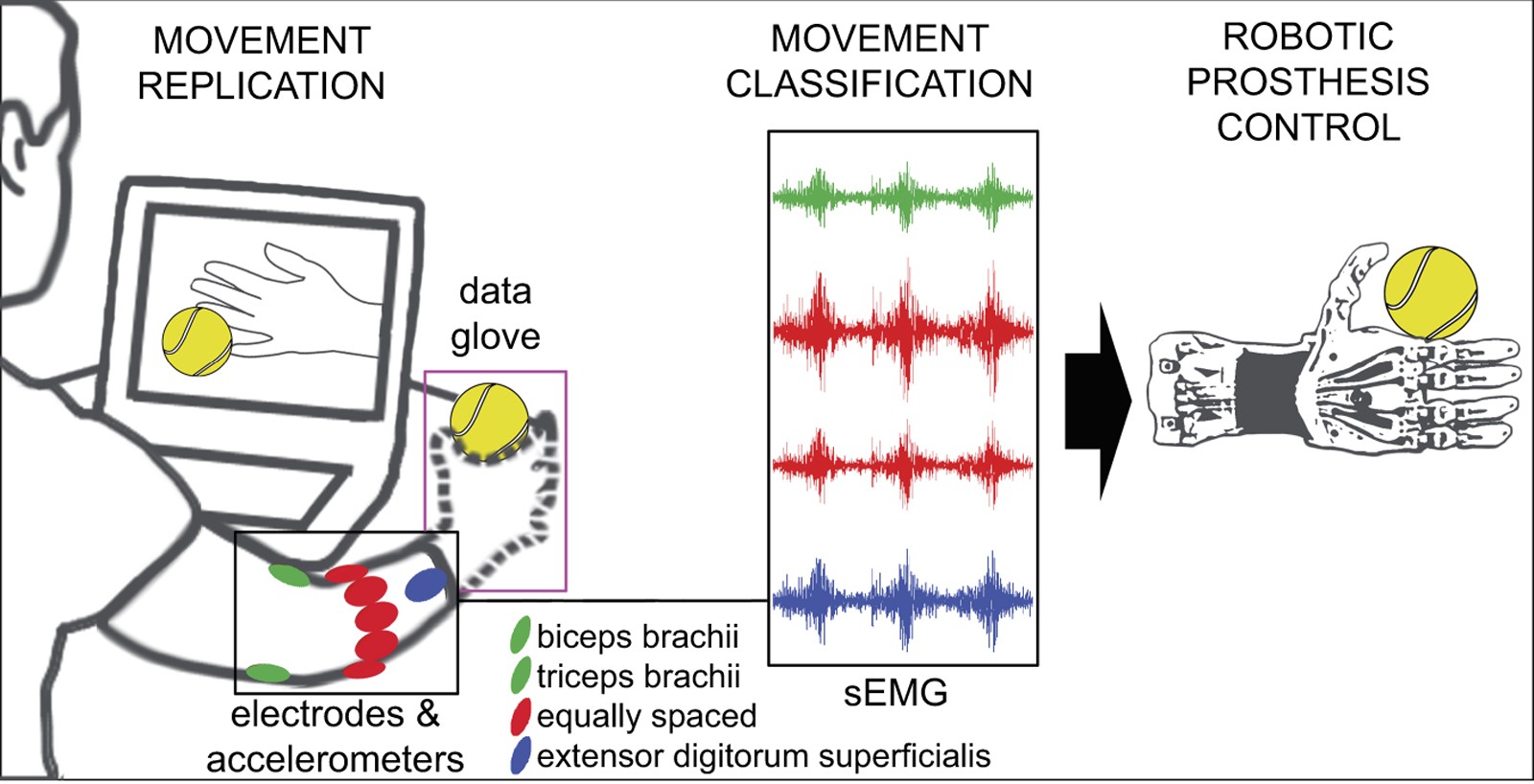
EMG signals reflect the electrical potentials produced by muscle cells when they are electrically or neurologically activated. They are acquired either non-invasively through surface electrodes or invasively via needle electrodes. Surface electromyography (sEMG) typically involves electrodes placed on the skin, whereas needle electromyography (nEMG) involves inserting electrodes directly into muscle tissue. Each method has its advantages: surface EMG is preferred for its safety and ease of use, while needle EMG can provide a more precise and deeper insight into the muscle’s activity.
The raw EMG signal contains a wealth of information yet is often rife with noise and artifacts due to movement, electrical interference, and inherent biological variability. Accurate classification depends on effective extraction of relevant features and noise reduction. This is where AI becomes transformative.
The Process of EMG Signal Classification with AI
1. Data Acquisition and Preprocessing
The first step in EMG signal classification is data acquisition. Sensors record the EMG signals while subjects perform various physical activities or specific hand gestures. However, raw data is challenging to work with due to external noise. Therefore, it requires comprehensive preprocessing, including:
Signal Filtering
Signal filtering is applied to remove unwanted artifacts and frequencies. Techniques such as lowpass, highpass, and notch filters are used to eliminate noise. This step is essential, as the fidelity of the subsequent analysis largely depends on the clarity of the signal.
Data Normalization
Normalization methods, like Z-score normalization, align the magnitudes of EMG signals from different subjects, aiding in consistent performance across varying conditions.
Windowing
Dividing the signal into overlapping windows helps in capturing the temporal dynamics of muscle activations, which is crucial for time-series analysis.
2. Feature Extraction and Dimensionality Reduction
Once the data is preprocessed, the next step is to extract meaningful features. Feature extraction transforms raw signals into statistical and time-domain characteristics that can be easily analyzed. Common features include:
- Mean Absolute Value (MAV): Represents the average muscle activation level.
- Waveform Length (WL): Captures the complexity of the signal over time.
- Zero Crossing (ZC): Reflects the frequency of muscle contractions.
- Slope Sign Changes (SSC): Indicates rapid fluctuations in the EMG signal.
- Root Mean Square (RMS): Provides a measure of signal amplitude that is sensitive to outliers.
In addition to the above, advanced feature extraction methods, such as the wavelet transform, enhance the detection of transient signal characteristics. Dimensionality reduction techniques such as Linear Discriminant Analysis (LDA) and Principal Component Analysis (PCA) are then used to refine the features. These techniques reduce computational complexity and boost the discriminative power of the model by eliminating redundant information.
3. AI Techniques for Classifying EMG Signals
AI-driven EMG classification leverages both traditional machine learning and deep learning models:
Machine Learning Approaches
Machine learning models rely on carefully engineered features:
- Support Vector Machines (SVM): Often used due to their robustness in handling high-dimensional datasets, SVMs separate classes effectively by finding optimized hyperplanes.
- Linear Discriminant Analysis (LDA): Minimizes class variance and maximizes class separability, making it especially suitable for EMG signal classification.
- K-Nearest Neighbors (KNN): Uses the distance between feature vectors and is intuitive in its classification approach.
Deep Learning Models
Deep learning models provide the advantage of automatic feature extraction from raw EMG data:
- Convolutional Neural Networks (CNNs): Typically used for images, CNNs can analyze EMG signals by converting them into time-frequency representations. Their architecture allows them to automatically extract spatial features without explicit manual feature extraction.
- Recurrent Neural Networks (RNNs) and LSTM Networks: Designed to handle sequential data, RNNs such as LSTM capture temporal dependencies in EMG signals. They are highly efficient in real-time classification tasks, which is vital for applications like prosthetic control.
- Hybrid CNN-RNN Models: These hybrid architectures integrate the strengths of both CNNs and RNNs. By combining spatial and temporal analysis, hybrid models have achieved superior performance in classifying complex and abnormal EMG patterns.
4. Integration and Classification
The final step involves training classification models on the extracted features. The training process involves several stages:
- Model Training: AI models are trained using labeled datasets that include various muscle movements and gestures. This training requires large, comprehensive datasets to enable the models to generalize well across different subjects and conditions.
- Validation and Testing: After training, the models undergo validation using separate datasets to ensure their accuracy and efficiency. Performance metrics like accuracy, sensitivity, and specificity are computed to evaluate the models.
- Deployment: For real-time applications, especially in prosthetic control or rehabilitation devices, the trained models are deployed into hardware or edge devices. This deployment often involves optimization for faster processing and lower computational demands.
Applications of AI-Based EMG Signal Classification
Prosthetic Control
One of the most groundbreaking applications of EMG signal classification is in the domain of prosthetic control. By accurately decoding muscle signals, AI models enable intuitive and responsive control of robotic limbs. Users can move a prosthesis with a level of precision that closely mimics natural limb movement, significantly improving their quality of life. Furthermore, innovations like 3D printed prostheses integrated with lightweight AI systems have shown promise in transforming prosthetic technology, offering cost-effective and custom-fitted solutions.
Neuromuscular Disorder Diagnosis
In clinical settings, EMG signal classification aids in diagnosing neuromuscular disorders. Traditional diagnostics require extensive manual examination by experts. However, AI-driven analysis can automate this process, improving both speed and accuracy. Sophisticated algorithms analyze needle EMG signals to detect subtle patterns associated with disorders such as myopathy or neuropathy. Although current AI models are still undergoing refinement to achieve full clinical validation, their ability to provide early diagnostic insights holds significant promise for future healthcare implementations.
Rehabilitation and Human-Computer Interaction (HCI)
EMG signal classification finds vital applications in rehabilitation. By monitoring muscle activity in real time, therapists can gain detailed insights into the recovery process and adjust exercise regimens accordingly. Similarly, EMG-based systems allow for touchless control of computers and other devices, enhancing human-machine interaction for people with mobility impairments. This technology not only extends functional capabilities but also opens new paradigms in interface design and accessibility.
Other Emerging Applications
Beyond the clinical and assistive domains, advanced EMG signal classification supports the control of robotic systems and exoskeletons, enabling enhanced performance in industrial environments and augmented human capabilities. These applications underline the vast potential of AI in diverse fields.
Case Study: Comparative Overview of AI Models
To illustrate the performance of various AI models in classifying EMG signals, consider the following table summarizing key aspects:
| Model Type | Strengths | Ideal Applications |
|---|---|---|
| Support Vector Machines (SVM) | High accuracy with engineered features, robust in high-dimensional spaces. | Prosthetic control, preliminary diagnostics. |
| Convolutional Neural Networks (CNNs) | Automatic feature extraction from time-frequency representations. | Gesture recognition, image-based signal representations. |
| Recurrent Neural Networks (RNNs)/LSTM | Excellent temporal sequence analysis, real-time performance. | Real-time control systems and sequential data classification. |
| Hybrid CNN-RNN Models | Combines spatial and temporal analysis for superior performance. | Complex gesture recognition and abnormal pattern classification. |
Challenges and Future Directions
Even with significant advances, the application of AI in EMG signal classification is accompanied by several challenges. A primary concern is the variability and noise inherent in EMG signals, which can drastically affect model performance if not mitigated effectively through careful preprocessing and robust design. Another challenge is the constant need for large, high-quality datasets that capture the subtleties of muscle activity across diverse populations and conditions.
Real-Time Processing and Hardware Integration
Real-time applications such as prosthetic control require AI models that not only achieve high accuracy but also operate with minimal delay. Research is focused on optimizing neural networks for deployment on edge devices, where computational resources are limited. Lightweight architectures and model compression techniques are being explored to ensure rapid processing without compromising precision.
Standardization and Clinical Implementation
For AI-based diagnostics in neuromuscular disorders to become a clinical standard, further work in validating models across diverse datasets is necessary. Standardizing preprocessing methods and feature selection protocols can contribute significantly to developing robust, widely applicable models. Collaboration among research institutions and clinical centers is vital for pooling data and aligning standards.
Future research directions include enhancing hybrid AI models, developing efficient data augmentation techniques, and integrating multi-modal signals (combining EMG with other biosignals) to further improve classification reliability. These innovations promise to push the boundaries of what's possible in both clinical diagnostics and assistive device control.
Conclusion
The classification of EMG signals with AI is a rapidly evolving field that blends sophisticated data processing techniques with cutting-edge machine learning and deep learning models. From initial data acquisition and noise reduction to advanced feature extraction and classification, every step is crucial in decoding the complex patterns embedded within EMG signals. Applications spanning prosthetic control, neuromuscular disorder diagnostics, rehabilitation, and human-computer interaction demonstrate the profound impact of these innovations on both medical and technological landscapes.
As research continues to refine these AI methods, we can expect further improvements in accuracy, real-time applicability, and overall system robustness. The move toward lightweight networks and effective model standardization will pave the way for their integration into clinical practices and everyday assistive technologies, ultimately enhancing the quality of life for many individuals. The future of EMG signal classification with AI is promising, with emerging technologies set to unlock even more potential in harnessing the power of muscle activity data.
References
- Machine Learning-Based Feature Extraction and Classification of EMG Signals for Intuitive Prosthetic Control - MDPI
- Real-Time EMG Signal Classification via Recurrent Neural Networks - DeepAI
-
A Deep Learning Model for Automated Classification of Abnormal EMG Signals - PMC
- Classify Arm Motions Using EMG Signals and Deep Learning - MathWorks
- Electromyogram (EMG) Signal Classification Based on Light-Weight AI Models for HCI - MDPI
Recommended
Last updated February 25, 2025