
Exploring the Playful and Expressive World of Emoticons
A deep dive into how symbols and punctuation shape digital conversation
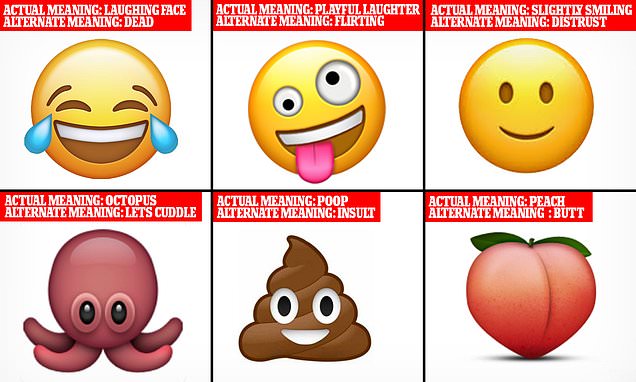
Highlights of Understanding Emoticons and Symbols
- Multiple Question Marks: Denote confusion, curiosity, or the need for clarification.
- Winking Face Emoticon (;): Adds a playful, teasing, or even flirtatious tone to the message.
- Combined Expression: The merged usage of these symbols creates an engaging and layered communication style, balancing questioning with a hint of humor.
Understanding the Components
The Role of Punctuation in Digital Language
In texting and online communication, punctuation is not merely a tool to end sentences but also a key element that adds emotional context. When multiple question marks are used, they serve as a signal from the sender that there is uncertainty or a request for clarification on the subject at hand. For instance, typing "?????" can imply that the sender is puzzled by a statement, looking for more information, or wanting to challenge something that was said.
How Question Marks Enhance Tone
Question marks in digital conversation function similarly to body language in face-to-face communication. They provide cues about the sender's state of mind, suggesting curiosity, disbelief, or even mild irritation, depending on the context. Additionally, when used in sequences, they underscore the intensity of the inquiry. In many instances, such punctuation urges the recipient to pay closer attention to the underlying tone or emotion behind the message.
The Winking Emoticon: Playful Nuance in Communication
The winking emoticon, represented by the symbol ; followed by a closing parenthesis ), holds a special place in digital interactions. This emoticon is recognized universally for its ability to inject playfulness or flirtation into a message. It hints at an underlying subtext, suggesting that the sender might be conveying a hidden meaning, a joke, or an inside reference. In many ways, it softens the message, balancing what might otherwise be perceived as blunt or overly inquisitive.
Subtle Signals and Nuances
The essence of the winking emoticon lies in its ability to communicate subtle signals that are often challenging to express through words. When interlaced with multiple question marks, the emoticon transforms what could be a straightforward inquiry into a complex, layered message. The implicit humor or flirtation suggested by the wink provides a context that encourages the recipient to interpret the message in a lighter, more engaging manner.
The Interplay of Emoticons and Punctuation in Digital Messaging
Combining Symbols to Convey Multiple Layers of Meaning
Digital communication has evolved to support communication beyond just text; symbols and emoticons now play a key role in conveying emotion, nuance, and intent. The combination "????? ;)" is a prime example of how two distinct elements—multiple question marks and a winking emoticon—can be merged to create a message that carries a multifaceted meaning. The string of question marks questions the state or clarity of a situation, while the winking face introduces a playful and assured-to-be-interpretative element.
Multi-dimensional Communication
When these symbols are used together, the sender is not merely seeking clarification but is also inviting a response that acknowledges the playful nature of the conversation. It is as if the sender is simultaneously saying, "I am curious, and I find this amusing." This duality is critical in digital conversation, especially in informal settings where tone can often be misconstrued. The subtle use of a wink can prevent misunderstandings that might have arisen from an otherwise ambiguous message.
Context-Dependent Interpretations
The way emoticons and punctuation are interpreted largely depends on the context in which they are used. Different scenarios, such as romantic messaging, friendly banter, or even light sarcasm, can influence how these symbols are perceived. For example, a combination like "????? ;)" in a casual conversation among friends might be seen as a humorous way to ask for an explanation or clarification. Conversely, in a more formal setting, such usage might be misinterpreted if one is unaware of the sender's typical communication style.
Cultural and Social Impact
The widespread adoption of emoticons and emojis has also led to a new layer of cultural and social influence in how messages are conveyed. People have now adapted their written communication to incorporate symbols that represent emotions, making conversations more expressive. What might have been a plain text message can now be rich in emotional context simply by adding a few well-chosen symbols. The playful combination "????? ;)" epitomizes this evolution in digital language, showing how visual cues are intertwined with text to enhance understanding.
Practical Examples and Detailed Analysis
A Closer Examination of the Message "????? ;)"
Now, let’s explore a deeper breakdown of the message "????? ;)". Each component of this message serves a specific role:
| Symbol | Interpretation | Typical Context |
|---|---|---|
| ????? |
Conveys confusion or inquiry. Emphasizes the intensity of questioning. |
Used when the sender is uncertain or needs further explanation. |
| ; |
Represents a winking expression. |
Indicates playfulness, teasing, or flirtation within the conversation. |
| ) |
Completes the winking emoticon, reinforcing its playful meaning. |
Used in conjunction with the semicolon to signal humor or a light-hearted twist. |
As seen in the table, each segment of the emoticon string combines to create a balanced query filled with both a request for clarification and a playful subtext. This combination is particularly potent in digital conversations because it allows the sender to convey uncertainty without losing the lighthearted tone.
Evolution of Digital Communication Symbols
The evolution of digital communication has been significantly influenced by the rise of symbols, emoticons, and emojis. With advancements in technology, people have developed a language of symbols that transcends linguistic barriers. The emoticon ";)” predates many modern emojis, yet it remains relevant because of its simplicity and effectiveness in conveying nuanced emotions.
From Text to Visual Language
Before the widespread use of images in digital messaging, punctuation marks and combinations thereof were the primary means to inject personality into a text. Over time, as digital interfaces became more sophisticated, these simple symbols evolved into a rich set of emojis and emoticons that can express a wide range of emotions and ideas. Despite this evolution, traditional emoticons continue to be recognized and valued for their historical significance and minimalist style.
Impact on Communication Efficiency
One of the key impacts of using symbols like "????? ;)" is the improvement in communication efficiency. These symbols allow users to convey complex emotions or intents briefly, without the need for long-winded explanations. They help in reducing misunderstandings by providing non-verbal cues that are easily recognizable, thereby strengthening the bond between the sender and the recipient.
Sociolinguistic Implications and Broader Perspectives
The Role of Emoticons in Social Interaction
Emoticons have become a cornerstone in the modern lexicon of digital communication. Beyond their basic functions, they shape the way individuals interact by adding personality and emotional depth to textual exchanges. The emoticon "????? ;)" specifically represents the fusion of inquiry and humor—a combination that signifies both openness to dialogue and a flair for playful expression.
Influence on Digital Etiquette
The integration of emoticons into everyday text has also influenced digital etiquette. Their use can soften criticisms, inject levity into serious discussions, or even serve as a diplomatic tool in situations where direct confrontation might lead to conflict. In many online communities, the proper use of emoticons is seen as a mark of emotional intelligence and awareness of the subtleties of digital communication.
Bridging Cultural Gaps
In a globalized world, where language barriers often hinder smooth communication, emoticons and emojis serve as universal symbols that transcend cultural differences. Despite variations in interpretation, the general principles behind symbols like "????? ;)" are widely understood, making them an effective tool for cross-cultural exchange. Their visual nature allows people from different linguistic backgrounds to connect and communicate their emotions with ease.
Practical Usage and Best Practices
Optimizing Digital Communication with Emoticons
For those seeking to improve their digital communication skills, understanding the effective use of emoticons is crucial. When using combinations like "????? ;)", it is important to consider both the audience and the context. Using such symbols in friendly chats or informal emails can help convey your tone more accurately, ensuring your message comes across as intended.
Tips for Effective Use
- Context is Key: Always consider the context before using a playful emoticon. What works well in a casual conversation might not be appropriate in professional settings.
- Balance with Text: Ensure that the emoticons complement your text rather than replace it entirely. They should serve as additional cues to your message.
- Be Mindful of Overuse: While emoticons help convey emotion, excessive use might clutter your message and dilute its meaning.
- Know Your Audience: Understanding the preferences of your conversation partner is essential. Some individuals might appreciate playful symbols, while others might prefer clear and straightforward text.
Examples in Everyday Conversations
Let’s consider a few scenarios where a combination like "????? ;)" might be used:
- When a friend sends a cryptic message, you might reply with "????? ;)" to indicate that you are both curious and amused, prompting further clarification in a light-hearted manner.
- In a text exchange where a statement seems both confusing and intriguing, the emoticon can help invite the sender to explain their remark in a more engaging way.
- In cases where sarcasm or gentle teasing is intended, this combination can soften what might otherwise be perceived as a blunt remark, steering the conversation into a more humorous direction.
Interactive Elements and Additional Insights
Understanding Through Visual Representation
Below is a visual diagram that further breaks down the emoticon combination into its components and their meanings:
| Component | Meaning | Usage Note |
|---|---|---|
| ????? |
Query or confusion, indicating that the sender has questions or doubts. |
Effective in indicating that the sender is seeking more details. |
| ; |
A winking semicolon that represents a playful tone. |
Used to signal that there is a humorous or teasing subtext. |
| ) |
Completes the winking emoticon, finalizing the tone. |
Ensures that the message is interpreted as playful rather than stern. |
This diagram simplifies the understanding of how each part plays a role in the overall meaning of the emoticon string. It helps users appreciate that even simple punctuation can convey a rich, multi-layered message.
The Broader Impact on Digital Literacy
The incorporation of symbols like "????? ;)" into everyday language is reflective of the broader trend toward visual literacy in digital communication. As interactions increasingly occur online, the ability to decode these signals has become essential. Emoticons are a bridge—merging traditional text with modern visual cues—to enhance clarity, emotion, and tone in a way that pure text sometimes cannot.
Moreover, the creative use of such symbols nurtures a dynamic form of digital expression that keeps the conversation vibrant and engaging. This evolution is not simply about aesthetics; it is integral to how we understand each other in the digital age.
References
- List of Emoticons - Wikipedia
- Text Message Symbols - WonderMomWannabe
- Emoticon Meanings - Quora
- Emoticon Insights - YourDictionary
- Symbol Definition - Cambridge Dictionary
- Emoji Meanings - EmojiMeanings.net
- Interpreting Text Symbols - Yahoo
- List of Emoji Symbols - EmojiMeanings
- General Information - Wikipedia
- Digital Communication Trends - Internet Live Stats
Recommended Queries for Deeper Insights
Last updated March 2, 2025