
Beyond Movement: The Deep Wellspring of Emotional Intelligence in Indian Classical Dance
Exploring how ancient art forms cultivate profound emotional awareness and regulation in professional dancers.
Highlights: Key Insights into EI and Indian Classical Dance
- Navarasas as Foundation: The mastery and expression of the nine core emotions (Navarasas) are central to Indian classical dance, inherently demanding and cultivating high emotional intelligence.
- Enhanced EI Capabilities: Qualitative research indicates professional dancers exhibit heightened self-awareness, empathy, emotion regulation, and emotional expressivity compared to non-dancers.
- Holistic Well-being: The disciplined practice and expressive nature of these dance forms are strongly linked to improved psychological well-being, stress resilience, and overall quality of life for performers.
The Cultural-Psychological Tapestry: EI in Indian Classical Dance
Indian classical dance forms, encompassing styles like Bharatanatyam, Kathak, Odissi, Kuchipudi, Kathakali, Mohiniyattam, Manipuri, and Sattriya, are far more than physical disciplines. They are intricate systems of storytelling and emotional expression deeply rooted in Indian culture and spirituality. At the heart of this expressive power lies a profound connection to emotional intelligence (EI) – the capacity to perceive, understand, manage, and utilize emotions effectively.
The Language of Emotions: Navarasas and Abhinaya
A cornerstone of Indian classical dance is the concept of Navarasas, the nine fundamental emotions or aesthetic flavors:
- Shringara: Love, Beauty
- Hasya: Laughter, Mirth
- Karuna: Sorrow, Compassion
- Raudra: Anger, Fury
- Veera: Heroism, Courage
- Bhayanaka: Fear, Terror
- Bibhatsa: Disgust, Aversion
- Adbhuta: Wonder, Amazement
- Shanta: Peace, Tranquility
Dancers utilize Abhinaya (the art of expression) – combining intricate facial expressions (Mukha Abhinaya), hand gestures (Hasta Mudras), body movements (Angika Abhinaya), and costume/makeup (Aharya Abhinaya) – to convey these Navarasas and complex narratives. This requires not just technical proficiency but a deep internal understanding and ability to embody diverse emotional states authentically. Qualitative studies emphasize that engaging with Navarasas acts as a powerful training ground for emotional recognition and regulation, enhancing the dancer's overall EI.
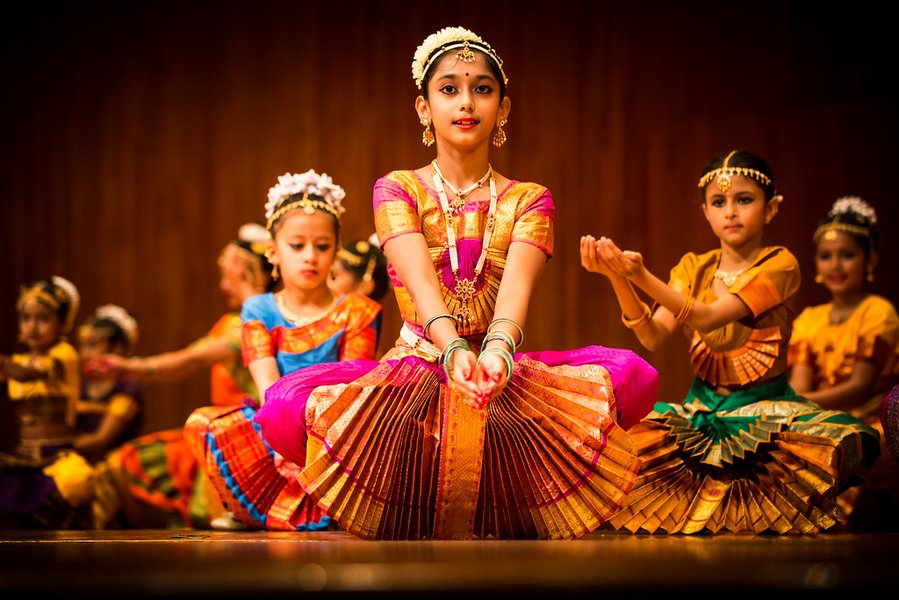
An Indian classical dancer performing, showcasing intricate gestures and expressions central to conveying emotion.
Unpacking Emotional Intelligence in Dancers: Qualitative Insights
While a singular, dedicated meta-analysis focusing solely on qualitative research of EI in professional Indian classical dancers in India appears scarce, a synthesis of existing qualitative studies, interviews, and thematic analyses provides rich insights. Research consistently points towards enhanced emotional capabilities fostered by the rigorous training and performance demands of these art forms.
Enhanced Self-Awareness and Empathy
Recognizing Inner States and Others' Feelings
Qualitative inquiries reveal that the process of embodying different characters and emotions fosters heightened self-awareness. Dancers report a greater ability to recognize and understand their own emotional states, a key component of EI. Furthermore, the need to interpret and portray diverse human experiences cultivates empathy – the capacity to understand and share the feelings of others. Studies comparing dancers and non-dancers often highlight superior performance in empathy-related measures among dancers.
Mastery of Emotion Regulation
Controlling and Channeling Emotions
Indian classical dance demands precise control over emotional expression. Dancers must not only access specific emotions but also modulate their intensity and transition smoothly between them, often portraying complex emotional arcs within a single performance. Qualitative data suggests this constant practice translates into enhanced emotion regulation skills applicable both on and off stage. Dancers develop strategies to manage performance anxiety and maintain emotional equilibrium, contributing to their psychological resilience.
The Role of Training and Experience
Cultivating EI Over Time
Research indicates a positive correlation between the duration of dance training and levels of emotional intelligence and psychological well-being. Studies suggest that dancers with extensive training (e.g., over 10 years) exhibit significantly higher EI traits compared to those with less experience. This underscores the developmental aspect of EI within the context of sustained engagement with Indian classical dance.

An Odissi performance, highlighting the grace and expressive potential of Indian classical dance forms.
Comparing EI: Dancers vs. Non-Dancers
Comparative studies, often employing both qualitative interviews and quantitative measures, provide valuable context for understanding the unique EI profile of Indian classical dancers. The table below summarizes typical findings from such research, highlighting areas where dancers often demonstrate enhanced capabilities.
| Emotional Intelligence Aspect | Professional Indian Classical Dancers (General Findings) | Non-Dancer Comparison Group (General Findings) |
|---|---|---|
| Self-Awareness | Generally higher; enhanced ability to recognize own emotions due to constant practice of embodying feelings. | Baseline levels; may vary widely based on individual factors. |
| Empathy | Often significantly higher; developed through interpreting and portraying diverse characters and emotions. | Baseline levels; may vary. |
| Emotion Regulation | Often higher; honed through the need for controlled emotional expression and managing performance demands. | Baseline levels; may vary. |
| Emotional Expressivity | Significantly higher and more nuanced; core requirement of the art form (Abhinaya). | Varies greatly; typically less developed in terms of controlled, nuanced expression. |
| Social Skills | May be enhanced due to improved empathy and emotional understanding, facilitating better interpersonal connections. | Baseline levels; variable. |
| Motivation / Discipline | Typically very high due to the demands of rigorous, long-term training. | Highly variable. |
Note: This table represents generalized findings from comparative studies and individual results can vary.
Visualizing Key EI Dimensions in Dancers
To illustrate the potential differences in emotional intelligence profiles, the radar chart below presents a hypothetical comparison between professional Indian classical dancers and the general population across several key EI dimensions. Based on synthesized research findings, dancers are depicted as potentially having more developed capabilities in areas directly cultivated by their art form.
This chart visually represents the potential enhancement of specific EI facets through dedicated classical dance practice, particularly in areas like emotional expression, empathy, and regulation, which are explicitly trained and refined within these art forms.
The Interplay of Culture, Passion, and Well-being
Cultural Context and the Guru-Shishya Tradition
The development of EI in Indian classical dancers is deeply embedded within its cultural context. The traditional Guru-Shishya Parampara (teacher-disciple relationship) often plays a significant role. This relationship typically involves close mentorship that extends beyond technical instruction to encompass emotional guidance, fostering values like discipline, respect, and dedication (Sradha). Qualitative studies suggest this relational aspect enhances emotional maturity and interpersonal skills.
Passion, Flow States, and Psychological Health
Research explores the deep passion dancers feel for their art. This passion, when integrated with emotional intelligence, becomes a powerful driver for dedication and performance excellence. Qualitative inquiries describe dancers experiencing 'flow states' – moments of complete absorption and peak performance – which are linked to positive psychological well-being. The disciplined practice and expressive outlet provided by dance are associated with reduced stress, lower anxiety levels, improved self-esteem, and overall better mental health outcomes for performers.
Therapeutic Applications: Dance as Movement Therapy
The inherent connection between movement, emotion, and well-being in Indian classical dance has led to explorations of its use in Dance Movement Therapy (DMT). Based on the principle that the mind and body are interconnected, DMT utilizes movement to promote emotional, social, cognitive, and physical integration. Studies and reviews suggest that incorporating elements of Indian classical dance, particularly the focus on Abhinaya and rhythmic patterns, can be effective in therapeutic settings for improving emotional regulation, stress resilience, and self-awareness.
Storytelling Through Movement: An Embodied Art
Indian classical dance is fundamentally a narrative art form. Dancers become storytellers, using their bodies, expressions, and gestures to convey complex myths, legends, and human experiences. This requires a deep empathetic connection to the characters and emotions being portrayed. The following video explores how Bharatanatyam, one of the major Indian classical dance forms, serves as a powerful medium for empathic storytelling, directly illustrating the connection between dance, emotion, and communication.
TEDx Talk: Aishwarya Ravindran discusses storytelling and empathy through Bharatanatyam.
As demonstrated in the video, the ability to tell stories effectively through dance relies heavily on the performer's emotional intelligence – their capacity to understand, embody, and communicate the emotional core of the narrative to the audience.
Mapping the Landscape: EI in Indian Classical Dance
The relationship between emotional intelligence and Indian classical dance is multifaceted, involving artistic technique, cultural tradition, psychological processes, and personal development. The mindmap below provides a visual overview of the key concepts and connections explored in the research.
in Professional
Indian Classical Dancers"] id1["Core Dance Elements"] id1a["Navarasas (Nine Emotions)
Shringara, Hasya, Karuna, etc."] id1b["Abhinaya (Expression)
Facial, Gestural, Body"] id1c["Technical Skill & Discipline"] id2["Enhanced EI Components"] id2a["Self-Awareness
Recognizing own emotions"] id2b["Empathy
Understanding others' emotions"] id2c["Emotion Regulation
Managing & controlling expression"] id2d["Emotional Expressivity
Nuanced portrayal"] id2e["Social Skills"] id3["Contributing Factors"] id3a["Years of Training & Experience"] id3b["Cultural Context
Guru-Shishya Parampara"] id3c["Passion & Motivation"] id4["Outcomes & Benefits"] id4a["Psychological Well-being
Reduced stress, anxiety"] id4b["Improved Self-Esteem"] id4c["Enhanced Quality of Life"] id4d["Therapeutic Potential (DMT)"] id4e["Performance Excellence"] id5["Research Landscape"] id5a["Qualitative Methods
Interviews, Thematic Analysis"] id5b["Comparative Studies
Dancers vs. Non-Dancers"] id5c["Systematic Reviews (Related Areas)"] id5d["Lack of Specific Meta-Analysis"] id5e["Future Research Needs"]
This mindmap illustrates how the core elements of Indian classical dance directly contribute to the development of specific EI components, influenced by training and cultural factors, ultimately leading to various positive outcomes for the dancers, while also highlighting the current state of research in this area.
Research Landscape: Meta-Analysis and Future Directions
The State of Meta-Analytical Qualitative Research
While the user query specifically asked for meta-analytical qualitative research, the available literature indicates that such a specific study – one that synthesizes findings *exclusively* from qualitative studies focused *only* on the EI of professional Indian classical dancers *in India* – is not readily available or may not have been conducted yet. However, there is a growing body of relevant research:
- Individual Qualitative Studies: Numerous studies employ qualitative methods (like interviews and thematic analysis) to explore the experiences and EI-related aspects of Indian classical dancers.
- Quantitative & Comparative Studies: Research exists comparing EI traits, well-being, and other psychological variables between dancers and non-dancers, often using standardized scales alongside qualitative insights.
- Systematic Reviews & Meta-Analyses (Broader Scope): Reviews and meta-analyses have been conducted on the relationship between EI and dance more generally, or EI and sports performance, which provide context but don't focus solely on the specific demographic requested.
Therefore, the current understanding is built upon synthesizing findings from these related, though not perfectly matched, research efforts.
Identified Gaps and Potential Research Avenues
The existing research opens doors for future investigations:
- Dedicated Meta-Synthesis: A rigorous meta-synthesis of existing qualitative studies could provide deeper, aggregated insights specific to this group.
- Longitudinal Studies: Tracking the development of EI in dancers over the course of their training and careers would offer valuable developmental perspectives.
- Cross-Cultural Comparisons: Examining EI manifestations across different classical dance forms within India and comparing them with dancers from other cultural contexts could yield interesting findings.
- Neurophysiological Studies: Investigating the brain mechanisms underlying emotion processing and regulation in dancers could complement psychological research.
Frequently Asked Questions (FAQ)
What are Navarasas and why are they important for EI in dancers?
Navarasas are the nine fundamental emotions (Love, Laughter, Sorrow, Anger, Heroism, Fear, Disgust, Wonder, Peace) central to expression in Indian classical dance. They are crucial for EI because dancers must deeply understand, embody, and skillfully portray these varied emotions. This constant engagement cultivates emotional awareness (recognizing emotions in self and others), emotional regulation (managing the intensity and transition between emotions), and empathy (understanding the emotional states being portrayed).
Do Indian classical dancers generally have higher emotional intelligence than others?
Synthesized research, including comparative studies and qualitative inquiries, suggests that professional Indian classical dancers often exhibit higher levels of certain EI components compared to non-dancers. These typically include enhanced emotional awareness, empathy, emotional regulation, and particularly emotional expressivity, likely due to the specific demands of their art form which requires constant engagement with and portrayal of emotions.
Can practicing Indian classical dance improve my emotional intelligence?
Research indicates a positive correlation between training in Indian classical dance and enhanced EI traits and psychological well-being. The focus on emotional expression (Abhinaya), understanding Navarasas, discipline, and self-awareness inherent in the practice can contribute to developing emotional intelligence. While professional dancers undergo intensive, long-term training, engaging in the practice at any level may offer benefits for emotional development.
Is there a specific meta-analysis available on the emotional intelligence of Indian classical dancers?
Based on the available information, a dedicated meta-analysis focusing specifically on synthesizing *qualitative* research about the emotional intelligence of *professional Indian classical dancers in India* appears to be scarce or non-existent as a single published study. However, there are systematic reviews on dance and EI more broadly, meta-analyses related to performance or therapy, and numerous individual qualitative and quantitative studies whose findings can be synthesized to understand the topic, as presented in this response.
Recommended Further Exploration
- How do Navarasas influence emotion regulation skills in performers?
- What are the psychological benefits of long-term Indian classical dance training?
- Compare emotional intelligence levels across different classical dance forms like Bharatanatyam and Kathak.
- Explore the use of Indian classical dance techniques in modern dance movement therapy.
References
Last updated May 3, 2025