
Investigating Energy Transfers in a Small Generator and Hydroelectric Power
Detailed analysis of energy conversion principles from gravitational potential to electrical energy
Key Insights
- Gravitational Potential Energy Calculation: The energy stored in an elevated mass is given by the formula GPE = mgh, critical for understanding energy loss and conversion.
- Energy Loss Mechanisms: Not all potential energy converts to electrical energy due to inherent losses from friction, heat, and electrical resistance.
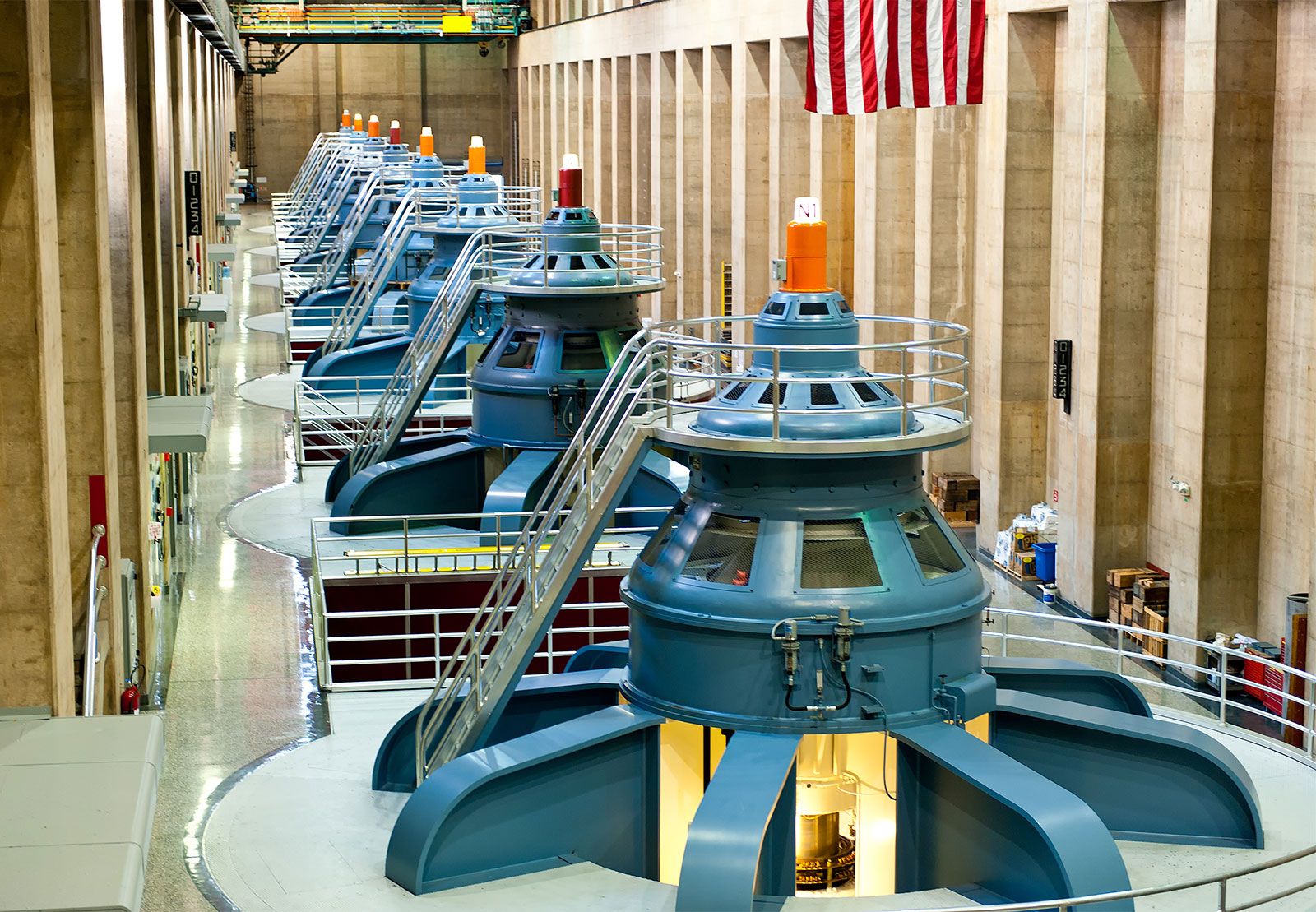
- Hydroelectric Energy Transfers: Large-scale water power generation involves converting gravitational potential energy to kinetic, then to mechanical, and finally into electrical energy.
Part (a): Analysis of the Small Generator Experiment
Overview of the Setup and Measurements
In this experiment, a student investigates how energy is transferred from gravitational potential energy (GPE) into electrical energy via a small generator. A mass is suspended from a string wound around the axle of the generator. As the mass falls due to gravity over a measured distance, the gravitational energy is partially converted into electrical energy, which lights a lamp. The provided experimental data includes:
- Height the mass falls: 0.61 m
- Mass of the object: 2.75 kg
- Time taken for the mass to fall: 1.3 s
- Average current in the circuit (lamp): 0.46 A
- Average voltage across the lamp: 12.7 V
(i) Equation Linking Gravitational Potential Energy, Mass, g, and Height
The gravitational potential energy (GPE) of an object is the energy it possesses due to its position in a gravitational field. The fundamental equation is given by:
GPE = mgh
where:
- m is the mass of the object (in kilograms),
- g is the acceleration due to gravity (approximately 9.8 m/s² under standard conditions), and
- h is the height through which the mass is moved (in meters).
(ii) Calculation of the Gravitational Potential Energy Lost by the Mass
The gravitational potential energy lost by the falling mass is calculated by substituting the experimental values into the formula:
Given: m = 2.75 kg, g = 9.8 m/s², and h = 0.61 m. Thus, the calculation proceeds as:
GPE = 2.75 kg × 9.8 m/s² × 0.61 m
When computing this:
- Multiplying 2.75 by 9.8 yields approximately 26.95,
- Then multiplying 26.95 by 0.61 gives a final GPE value of close to 16.4 Joules.
Therefore, the gravitational potential energy lost by the mass is approximately 16.4 J.
(iii) Explanation of Incomplete Energy Transfer to the Lamp
In any real-world energy conversion process, losses occur at various stages and prevent the full transfer of energy to the final useful form. In this generator experiment, only some of the gravitational potential energy is transmitted to the lamp because of:
Frictional Losses
As the mass falls, friction arises in the components of the generator, such as the bearings or the axle around which the string is wound. This friction converts a portion of the mechanical energy into thermal energy (heat), reducing the available energy for conversion to electrical energy.
Electrical Resistance
The connecting circuit, including wires and contacts, exhibits resistance. This resistance results in the dissipation of electrical energy as heat. Even though a generator converts mechanical energy into electrical energy through electromagnetic induction, some energy is lost due to the inherent resistance in these materials.
Generator Inefficiencies
No generator is 100% efficient. Mechanical imperfections, internal resistance, and imperfect magnetic coupling in the generator contribute to further losses. These inefficiencies mean that not all the energy from the falling mass is effectively converted from mechanical to electrical energy.
Other Energy Losses
Additional minor energy losses arise due to air resistance acting on the falling mass and even small amounts of energy might be converted into sound. Collectively, these factors ensure that only a fraction of the gravitational potential energy directly powers the lamp.
(iv) Calculation of the Energy Transferred to the Lamp
The energy received by the lamp is determined by calculating the work done on the circuit in terms of electrical energy. This energy is given by the product of the power (derived from voltage and current) and the time. The formula is:
Energy Transferred = Voltage (V) × Current (I) × Time (t)
With the experimental measurements provided: Voltage = 12.7 V, Current = 0.46 A, and Time = 1.3 s. Substituting these values:
Energy Transferred = 12.7 V × 0.46 A × 1.3 s
First, calculate the power: (12.7 V × 0.46 A) which equals about 5.84 W. Then multiply by the time:
Energy = 5.84 W × 1.3 s ≈ 7.59 J
Thus, the energy transferred to the lamp is approximately 7.59 Joules.
Part (b): Energy Transfers in Hydroelectric Power Generation
Overview
Hydroelectric power generation is one of the most efficient and widely used methods of harnessing renewable energy. It primarily converts the gravitational potential energy stored in water at a height into electrical energy. This conversion involves multiple stages, each characterized by specific energy transfers and transformations.
Step 1: Gravitational Potential Energy of Reservoir Water
Water stored in a reservoir behind a dam possesses significant gravitational potential energy. This energy is directly dependent on the mass of the water and the height difference between the reservoir and the lower elevation where the water is released. The higher the water level relative to the turbine, the greater the potential energy available.
This stored energy is a result of accumulated precipitation and river flows, making reservoirs natural repositories of gravitational energy waiting to be converted.
Step 2: Conversion to Kinetic Energy
When the water is released from the reservoir, it flows downwards through large channels or penstocks. During this descent, the gravitational potential energy is converted into kinetic energy—the energy of motion—as the water accelerates under gravity.
At this stage, the water’s velocity increases, and the kinetic energy becomes the dominant form of energy in the water stream.
Step 3: Conversion to Mechanical Energy
The fast-moving water then strikes the blades of a turbine. Here, the kinetic energy of the water is transferred to the turbine, causing it to rotate. This rotation is an expression of mechanical energy—the coordinated movement of the turbine's components.
The turbine blades are engineered to maximize the conversion of the water’s kinetic energy into rotational motion, which is the driver for the next stage of energy conversion.
Step 4: Conversion to Electrical Energy
The rotating turbine is connected to a generator. As the turbine spins, it mechanically drives the generator’s rotor, turning within a magnetic field. Through the process of electromagnetic induction, the mechanical energy of rotation is transformed into electrical energy. This process involves alternating current (AC) generated by the continuous movement of the rotor within the stator’s magnetic field.
Modern generators are designed to optimize this conversion process, ensuring that a large percentage of the initial gravitational potential energy is ultimately converted into electrical energy.
Step 5: Transmission and Distribution
The electrical energy generated by the hydroelectric plant is then transmitted via high-voltage power lines to a network of transformers and eventually distributed to residential, commercial, and industrial areas. At this stage, the electrical energy might be converted into other useful forms such as light, heat, or mechanical work.
Table: Summary of Energy Conversion Process in Hydroelectric Power Generation
| Stage | Energy Form | Description |
|---|---|---|
| 1. Reservoir | Gravitational Potential Energy | Water stored at a height possesses potential energy due to elevated position. |
| 2. Penstock | Kinetic Energy | Water accelerates and gains kinetic energy as it flows downwards. |
| 3. Turbine | Mechanical Energy | The moving water rotates turbine blades converting kinetic energy into mechanical energy. |
| 4. Generator | Electrical Energy | The turbine rotates a generator that converts mechanical energy into electrical energy via electromagnetic induction. |
| 5. Power Lines | Transmission Energy | Electrical energy is transmitted to end users after stepping down voltage levels. |
This chain of energy transformations highlights the efficiency and engineering behind modern hydroelectric power generation. Each stage is vital to ensure maximum energy yield and minimal losses.
Conclusion
In this comprehensive analysis, we began by understanding the basic equation of gravitational potential energy (GPE = mgh) and applied it to a small generator experiment where a mass falls and lights a lamp. The calculation of GPE loss, approximately 16.4 J, is contrasted with the energy actually transferred to the lamp, which is about 7.59 J. This noticeable difference demonstrates that real systems have energy losses due to friction, electrical resistance, and other inefficiencies. Our discussion also addressed the fundamental principles of hydroelectric power generation. In large-scale applications, water stored in reservoirs possesses gravitational potential energy, which transitions through several stages—kinetic and mechanical—before finally being converted into electrical energy using optimized turbine-generator systems. This sequential pattern of energy transformations underscores both the challenges of minimizing energy loss in small-scale experiments and the advantages of optimized large-scale energy systems.
The detailed evaluation of both scenarios illustrates the crucial roles of energy conversion principles in both experimental setups and practical applications. While laboratory experiments help illustrate fundamental physics concepts, technologies like hydroelectric power take full advantage of nature’s inherent energy resources by minimizing losses and maximizing conversion efficiency. Such comprehensive understanding is essential for advancing energy technology and engineering more sustainable solutions in the future.
References
- BBC Bitesize - Gravitational Potential Energy
- Study.com - Gravitational Potential Energy
- LibreTexts - Gravitational Potential Energy
- Department of Energy - How Hydropower Works
- National Geographic - Hydroelectric Energy
Recommended Queries
Last updated February 22, 2025