
Effective Heuristics in Engineering Decision Making
Streamlining Complex Choices for Optimal Engineering Outcomes
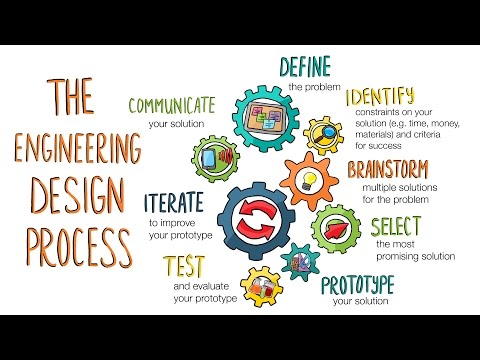
Key Takeaways
- Pareto Principle: Focus on the vital few factors that drive the majority of results to maximize efficiency.
- Divide and Conquer: Simplify complex problems by breaking them into manageable sub-problems.
- First Principles Thinking: Challenge assumptions by deconstructing problems to their fundamental truths and rebuilding innovative solutions.
Introduction
In the dynamic and multifaceted field of engineering, decision-making often involves navigating through uncertainty, complexity, and competing priorities. Heuristics, or experience-based rules of thumb, play a pivotal role in simplifying these complex decisions, enabling engineers to make informed and efficient choices without exhaustive analysis. This comprehensive guide delves into the most useful heuristics in engineering decision-making, exploring their applications, benefits, limitations, and best practices.
Core Heuristics in Engineering Decision Making
1. Pareto Principle (80/20 Rule)
The Pareto Principle asserts that approximately 80% of effects arise from 20% of causes. In engineering, this heuristic is instrumental in prioritizing tasks, identifying critical components, and optimizing system performance.
- Application: Engineers use the Pareto Principle to focus on the most impactful factors, such as identifying key failure modes in a system or prioritizing design elements that contribute significantly to performance.
- Example: In a manufacturing process, 20% of the processes might be responsible for 80% of defects. Addressing these critical processes can lead to significant quality improvements.
2. Satisficing
Coined by Herbert Simon, satisficing involves selecting the first adequate solution that meets predefined criteria rather than seeking the optimal solution.
- Application: This heuristic is particularly useful in scenarios with time or resource constraints, such as rapid prototyping or early-stage design, where exhaustive analysis is impractical.
- Example: Choosing a material that meets the minimum strength requirements for a component instead of conducting extensive testing to find the absolute best material.
3. Divide and Conquer
Divide and Conquer involves breaking down a complex problem into smaller, more manageable sub-problems.
- Application: Commonly used in systems and software engineering, this approach allows for independent analysis and optimization of each subsystem.
- Example: In designing a spacecraft, separate teams may handle propulsion, life support, and navigation systems independently before integrating them into the final design.
4. First Principles Thinking
First Principles Thinking entails deconstructing problems to their most fundamental truths and building solutions from the ground up.
- Application: Encourages innovation by challenging existing assumptions and exploring novel approaches.
- Example: Elon Musk applied first principles thinking to battery design, leading to the development of more efficient and cost-effective energy storage solutions.
5. Modularity
Modularity refers to designing systems as a collection of independent, interchangeable components or modules.
- Application: Facilitates easier troubleshooting, maintenance, and scalability by compartmentalizing system functions.
- Example: In software engineering, modularity allows developers to update or replace individual modules without affecting the entire system.
6. Analogies and Historical Data
Utilizing analogies and historical data involves leveraging past experiences and similar case studies to inform current decisions.
- Application: Helps predict outcomes, avoid previous mistakes, and apply proven solutions to new problems.
- Example: Applying design principles from a previously successful bridge project to a new bridge with similar requirements can expedite the design process.
7. Margin of Safety
The Margin of Safety heuristic incorporates a buffer or safety factor to account for uncertainties and potential variances in design parameters.
- Application: Ensures that structures or systems can withstand unexpected loads or stresses, enhancing reliability and safety.
- Example: Designing a bridge to support loads significantly higher than the maximum expected traffic weight to prevent structural failure.
8. Prototyping and Iterative Refinement
Prototyping involves creating preliminary models to test and refine concepts iteratively.
- Application: Enables engineers to gather feedback, identify issues, and make necessary adjustments before finalizing designs.
- Example: Developing multiple iterations of a drone prototype to refine aerodynamics and functionality based on test results.
9. Bias Avoidance and Cognitive Heuristics
Awareness and mitigation of cognitive biases, such as overconfidence or anchoring, are crucial for objective decision-making.
- Application: Enhances the reliability of decisions by recognizing and addressing potential biases that can skew judgment.
- Example: Implementing peer reviews and diverse team perspectives to counteract individual biases during the design process.
Application of Heuristics in Specific Engineering Domains
A. Storage Vessels
Heuristics guide the design and implementation of storage vessels to ensure safety, efficiency, and compliance with standards.
- Tank Orientation:
- Vertical tanks on legs for volumes less than 3.8 meters.
- Horizontal tanks on concrete supports for volumes between 3.8 and 38 meters.
- Vertical tanks on concrete pads for volumes exceeding 38 meters.
- Roof Design:
- Use floating or expansion roofs for liquids subject to breathing losses.
- Freeboard Specification:
- 15% freeboard below 1.9 cubic meters.
- 10% freeboard above 1.9 cubic meters.
B. Pump Selection
Heuristics assist in selecting appropriate pumps based on system requirements and performance criteria.
- Centrifugal Pumps:
- Opt for single-stage centrifugal pumps for flow rates ranging from 0.057 to 18.9 cubic meters per minute.
Benefits of Using Heuristics in Engineering
- Efficiency: Heuristics significantly reduce the time and effort required for decision-making by providing quick, actionable guidelines.
- Practicality: They offer practical solutions that can be readily implemented in real-world engineering scenarios, especially under constraints.
- Adaptability: Heuristics are versatile and can be applied to a wide range of problems, even when information is incomplete or uncertain.
- Facilitation of Innovation: By challenging existing assumptions and encouraging out-of-the-box thinking, heuristics foster innovative solutions.
- Risk Management: Incorporating safety margins and considering worst-case scenarios through heuristics enhances the reliability and safety of engineering designs.
Limitations and Challenges of Heuristics
- Cognitive Biases: Over-reliance on heuristics can lead to cognitive biases, such as confirmation bias or anchoring, which may distort judgment and decision-making.
- Suboptimal Solutions: Heuristics may yield "good enough" solutions that are not necessarily optimal, potentially leaving room for improvement.
- Context Dependency: The effectiveness of heuristics is highly dependent on the specific problem context and environmental factors, which can limit their applicability.
- Over-Simplicity: Simplified approaches might overlook critical nuances or complexities inherent in engineering problems, leading to incomplete or flawed solutions.
- Resistance to Change: Relying on familiar heuristics can stifle creativity and innovation, making it difficult to adopt novel or unconventional solutions.
Best Practices for Utilizing Heuristics in Engineering
-
Combine with Formal Analysis: Use heuristics as initial guidelines and complement them with detailed analyses for critical decisions to ensure robustness.
-
Regular Validation and Updating: Continuously validate heuristics against empirical data and update them to reflect evolving project requirements and technological advancements.
-
Awareness of Limitations: Recognize the boundaries and potential pitfalls of each heuristic to mitigate risks associated with their application.
-
Encourage Diverse Perspectives: Facilitate collaboration and input from multidisciplinary teams to counteract individual biases and enhance decision quality.
-
Iterative Application: Apply heuristics iteratively throughout the project lifecycle, allowing for refinement and adaptation as new information emerges.
Conclusion
Heuristics are indispensable tools in the arsenal of engineering decision-making. By providing structured, experience-based guidelines, they enable engineers to navigate complex problems efficiently and effectively. While they offer numerous benefits, including enhanced efficiency and adaptability, it is crucial to remain vigilant about their limitations, such as potential biases and the risk of suboptimal solutions. Employing best practices, such as combining heuristics with formal analysis and encouraging diverse perspectives, can mitigate these challenges and leverage heuristics to achieve superior engineering outcomes.
References
Last updated January 24, 2025