
Ace Your CTO Interview: A Strategic Preparation Guide for Engineering Managers
Leverage your management experience to impress the Chief Technology Officer and showcase your strategic potential.
As an Engineering Manager, interviewing with the Chief Technology Officer (CTO) is a significant step. It requires more than just demonstrating your team leadership and technical skills; it demands showcasing your strategic thinking and understanding of how technology drives the broader business. The CTO is evaluating your ability to not only manage engineers but also contribute to the company's technological vision and direction. This guide synthesizes key strategies to help you prepare thoroughly and confidently.
Essential Insights for Your CTO Interview Prep
- Strategic Alignment is Key: Be prepared to articulate how your team's work, projects, and technical decisions directly support the company's overall business objectives and technology strategy.
- Demonstrate Robust Leadership: Showcase your experience in building, motivating, and developing high-performing engineering teams, including specific examples of handling challenges and fostering growth.
- Balance Technical Depth with High-Level Vision: While your technical competence is assumed, emphasize your ability to think strategically about technology choices, architecture, scalability, and future trends.
Laying the Groundwork: Research and Context
Thorough preparation starts with understanding the environment you're stepping into. A CTO appreciates candidates who have done their homework and demonstrate genuine interest.
Deep Dive into the Company and its Technology
Understand the Business and Market
Investigate the company's business model, revenue streams, mission, and values. Understand its position within the industry, its main competitors, and the current market trends affecting it. How does technology serve as a differentiator or enabler for their business?
Analyze the Tech Landscape
Familiarize yourself with the company's current technology stack, major ongoing technical initiatives, and any significant challenges they might be facing (e.g., scaling issues, legacy systems, recent acquisitions). This knowledge allows you to tailor your examples and ask relevant questions.
Research the Interviewer: The CTO
Investigate Their Background and Focus
Use online resources like LinkedIn, company blogs, or conference talks to learn about the CTO's professional journey, areas of expertise, and potential focus areas (e.g., innovation, operational efficiency, team scaling). Understanding their priorities can help you anticipate the types of questions they might ask.
Seek Internal Perspectives (If Possible)
If you have contacts within the organization or spoke with other interviewers, gather insights about the CTO's leadership style, current priorities, and team dynamics. This can provide valuable context and help you build rapport.
Understand the CTO's High-Level Perspective
Recognize that a CTO typically operates at a strategic level, focusing on the long-term technological direction, budget, cross-functional alignment, and overall health of the engineering organization, rather than the day-to-day minutiae of specific projects. Frame your experiences through this lens.
Structuring Your Preparation: A Mindmap Overview
Visualizing your preparation plan can help ensure you cover all essential areas. This mindmap outlines the key steps to effectively prepare for your CTO interview:
(Tech Debt, Security)"] id3b4["Innovation & Future Trends"] id4["Prepare & Practice"] id4a["Anticipate Questions"] id4a1["Technical, Leadership,
Strategic, Behavioral"] id4b["Prepare Your Questions"] id4b1["Show Strategic Interest"] id4b2["Clarify Role & Expectations"] id4c["Practice Delivery"] id4c1["Mock Interviews"] id4c2["Clear Communication"] id4c3["Authenticity"] id5["Logistics & Mindset"] id5a["Resume/Portfolio Ready"] id5b["Confident & Conversational Approach"]
This mindmap serves as a checklist, guiding you through researching the context, preparing examples of your leadership, honing your technical and strategic arguments, and practicing your delivery.
Showcasing Your Engineering Leadership Prowess
As an Engineering Manager, your leadership capabilities are central. The CTO wants to understand how you build, guide, and grow effective engineering teams.
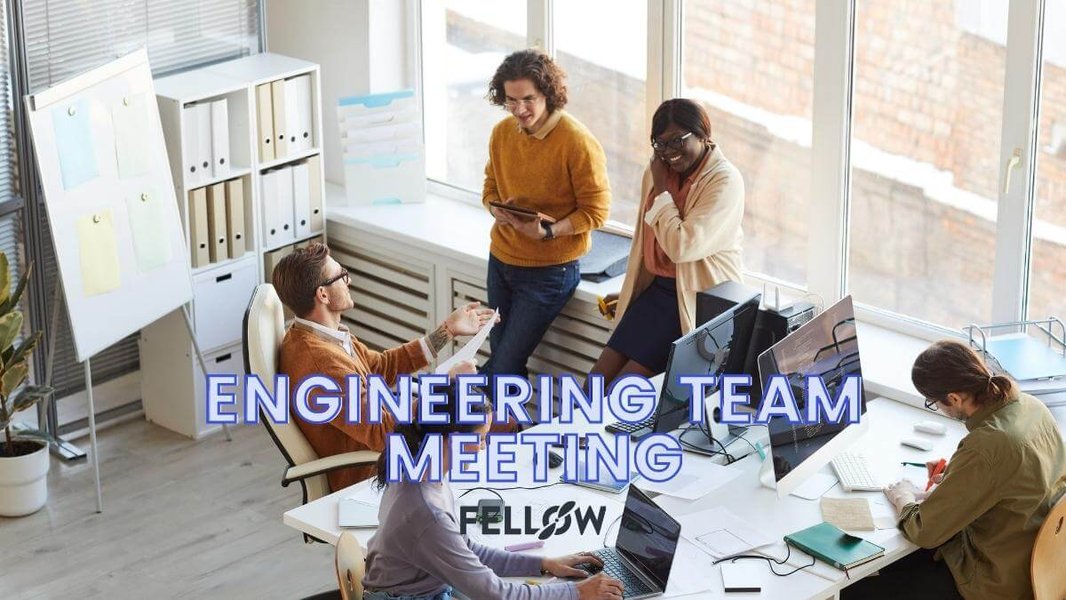
Effective leadership involves fostering collaboration and clear communication within the engineering team.
Articulate Your Management Philosophy
Be ready to discuss your approach to managing engineers. How do you foster a positive and productive environment? Prepare to talk about:
- Team Building and Motivation: Your strategies for attracting, hiring, and retaining talent. How do you motivate engineers and align them with team goals?
- Performance Management and Growth: How you handle performance reviews, provide feedback, manage underperformance, and support the professional development of your team members (e.g., through one-on-one meetings, mentorship).
- Conflict Resolution: Examples of how you've successfully navigated disagreements or conflicts within your team or between teams.
Demonstrate Impact with Concrete Examples
Abstract statements about leadership are less compelling than specific stories. Use the STAR method (Situation, Task, Action, Result) to structure your answers to behavioral questions:
- Situation: Describe the context of the challenge or project.
- Task: Explain your specific responsibility or goal.
- Action: Detail the steps you took to address the situation.
- Result: Quantify the outcome and impact of your actions. Highlight improvements in team velocity, product quality, system reliability, or process efficiency.
Prepare examples covering successful projects, challenging situations (like managing critical incidents or technical debt), impactful hiring decisions, and times you mentored team members.
Balancing Technical Depth and Strategic Vision
The CTO needs to be confident in your technical judgment and your ability to think beyond immediate implementation details.
Discussing Technical Foundations
While you might not face deep coding exercises, be prepared to discuss technical concepts at a higher level:
- System Design and Architecture: Discuss your experience with designing, building, or maintaining scalable, reliable, and maintainable systems. Be ready to talk about architectural trade-offs.
- Performance and Quality: Explain how you measure and improve system performance, reliability, and code quality within your teams.
- Technical Decision-Making: Describe your process for making technical decisions, evaluating new technologies, or managing technical risk.
Connecting Technology to Business Strategy
This is where you bridge your EM role with the CTO's perspective. Demonstrate that you understand how technology serves the business:
- Strategic Technology Choices: Discuss how you evaluate and advocate for technologies that align with long-term goals. How do you balance innovation with stability?
- Managing Risk: Explain your approach to managing technical debt, security vulnerabilities, and compliance requirements.
- Fostering Innovation: Talk about how you encourage experimentation and the adoption of new, relevant technologies within your teams.
- Staying Current: Show that you keep abreast of technological advancements and industry trends relevant to the company.
Visualizing Skill Focus: Engineering Manager vs. CTO Interview Expectations
This chart illustrates the subtle shift in emphasis required when interviewing with a CTO compared to typical day-to-day Engineering Manager responsibilities. While all areas are important, demonstrating strategic thinking, business acumen, and high-level communication becomes more critical.
Use this visualization to guide your preparation, ensuring you emphasize the strategic and communication aspects alongside your proven leadership and technical execution skills.
Contrasting Perspectives: Engineering Manager vs. CTO Focus
Understanding the difference in scope and priority between your role and the CTO's role is crucial for framing your answers effectively. This table highlights some key distinctions:
| Feature | Typical Engineering Manager Focus | CTO's Likely Interest |
|---|---|---|
| Timeline | Sprints, quarters, project deadlines | 1-5 year technology roadmap, long-term scalability |
| Scope | Team performance, specific projects/features | Overall tech architecture, cross-departmental alignment, budget |
| Goals | Delivery velocity, code quality, team morale, hiring | Business alignment, innovation, ROI, talent strategy, tech risk mitigation |
| Technology | Implementation details, tool proficiency, code reviews | Strategic tech choices, build vs. buy decisions, vendor management, platform stability |
| Communication | Team updates, stakeholder reports, incident communication | Board presentations, C-suite alignment, articulating tech vision, industry engagement |
| Problem Solving | Debugging code, resolving team blockers, improving processes | Addressing systemic issues, resolving organizational bottlenecks, navigating market shifts |
Keep these differing perspectives in mind as you formulate your responses, aiming to elevate your experiences to address the CTO's strategic concerns.
Practice, Prepare Questions, and Refine Your Delivery
Preparation is incomplete without practice and thoughtful consideration of the two-way nature of the interview.
Anticipate and Rehearse Potential Questions
Prepare for a mix of question types:
- Behavioral Questions: Use the STAR method for questions like "Tell me about a time you failed," "Describe how you handled a conflict," or "How did you lead a team through change?"
- Situational/Hypothetical Questions: "How would you handle a disagreement between two senior engineers?" or "What would you do if a critical project was falling behind schedule?"
- Technical Discussions: Be ready for high-level discussions on architecture, scalability, technology choices, or managing technical debt.
- Strategic Questions: "Where do you see technology in our industry heading?" "How would you align engineering priorities with shifting business goals?" "What's your vision for this team?"
Prepare Your Own Insightful Questions for the CTO
Asking thoughtful questions demonstrates your engagement, strategic thinking, and genuine interest. Prepare questions focused on:
- Technology Strategy and Vision: "What are the biggest technical challenges the company is currently facing?" "How do you see the engineering organization evolving in the next 1-3 years?" "What is your vision for innovation within engineering?"
- Team and Culture: "How does the engineering leadership team collaborate?" "What qualities do you value most in your engineering managers?" "How is success measured for this role and the team?"
- Role Expectations: "What would be the top priorities for this role in the first 6-12 months?" "How does this role interact with product and other departments?"
Prioritize your questions, as time may be limited.
Hone Your Communication and Delivery
- Practice Aloud: Rehearse your answers, especially your career narrative and key STAR examples. Consider mock interviews with peers or mentors.
- Be Authentic and Confident: While preparation is key, let your personality show. Be genuine in your responses and confident in your experience.
- Listen Actively: Pay close attention to the CTO's questions and comments. Adapt your responses as needed and show you are engaged in the conversation. Mentioning insights gained from previous interview rounds can demonstrate good listening skills.
- Conciseness: Be thorough but avoid rambling. Structure your answers clearly.
Relevant Interview Insights Video
Watching experienced professionals discuss interview strategies can provide valuable perspectives. This video offers tips relevant to executive-level interviews, including preparing for strategic discussions often encountered when speaking with a CTO.
This video discusses strategies for acing final interviews, particularly with senior leaders like CTOs.
Frequently Asked Questions (FAQ)
What's the biggest difference between interviewing with a hiring manager vs. a CTO?
While a hiring manager might focus more on your direct team fit, specific project experiences, and day-to-day management capabilities, a CTO interview typically probes deeper into your strategic thinking, alignment with long-term company goals, understanding of the broader technology landscape, and potential for higher-level leadership. They are assessing your ability to see the bigger picture and contribute beyond the immediate team.
Should I prepare technical case studies even as an Engineering Manager?
Yes, but likely at a higher level than a purely individual contributor role. Be prepared to discuss system design, architecture trade-offs, technical strategy decisions, or how you'd approach resolving a major technical incident or scaling challenge. The focus will be less on implementation details and more on your thought process, decision-making framework, and ability to lead a team through such scenarios.
How much should I focus on business strategy vs. technical details?
Find a balance, but lean towards connecting technical aspects to business outcomes. The CTO understands technology but is primarily concerned with its strategic impact. Demonstrate technical competence, but always explain *why* a technical decision matters for the business (e.g., improving scalability to support user growth, enhancing security to build trust, adopting a framework to increase development speed and reduce time-to-market).
Is it okay to admit I don't know the answer to a technical question?
Absolutely. Honesty is better than bluffing. However, don't just say "I don't know." Explain how you would *find* the answer. Describe your problem-solving process: "I haven't worked directly with that specific technology, but based on my understanding of similar systems, I would likely investigate X, consult documentation Y, or collaborate with team members specializing in Z." This shows resourcefulness and a structured approach to learning.
Recommended Next Steps
To deepen your understanding and continue your preparation, consider exploring these related topics:
- How can engineering managers effectively demonstrate strategic thinking in interviews?
- What common pitfalls should engineering managers avoid when interviewing with a CTO?
- What is the best way to discuss technical debt and its business impact with executive leadership like a CTO?
- Which questions can I ask during an interview to truly understand a company's engineering culture and values?
References
Last updated April 27, 2025