
Hello! More Than Just a Word: Unpacking the Power of a Simple Greeting
Dive into the fascinating world of "hello," from its surprising origins to its many modern forms and the art of choosing the perfect greeting.
Essential Insights into "Hello"
- Universal Yet Versatile: "Hello" is a globally recognized greeting, but its usage and alternatives vary significantly based on formality, relationship, and cultural context.
- A Modern Invention: Contrary to what many believe, "hello" as a greeting is relatively recent, originating in the early 19th century and popularized by the advent of the telephone.
- Beyond a Salutation: While primarily a greeting, "hello" also lends its name to brands, media, and iconic songs, showcasing its cultural resonance.
The Story Behind "Hello": From Attention-Grabber to Universal Greeting
The word "hello," a cornerstone of daily interaction, has a richer history than one might expect. It wasn't always the standard greeting we know today. Let's explore its journey through time.
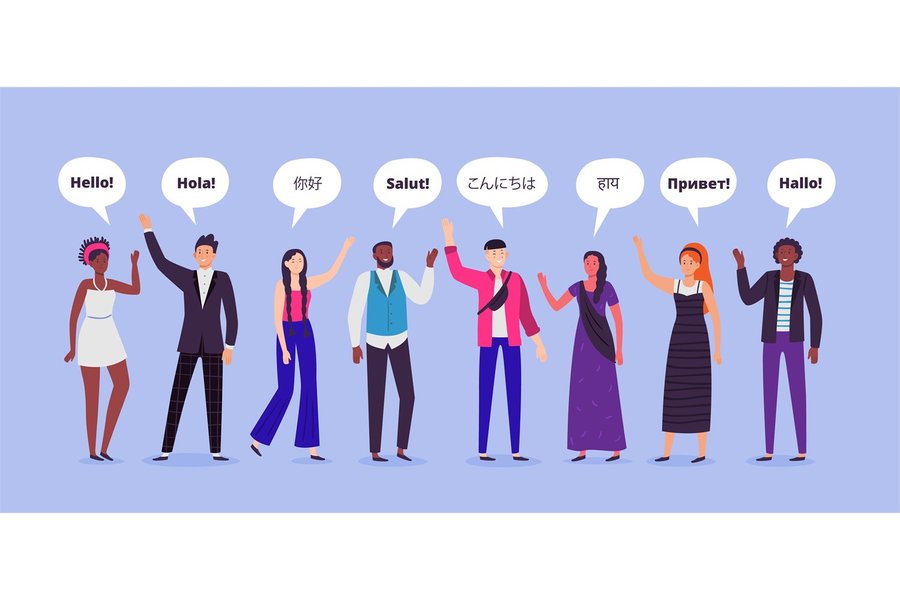
"Hello" and its equivalents connect people across cultures.
Early Origins and Evolution
The term "hello" emerged in the early 19th century. Initially, it served more as an exclamation to attract attention or express surprise, akin to "hallo," "hollo," or "hullo." These earlier forms were often used as shouts to hail someone, particularly from a distance, and might have nautical roots or influences from German ("hallo").
The Telephone's Decisive Role
The widespread adoption of "hello" as a greeting is significantly linked to the invention and popularization of the telephone in the late 19th century. While Alexander Graham Bell initially favored "Ahoy" as the standard telephone greeting, Thomas Edison advocated for "hello." Edison's preference ultimately prevailed, cementing "hello" as the conventional way to answer a phone call and, by extension, a common greeting in everyday life.
By the late 19th century, "hello" had become firmly established in English-speaking countries, transitioning from a simple call for attention to a polite and versatile way to initiate conversations.
A Greeting for Every Occasion: Navigating the Nuances of "Hello"
English offers a diverse palette of greetings, allowing speakers to tailor their salutations to specific situations, relationships, and desired tones. While "hello" itself is remarkably adaptable, knowing its alternatives can enrich your communication.
Formal Greetings: Politeness and Professionalism
In professional settings, formal encounters, or when addressing someone you don't know well, opting for a more formal greeting is appropriate and shows respect.
Common Formal Greetings:
- Hello: The quintessential formal greeting, suitable for almost any professional context. Example: "Hello, this is [Your Name] calling from [Your Company]."
- Good morning / Good afternoon / Good evening: Time-sensitive and highly professional. "Good morning" is used until noon, "Good afternoon" from noon until early evening, and "Good evening" thereafter. Ideal for meetings, emails, and formal presentations.
- How do you do?: A traditional and very formal greeting, often used in British English during initial introductions. It's more of a statement than a question requiring a detailed answer; a typical response is "How do you do?"
- Pleased to meet you / Nice to meet you: Used when being introduced to someone for the first time. Example: "Hello, Mr. Smith. It's very nice to meet you."
- How have you been?: A polite way to greet an acquaintance you haven't seen in a while, showing considerate interest.
Informal Greetings: Casual and Friendly
With friends, family, and in relaxed social settings, informal greetings help create a warm and approachable atmosphere.
Popular Informal Greetings:
- Hi: Perhaps the most common informal greeting – simple, friendly, and universally understood.
- Hey / Hey there: Casual and energetic, often used among peers and friends. "Hey, what's up?" is a common conversation starter.
- What's up? / Sup?: Very casual ways to ask how someone is or what they are doing. "Sup?" is a more abbreviated, slang version.
- How's it going? / How are you doing?: Friendly and conversational, inviting a brief update.
- Yo!: Extremely informal, typically used between close friends, particularly younger people.
Regional and Creative Greetings
English is spoken worldwide, leading to some charming regional variations and creative expressions:
- G'day: Quintessentially Australian, short for "Good day," a friendly and informal greeting.
- Howdy: Common in some parts of the Southern United States, offering a warm, folksy welcome.
- Oi!: Used in the UK and Australia, often to get someone's attention in a casual, sometimes abrupt, way. Often paired with "Mate!" (e.g., "Oi, mate!").
- Alright? / You right?: Common in British English, particularly in some regions, as a casual greeting meaning "Hello, are you okay?".
- Heya / Hiya: Playful and friendly, often used in informal written communication or among younger speakers.
- Cheers!: In British English, "cheers" can be used not only for a toast or to mean "thank you" but also informally as a greeting or farewell.

A simple "hello" can brighten someone's day.
Comparing Greetings: A Visual Guide
Different greetings carry different connotations. The radar chart below offers an opinionated comparison of various English greetings across five dimensions: Formality, Warmth, Commonality, Youthfulness (how much it's associated with younger speakers), and Specificity (how tied it is to a particular region or very specific context).
This chart visualizes how different greetings can be perceived. For example, "Good morning" scores high on Formality, while "G'day" scores high on Specificity due to its regional association.
The Art of Responding: How to Acknowledge a "Hello"
Responding appropriately to a greeting is just as important as delivering one. The key is often to mirror the formality and tone of the initial greeting.
- For Formal Greetings: If someone greets you with "Good morning" or "Pleased to meet you," respond in kind. "Good morning, I'm well, thank you. And you?" or "The pleasure is all mine" are suitable replies.
- For Informal Greetings: A "Hi" can be met with "Hey!" or "Hi there! How are you?" If someone asks "What's up?", you can reply with "Not much, you?" or share a brief update.
- Non-Verbal Cues: Don't forget non-verbal responses. A smile, a nod, or a handshake (in more formal or initial meetings) can accompany your verbal reply and enhance the connection.
- Acknowledge and Proceed: Always acknowledge the greeting before moving on to the main topic of conversation. This simple courtesy sets a positive tone for the interaction.
"Hello" in the Digital Age: Modern Communication
Greetings have evolved with technology. In today's digital world, "hello" takes many forms, from professional emails to casual text messages.
Professional Digital Communication
In emails and business messaging, "Hello [Name]," or "Dear [Mr./Ms./Dr. Last Name]," are standard. For group communications, "Hello team," or "Good morning everyone," are common. Clarity and politeness are paramount.
Casual Digital Greetings: Emojis, GIFs, and E-cards
Informal digital chats are often livened up with emojis (like the waving hand 👋) or animated GIFs to convey warmth and personality. Beyond texts and chats, digital greeting cards, or e-cards, offer a more elaborate way to send greetings for various occasions. Numerous websites allow users to send free, personalized e-cards:
- Platforms for E-cards: Websites like Hallmark, 123 Greetings, Paperless Post, Greetings Island, and Jacquie Lawson offer a wide selection of e-cards for birthdays, holidays, or just to say hello. Many allow for customization with personal messages, photos, or even videos.
- Sending Options: These e-cards can typically be sent via email, social media platforms, or messaging apps, making it easy to reach out to friends and family across distances.
The following video explores some websites that offer digital greeting card services, which can be a fun and modern way to say "hello" or send wishes for special occasions.
This video discusses various e-card websites where you can send digital greetings.
Mapping the World of "Hello"
To better understand the multifaceted nature of "hello," the mindmap below illustrates its core aspects, variations, and contextual applications. It provides a visual summary of how this simple word connects to a broader communication landscape.
This mindmap shows how "Hello" branches out into its historical roots, its many forms depending on formality and region, the contexts in which different greetings are used, appropriate ways to respond, and its overall cultural importance in initiating communication.
Summary of English Greetings
Choosing the right greeting can significantly impact the first impression you make. The table below summarizes various English greetings, indicating their formality level and common usage contexts, helping you select the most fitting salutation for any situation.
| Greeting | Formality Level | Common Usage Context | Example Sentence |
|---|---|---|---|
| Hello | Formal to Semi-Formal | General use, professional settings, phone calls, initial meetings | "Hello, may I speak to Ms. Davis?" |
| Good morning / afternoon / evening | Formal | Business meetings, presentations, customer service, formal emails | "Good afternoon, everyone, and welcome to the webinar." |
| How do you do? | Very Formal | Traditional introductions, often in British English | "How do you do? It's a pleasure to make your acquaintance." |
| Pleased to meet you | Formal | First-time introductions | "John, this is Sarah. Sarah, John." "Pleased to meet you, John." |
| Hi | Informal | Friends, colleagues, casual encounters, everyday use | "Hi, how was your weekend?" |
| Hey / Hey there | Informal | Friends, peers, familiar acquaintances | "Hey there! Long time no see." |
| What's up? / Sup? | Very Informal | Close friends, very casual settings, younger demographic | "Sup? Anything new?" |
| How's it going? | Informal | Friends, colleagues, general casual check-in | "How's it going? Keeping busy?" |
| G'day | Informal (Regional) | Primarily Australian English, friendly and casual | "G'day, mate! How are ya?" |
| Howdy | Informal (Regional) | Common in Southern US, warm and friendly | "Howdy, partner! Welcome." |
Beyond a Greeting: Other Meanings of "Hello"
While "hello" is predominantly known as a salutation, the word also appears in other contexts, showcasing its broad cultural footprint:
- Hello Products: A brand known for its oral care products, aiming to make everyday routines more enjoyable.
- HELLO! Magazine: An international publication famous for its coverage of celebrity and royal news, with various regional editions including a U.S. version.
- "Hello" by Adele: An iconic and critically acclaimed soulful piano ballad released in 2015 by the British singer Adele, exploring themes of nostalgia and regret.
- "Hello" by Lionel Richie: A classic romantic song released in 1984 by American singer Lionel Richie, celebrated for its memorable melody and heartfelt lyrics.
- Educational Songs: The word "hello" is frequently used in songs designed for children, such as those by Super Simple Songs, to teach basic greetings and social interactions.
Frequently Asked Questions about "Hello"
Is "hello" always a formal greeting?
"Hello" is quite versatile. While it can be formal, especially when used in professional settings or when addressing someone you don't know, its formality can also depend on tone of voice and context. It's generally considered more formal than "hi" or "hey" but can be used in a friendly, semi-formal way too.
What's the origin of "hello" being used on the telephone?
Thomas Edison is largely credited with popularizing "hello" as the standard telephone greeting. When the telephone was invented, there was a debate about the best way to answer a call. Alexander Graham Bell, the inventor, preferred "Ahoy." However, Edison suggested "hello," and his influence helped it become the common practice.
Can I use "hey" in a professional email?
It depends on your relationship with the recipient and the company culture. For initial emails or communication with superiors or clients, it's generally safer to use more formal greetings like "Hello [Name]," or "Dear [Name]." "Hey" can be acceptable with colleagues you know well in a more relaxed work environment, but it's best to err on the side of formality if unsure.
Are there any funny ways to say hello?
Yes, people sometimes use humorous or quirky greetings, especially with close friends. Examples include "Ahoy, matey!", "What's kickin', little chicken?", or "Greetings, Earthling!" However, these are highly informal and depend heavily on your relationship with the person and their sense of humor.
What are some good websites for sending free e-cards?
Several websites offer free e-cards for various occasions. Some popular options include 123 Greetings, Hallmark eCards (often has free selections), Greetings Island, Paperless Post (offers some free cards), and Rattlebox. These platforms usually allow you to personalize your message and send the card via email or social media.
Recommended Further Exploration
- What are the cultural differences in greeting etiquette around the world?
- How has digital communication changed the way we use greetings?
- Explore the etymology of other common English words used in daily conversation.
- What is the psychological impact of a warm greeting?
References
Last updated May 7, 2025