

Key Insights into Ancient Egyptian Royal Seals
- Multifaceted Functions: Ancient Egyptian royal seals served critical roles in authentication, administration, and the assertion of authority, functioning as early forms of signatures and guarantees.
- Symbolic Significance: Beyond their practical uses, these seals were imbued with deep religious and political symbolism, representing divine power, protection, and the pharaoh's enduring legacy.
- Evolution of Forms: The primary types of royal seals, including cylinder seals, scaraboids, and signet rings, evolved over millennia, adapting to changing administrative needs and cultural practices, with scarabs becoming particularly prevalent.
Engraved royal seals were indispensable artifacts in ancient Egypt, far exceeding simple identification markers. These intricate objects were foundational to the complex administrative, political, and spiritual life of one of history's greatest civilizations. They authenticated decrees, secured properties, and symbolized the pervasive power of the pharaoh, making them crucial elements in both daily governance and grand ceremonies. The evolution of these seals, from early cylinder forms to the iconic scarabs, reflects a society deeply intertwined with symbolism and precise record-keeping.
Early Beginnings and Mesopotamian Influences
The practice of sealing in ancient Egypt emerged around 3600 BCE during the Predynastic period, though cylinder seals, which were among the earliest forms, show clear Mesopotamian influence. These early seals were typically small and were rolled onto damp clay to create continuous impressions. Initially, their primary function was to secure containers and documents, acting as a tamper-proof mechanism in an era before sophisticated locks and keys. The presence of such seals marked a pivotal step towards a more centralized and organized administration.
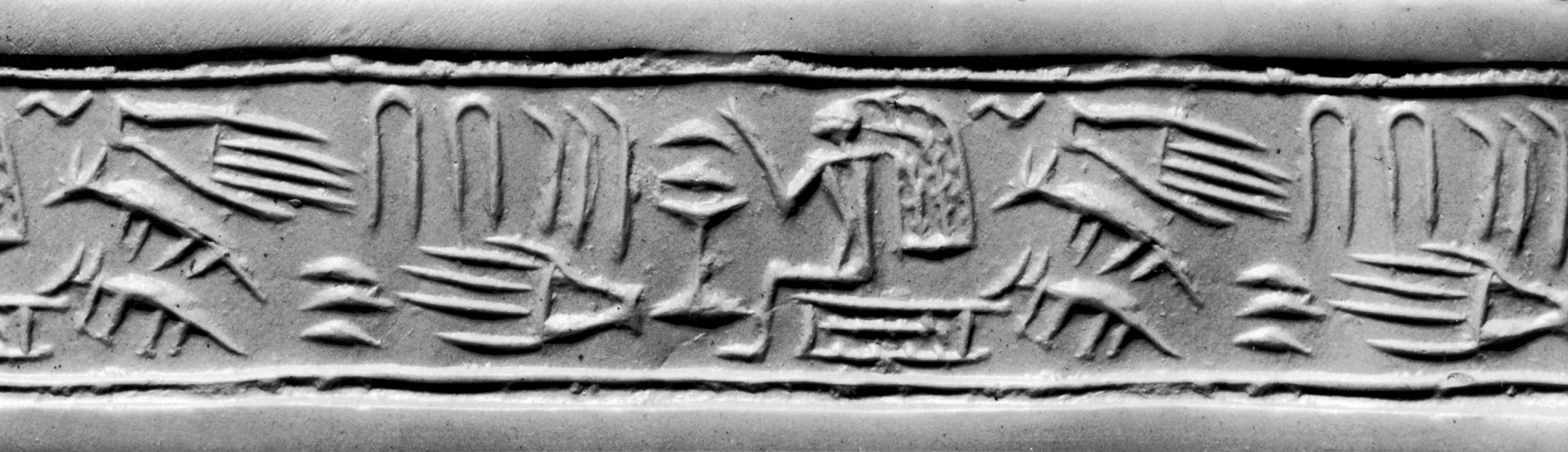
An ancient cylinder seal, a testament to early administrative practices.
The Rise of Native Forms: Scarabs and Signet Rings
While cylinder seals remained in use, particularly for monumental and ritualistic purposes, the Middle Kingdom saw the increasing prominence of scaraboid seals. These distinctively Egyptian seals, shaped like the scarab beetle, eventually surpassed cylinder seals in popularity, especially with the widespread adoption of papyrus. Scarabs were not merely functional; they embodied profound religious significance, symbolizing life, death, rebirth, and divine power due to the beetle's association with Khepri, the rising sun god. This dual function—practical and symbolic—made scarabs immensely powerful artifacts.
Alongside scarabs, signet rings became a personal and official form of sealing. Pharaohs received specially engraved signet rings at their coronations, bearing their names and titles. High officials also sported finger-ring style seals, signifying their elevated status and direct association with royal authority. These rings were both tools of administration and badges of honor.
Types of Royal Seals and Their Distinctive Features
The array of royal seals reflects the innovative artistry and pragmatic needs of ancient Egyptian civilization. Each type possessed unique characteristics and applications.
Cylinder Seals: Continuous Impressions of Authority
Cylinder seals, typically made of stone or faience, were designed to be rolled over soft materials like clay, creating a continuous, repetitive pattern. While early examples were modest, later periods saw grander versions, such as the impressive cylinder seal of Amenirdis I or II, measuring 25 cm and weighing 2 kg. These larger seals, often featuring multiple registers of hieroglyphs and royal cartouches, were likely used for symbolic purposes, like sealing temple offerings or representing divine authority, rather than everyday administrative tasks. Their legacy underscores a transition from purely functional tools to monumental symbols of power.
Scaraboid Seals: The Iconic Beetle Form
Scaraboid seals, carved in the unmistakable shape of the scarab beetle, became a ubiquitous form of sealing from the 2nd millennium BC onwards. The flat underside of these seals was meticulously engraved with hieroglyphs, royal names (often within cartouches), titles, or scenes depicting deities. Pharaohs like Thutmose III and Amenhotep III frequently had their names inscribed on scarabs, turning these objects into portable declarations of sovereignty. Beyond their administrative role, scarabs served as powerful amulets, worn by royalty and commoners alike for protection and to invoke rebirth, embodying a blend of practical utility and profound spiritual belief.
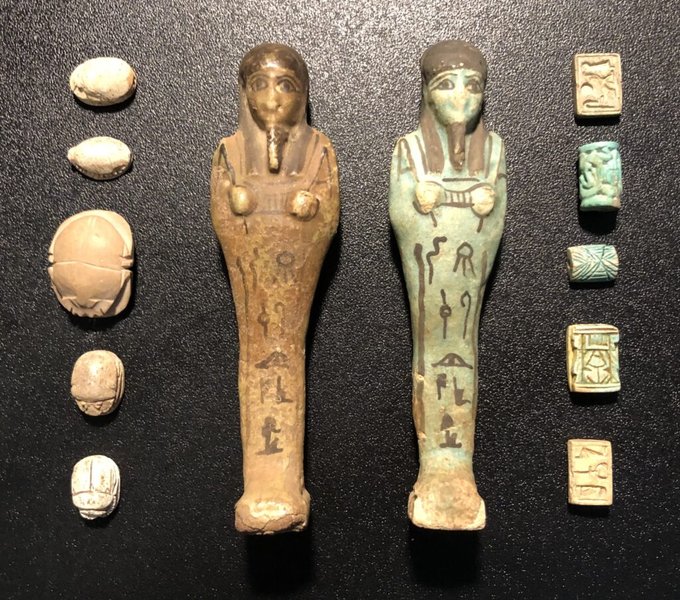
A collection of Egyptian scarabs and seals, showcasing their diverse forms and engravings.
Signet Rings: Personal Badges of Office
Signet rings were a distinct type of seal, often worn directly on the finger. These rings typically featured a bezel engraved with the owner's name, title, or a royal emblem. For pharaohs and high officials, a signet ring was a personal mark of authority, allowing them to quickly and easily authenticate documents or seal containers. The discovery of a signet ring belonging to Pharaoh Seti I in an ancient coffin in Israel highlights the far-reaching influence of Egyptian royal seals and their importance in diplomatic and political contexts beyond Egypt's borders.
The Craftsmanship and Materials of Royal Seals
The creation of engraved royal seals involved specialized artistry and a careful selection of materials, reflecting the value and importance placed on these objects.
Materials and Engraving Techniques
Ancient Egyptian seals were crafted from a variety of materials, including steatite (a soft stone), faience (a glazed ceramic), and sometimes precious metals. Skilled artisans meticulously carved intricate designs, hieroglyphs, and royal cartouches onto these surfaces. The precision required for such detailed engravings, often on small surfaces, indicates a high level of craftsmanship and an established tradition of glyptic art. The choice of material could also imbue the seal with additional symbolic meaning; for instance, blue faience was associated with divinity and fertility.

An example of an ancient Egyptian faience royal seal amulet.
The Significance of Cartouches
The cartouche, an oval enclosure specifically designed to encircle royal names, was a distinctive feature of many royal seals. This protective enclosure was not merely aesthetic; it was believed to safeguard the pharaoh's soul and ensure the eternal recognition of their identity. The practice of inscribing royal names within cartouches on seals further solidified the pharaoh's connection to the divine and underscored the enduring nature of their reign, even extending to the afterlife, as demonstrated by the seals on Tutankhamun's tomb.
This mindmap visually organizes the key aspects of engraved royal seals in ancient Egypt, from their types and functions to their historical context and notable examples.
The "Royal Sealer" and Bureaucracy
The office of the "royal sealer" (ḫtmty-bỉty) highlights the administrative sophistication of ancient Egypt and the crucial role seals played in its governance.
A High-Ranking Position
In the Early Dynastic and Old Kingdom periods, the royal sealer was a top treasury official, responsible for managing finances and ensuring the legitimacy of official communications. Figures like Setka and Hemaka, under Pharaoh Den, held this powerful position, acting as direct representatives of pharaonic authority. Their role often included the power to counter-seal documents, thereby validating the authenticity of critical state affairs.
Evolution of the Title
By the Middle Kingdom and subsequent periods, the title of "trustworthy seal bearer" (xtm(w) kfA-ib) became a mark of elite status, often held by high officials. These individuals were entrusted with carrying seals for their superiors, further demonstrating the trust and prestige associated with the role. The continuous importance of this office underscores the persistent need for verifiable authentication and the centralized control that defined Egyptian bureaucracy.
Global Reach and Lasting Legacy
The influence of ancient Egyptian royal seals extended beyond the Nile Valley, leaving a lasting impact on subsequent cultures and archaeological discoveries.
International Presence
The discovery of Egyptian royal seals, such as a signet ring of Pharaoh Seti I in an ancient coffin in Israel, attests to Egypt's diplomatic and trade relations with neighboring regions. These finds provide invaluable insights into the cultural exchange and political influence wielded by Egyptian pharaohs across the ancient world. The presence of such seals in foreign lands could signify treaties, alliances, or simply the extensive reach of Egyptian economic and political power.
Insights from Modern Discoveries
Even today, discoveries related to ancient Egyptian seals continue to shed light on historical practices. The unbroken seals on King Tutankhamun's tomb, with their detailed engravings, famously preserved its contents until Howard Carter's discovery in 1922, offering an unprecedented glimpse into funerary practices and royal wealth. Similarly, a cartouche potentially belonging to Ramesses II, acquired for a modest sum, exemplifies how these artifacts, even when seemingly commonplace, can hold immense historical value due to their royal engravings.
This video showcases the exciting process of opening a sealed Egyptian tomb, revealing the significance of such intact seals and the discoveries they safeguard.
A Comparative Look: Functions of Royal Seals
To fully appreciate the scope of engraved royal seals, it's helpful to compare their various functions in a structured manner.
| Function Category | Primary Purpose | Key Examples/Features | Materials Often Used |
|---|---|---|---|
| Administrative | Authentication of documents, securing goods, preventing tampering | Cylinder seals on clay, scarabs on papyrus, "royal sealer" officials | Steatite, faience, clay |
| Political | Assertion of pharaonic authority, propaganda, commemoration of achievements | Royal names in cartouches, Thutmose III scarabs, Amenhotep III political scarabs | Stone, faience, sometimes precious metals |
| Symbolic/Religious | Protection, rebirth, divine connection, amuletic use | Scarab beetle form, ankh/djed symbols, placement in tombs | Faience, steatite |
| Personal/Social | Identification, display of status, jewelry | Signet rings, scarabs worn as amulets | Various, including semiprecious stones |
This table provides a concise overview of the diverse functions fulfilled by engraved royal seals in ancient Egypt.
Frequently Asked Questions About Royal Seals
What were the primary types of engraved royal seals in ancient Egypt?
What materials were typically used to make these seals?
How did royal seals authenticate documents and goods?
What was the significance of the scarab shape for seals?
Who was the "royal sealer" (ḫtmty-bỉty) and what was their role?
Did royal seals have religious or spiritual importance?
Were royal seals used outside of Egypt?
Conclusion
Engraved royal seals in ancient Egypt represent a remarkable intersection of art, administration, and spirituality. From the earliest cylinder seals to the ubiquitous scarabs and personal signet rings, these artifacts were central to maintaining order, asserting power, and expressing deeply held beliefs. They served as vital tools for authentication and control in a complex bureaucratic state, while simultaneously acting as powerful symbols of the pharaoh's divine authority, political prowess, and protective magic. The enduring legacy of these seals, evidenced by their intricate craftsmanship and the insights they continue to provide, underscores their indispensable role in shaping one of the most magnificent civilizations of the ancient world.
Recommended Further Exploration
- How did Egyptian pharaohs use seals for political propaganda and diplomacy?
- What was the symbolic meaning of different animal motifs on ancient Egyptian seals?
- The evolution of sealing technology in ancient civilizations beyond Egypt
- What were the specific roles and daily tasks of a 'royal sealer' in the New Kingdom?