
Significance of the Study
Exploring the Role of Environmental Effects on Capacitor Performance in Wireless Transfer Systems
Key Highlights
- Practical Learning Enhancement: How understanding environmental impacts enriches educational experiences.
- Innovative Research Opportunities: Catalyst for future research and advanced technological designs.
- Informed Decision-Making: Guides administrators in strategic resource allocation and policy development.
Introduction
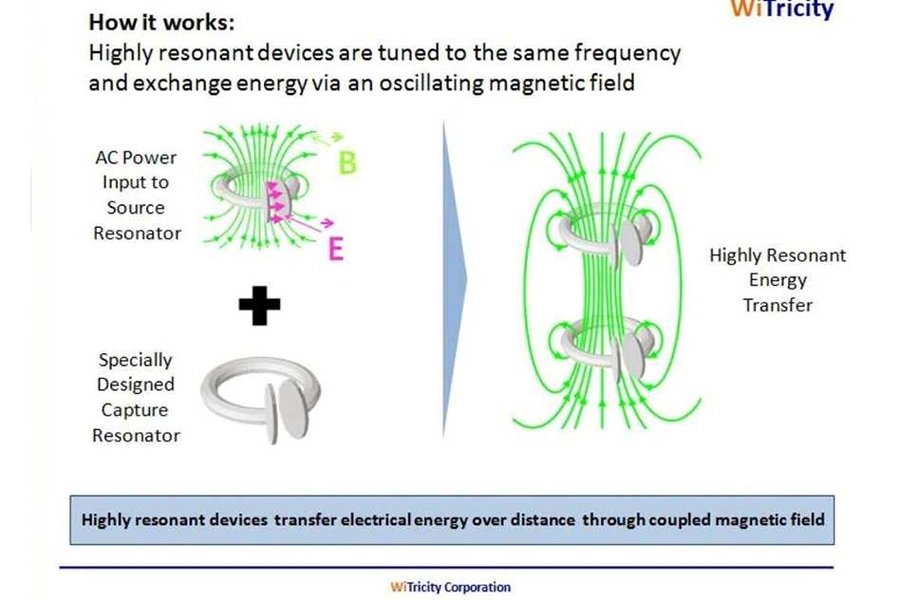
The study of environmental factors on capacitor performance, particularly within wireless transfer systems, occupies a crucial interdisciplinary space. It integrates principles of electrical engineering, material science, and environmental studies. Capacitors, as core components in these systems, are sensitive to various external influences such as temperature, humidity, atmospheric pressure, and mechanical stress. Given that wireless power transfer (WPT) technologies continue to make rapid advancements, understanding how these factors alter capacitor behavior is essential for ensuring the reliability and efficiency of modern electronic devices.
This research is significant for a wide spectrum of stakeholders, namely students, teachers, future researchers, and administrators. Each group derives unique insights from this investigation that range from enhancing practical learning experiences and curriculum relevance to driving innovative research and enabling strategic policy and resource allocation. In this detailed analysis, we will explore the manifold benefits this study offers to each stakeholder group, developing a comprehensive understanding that bridges theoretical knowledge and practical application.
Impact on Stakeholders
For Students
Foundation for Learning and Research
Students engaging with the subject of capacitor performance within wireless power transfer systems benefit greatly from practical exposure to complex, real-world challenges. Learning how environmental variables interact with capacitor behavior is pivotal in:
- Enhancing Theoretical Understanding: Students gain comprehensive insights into electrical fundamentals by linking theory with empirical observations and experiments.
- Developing Experimental Skills: Investigations often involve hands-on experiments where students learn to measure changes in capacitance, dissipation factors, and other critical parameters under varying environmental conditions.
- Analytical and Problem-solving Skills: The study motivates students to modify, test, and analyze the reliability of electronic components, fostering critical thinking necessary for advanced research.
By confronting the challenges posed by temperature fluctuations, varying humidity levels, and other environmental influences, the study not only exposes students to the operational limits of capacitor materials but also encourages them to innovate solutions for enhanced durability and efficiency.
Interdisciplinary Exposure
The environment does not exist in isolation; thus, the study underscores the interconnectedness of physical sciences. Students are introduced to:
- Material Science: Exploration of capacitor materials and how they chemically and structurally respond to external stresses.
- Environmental Science: Learning about how environmental factors such as moisture and temperature have quantifiable impacts on electronic systems.
- Innovative Circuit Design: Practical exposure to designing circuits that compensate for environmental variances, ensuring steady operation despite external fluctuations.
For Teachers
Curriculum Development and Practical Teaching Aids
Teachers have a vital role in translating emerging research into pedagogical content. The analysis of capacitor performance under environmental stress provides educators with authentic, relevant case studies. This integration aids in:
- Enhancing Course Content: Including real-world scenarios into textbooks and presentations, which illustrate how theoretical principles are applied in practice.
- Bridging Theory and Practice: Using specific examples of capacitor failure modes under varied temperatures and humidities, educators can vividly describe the consequences of neglecting environmental factors in circuit design.
- Demonstrating the Scientific Method: Teachers can guide students through experimental design, data analysis, and error quantification, thereby establishing a foundation in scientific research methods.
Furthermore, the study serves as a tool for professional development among teachers, keeping them informed of advancements in engineering technologies and environmental impacts on electronic components. This continuous learning helps teachers remain at the forefront of both theoretical and practical innovations.
Integration into Engineering Education
Teaching about the environmental effects on capacitors enables educators to underscore the importance of:
- Risk Assessment and Mitigation: How proactive design modifications can enhance system robustness during unexpected environmental changes.
- Energy Efficiency: Relating environmental factor studies with energy transfer efficiency to demonstrate the importance of quality component selection and system design.
- Case Studies and Problem Solving: Using case research from industry and academia to create classroom debates and problem-solving sessions that prepare students for real engineering challenges.
For Future Researchers
Advancing Technological Innovations
Future researchers stand to benefit immensely from the detailed study of environmental effects on capacitor performance. Widening the scope of the investigation can lead to breakthrough innovations in WPT system architectures and may inspire:
- Development of Advanced Materials: Research into new dielectric materials and electrolyte compositions that exhibit greater stability under diverse environmental conditions.
- Innovative Circuit Designs: Experimentation with circuit configurations that mitigate the negative impacts of temperature and humidity, thus enhancing overall reliability.
- Systematic Reliability Assessments: Quantitative studies designed to develop predictive models for capacitor lifespan based on environmental exposure, thereby informing better warranty and maintenance schedules for industrial applications.
Furthermore, such research can facilitate the exploration of hybrid systems that combine complementary technologies. By integrating diverse strategies for dealing with environmental issues, researchers can create more resilient systems. For example, incorporating redundancy into capacitor networks or designing adaptive feedback systems that adjust operating parameters in real-time.
Encouraging Interdisciplinary Collaboration
The multifaceted nature of this study necessitates collaboration across disciplines. Researchers in this area work closely with:
- Materials Scientists: To uncover and characterize new substrates or coatings that minimize degradation due to environmental stress.
- Environmental Engineers: To accurately model and simulate real-world environmental conditions for testing electronic components.
- Electrical Engineering Specialists: To develop adaptive systems and recalibrate circuits aimed at optimizing capacitor performance.
The synergy between these fields not only broadens the scope of study but also makes it more practical and applicable to current technological needs. Researchers also benefit from increased funding opportunities and industry partnerships as they work on projects with significant real-world impact.
For Administrators
Strategic Resource and Policy Planning
For administrators involved in academic institutions or research organizations, understanding how environmental factors affect capacitor performance translates into better strategic decisions. Administrators use this information to:
- Optimize Funding Allocation: Direct resources towards projects and research initiatives that show promise for advancing WPT system performance based on comprehensive environmental studies.
- Enhance Infrastructure Planning: Develop laboratories and testing facilities that replicate real-world environmental conditions, ensuring that the equipment remains state-of-the-art and relevant.
- Drive Policy Development: Formulate guidelines and regulations that foster innovation in sustainable technologies, ensuring that long-term investments yield robust and efficient technological solutions.
Administrators also benefit from the predictive data provided by such studies. This data allows them to plan for the most cost-efficient and reliable technology deployments. For example, by understanding the limitations imposed by different environmental conditions, institutional leaders can decide the optimal environments and configurations for various electronic deployments within campus networks or research institutions.
Supporting Strategic Partnerships
Beyond internal implications, the insights from capacitor performance studies under environmental stress can act as a catalyst for building external collaborations. Administrators can:
- Facilitate Collaborative Research: Establish partnerships with industry leaders and government agencies that are invested in sustainable electronic designs and advanced wireless power solutions.
- Enhance Institutional Reputation: Position their institutions as pioneers in research that directly addresses modern technological and environmental challenges.
- Create Long-term Investment Strategies: Guide decisions on research investments by clearly understanding which projects will have a measurable impact on operational efficiency and system longevity.
Environmental Factors and Their Specific Impacts
Primary Environmental Influences
The capacitor performance within wireless power transfer systems is predominantly affected by several key environmental factors. These include:
| Environmental Factor | Impact on Capacitor | Relevant Considerations |
|---|---|---|
| Temperature | Accelerates chemical reactions, potentially reducing the service life and stability of the capacitor. | High temperatures may lead to dielectric breakdown and reduced capacitance values. |
| Humidity | Moisture absorption can cause degradation in capacitor performance and insulation resistance. | Exposure to high humidity may lead to corrosion and increased leakage currents. |
| Atmospheric Pressure | Variations in pressure can influence mechanical stresses, impacting the overall reliability of the capacitor. | Low pressure environments might accelerate the aging process due to evaporation of electrolytic substances. |
| Vibration and Mechanical Shock | Repeated stress can lead to physical deformations or micro-cracks in capacitor materials. | Critical in applications where the system is subject to movement or structural vibration. |
This table synthesizes the major environmental influences, providing an overview of how each factor specifically affects capacitor performance. It also highlights the areas where further research may yield improvements in component design and durability.
Practical Implications and Applications
Optimizing Wireless Power Transfer Systems
The insights derived from studying these environmental factors have direct implications for the design and operation of wireless power transfer systems. By integrating environmental considerations into the design process, engineers and designers can:
- Improve System Reliability: Build robust systems that compensate for environmental fluctuations, thus ensuring uninterrupted power transfer.
- Enhance Energy Efficiency: Optimize component selection and system architecture to reduce energy loss, even under environmental stress.
- Reduce Maintenance Costs: Develop predictive maintenance schedules based on the measured effects of environmental factors, ensuring timely intervention before catastrophic failure.
- Promote Sustainable Practices: Encourage research into eco-friendly materials and designs that align with the broader goals of reducing ecological footprints.
Case Implementation in Real-World Environments
In practical settings, environmental challenges demand that capacitor-based systems adapt dynamically. For instance, manufacturers and system designers have begun to:
- Use Temperature-Compensated Designs: Capacitors integrated with built-in thermal sensors and regulation circuits adjust performance in real time.
- Incorporate Protective Coatings: Apply specialized coatings that shield sensitive components from moisture, reducing the risk of corrosion in humid environments.
- Design for Redundancy: Build circuits that include backup capacitors which automatically take over in the event of environmental-induced failure.
- Conduct Extensive Field Testing: Validate design efficacy by testing products in varied, real-world environmental conditions to ensure standards are met globally.
References
- How does the Environment Affect Capacitor Performance? - ATO.com
-
Do Capacitors Fail With Age? - ElectronicsTalk.org
- Capacitors in Wireless Power Transfer Systems - Electricity-Magnetism.org
-
Environmental Effects in Capacitor Performance - ScienceDirect
- Environmental Factor Studies in WPT - IEEE Xplore
Recommended Further Queries
Last updated March 7, 2025