
Navigating the Landscape of Environmental Management Systems
A Comprehensive Guide to Understanding, Implementing, and Certifying an EMS
Key Insights into Environmental Management Systems
- Strategic Framework: An Environmental Management System (EMS) provides a structured framework for organizations to systematically manage their environmental impacts, enhance operating efficiency, and ensure compliance with regulations.
- ISO 14001 as the Benchmark: The ISO 14001 standard is the internationally recognized framework for EMS, guiding organizations through the process of establishing, implementing, maintaining, and continually improving their environmental performance.
- Holistic Benefits: Beyond regulatory compliance, implementing an EMS offers significant advantages such as cost savings through waste reduction, improved public image, enhanced stakeholder confidence, and a robust platform for continuous environmental improvement.
Understanding Environmental Management Systems (EMS)
An Environmental Management System (EMS) is a comprehensive set of processes and practices designed to help an organization reduce its environmental impacts, increase operational efficiency, and comply with environmental regulations. It's a proactive approach that enables systematic identification, control, and monitoring of environmental aspects and their associated impacts. The core purpose of an EMS is to integrate environmental considerations into an organization's daily operations and decision-making processes, leading to measurable improvements in environmental performance.
At its heart, an EMS helps an organization systematically address its environmental responsibilities. It provides a structured way to manage the environmental effects of activities, products, and services, moving beyond mere compliance to foster a culture of continuous environmental improvement. This involves establishing environmental policies, setting objectives and targets, implementing programs to achieve these objectives, monitoring and measuring environmental performance, and periodically reviewing the system for effectiveness and opportunities for enhancement.
Defining an EMS
An EMS can be defined as "a system which integrates policy, procedures, and processes for training of personnel, monitoring, summarizing, and reporting of specialized environmental performance information to internal and external stakeholders of a firm." It acts as a tool or process to improve environmental performance by focusing on elements such as design, pollution control and waste minimization, training, reporting to top management, and the setting of goals. The U.S. EPA emphasizes that an EMS allows an organization to address its regulatory requirements in a systematic and cost-effective manner, ensuring employee environmental awareness and competence.
The Importance and Benefits of an EMS
The implementation of an EMS is increasingly crucial in today's operating context, given escalating regulatory and societal demands for environmental sustainability. Organizations that adopt an EMS can achieve numerous benefits that extend beyond simply meeting legal obligations:
- Enhanced Environmental Performance: An EMS leads to a noticeable reduction in waste production, resource consumption, and pollutant emissions, ultimately minimizing an organization's environmental footprint. This includes improved ability to analyze, control, and reduce impacts like air emissions and oil in wastewater.
- Regulatory Compliance: By systematically identifying and addressing environmental aspects, an EMS helps organizations stay compliant with current and future statutory requirements, reducing the risk of non-compliance and potential penalties.
- Cost Savings: Efficient resource usage, waste reduction, and streamlined processes often result in significant cost reductions. For instance, waste reduction can begin at the design phase through pollution prevention and waste minimization efforts.
- Improved Reputation and Stakeholder Confidence: Demonstrating a commitment to environmental responsibility can significantly enhance an organization's public image and build trust with customers, investors, employees, and the broader community. Certification to ISO 14001, for example, signals a high level of accreditation.
- Competitive Advantage: A strong environmental performance can differentiate an organization in the marketplace, attracting environmentally conscious consumers and partners.
- Employee Engagement: An EMS fosters environmental buy-in from management and employees by assigning accountability and responsibility, and providing a framework for training to achieve environmental objectives.
- Continual Improvement: The inherent design of an EMS, often based on the Plan-Do-Check-Act (PDCA) cycle, ensures a process of ongoing review and revision, continually driving improvement in environmental performance.
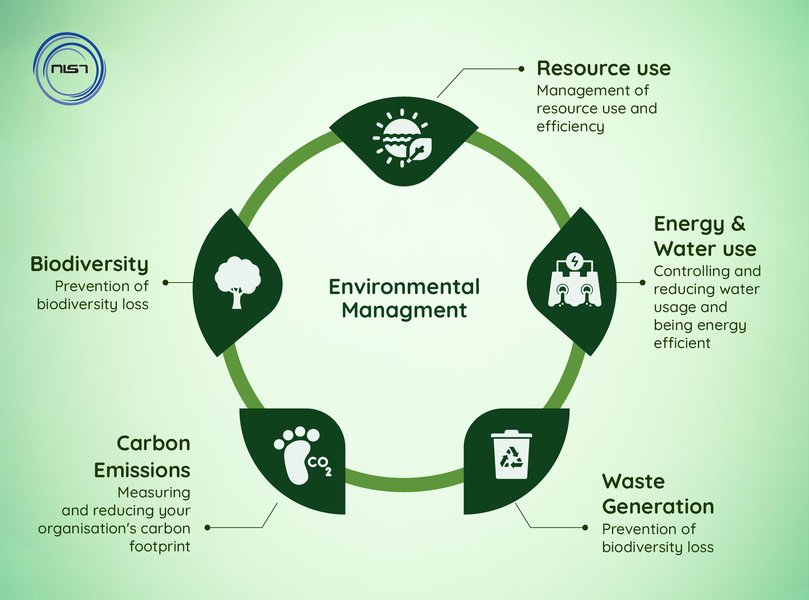
Visualizing the multifaceted benefits of a robust Environmental Management System.
The ISO 14001 Standard: A Global Benchmark for EMS
The ISO 14001 standard, published by the International Organisation for Standardisation (ISO), is the most widely recognized international standard for Environmental Management Systems. It provides a solid framework for implementing an EMS, rather than establishing specific environmental performance requirements. This flexibility allows organizations across various industries—from manufacturing facilities to service industries and government agencies—to adopt and tailor the standard to their unique contexts.
Core Principles of ISO 14001
ISO 14001 focuses on a systematic approach to environmental management, emphasizing the following key areas:
- Context of the Organization: Understanding internal and external issues relevant to the EMS, as well as the needs and expectations of interested parties.
- Leadership: Top management demonstrating commitment and involvement in the EMS.
- Planning: Identifying environmental aspects and impacts, compliance obligations, risks and opportunities, and setting environmental objectives.
- Support: Ensuring necessary resources, competence, awareness, communication, and documented information are in place.
- Operation: Implementing and controlling processes related to environmental aspects and compliance obligations.
- Performance Evaluation: Monitoring, measuring, analyzing, and evaluating environmental performance, including internal audits and management reviews.
- Improvement: Addressing nonconformities, taking corrective actions, and continually improving the suitability, adequacy, and effectiveness of the EMS.
The Plan-Do-Check-Act (PDCA) Cycle in EMS
The ISO 14001 standard is built upon the iterative Plan-Do-Check-Act (PDCA) cycle, a cornerstone of continuous improvement. This model ensures that an EMS is constantly reviewed and revised to enhance its effectiveness:
- Plan: This phase involves establishing the environmental policy, identifying environmental aspects and impacts, determining legal and other requirements, setting environmental objectives and targets, and planning actions to achieve them. It's about laying the groundwork and defining what needs to be done.
- Do: The implementation phase, where the planned activities are carried out. This includes assigning roles and responsibilities, providing training and awareness, establishing internal and external communication, controlling documents, and implementing operational controls to manage significant environmental aspects.
- Check: This involves monitoring, measuring, and evaluating environmental performance against objectives and targets. It also includes conducting internal audits to assess the EMS's conformity to the standard and its effectiveness, and evaluating compliance with legal obligations.
- Act: Based on the results of the "Check" phase, this involves taking actions to continually improve the EMS. This could mean taking corrective actions for nonconformities, reviewing the EMS during management reviews, and adapting the system to new challenges and opportunities.

The Plan-Do-Check-Act (PDCA) cycle, fundamental to continuous improvement in an EMS.
Implementing and Certifying an EMS
Implementing an EMS is a strategic decision that requires commitment from top management and engagement across all levels of the organization. The process typically involves several key steps, leading to potential certification against standards like ISO 14001.
Steps to Implement an EMS
While the exact steps may vary, a general roadmap for implementing an EMS includes:
Initial Environmental Review and Gap Analysis
Before designing an EMS, an organization should conduct an initial environmental review to understand its current environmental performance, identify significant environmental aspects, and assess compliance with relevant regulations. A gap analysis can then highlight areas where current practices fall short of EMS requirements or ISO 14001 standards.
Establishing Environmental Policy
Top management must define and endorse an environmental policy that reflects the organization's commitment to environmental protection, pollution prevention, and continual improvement. This policy serves as the foundation for the entire EMS.
Planning for Environmental Aspects and Impacts
Identify all activities, products, and services that can interact with the environment (environmental aspects) and determine their actual or potential impact (environmental impacts). Prioritize significant impacts to focus efforts where they will have the greatest benefit.
Setting Objectives and Targets
Based on the environmental policy and significant aspects, specific, measurable, achievable, relevant, and time-bound (SMART) environmental objectives and targets are established. These drive environmental performance improvement.
Resource Allocation and Training
Allocate necessary resources (human, financial, technological) for EMS implementation and maintenance. Crucially, provide comprehensive training and raise awareness among employees about their roles, responsibilities, and the importance of the EMS.
Establishing Operational Controls
Develop and implement procedures, guidelines, and controls for operations associated with significant environmental aspects. This may include waste management protocols, energy consumption reduction measures, or emergency preparedness plans.
Monitoring, Measurement, and Evaluation
Regularly monitor and measure environmental performance, track progress towards objectives, and ensure compliance with legal and other requirements. This data is vital for informed decision-making.
Internal Audits and Management Review
Conduct periodic internal audits to ensure the EMS is effectively implemented and maintained, and conforms to the standard. Management reviews, led by top management, assess the EMS's continuing suitability, adequacy, and effectiveness, and identify opportunities for improvement.
Continual Improvement
The EMS is a dynamic system. Feedback from monitoring, audits, and reviews should lead to corrective actions and adjustments, driving continuous improvement in environmental performance.
The Certification Process for ISO 14001
Achieving ISO 14001 certification demonstrates that an organization has effectively implemented the standard and has a robust EMS meeting all its requirements. The certification process typically involves:
- Gap Analysis: An optional but highly recommended initial step where a third-party auditor assesses the organization's current practices against ISO 14001 requirements to identify any gaps.
- Implementation of the EMS: The organization develops and implements the EMS according to the ISO 14001 standard.
- Internal Audits and Management Review: The organization conducts its own internal audits and management reviews to ensure readiness for external assessment.
- Certification Audit (Stage 1 and Stage 2):
- Stage 1 (Documentation Review): An external certification body reviews the EMS documentation to ensure it meets the standard's requirements.
- Stage 2 (On-site Audit): The auditor conducts an on-site visit to verify that the EMS is fully implemented and functioning effectively in practice.
- Certification Awarded: If the audit is successful, the organization receives ISO 14001 certification.
- Surveillance Audits: Certification bodies conduct periodic surveillance audits (typically annually) to ensure ongoing compliance and continuous improvement.
- Recertification Audit: Typically every three years, a full recertification audit is conducted to renew the certificate.
The total timeline for EMS implementation and certification can vary widely depending on the size and complexity of the organization, typically ranging from a few months to over a year.
Comparative Analysis: Environmental Management Systems
While ISO 14001 provides a widely accepted framework, different organizations and sectors may adopt varied approaches to environmental management. This radar chart illustrates a comparative perspective on key attributes of an ideal EMS versus typical implementation challenges.
The radar chart above visualizes the distinction between the aspirational goals of an ideal Environmental Management System and common hurdles encountered during typical implementation. "Regulatory Compliance" and "Risk Mitigation" tend to be higher in typical implementations due to their critical nature, often driven by immediate legal pressures. However, areas like "Resource Efficiency," "Stakeholder Engagement," "Continual Improvement," and "Cost Effectiveness" often see lower scores in practice, highlighting areas where organizations can strive for greater alignment with ideal EMS principles. This comparison underscores the importance of a comprehensive and committed approach to realize the full spectrum of EMS benefits.
Distinguishing Between "EMS" Meanings
It is important to note that the acronym "EMS" can refer to two distinct fields: Environmental Management Systems and Emergency Medical Services. While both are critical management systems, they operate in entirely different domains and address different objectives.
Environmental Management Systems (EMS)
As discussed, an Environmental Management System (EMS) is a framework used by organizations to manage their environmental impacts. It's about proactive environmental stewardship, pollution prevention, and continuous improvement in ecological performance. The primary goal is to minimize the organization's environmental footprint and ensure compliance with environmental regulations. Key standards like ISO 14001 are central to this field.
Emergency Medical Services (EMS)
Emergency Medical Services (EMS) refers to the network of professionals and resources that provide out-of-hospital emergency medical care and transportation. This field involves first responders, Emergency Medical Responders (EMRs), Emergency Medical Technicians (EMTs), Advanced EMTs (AEMTs), and Paramedics. Their primary role is to stabilize and safely transport patients experiencing critical and emergent medical conditions or traumatic injuries. Certification for EMS professionals is typically handled by national bodies like the National Registry of Emergency Medical Technicians (NREMT) and state licensing boards.
A comprehensive video explaining the pathway to becoming an EMT, highlighting the crucial role of Emergency Medical Services professionals.
This video offers an insightful overview for individuals interested in becoming an Emergency Medical Technician (EMT). It breaks down the essential steps, requirements, and the certification process involved in entering the Emergency Medical Services (EMS) field. This is particularly relevant for those seeking to understand the career path within EMS, from foundational training to certification and licensure, illustrating the distinct nature of Emergency Medical Services compared to Environmental Management Systems.
Key Differences Summarized
To avoid confusion, the fundamental differences between these two distinct uses of "EMS" are outlined in the table below:
| Aspect | Environmental Management Systems (EMS) | Emergency Medical Services (EMS) |
|---|---|---|
| Primary Focus | Managing environmental impacts, pollution prevention, resource efficiency, and regulatory compliance related to the environment. | Providing immediate, out-of-hospital emergency medical care and transportation to critical and emergent patients. |
| Main Objective | Reduce environmental footprint, improve environmental performance, achieve sustainability goals, and comply with environmental laws. | Save lives, alleviate suffering, prevent further injury, and provide timely and effective patient care until transfer to a medical facility. |
| Key Standard/Certification | ISO 14001 (international standard for EMS certification). | National Registry of Emergency Medical Technicians (NREMT) certification, state licensure for various levels (EMR, EMT, AEMT, Paramedic). |
| Governing Bodies (Examples) | Environmental Protection Agency (EPA), ISO, state environmental agencies. | National Registry of EMTs (NREMT), state health departments, local EMS agencies. |
| Typical Users/Practitioners | Organizations (businesses, government agencies), environmental managers, sustainability officers. | Emergency Medical Responders (EMRs), Emergency Medical Technicians (EMTs), Advanced EMTs (AEMTs), Paramedics, first responders. |
Frequently Asked Questions (FAQ)
What is the primary goal of an Environmental Management System (EMS)?
What is ISO 14001 and how does it relate to EMS?
What are the main benefits of implementing an EMS?
How long does it take to implement and certify an EMS?
Can "EMS" refer to something other than Environmental Management Systems?
Conclusion
Environmental Management Systems (EMS) are indispensable tools for organizations seeking to navigate the complexities of environmental responsibility and achieve sustainable operations. By providing a structured and systematic approach, an EMS, particularly one aligned with the ISO 14001 standard, empowers organizations to identify and control their environmental impacts, ensure regulatory compliance, and drive continuous improvement. The benefits extend far beyond legal adherence, encompassing significant cost savings, enhanced reputation, and increased operational efficiency. While the term "EMS" can also refer to Emergency Medical Services, the context typically clarifies which domain is being discussed. Embracing an EMS is a strategic investment that positions an organization as a responsible global citizen, contributing positively to environmental protection while fostering long-term business resilience and success.
Recommended Further Exploration
- How to conduct an environmental aspects and impacts assessment for ISO 14001?
- The role of top management in EMS implementation and success
- Benefits of integrating EMS with other management systems like OHS and Quality
- Case studies of successful EMS implementation in various industries