
Unlock Your Retirement Potential: Why EOFY Super Contributions Matter
Strategize your superannuation contributions before June 30, 2025, to maximize tax benefits and boost your retirement savings.
Key Insights into EOFY Super Contributions
- Tax Efficiency: Contributions made to superannuation, especially concessional (before-tax) contributions, are often taxed at a lower rate (15%) compared to your marginal income tax rate, potentially reducing your overall tax bill.
- Maximize Caps and Carry-Forward: The annual superannuation contribution caps reset on June 30th. Utilizing your available cap space, including any unused concessional caps from the previous five financial years (if eligible), can significantly accelerate your retirement savings.
- Long-Term Growth: Contributing sooner allows your funds to benefit from compounding returns within the tax-effective superannuation environment, leading to substantial growth in your retirement nest egg over time.
Strategic Superannuation Contributions Before June 30, 2025
Deciding whether to make an additional contribution to your superannuation before the end of the financial year on June 30, 2025, is a crucial financial decision. This strategy can offer significant benefits for your retirement savings and tax position, but its suitability depends entirely on your individual financial circumstances, retirement goals, age, and eligibility. Leveraging available contribution caps and understanding the tax implications are key to optimizing your superannuation.
Understanding Contribution Types and Caps for FY2024-25
There are two primary types of superannuation contributions, each with specific caps and rules designed to offer tax advantages and promote retirement savings:
Concessional Contributions (Before-Tax)
These contributions are made from your pre-tax income, and they are taxed at a flat rate of 15% within the superannuation fund. This rate is often significantly lower than an individual's marginal income tax rate, especially for those earning above $45,000 annually. This category includes:
- Employer Super Guarantee (SG) Payments: Your employer's mandatory contributions.
- Salary Sacrifice Arrangements: A voluntary agreement with your employer to direct a portion of your pre-tax salary directly into your super fund.
- Personal Deductible Contributions: Contributions you make from your after-tax income that you then claim as a tax deduction. To claim a deduction, you must notify your super fund using a "Notice of intent to claim a tax deduction" form before lodging your tax return.
The annual concessional contributions cap for the 2024-25 financial year is $30,000. It is vital to remember that this cap includes all your employer's SG contributions and any salary sacrificed amounts. Exceeding this cap can result in excess concessional contributions, which are then included in your assessable income and taxed at your marginal tax rate, albeit with a 15% offset for contributions tax already paid by your super fund.
Carry-Forward (Catch-up) Contributions
A significant opportunity exists for those who haven't fully utilized their concessional caps in previous financial years. If your total super balance was less than $500,000 at the end of the previous financial year, you may be able to contribute more than the annual $30,000 cap by utilizing unused concessional cap amounts from the past five financial years. These unused amounts expire after five years, so any unused cap from the 2019-20 financial year, for example, will lapse if not used by June 30, 2025. This rule is particularly beneficial for individuals who have had periods of lower income or career breaks and wish to "catch up" on their retirement savings.
Non-Concessional Contributions (After-Tax)
These contributions are made from your post-tax income, or from other sources such as an inheritance, after income tax has already been paid. The non-concessional contributions cap for the 2024-25 financial year is $120,000. For those with a total super balance below certain thresholds, the "bring-forward rule" allows you to contribute up to three years' worth of non-concessional contributions in a single year (i.e., up to $360,000 if eligible and not exceeding the cap in prior years).
Eligibility for non-concessional contributions and the bring-forward rule depends on your age and your total super balance at June 30 of the previous financial year. If your total super balance is $1.9 million or more on June 30 of the previous financial year, you cannot make further non-concessional contributions.
The Power of Timing: Why EOFY Matters
The end of the financial year provides a critical window for optimizing your super contributions. Here’s why timing your contributions before June 30, 2025, is strategically important:
- Cap Reset: Superannuation contribution caps reset annually on July 1. Making contributions before June 30 ensures they count towards the current financial year's limits, preventing the loss of unused cap space (especially critical for carry-forward amounts).
- Immediate Tax Benefits: For concessional contributions, you realize tax savings in the current financial year's tax assessment. This can reduce your taxable income and, consequently, your tax bill.
- Accelerated Compounding: The sooner money enters your super fund, the longer it has to grow through compound returns. Even small contributions can significantly impact your final retirement balance over decades due to this exponential growth.
Government Incentives and Eligibility
Beyond the direct tax benefits of contributions, several government incentives can further boost your superannuation, particularly for low to middle-income earners:
- Government Co-contribution: If you are a low to middle-income earner and make an after-tax contribution that you don't claim as a tax deduction, you might be eligible for a government co-contribution. For example, if your total income is $43,445 or less for the 2024-25 financial year and you contribute up to $1,000, you could receive a maximum co-contribution of $500.
- Low Income Superannuation Tax Offset (LISTO): If you earn $37,000 or less, you may be eligible for a LISTO of up to $500 per year. This offset effectively refunds the 15% tax paid on eligible concessional contributions, ensuring low-income earners don't pay more tax on their super contributions than their take-home pay.
Important Deadlines and Practical Steps
To ensure your contributions are counted for the 2024-25 financial year, they must be received by your superannuation fund by June 30, 2025. However, many super funds advise submitting contributions well in advance due to processing times. Some funds may have cut-off dates as early as June 23, 2025, for personal contributions, with payments received after this date potentially being processed in the new financial year. BPAY payments, for example, can take several business days to clear, so plan accordingly for last-minute contributions.
It is always recommended to review your super balance, track your contributions throughout the financial year, and confirm specific cut-off dates directly with your super fund to avoid disappointment.
Key Regulatory Changes and Future Considerations
Staying informed about upcoming changes to superannuation rules is crucial for long-term planning:
- Super Guarantee (SG) Rate Increase: From July 1, 2025, the Super Guarantee (SG) rate, which is the minimum employers must contribute, will increase from 11.5% to 12%.
- General Transfer Balance Cap Increase: The general transfer balance cap, which limits the total amount that can be transferred into tax-free retirement phase super accounts, will increase from $1.9 million to $2.0 million from July 1, 2025.
When to Consider Contributing: A Mindmap of Key Factors
This mindmap illustrates the various factors and considerations that influence the decision to make a superannuation contribution before the End of Financial Year (EOFY). It highlights the interconnectedness of tax benefits, eligibility, personal financial situation, and long-term retirement goals.
Navigating Your Superannuation Strategy
A detailed evaluation of your financial profile is paramount before making additional super contributions. This includes understanding your current super balance, income, age, and long-term financial goals. The following table provides a comprehensive overview of the different contribution types, their caps for FY2024-25, and key eligibility criteria:
| Contribution Type | Description | Annual Cap (FY2024-25) | Key Eligibility / Notes |
|---|---|---|---|
| Concessional Contributions (Before-tax) | Employer SG, salary sacrifice, or personal contributions claimed as a tax deduction. Taxed at 15% in super fund. | $30,000 | Includes all employer and salary sacrifice contributions. Excess contributions taxed at marginal rate (less 15% offset). |
| Carry-Forward Concessional Contributions | Unused concessional cap amounts from the previous 5 financial years. | Variable (up to $30,000 plus unused cap) | Total super balance must be under $500,000 at previous June 30. Unused caps expire after 5 years. |
| Non-Concessional Contributions (After-tax) | Contributions from after-tax income (no tax deduction claimed). | $120,000 | Total super balance must be under $1.9 million at previous June 30. |
| Bring-Forward Non-Concessional Contributions | Allows contributing up to 3 years of non-concessional caps in one year. | Up to $360,000 | Eligibility depends on age and total super balance at previous June 30. Triggers restrictions on future contributions. |
| Government Co-contribution | Government matches a portion of your personal non-deductible contributions. | Up to $500 | For low to middle-income earners (e.g., income below $43,445 for maximum benefit), must make an eligible after-tax contribution. |
| Low Income Superannuation Tax Offset (LISTO) | Refunds 15% tax on concessional contributions for low-income earners. | Up to $500 | For those earning $37,000 or less. Automatically paid by the ATO. |
| Spouse Contributions | Contributing to your spouse's super fund. | No specific cap (counts towards spouse's cap) | Can be eligible for a tax offset if your spouse's income is below certain thresholds. |
Assessing Your Superannuation Strategy: A Radar Chart Analysis
To further illustrate the multifaceted nature of superannuation contribution decisions, this radar chart evaluates different strategic approaches based on a range of criteria. Each spoke represents a key consideration, and the plotted lines indicate the perceived effectiveness or benefit of various contribution types and strategies before EOFY. This visual representation helps to highlight where each approach excels and where it might be less effective.
For example, "Maximizing Carry-Forward" excels in "Retirement Growth" and "Tax Savings" for those with unused cap space, while "Salary Sacrifice" performs strongly in "Income Tax Reduction" and "Simplicity."
Visualizing the Impact of Superannuation Contributions
This image illustrates the significant impact of consistent superannuation contributions on overall super flows. It underscores how personal contributions, when added to employer contributions, can substantially boost an individual's retirement savings over time. The graph visually reinforces the benefit of proactive engagement with your super fund, especially during periods like the end of the financial year.
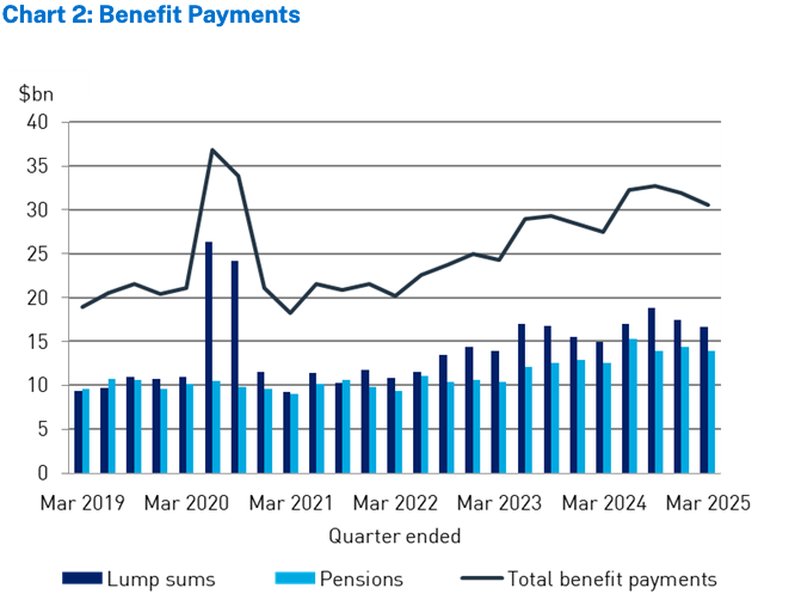
An illustration of how personal contributions can significantly lift overall super flows.
Further Deep Dive: Unused Concessional Contributions
One of the most effective strategies for boosting your super before EOFY, especially if you have had periods of lower contributions, is utilizing unused concessional contributions. This video provides an excellent overview of how this "catch-up" rule works and how it can be leveraged to reduce your taxable income while significantly increasing your retirement savings. It details the process, eligibility criteria, and the importance of acting before these unused cap amounts expire. This strategy is particularly powerful for those who have recently increased their income or are nearing retirement and want to maximize their super balance.
Video: Reduce Your Tax by Thousands With Unused Concessional Contributions
Frequently Asked Questions (FAQ)
What is the concessional contributions cap for FY2024-25?
What is the non-concessional contributions cap for FY2024-25?
When do I need to make my super contribution by for it to count in the current financial year?
What is the "carry-forward" rule for super contributions?
Can I still contribute to super if I am aged 67 or older?
Conclusion
Making a contribution to your superannuation before the end of the financial year (June 30, 2025) can be a highly effective strategy to enhance your retirement savings and optimize your tax position. By understanding the different types of contributions—concessional (before-tax) and non-concessional (after-tax)—and their respective caps, you can strategically leverage these mechanisms. The ability to carry forward unused concessional cap space provides a valuable opportunity for those who may have under-contributed in previous years. Additionally, government incentives like co-contributions and the Low Income Superannuation Tax Offset further amplify the benefits for eligible individuals. It is crucial to be mindful of specific fund cut-off dates to ensure contributions are processed within the current financial year. While the potential for tax savings and long-term compound growth is significant, personal circumstances such as your current financial situation, age, and retirement goals should guide your decision. Consulting with a financial advisor or tax professional is recommended for personalized advice tailored to your unique circumstances.
Recommended Further Exploration
- How to maximize superannuation tax benefits?
- Understanding superannuation contribution caps and limits.
- Strategies for low-income super contributions.
- Impact of age on superannuation contribution rules.