
Entomopathogenic Fungi: Insights into Recent Understanding
Comprehensive Review of Mechanisms, Interactions, and Applications
Key Highlights
- Diverse Roles: Entomopathogenic fungi not only control insect pests but also promote plant growth and induce systemic resistance.
- Mechanisms of Infection: Their infection process involves spore adhesion, cuticle penetration, and internal proliferation, driven by lytic enzymes and secondary metabolites.
- Sustainable Agriculture: Offering an eco-friendly alternative to chemical pesticides, these fungi are transforming agricultural pest management practices.
Abstract
Entomopathogenic fungi (EPF) represent an innovative and dynamic component in the arsenal of sustainable agricultural practices. These microorganisms have gained extensive attention for their potential to manage insect pest populations while simultaneously enhancing plant health and ecosystem balance. This review synthesizes the latest research findings and explores the multifaceted roles of EPF, with particular focus on their infection mechanisms, symbiotic relationships with plants, and application in environmentally friendly pest management.
The biological processes underlying EPF infection commence with the adhesion of fungal spores to the insect cuticle, followed by enzymatic degradation of the host’s external barrier, and subsequent penetration into the hemocoel, where rapid proliferation leads to host mortality. Species such as Beauveria bassiana and Metarhizium anisopliae are emblematic of this mode of action. Contemporary studies have elucidated the roles of diverse molecular determinants such as lytic enzymes, adhesins, and secondary metabolites that not only facilitate pathogenicity but also contribute to the modulation of host immune responses.
Beyond their conventional role as insect pathogens, EPF have been recognized for establishing endophytic associations with various plant species. This interaction triggers a cascade of beneficial effects on plant physiology, including improved nutrient uptake, enhanced growth, and increased resistance against both biotic and abiotic stress factors. The capacity of EPF to induce systemic resistance in plants redefines their utility, positioning them as dual-purpose agents that extend benefits from pest management to overall crop health enhancement.
Additionally, EPF display considerable biodiversity. Classified among several fungal groups across Ascomycota, Basidiomycota, Microsporidia, and Zygomycota, these fungi do not form a monophyletic lineage but represent a broad spectrum of evolutionary adaptations geared towards survival in diverse ecological niches. Advances in molecular biology and genomics have provided granular insights into strain-specific characteristics and host specificity, paving the path for precision identification and improved formulation of EPF-based biopesticides.
The integration of EPF into modern agroecosystems contributes significantly to sustainable pest control strategies. Their deployment curtails the reliance on chemical insecticides that are associated with detrimental environmental and health impacts, offering a reliable and eco-friendly solution in integrated pest management (IPM) programs. Despite these promising attributes, field applications of EPF encounter hurdles such as variability in efficacy under fluctuating environmental conditions and challenges in mass production and formulation stability. Recent research strives to overcome these limitations by optimizing delivery systems, enhancing virulence through genetic engineering, and developing novel formulations that maintain potency across diverse crop environments.
The emerging insights into the multi-dimensional roles of EPF underscore their potential to not only manage pest populations effectively but also to promote overall ecosystem balance. Their symbiotic relationships with plants position them as pivotal agents in bioremediation, soil health improvement, and biofertilization. Coupled with the evolving technological advancements, EPF represent a transformative paradigm in ecological pest management, offering sustainable alternatives that harmonize agricultural productivity with environmental stewardship.
In-depth Analysis of Entomopathogenic Fungi
Taxonomy and Biodiversity
Diverse Phylogenetic Origins
Entomopathogenic fungi are dispersed among several phylogenetic groups, which highlights their varied evolutionary origins. Although they are primarily recognized in the context of insect pathology, these fungi span multiple fungal phyla such as Ascomycota and Basidiomycota. This diversity complicates taxonomic classification, yet it also underscores the wide array of adaptive strategies that these fungi have evolved. The exploration of genomic sequencing and multiomics technologies has been instrumental in unraveling the genetic diversity among EPF, providing critical insights into species differentiation and host specificity.
Identification Challenges
Identifying novel fungal strains remains a challenging endeavor due to the morphological similarities observed across disparate species. However, molecular techniques such as polymerase chain reaction (PCR), next-generation sequencing (NGS), and bioinformatics analyses have significantly enhanced the resolution at which researchers can distinguish between species. These advances are essential not only for taxonomic clarification but also for optimizing the selection of candidates for biological control applications.
Mechanisms of Pathogenicity
Infection Process
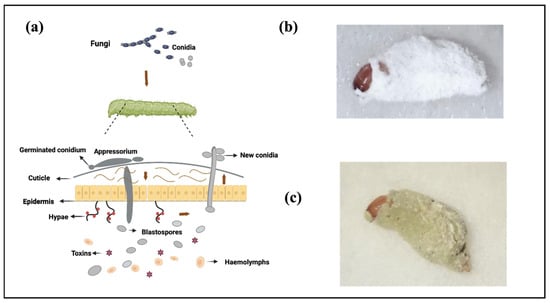
The mode of action of entomopathogenic fungi is a complex, multi-step process starting with the adherence of fungal spores to the insect host. Once attached, the spores germinate and produce specialized structures called appressoria, which secrete a suite of enzymes — including chitinases, proteases, and lipases — to digest the insect’s cuticular barriers. Following penetration, the fungi proliferate within the insect’s body, leading to a systemic infection that overwhelms the host's immune defenses and results in mortality. The efficiency of this process is influenced by environmental factors such as humidity, temperature, and ultraviolet radiation.
Molecular Mediators
Beyond physical penetration, entomopathogenic fungi deploy secondary metabolites and adhesins that are crucial in the establishment of infection. These molecular mediators facilitate the initial binding to host tissues and help evade the immune responses of the insect. The secreted proteins and enzymes not only play a significant role in pathogenesis but are also subjects of ongoing research aimed at enhancing biocontrol efficacy. Understanding these molecular processes is vital for developing strategies that optimize fungal performance in field applications.
Plant Interactions and Ecosystem Benefits
Endophytic Associations
Recent studies have broadened our understanding of entomopathogenic fungi by revealing their capacity for endophytic colonization. When these fungi inhabit plant tissues, they can stimulate a range of beneficial responses. The establishment of such symbiotic relationships is known to bolster plant growth, enhance nutrient uptake, and improve overall plant vigor. In particular, their ability to induce systemic resistance in plants helps to fortify them against a wide spectrum of pathogens and pest attacks. This dual functionality as both biocontrol agents against insects and promoters of plant health underscores the comprehensive benefits of integrating EPF into agricultural practices.
Ecological and Environmental Impact
The application of entomopathogenic fungi in agriculture extols significant environmental benefits. By reducing the reliance on chemical pesticides, EPF contribute to the preservation of non-target organisms and overall biodiversity. Their role in integrated pest management is critical for developing sustainable agroecosystems that maintain soil health and promote ecological balance. Moreover, the use of EPF results in lower chemical residues on crops, thereby mitigating potential health risks for consumers and reducing the environmental burden associated with pesticide runoff.
Challenges and Future Perspectives
Field Application Variability
Despite the promising attributes of entomopathogenic fungi, real-world applications present several challenges. Variability in field performance, largely due to environmental fluctuations and the complex dynamics of host-pathogen interactions, remains a significant barrier. Factors such as extreme weather conditions, differing pest pressure levels, and soil composition can influence the efficacy of EPF formulations. Addressing these issues requires continual research into formulation chemistry, delivery mechanisms, and the use of adjunctive agents that can stabilize fungal viability under diverse conditions.
Biotechnological Enhancements
Advances in genetic engineering and biotechnological approaches are paving the way for enhanced formulations of EPF. By modifying specific genetic pathways, researchers are aiming to improve fungal virulence, stress tolerance, and the overall consistency of biocontrol performance. Innovations in nanoparticle technology and encapsulation methods offer promising avenues to protect fungal spores from adverse environmental factors. Furthermore, the integration of omics technologies is expected to deepen our understanding of the molecular interactions between EPF and their insect and plant hosts, thus enabling precision enhancement of their biocontrol attributes.
Comparative Overview of Key Characteristics
| Characteristic | Description | Significance |
|---|---|---|
| Infection Mechanism | Spore adhesion, enzymatic cuticle degradation, systemic infection | Ensures rapid host mortality; core to pest management efficacy |
| Endophytism | Colonization of plant tissues leading to enhanced growth and defense | Dual role in insect control and plant health promotion |
| Biocontrol Applications | Integration in integrated pest management (IPM) strategies | Reduces chemical pesticide use, fostering sustainable agriculture |
| Environmental Impact | Minimally invasive, safe for non-target species | Promotes ecological balance and minimizes residual toxicity |
| Research Challenges | Field variability, formulation stability, mass production hurdles | Guide future studies towards optimizing deployment |
Integrated Discussion
Sustainable Agricultural Practices
The application of EPF in agriculture provides not only an alternative to conventional chemical insecticides but also sets the stage for integrated approaches that emphasize sustainability and safety. By targeting specific pest species while preserving beneficial organisms, EPF contribute to an agricultural model that is both productive and environmentally responsible. In many systems, these fungi act as both active biocontrol agents and supportive endophytes, thereby enhancing crop resilience and reducing the overall pest burden.
The dual advantages of pest suppression and plant growth promotion are critical in modern agricultural practices facing increasing pressures from climate change, pest migration, and the adverse effects of chemical inputs. As the global community emphasizes sustainable development goals, the integration of EPF-based solutions offers a compelling strategy for ensuring food security without compromising environmental integrity.
Future Research Directions
Optimizing Field Formulations
Future research must prioritize the standardization of EPF formulations, addressing the challenges imposed by variable environmental conditions. Formulation science, augmented by biotechnological innovations, is expected to yield products that exhibit consistent performance. Techniques such as nanoencapsulation and adjuvant addition are under active investigation to improve spore viability and persistence in field applications.
Harnessing Multiomics
The application of multiomics — including genomics, transcriptomics, and proteomics — is revolutionizing our understanding of host-pathogen interactions. These approaches not only help in identifying key genetic determinants responsible for pathogenicity and endophytic behavior but also guide the selection of candidate strains for enhanced efficacy. The integration of omics data into predictive models of biocontrol performance can accelerate the development of next-generation EPF formulations.
Public Acceptance and Regulatory Frameworks
Finally, the widespread adoption of EPF-based biocontrol agents hinges on both public acceptance and robust regulatory frameworks. Educating stakeholders about the environmental and health benefits, as opposed to the risks associated with chemical pesticides, is crucial. Additionally, streamlining approval processes for novel biopesticides will foster innovation and accelerate the availability of improved formulations to the agricultural community.
References
- Article on Sustainable Pest Management - Taylor & Francis
- Research on Plant–Fungus Interactions - MDPI
- Microbiology Insights - Frontiers in Microbiology
- Fungal Biocontrol Strategies - Frontiers in Microbiology
-
Genomic Approaches in EPF - NCBI
- Chapter on EPF Prospects - Springer
- EPF against Acaricides - MDPI
- Entomopathogenic Fungi for Mosquito Control - Oxford Academic
-
Fungal Pathogenicity Studies - ScienceDirect
- Fungal Interactions in Agriculture - Wiley Online Library
Recommended Related Queries
Last updated March 1, 2025