
Mastering the Non-Negotiable Skills of a Venture Capital Analyst
Essential Capabilities for Success in the Fast-Paced World of VC
Key Takeaways for Aspiring VC Analysts
- Financial modeling and valuation are foundational: Develop expert-level proficiency in building, analyzing, and interpreting financial models specific to startups and early-stage companies.
- Deep dive into market research and due diligence: Cultivate a rigorous approach to identifying market opportunities, competitive landscapes, and potential risks associated with investments.
- Beyond technical skills: While quantitative abilities are crucial, strong communication, networking, and a genuine passion for innovation are equally vital for long-term success in venture capital.
Becoming a successful Venture Capital (VC) Analyst requires a distinct blend of analytical rigor, market acumen, and interpersonal skills. While the VC landscape is dynamic and often opaque, certain core competencies are universally recognized as essential for entry and advancement in the field. These non-negotiable skills form the bedrock upon which a thriving VC career is built, enabling analysts to effectively evaluate potential investments, support portfolio companies, and contribute to the firm's overall success.
Ten Concrete and Specific Skills for Aspiring VC Analysts
To excel as a VC Analyst, focusing on mastering specific, actionable skills is crucial. Here are ten non-negotiable hard skills, presented as concrete goals you can set for your skill set development:
1. Financial Modeling Mastery
Develop the ability to construct detailed, dynamic financial models for early-stage companies and startups. This includes proficiency in projecting revenue growth, cost structures, funding rounds, and potential exit scenarios. Aim to build models that are not only accurate but also flexible enough to incorporate different assumptions and sensitivities.
Specific Goals:
- Build three comprehensive financial models for hypothetical startups in different sectors (e.g., SaaS, e-commerce, biotech), including detailed revenue build-ups and expense forecasts.
- Learn and apply various valuation methodologies relevant to early-stage companies, such as comparable company analysis (CCA), precedent transactions analysis (PTA), and discounted cash flow (DCF) with appropriate adjustments for risk and growth.
- Become proficient in using Excel or Google Sheets for complex financial calculations, data manipulation, and model auditing.
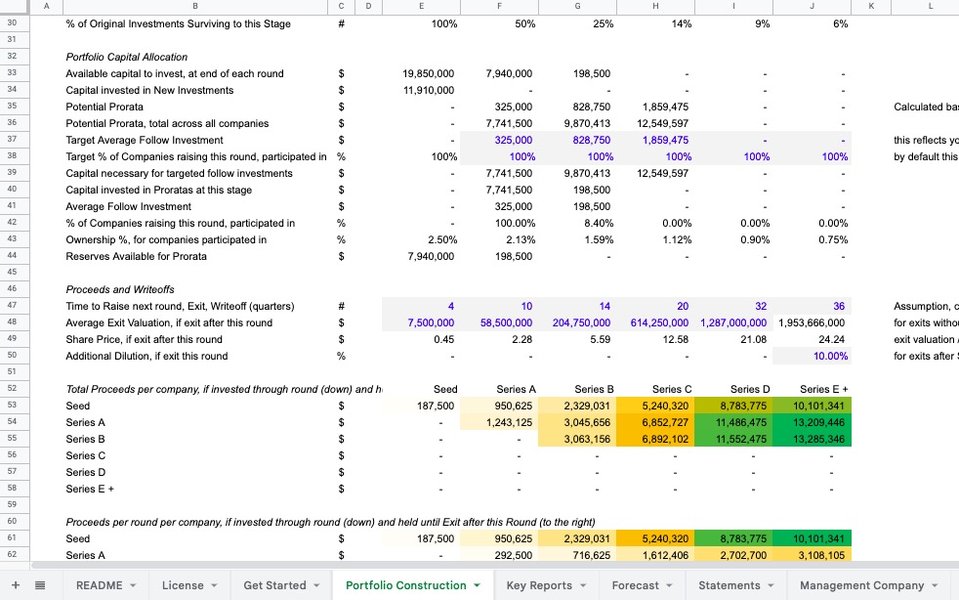
Example of a Venture Capital Financial Model Interface
2. Advanced Financial Analysis and Interpretation
Beyond building models, a VC Analyst must be able to critically analyze and interpret financial statements, key performance indicators (KPIs), and other financial data to assess a company's current financial health and future potential. This involves understanding the nuances of startup finance and recognizing red flags.
Specific Goals:
- Analyze the financial statements (Income Statement, Balance Sheet, Cash Flow Statement) of at least five different startups, identifying key trends, ratios, and potential areas of concern.
- Understand and interpret common startup KPIs such as Customer Acquisition Cost (CAC), Lifetime Value (LTV), Burn Rate, and Monthly Recurring Revenue (MRR).
- Evaluate a company's capital structure and understand the implications of different financing rounds and debt.
3. Due Diligence Expertise
Master the process of conducting thorough due diligence on potential investment opportunities. This involves not only financial analysis but also in-depth market research, competitive analysis, technology assessment, and evaluation of the management team. The goal is to identify both the opportunities and the risks associated with an investment.
Specific Goals:
- Conduct a detailed due diligence exercise on a hypothetical startup, covering market size, competitive landscape, intellectual property, and management team assessment.
- Learn to identify and evaluate potential legal, regulatory, and operational risks associated with early-stage companies.
- Develop a structured approach to gathering and synthesizing information from various sources during the due diligence process.
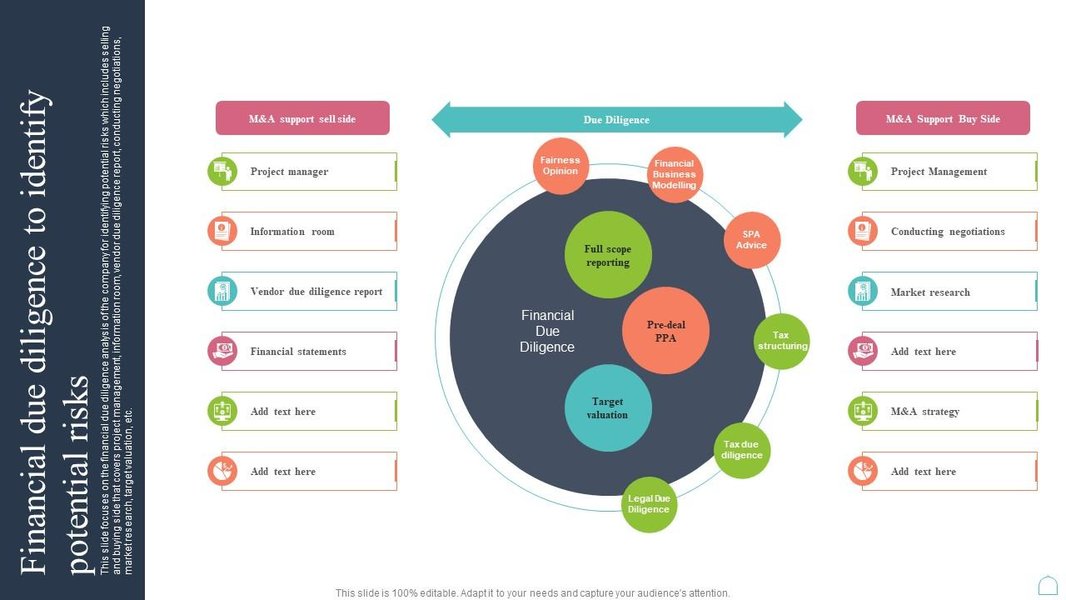
Identifying Potential Risks Through Financial Due Diligence
4. Market Research and Industry Knowledge
Possess a strong understanding of various industries and market dynamics relevant to venture capital investments. This includes the ability to research market size, growth trends, customer behavior, and the competitive landscape within specific sectors. Being passionate about varied sectors is a plus.
Specific Goals:
- Conduct in-depth market research on two distinct technology sectors, identifying key players, market trends, and potential investment opportunities.
- Analyze a specific market to determine its size, growth rate, and segmentation, using reliable data sources.
- Stay updated on emerging technologies and industry news through publications, reports, and conferences.
5. Deal Analysis and Structuring Fundamentals
Understand the basic principles of deal analysis and how venture capital deals are structured. This includes familiarity with term sheets, preferred stock provisions, liquidation preferences, and other key terms that impact investment outcomes.
Specific Goals:
- Analyze and compare the terms of several publicly available venture capital deal term sheets, identifying key differences and implications.
- Understand the purpose and impact of common preferred stock provisions in venture capital financing rounds.
- Learn about different exit strategies (e.g., IPO, acquisition) and how they affect investment returns.
6. Business Strategy Evaluation
Assess the viability and scalability of a startup's business model and strategy. This involves evaluating their go-to-market plan, competitive advantage, and potential for growth and profitability. Analysts act as "Sherlocks," solving mysteries about markets and companies.
Specific Goals:
- Evaluate the business models of five different startups, identifying their core value proposition, target market, and revenue streams.
- Analyze a startup's competitive strategy and assess its ability to defend its market position.
- Understand the concept of product-market fit and how to evaluate if a startup has achieved it.
7. Database and Data Aggregation Proficiency
Develop strong skills in gathering, organizing, and analyzing data from various sources. This includes proficiency in using databases, data visualization tools, and other software to support research and analysis. Knowledge of Notion, Airtable, or Google Sheets is also useful, alongside expert-level Excel skills.
Specific Goals:
- Utilize a database or spreadsheet to aggregate and organize financial and market data for a potential investment.
- Create charts and visualizations to present key findings from your research and analysis.
- Learn to use online research tools and platforms to gather information on companies and industries.
8. Understanding of Technology and Product
While not all VC analysts need to be deeply technical, a fundamental understanding of technology trends and the ability to assess the potential of a product or service is increasingly important, especially in tech-focused funds. In some cases, VC roles may even involve acting as a technology consultant.
Specific Goals:
- Research and understand the basics of an emerging technology relevant to venture capital (e.g., AI, blockchain, biotechnology).
- Evaluate a startup's product or service from a user perspective and assess its market potential.
- Understand the typical product development lifecycle and the challenges startups face in bringing products to market.
9. Presentation and Communication Skills
Clearly and concisely present findings and recommendations to partners and other stakeholders. This includes the ability to create compelling presentations and articulate complex ideas effectively. Good communication and people skills are essential.
Specific Goals:
- Prepare and deliver a presentation on a hypothetical investment opportunity, summarizing your key findings and recommendation.
- Practice explaining complex financial concepts in a clear and understandable manner.
- Refine your written communication skills for preparing investment memos and reports.
10. Networking and Relationship Building
While often considered a soft skill, the ability to build and maintain relationships with entrepreneurs, industry experts, and other members of the venture ecosystem is crucial for deal sourcing and gaining market insights. Develop strong interpersonal skills to build meaningful relationships.
Specific Goals:
- Attend industry events or webinars and connect with at least five new people in the startup or VC community.
- Conduct informational interviews with individuals working in venture capital to learn about their experiences and gain insights.
- Practice effectively communicating your interests and goals when networking.
Developing these skills requires dedicated effort and practice. Aspiring VC analysts should actively seek opportunities to apply these skills through internships, personal projects, and relevant coursework.
Visualizing Key Skill Areas
The following radar chart provides a visual representation of the relative importance and typical proficiency levels expected of an aspiring VC Analyst across key skill areas. This is an opinionated analysis based on the synthesis of information regarding the VC Analyst role.
Educational Background and Experience
While specific educational requirements can vary between firms, a strong academic background is generally expected. Many VC analysts hold bachelor's degrees in finance, business, economics, or related fields. Some firms may prefer candidates with an MBA or a graduate degree in a relevant discipline. Experience in investment banking, management consulting, or startups can also be highly valuable, providing transferable skills in financial analysis, valuation, negotiation, and deal execution.
| Educational Background | Relevant Experience |
|---|---|
| Bachelor's Degree (Finance, Business, Economics, Math, Statistics) | Investment Banking Analyst |
| Master's Degree (Finance, Entrepreneurship, Strategy, MBA) | Management Consulting |
| Advanced Degrees (M.D., Ph.D. in relevant fields like Life Science) | Startup Experience (Product Management, Operations) |
The Value of Prior Experience
Prior experience in roles that involve rigorous analysis, financial modeling, and exposure to business operations can significantly enhance an aspiring VC analyst's profile. Investment banking provides a strong foundation in financial analysis and deal execution, while consulting hones problem-solving and strategic thinking. Experience within a startup offers invaluable insights into the entrepreneurial journey and business realities.
A Glimpse into the VC Analyst Role
The role of a VC Analyst is dynamic and demanding. Analysts are often the first point of contact for potential deals, responsible for sourcing and screening opportunities. Their daily tasks can involve extensive research, financial modeling, preparing investment memos, and supporting senior team members in due diligence and deal execution. The work hours can be long, especially during active deal cycles. Analysts are junior members in the VC hierarchy but their contributions are integral to the firm's investment process.
A Day in the Life of a Venture Capital Analyst
This video provides a look into the typical daily activities and environment of a VC Analyst, offering a practical perspective on the role's demands and responsibilities. It can help aspiring analysts understand the practical application of the skills discussed.
Frequently Asked Questions About Becoming a VC Analyst
Recommended Further Exploration
- How do venture capital firms source and evaluate deals?
- What are the common valuation methods used for early-stage startups?
- Understanding the key terms in a venture capital term sheet.
- Exploring the different roles and responsibilities within a venture capital firm.
References
Last updated May 20, 2025