
Unveiling the Hidden Costs: The Ethical Maze of AI-Generated Summaries
Navigating accuracy, bias, privacy, and accountability in the age of automated information.
As artificial intelligence (AI) continues to reshape how we access and process information, AI-generated summaries offer unprecedented speed and convenience. However, this reliance is not without its ethical pitfalls. Understanding these implications is crucial for users, developers, and policymakers to foster responsible AI deployment. This response, current as of May 10, 2025, delves into the multifaceted ethical considerations of using AI summaries.
Key Ethical Considerations at a Glance
Essential Insights and Takeaways
- Accuracy and Misinformation: AI summaries can contain factual errors, misinterpretations, or "hallucinations" (fabricated information), leading to the spread of false narratives and misinformed decisions.
- Bias and Fairness: AI models may inherit and amplify biases present in their training data, resulting in summaries that are skewed, discriminatory, or marginalize certain perspectives.
- Transparency and Accountability: The "black box" nature of many AI systems makes it difficult to understand how summaries are generated, posing challenges for assigning responsibility when errors or harms occur.
The Precision Predicament: Accuracy and the Specter of Misinformation
When Speed Outpaces Truth
One of the most significant ethical concerns surrounding AI-generated summaries is their potential for inaccuracy. While designed to distill vast amounts of text into digestible snippets, these tools are not infallible.
The Risk of "Hallucinations" and Factual Errors
AI models, particularly large language models (LLMs), can "hallucinate" – that is, generate information that is plausible-sounding but factually incorrect or entirely fabricated. Studies have shown that AI-generated summaries, including those for news articles, can exhibit significant error rates. This means users might unknowingly absorb and propagate misinformation, which can have serious consequences in fields like journalism, academic research, healthcare, and financial decision-making. Relying on unverified AI summaries undermines the ethical imperative of truthfulness.
Contextual Misinterpretations and Distortions
Beyond outright errors, AI may struggle with the nuanced understanding of context, leading to summaries that misrepresent or distort the original material's meaning. Omission of critical context, subtle shifts in emphasis, or misinterpretation of subtleties can alter the message significantly. This lack of deep contextual understanding can lead users to draw incorrect conclusions, eroding the reliability of the information consumed.
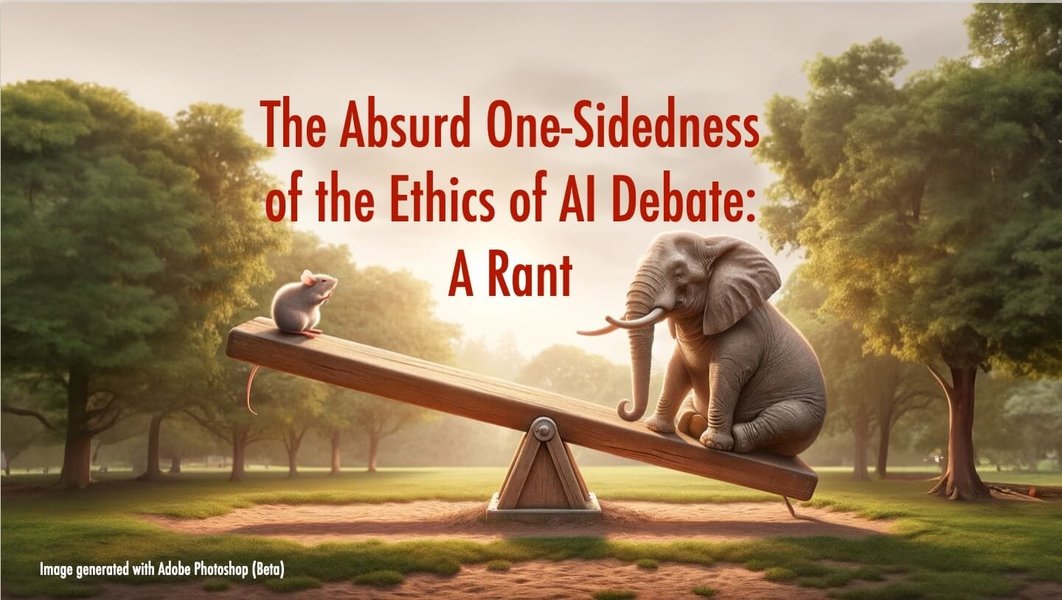
The ethical landscape of AI is complex, with ongoing debates about responsibility and impact.
The Shadow of Bias: Ensuring Fairness in AI Summaries
Can AI Summaries Be Truly Objective?
AI systems learn from the data they are trained on. If this data reflects existing societal biases related to race, gender, socioeconomic status, or other characteristics, the AI model is likely to internalize and perpetuate these biases in its outputs, including summaries.
Perpetuating Systemic Inequalities
Biased summaries can lead to unfair representation, marginalize minority viewpoints, or reinforce harmful stereotypes. For instance, an AI summarizing historical events might inadvertently prioritize dominant narratives while downplaying the contributions or suffering of underrepresented groups. In critical applications like legal research or policy analysis, biased summaries could lead to discriminatory outcomes and exacerbate social injustices. This contravenes ethical principles of fairness and equity.
Selective Emphasis and Omission
Even without overt malice, AI algorithms might make choices about what information to include or exclude based on patterns in their training data that inadvertently favor certain perspectives. This selective emphasis can skew a user's understanding of a topic, limiting their exposure to a diverse range of viewpoints and potentially influencing public opinion in ways that are not equitable.
The "Black Box" Conundrum: Transparency and Accountability
Who is Responsible When AI Gets it Wrong?
Many advanced AI systems operate as "black boxes," meaning their internal decision-making processes are opaque and difficult for humans to interpret. This lack of transparency has significant ethical implications for accountability.
Opacity in Summary Generation
When an AI produces an inaccurate or biased summary, the inability to understand *why* it made certain choices (e.g., why specific information was included, excluded, or phrased in a particular way) makes it challenging to diagnose and rectify underlying problems. This opacity can erode user trust and hinder the ability to critically evaluate the generated content.
The Accountability Gap
If decisions based on faulty AI summaries lead to negative consequences, determining who is responsible becomes a complex ethical and legal question. Is it the AI developer, the organization deploying the tool, or the end-user who relied on the summary? The absence of clear lines of accountability can mean that no entity takes full responsibility, potentially leaving those harmed without recourse. Ethical AI frameworks emphasize the need for mechanisms to ensure accountability, yet this remains a significant challenge for AI-generated content.
Intellectual Property and Originality Concerns
Navigating Copyright in an AI-Driven World
The creation and use of AI-generated summaries also raise important questions about intellectual property (IP) rights and plagiarism.
Training Data and Copyright Infringement
AI models are often trained on vast datasets, which may include copyrighted material scraped from the internet without explicit permission from rights holders. Summaries generated from such models could, therefore, be derivative of copyrighted works, leading to ethical and legal challenges concerning fair use and copyright infringement. Users relying on these summaries may unknowingly be party to these infringements.
Risk of Unintentional Plagiarism
While summaries are meant to condense information, AI might sometimes reproduce text segments from its training data too closely, or fail to appropriately attribute sources, leading to unintentional plagiarism. This can have serious consequences in academic and professional settings where originality and proper citation are paramount.
Safeguarding Information: Privacy and Data Security
Protecting Sensitive Data in AI Summarization
The process of generating summaries, especially from private or confidential documents, brings data privacy and security to the forefront of ethical concerns.
Confidentiality Breaches
If AI summarization tools are used on sensitive documents (e.g., internal business communications, medical records, legal case files), there's a risk that confidential information could be inadvertently included in summaries shared with unauthorized individuals. Furthermore, the input data itself might be stored or processed in ways that compromise its confidentiality.
Data Security and Potential for Misuse
AI systems and the data they process can be targets for cyberattacks. A breach could expose sensitive input data or the models themselves. There's also concern that AI capabilities could be exploited to analyze existing malware and generate new, more sophisticated variants, posing broader cybersecurity threats. Ensuring robust data protection measures and secure handling of information is an ethical imperative.
Comparative assessment of key ethical dimensions in current AI summarization tools versus an ideal ethical benchmark. Scores (1-10, higher is better/more ethical) are illustrative.
Broader Societal Impacts and User Dependence
The Ripple Effects of Automated Summarization
Beyond the immediate concerns, the widespread adoption of AI-generated summaries has broader societal implications, including effects on critical thinking skills and the potential for diminished human oversight.
Overreliance and De-skilling
Excessive dependence on AI summaries may erode users' critical thinking, analytical skills, and information literacy. If individuals become accustomed to passively receiving condensed information without engaging deeply with original source material, their ability to discern nuance, evaluate arguments, and synthesize complex information may decline. This "de-skilling" can make populations more susceptible to manipulation and misinformation.
Diminished Human Control and Oversight
Relying heavily on AI for information processing, particularly in critical decision-making contexts, raises concerns about the potential loss of human control. While AI can be a powerful aid, human oversight, judgment, and ethical reasoning remain indispensable. The allure of efficiency should not lead to the abdication of human responsibility in verifying and contextualizing information.
Potential for Misuse and Unintended Consequences
Like any powerful technology, AI summarization tools can be misused. They could be employed to generate misleading summaries at scale for propaganda purposes, or to automate the creation of low-quality content that floods information channels. The development of advanced AI systems also brings concerns about unintended consequences if these systems are not properly aligned with human values and priorities.
Visualizing the Interconnected Ethical Challenges
The ethical implications of AI-generated summaries are not isolated issues but rather a web of interconnected concerns. The mindmap below illustrates these relationships, highlighting how challenges in one area can impact others.
AI-Generated Summaries"] id1["Accuracy & Misinformation"] id1a["Hallucinations"] id1b["Factual Errors"] id1c["Contextual Misinterpretation"] id1d["Spread of Falsehoods"] id2["Bias & Fairness"] id2a["Training Data Bias"] id2b["Algorithmic Bias"] id2c["Reinforcing Stereotypes"] id2d["Marginalization"] id3["Transparency & Accountability"] id3a["'Black Box' Problem"] id3b["Lack of Interpretability"] id3c["Difficulty Assigning Responsibility"] id3d["Erosion of Trust"] id4["Intellectual Property"] id4a["Copyrighted Training Data"] id4b["Plagiarism Risks"] id4c["Authorship Issues"] id5["Privacy & Data Security"] id5a["Sensitive Information Disclosure"] id5b["Data Breaches"] id5c["Input Data Misuse"] id5d["Cybersecurity Threats"] id6["Societal Impact & User Dependence"] id6a["Overreliance & De-skilling"] id6b["Erosion of Critical Thinking"] id6c["Diminished Human Oversight"] id6d["Job Displacement (Content Creation)"] id6e["Environmental Impact (Training AI)"]
A Deeper Dive: AI Ethics Explored
Understanding the Broader Ethical Landscape
The video below offers a brief introduction to the complex world of AI ethics, exploring the challenges of applying traditional ethical frameworks to rapidly evolving technologies. Understanding these broader concepts helps contextualize the specific issues related to AI-generated summaries and underscores the importance of proactive ethical consideration in AI development and deployment.
This introduction touches upon key themes such as fairness, accountability, and transparency, which are directly relevant to the ethical use of AI summarization tools. It emphasizes that as AI becomes more integrated into our lives, a thoughtful approach to its ethical governance is not just beneficial but essential to mitigate risks and harness its potential for good.
Navigating the Risks: A Summary of Concerns and Mitigations
Key Challenges and Pathways to Responsible Use
The table below consolidates some of the primary ethical risks associated with AI-generated summaries and suggests potential mitigation strategies. Addressing these challenges requires a multi-stakeholder approach involving developers, users, educators, and policymakers.
| Ethical Concern | Description | Potential Consequences | Recommended Mitigation Strategies |
|---|---|---|---|
| Accuracy & Misinformation | AI produces factual errors, fabrications ("hallucinations"), or misrepresents source material. | Spread of false information, flawed decision-making, erosion of trust in information sources. | Human review and verification, cross-referencing with original sources, clear labeling of AI-generated content with limitations, ongoing model refinement for accuracy. |
| Bias & Fairness | AI reflects and amplifies biases from training data, leading to skewed or discriminatory outputs. | Reinforcement of stereotypes, marginalization of groups, unfair representation, perpetuation of systemic inequalities. | Diverse and representative training data, bias detection and mitigation techniques in AI development, algorithmic audits, promoting diverse perspectives in output. |
| Transparency & Accountability | Lack of clarity in how AI generates summaries ("black box") and difficulty in assigning responsibility for errors. | Reduced user trust, inability to correct systemic flaws, lack of recourse for harm caused by erroneous summaries. | Developing explainable AI (XAI) methods, providing clear information about data sources and model limitations, establishing clear lines of responsibility for AI outputs. |
| Intellectual Property | Use of copyrighted material in training data without permission; potential for plagiarism in summaries. | Legal liabilities, infringement of creators' rights, damage to academic/professional integrity. | Ensuring training data complies with copyright laws, implementing plagiarism detection, providing clear attribution for sources used in summaries. |
| Privacy & Data Security | Mishandling or leakage of sensitive information used as input or contained in summaries. | Violation of individual privacy, exposure of confidential data, identity theft, reputational damage. | Robust data encryption, secure data handling protocols, anonymization/pseudonymization techniques, regular security audits, user consent for data processing. |
| Overreliance & De-skilling | Users become overly dependent on AI summaries, leading to a decline in critical thinking and analytical skills. | Reduced ability to engage with complex information, increased susceptibility to manipulation, diminished information literacy. | Educating users on the limitations of AI, encouraging critical engagement with original sources, promoting media literacy programs, integrating AI tools as aids rather than replacements for human cognition. |
Frequently Asked Questions (FAQ)
What are "AI hallucinations" in the context of summaries?
"AI hallucinations" refer to instances where an AI model generates information that is incorrect, nonsensical, or entirely fabricated, yet presents it as factual. In summaries, this could mean inventing details, misstating facts from the source text, or creating content unrelated to the original document. These occur because AI models predict probable sequences of words rather than truly "understanding" content.
How can bias in AI-generated summaries be effectively addressed?
Addressing bias is a complex, ongoing process. Key strategies include:
- Diverse Training Data: Using datasets that are more representative of diverse populations and perspectives.
- Algorithmic Fairness Techniques: Implementing methods during model development to detect and mitigate bias.
- Bias Audits: Regularly testing AI systems for biased outputs with diverse test cases.
- Human Oversight: Involving diverse human reviewers to evaluate and correct biased summaries.
- Transparency: Being open about the potential for bias and the steps taken to address it.
Who is typically held responsible if an AI-generated summary causes harm?
Determining responsibility is one of the major ethical and legal challenges. Accountability can potentially lie with several parties:
- Developers: For flaws in the AI's design or training.
- Deploying Organizations: For how the AI tool is implemented and used within their services.
- End-Users: For relying on AI-generated information without due diligence or critical assessment, especially in high-stakes situations.
Are there significant legal risks associated with relying on AI summaries?
Yes, several legal risks exist:
- Copyright Infringement: If summaries reproduce copyrighted material without permission or fair use justification.
- Defamation: If an inaccurate summary harms an individual's or organization's reputation.
- Misinformation Liability: In certain professional contexts (e.g., medical, financial advice), providing or relying on inaccurate AI-generated information could lead to legal action.
- Data Privacy Violations: If personal data used to create summaries is handled improperly, breaching regulations like GDPR or CCPA.
Recommended Further Exploration
Delve Deeper into Related Topics
- How can organizations implement ethical AI frameworks for content generation tools?
- What are the best practices for human oversight of AI-generated information summaries?
- How does the 'black box' nature of AI impact user trust and adoption of summarization technologies?
- What role does user education play in mitigating the risks of AI-generated misinformation?
References
Sources and Further Reading
Last updated May 10, 2025