
Visualizing the Long-Term Journey of Building Facades: Understanding ETICS Reliability
A deep dive into how External Thermal Insulation Composite Systems perform over decades, illustrated through key visual concepts.
External Thermal Insulation Composite Systems (ETICS) are multi-layered cladding systems applied to the exterior walls of buildings. Since their introduction in the 1960s, they have become a crucial technology for enhancing thermal performance, reducing energy consumption for heating and cooling, and lowering carbon emissions. However, like any building component exposed to the elements, their performance and integrity can change over time. Understanding the long-term reliability of installed ETICS is essential for ensuring sustained energy savings, occupant safety, and building durability.
A study assessing this long-term reliability examines how these systems withstand decades of environmental exposure, material aging, and operational stresses. This involves analyzing potential failure modes, evaluating the durability of different materials and compositions, and understanding the impact of factors like climate, installation quality, and maintenance.
Key Insights: Visualizing ETICS Longevity
- ETICS Structure & Aging: Visuals showing the layered composition of ETICS and how these layers degrade (e.g., cracking, delamination) over time are crucial for understanding potential weaknesses.
- Environmental Impact: Illustrations depicting ETICS facades in various climates (urban, maritime, cold) highlight how environmental factors accelerate specific types of wear and tear.
- Performance Over Time: Charts and thermal images effectively demonstrate how the thermal insulation capability and overall integrity of ETICS can change throughout its service life, emphasizing the importance of proper specification and maintenance.
Illustrating the Study: Key Visual Concepts
To effectively communicate the findings of a study on the long-term reliability of ETICS, several types of visuals can be employed. These range from detailed technical diagrams to real-world photographic comparisons.
1. The Anatomy of ETICS: Cross-Sectional Views
Understanding the Layers
A fundamental visual is a clear, labeled cross-section diagram of an ETICS installation. This helps viewers understand the system's construction and the function of each component.
- Substrate: The original building wall (e.g., masonry, concrete).
- Adhesive: Secures the insulation boards to the substrate.
- Insulation Board: The core thermal barrier, typically made of Expanded Polystyrene (EPS), Mineral Wool (MW), or Extruded Polystyrene (XPS).
- Base Coat: A layer applied over the insulation, often cementitious or polymer-modified.
- Reinforcing Mesh: Embedded within the base coat to provide tensile strength and impact resistance, preventing cracks.
- Primer (Optional): Applied over the base coat to improve adhesion and equalize suction for the finish coat.
- Finish Coat: The final, decorative, and protective layer, providing weather resistance and aesthetic appeal (e.g., acrylic, silicate, silicone renders).
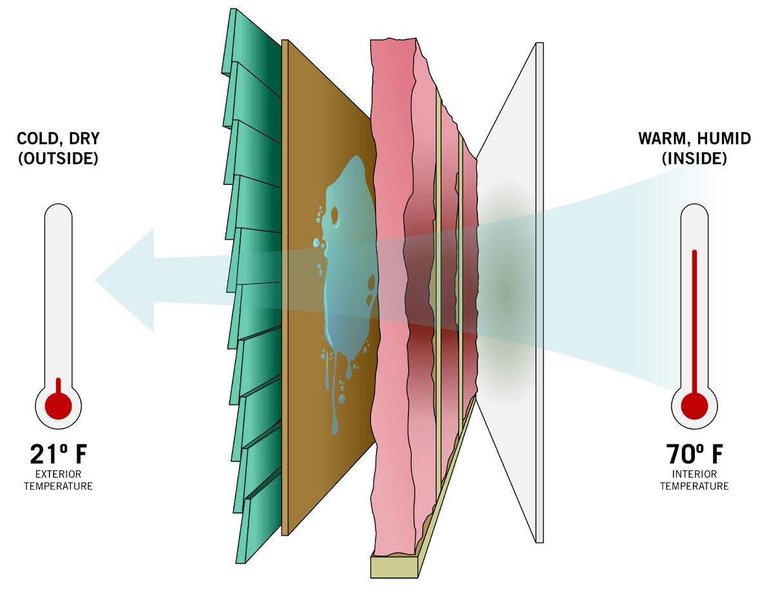
Conceptual illustration of layered wall insulation systems, similar in principle to ETICS.
Visualizing Degradation Over Time
A comparative cross-section showing a "new" system versus an "aged" system (e.g., after 20-30 years) can powerfully illustrate long-term reliability issues. The aged section might depict:
- Fine cracks propagating through the render and base coat.
- Signs of moisture ingress between layers or within the insulation.
- Partial delamination between the insulation board and substrate or base coat.
- Reduced thickness or altered texture of the finish coat due to erosion.
- Visual indication of reduced thermal resistance (e.g., using a color gradient).
2. ETICS vs. The Elements: Environmental Exposure and Aging
Climate's Influence
Illustrations showing ETICS facades in different climatic conditions can highlight environment-specific degradation patterns:
- Urban Environments: Depicting surface soiling from pollution, potential chemical attack from acid rain, and potentially higher surface temperatures due to urban heat island effect.
- Maritime Environments: Showing effects of salt spray (efflorescence, potential corrosion of fixings if applicable), high humidity fostering biological growth (algae, mold), and wind-driven rain impacts.
- Cold Climates: Illustrating freeze-thaw cycle effects (micro-cracking, moisture expansion), potential frost damage, and challenges with application during cold weather.
- High UV Exposure: Showing potential discoloration, chalking, or degradation of organic components in the finish coat over time.
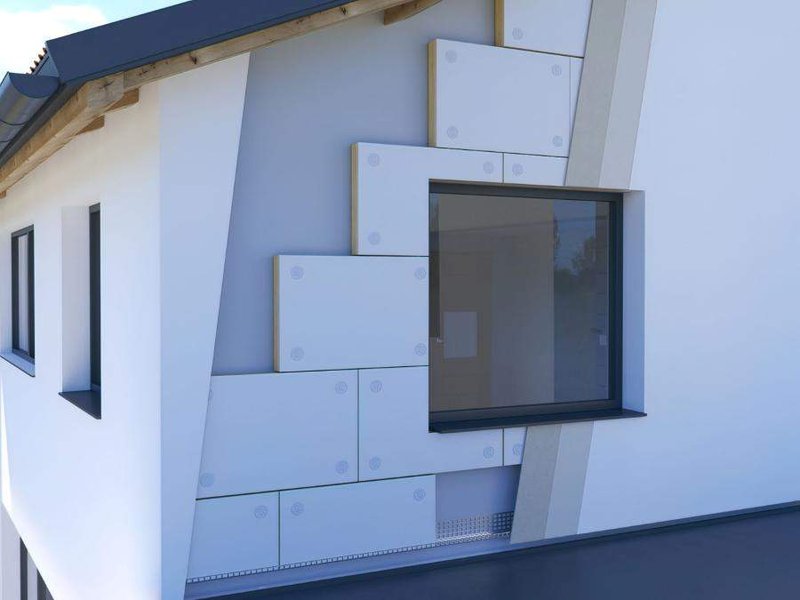
Example of a building utilizing External Thermal Insulation Composite Systems.
Common Signs of Aging and Defects
Visuals focusing on common defects observed in long-term studies are essential:
- Cracking: Close-ups showing different types of cracks (hairline, map cracking, structural cracks) in the render.
- Hollowing/Debonding: Illustrations or photos indicating areas where the system has detached from the substrate or layers have separated (often detected by acoustic tapping).
- Biological Growth: Images showing patches of algae (green), mold (black), or lichen growth on the facade surface, often linked to moisture retention.
- Surface Degradation: Depicting chalking, fading, or erosion of the finish coat.
- Impact Damage: Showing localized damage from impacts (e.g., punctures, dents) that can compromise the system's integrity.
- Water Staining/Damp Patches: Highlighting areas where moisture issues are visible, potentially indicating leaks or condensation problems.
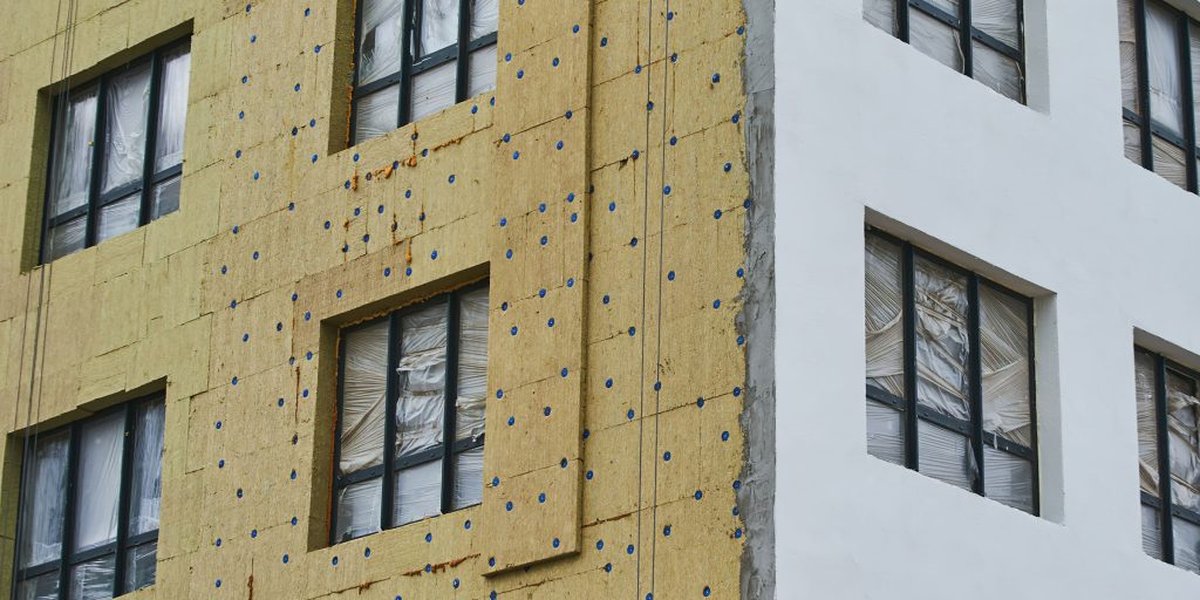
Illustration of ETICS application, showing the base layers before the final finish.
3. Assessing Performance: Testing and Evaluation
Non-Destructive and Laboratory Testing
Illustrations can showcase the methods used to assess ETICS reliability:
- Visual Inspection: Photos of inspectors examining facades, possibly using binoculars or drones.
- Thermographic Survey: Thermal images highlighting inconsistencies in surface temperature, indicating potential thermal bridges, moisture presence, or insulation defects.
- Moisture Meter Readings: Depicting technicians using surface or invasive moisture meters to check for dampness within the system.
- Adhesion Pull-Off Tests: Diagrams or photos showing equipment used to test the bond strength between layers.
- Laboratory Testing: Illustrations of ETICS samples undergoing accelerated weathering (UV, rain, temperature cycles), water penetration tests, or thermal conductivity measurements in controlled environments.
Performance Over Time: Graphs and Charts
Data visualization is key to showing trends:
- Thermal Conductivity Graph: A line graph showing how the effective thermal conductivity of the system might slightly increase over time due to aging or moisture, impacting energy savings.
- Defect Prevalence Chart: A bar or pie chart showing the relative frequency of different defect types observed in a large sample of aged ETICS installations.
- Reliability Timeline: A timeline graphic illustrating the expected service life, key degradation milestones, and typical maintenance intervals.
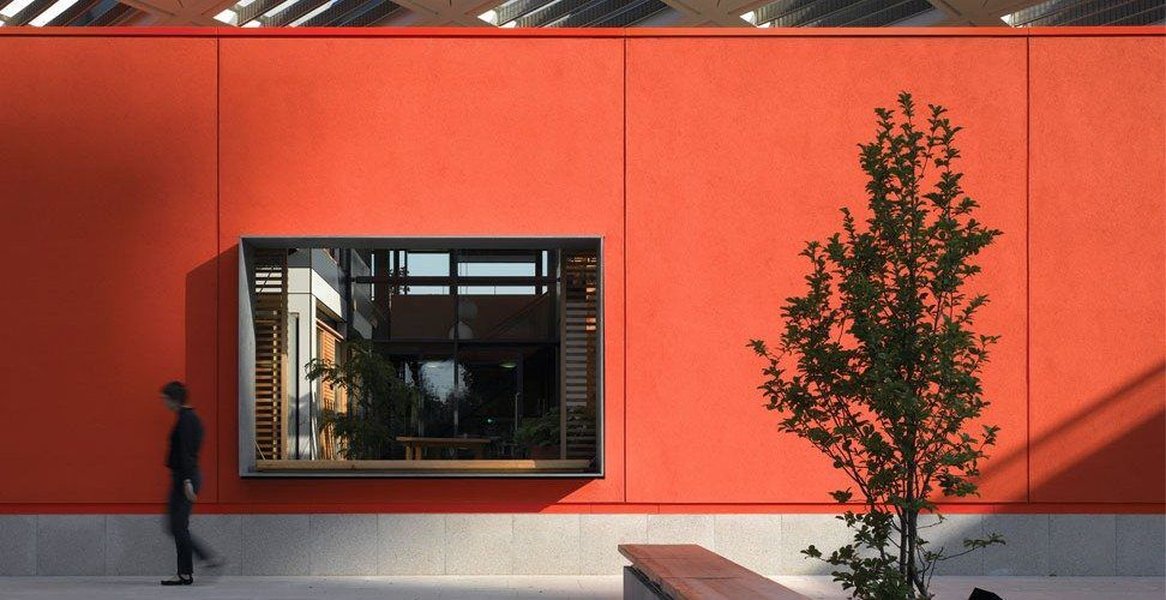
Modern exterior insulation contributing to building aesthetics and energy efficiency.
Factors Influencing ETICS Long-Term Reliability
The long-term reliability of an ETICS installation is not solely dependent on the materials themselves but on a complex interplay of factors. This mindmap outlines the key areas influencing how well these systems perform over decades.
Understanding these interconnected factors is crucial for designing, installing, and maintaining ETICS to maximize their lifespan and ensure sustained performance, as highlighted in reliability assessment studies.
Comparative Reliability Assessment of ETICS Types
Different ETICS configurations exhibit varying performance characteristics over the long term. This radar chart provides a comparative overview based on typical expectations for systems based on Expanded Polystyrene (EPS) versus Mineral Wool (MW) insulation, considering several key reliability factors. Note that actual performance heavily depends on specific product quality, installation, and environmental conditions.
This chart illustrates trade-offs: for instance, MW-based systems typically offer superior fire resistance, while EPS systems might have slightly better dimensional stability under certain conditions. Both systems heavily rely on the quality of the finish coat for UV/weathering and biological resistance. Long-term reliability studies help quantify these differences through field observations and laboratory testing.
Common ETICS Defects and Reliability Impacts
Long-term reliability assessments often involve identifying and analyzing common defects. The table below summarizes some frequently observed issues, their likely causes, and their potential impact on the system's overall reliability and performance.
| Defect | Common Causes | Impact on Reliability |
|---|---|---|
| Surface Cracking (Hairline to Medium) | Shrinkage of render, thermal stress, inadequate reinforcement, impact | Allows water ingress, accelerates degradation, aesthetically displeasing, may propagate |
| Debonding / Hollowing | Poor substrate preparation, improper adhesive application, moisture trapped behind system, freeze-thaw cycles | Loss of structural integrity, reduced thermal performance, potential for large sections to detach (safety hazard) |
| Biological Growth (Algae/Mold) | High surface moisture retention, shaded areas, lack of biocides in finish coat, environmental humidity | Aesthetically damaging, can retain moisture leading to further degradation, potential health concerns |
| Finish Coat Deterioration (Chalking, Fading, Erosion) | UV exposure, weathering, pollution, poor quality coating | Reduced protection for underlying layers, increased water absorption, aesthetic degradation |
| Water Ingress / Damp Patches | Cracks, faulty detailing (windows, sills, roof junctions), impact damage, interstitial condensation | Reduced thermal insulation value, potential damage to insulation and substrate, freeze-thaw damage risk, promotes biological growth |
| Mechanical / Impact Damage | Accidental impacts, vandalism | Breaches protective layers, allows water ingress, creates weak points in the system |
| Thermal Bridging | Improper installation around openings, inadequate insulation thickness, mechanical fixings not thermally broken | Reduced overall thermal performance, potential for localized condensation and mold growth internally |
Studies assessing long-term reliability often quantify the prevalence and severity of these defects to understand failure mechanisms and inform best practices for design, installation, and maintenance.
Understanding Common Issues: Installation and Render Problems
Proper installation and the choice of render system are critical for the long-term performance and reliability of ETICS. Mistakes during installation or inadequate material specification can lead to premature failures, such as water penetration, cracking, and reduced thermal efficiency. The video below discusses common problems associated with external wall insulation and render, offering insights into how these issues arise and potential preventative measures, which are key considerations in long-term reliability assessments.
This discussion highlights the practical challenges faced in ensuring ETICS durability, reinforcing the findings from scientific studies that emphasize the importance of correct detailing, material compatibility, and skilled workmanship for achieving the designed service life.
Frequently Asked Questions (FAQ)
What exactly are External Thermal Insulation Composite Systems (ETICS)? +
ETICS (also known as EIFS - External Insulation Finishing Systems in North America) are multi-component cladding systems applied to the exterior surfaces of building walls. They typically consist of thermal insulation boards (like EPS or mineral wool) fixed to the wall, covered with a reinforced base coat, and finished with a decorative and protective render. Their primary purpose is to improve the building's thermal insulation, reducing heat loss in winter and heat gain in summer.
How long are ETICS expected to last? +
The expected service life of ETICS can vary significantly depending on the quality of materials, installation, environmental conditions, and maintenance. Many systems are designed for a service life of 25-30 years or more. Studies and real-world observations, such as those referenced by the European Association for ETICS (EAE), have shown that well-designed and properly installed systems can remain reliable and perform effectively for 40-50 years or even longer, often requiring only periodic maintenance like cleaning or recoating the finish layer.
What are the most common failure modes affecting ETICS reliability? +
Common issues impacting long-term reliability include cracking of the render (due to thermal stress, shrinkage, or impact), debonding of layers (due to poor adhesion or moisture), water ingress (often through cracks or faulty detailing around openings), biological growth (algae or mold, especially in damp or shaded areas), and deterioration of the finish coat due to weathering and UV exposure. Severe issues like extensive debonding can compromise both thermal performance and safety.
How is the long-term reliability of ETICS assessed? +
Assessment typically involves a combination of methods:
- Field Surveys: Inspecting existing installations of various ages to document their condition and identify defects.
- Non-Destructive Testing (NDT): Using techniques like thermography (to detect thermal anomalies), moisture meters, and acoustic sounding (to detect debonding).
- Laboratory Testing: Analyzing samples taken from existing installations or subjecting new samples to accelerated aging tests (simulating weather, UV exposure, freeze-thaw cycles) to evaluate material durability (e.g., changes in thermal conductivity, water absorption, mechanical strength).
- Data Analysis: Correlating observed defects and performance changes with factors like system type, age, environmental conditions, and installation practices.
References
- Long-term performance - European Association for ETICS (EAE)
-
Durability assessment of external thermal insulation composite systems ... - ScienceDirect
- Durability Analysis of Building Exterior Thermal Insulation System... - ResearchGate
- Study on Evaluation System of External Thermal Insulation Composite... - SpringerLink
- Long-term performance of External Thermal Insulation Systems ETICS - ResearchGate
- Durability Assessment of ETICS: Comparative Evaluation... - MDPI
Recommended Reading
Last updated April 23, 2025