
Optimizing Thermal Performance: A Multi-Objective Finite Element Approach for EV Battery Cells
Enhancing Electric Vehicle Battery Lifespan, Safety, and Efficiency through Advanced Temperature Prediction
Key Insights into EV Battery Thermal Optimization
- Finite Element Method (FEM) is indispensable for detailed thermal analysis: FEM allows for precise prediction of temperature distribution within EV battery cells and packs, crucial for understanding and mitigating thermal issues.
- Multi-objective optimization is key for balanced performance: Optimizing EV battery design involves balancing conflicting objectives such as energy density, fast charging capability, high-rate discharging, and lifespan, all significantly influenced by temperature.
- Temperature management directly impacts battery longevity and safety: Maintaining optimal operating temperatures and minimizing temperature gradients are vital for extending battery lifespan, preventing thermal runaway, and ensuring overall electric vehicle safety.
The rapid growth of the electric vehicle (EV) market has underscored the critical importance of advanced battery technology. At the heart of EV performance and safety lies the battery pack, a complex system where temperature management is paramount. Lithium-ion batteries, the prevalent choice for EVs, are highly sensitive to temperature fluctuations. Suboptimal temperatures can lead to accelerated degradation, reduced capacity, increased internal resistance, and even thermal runaway, posing significant safety risks. Therefore, accurately predicting and managing the temperature distribution within EV battery cells and packs is a fundamental challenge in current EV design and engineering.
This manuscript delves into the application of the Finite Element Method (FEM) for comprehensive temperature prediction in EV battery cells, integrating a multi-objective optimization framework to address the complex interplay of performance metrics. FEM, a robust numerical technique, enables detailed thermal modeling of battery components, accounting for various heat generation sources and heat transfer mechanisms. By combining this predictive power with multi-objective optimization algorithms, engineers can design battery systems that achieve a harmonious balance of crucial performance indicators, including energy density, charging speed, discharging efficiency, and overall lifespan.
The Indispensable Role of Finite Element Method in Battery Thermal Analysis
The Finite Element Method (FEM), also known as Finite Element Analysis (FEA), is a powerful computational tool used to solve complex engineering problems, particularly those involving partial differential equations. In the context of EV battery thermal management, FEM is invaluable for its ability to model intricate geometries and material properties, providing a detailed understanding of temperature distribution and thermal stress within the battery components.
Mechanisms of Heat Generation in EV Batteries
Understanding the sources of heat within a battery cell is the first step towards effective thermal management. Heat generation in lithium-ion batteries primarily stems from electrochemical reactions, internal resistance, and entropy changes during charge and discharge cycles. The rate of heat generation is influenced by factors such as current density, cell chemistry, and operating temperature. FEM allows engineers to incorporate these complex heat sources into their models, providing a realistic representation of the thermal environment within the battery.
- Ohmic Heating (Joule Heating): This is the most significant source of heat, generated due to the internal electrical resistance of the battery components (electrodes, electrolyte, current collectors) as current flows. The heat generated is proportional to the square of the current and the resistance (\(Q = I^2R\)).
- Electrochemical Reaction Heat: Heat is also generated or absorbed due to the exothermic or endothermic nature of the electrochemical reactions occurring during charge and discharge. This heat can vary depending on the direction of current flow.
- Entropy Change Heat: Reversible heat generation occurs due to entropy changes during intercalation and de-intercalation of lithium ions within the electrode materials.
FEM Applications in Temperature Prediction
FEM models can predict various thermal phenomena in battery cells and packs, from bulk temperature to localized hot spots. This predictive capability is vital for designing efficient cooling systems and optimizing battery layouts. Researchers have utilized FEM to predict bulk and flash temperatures in gears, sliding contact in hip joint prostheses, and temperature rise in high-capacity substation connectors, demonstrating its versatility in thermal analysis across diverse engineering fields. Specifically for batteries, FEM is applied to:
- Cell-level Thermal Modeling: Detailed FEM models can simulate the temperature distribution within individual battery cells, considering internal heat generation and heat transfer through conduction to the cell's outer surfaces. This helps identify potential hot spots and understand the impact of cell design on thermal performance.
- Module and Pack-level Thermal Analysis: Beyond individual cells, FEM extends to modeling entire battery modules and packs. This involves simulating heat transfer between cells, through cooling plates, and to the surrounding environment. Such models are crucial for designing effective battery thermal management systems (BTMS).
- Transient Heat Transfer Analysis: FEM can simulate how temperature changes over time during various operational conditions, such as fast charging, high-rate discharging, and dynamic driving cycles. This transient analysis provides insights into the thermal response of the battery under real-world scenarios.
- Temperature Prediction in Abuse Conditions: FEM is also used to simulate battery behavior under abuse conditions, such as short circuits or mechanical deformation (crashes), to predict temperature rise and potential thermal runaway.

Figure 1: Discharge Curves of a Lithium-ion Battery at Varying Temperatures. Higher temperatures generally show improved capacity until a critical point.
Advantages of FEM in Battery Design
The strength of FEM lies in its ability to handle complex geometries, material properties, and boundary conditions, which are typical in battery design. It allows for detailed analysis that might be impossible or prohibitively expensive with experimental methods. By simulating different designs and operating conditions, engineers can optimize battery performance, longevity, and safety before physical prototyping.
For example, FEM has been used to predict asphalt pavement temperatures, tire temperatures and rolling resistance, and atmospheric boundary layer properties, showcasing its broad applicability in predicting thermal behavior in complex systems. This makes FEM a versatile tool for addressing the thermal challenges in EV battery development.
The Imperative of Multi-Objective Optimization in EV Battery Design
Designing an optimal EV battery is not a singular objective; it involves balancing multiple, often conflicting, performance criteria. Multi-objective optimization (MOO) provides a systematic framework for finding the best trade-offs among these objectives, leading to a more robust and efficient battery system.
Defining Key Optimization Objectives
For EV battery cells, the primary objectives often include:
- Maximizing Energy Density: This relates to the amount of energy a battery can store per unit volume or weight, directly impacting the vehicle's range.
- Maximizing Power Density / Rate Capability: This refers to how quickly a battery can deliver or accept power, crucial for acceleration and fast charging.
- Maximizing Lifespan (Cycle Life and Calendar Life): A longer battery lifespan reduces replacement costs and environmental impact. Real-world driving data has shown that EV batteries can last up to 40% longer than initially expected due to realistic demand profiles.
- Minimizing Temperature Gradients: Uniform temperature distribution within the battery pack is crucial for preventing localized degradation and ensuring consistent performance across all cells.
- Minimizing Cost: The overall cost of the battery pack significantly impacts the final vehicle price.
- Ensuring Safety: Preventing thermal runaway and ensuring structural integrity under various conditions (e.g., crash scenarios) are non-negotiable safety objectives.
Integrating FEM with Multi-Objective Optimization
The combination of FEM and MOO is particularly powerful for EV battery design. FEM provides the accurate thermal and mechanical performance predictions necessary for the optimization process, while MOO algorithms explore the design space to find Pareto-optimal solutions that represent the best compromises between conflicting objectives. This integration often involves:
- Parameterization of the Battery Model: Defining design variables that can be adjusted during optimization (e.g., cell dimensions, material properties, cooling system parameters, spacing between cells to enhance crashworthiness).
- FEM Simulation for Performance Evaluation: Running FEM simulations for different combinations of design variables to predict performance metrics (e.g., temperature distribution, stress, energy density).
- Optimization Algorithm Application: Employing multi-objective algorithms (e.g., NSGA-II, MOEA/D, Particle Swarm Optimization) to iteratively refine design parameters based on the simulation results. These algorithms aim to find a set of solutions, known as a Pareto front, which represents the trade-offs between various objectives.
- Surrogate Modeling/Machine Learning Integration: For computationally intensive FEM simulations, surrogate models (e.g., Radial Basis Function neural networks) can be trained on a subset of FEM results to rapidly estimate performance for new design parameters, accelerating the optimization process. AI-powered thermal management, combining FEA with neural networks, can enhance battery performance and longevity.
Video 1: AI & CFD Workflow for EV Battery Pack Cooling Design. This video highlights how AI and computational fluid dynamics (CFD) can be integrated into the design process to optimize battery pack cooling, a critical aspect of thermal management for EVs.
By optimizing these objectives, significant improvements can be achieved. For instance, a combined optimization of design parameters and temperature can lead to an extended EV lifespan. Furthermore, MOO can be applied to diverse aspects of EV infrastructure, such as optimizing charging station placement and scheduling, integrating renewable energy sources, and managing the reverse logistics of retired batteries.
Impact of Temperature on Battery Performance and Longevity
Temperature is arguably the single most critical factor influencing the performance, safety, and lifespan of lithium-ion batteries in electric vehicles. Understanding its multifaceted impact is essential for effective design and management.
Optimal Operating Temperature Range
Lithium-ion batteries typically perform best within a narrow temperature range, generally between 20°C and 40°C. Operating outside this range can lead to various detrimental effects:
- Low Temperatures: Below 20°C, the internal resistance of the battery increases, leading to reduced power output, slower charging rates, and a decrease in available capacity. Lithium plating, a major degradation mechanism, is also exacerbated at low temperatures, potentially leading to short circuits and safety hazards.
- High Temperatures: Above 40°C, accelerated degradation of battery components, such as the electrolyte and solid electrolyte interphase (SEI) layer, occurs. This results in irreversible capacity fade and can lead to thermal runaway, a dangerous uncontrolled temperature increase that can cause fire or explosion.
Temperature Gradients and Cell Balancing
Even within the optimal operating range, significant temperature differences between cells or within a single cell can lead to non-uniform aging. Cells operating at higher temperatures will degrade faster, leading to imbalances within the battery pack. This exacerbates the overall degradation of the pack, as the performance of the entire pack is limited by its weakest cell. Active cell balancing techniques, coupled with machine learning for Remaining Useful Life (RUL) prediction, are being integrated to mitigate these disparities and extend battery lifespan.
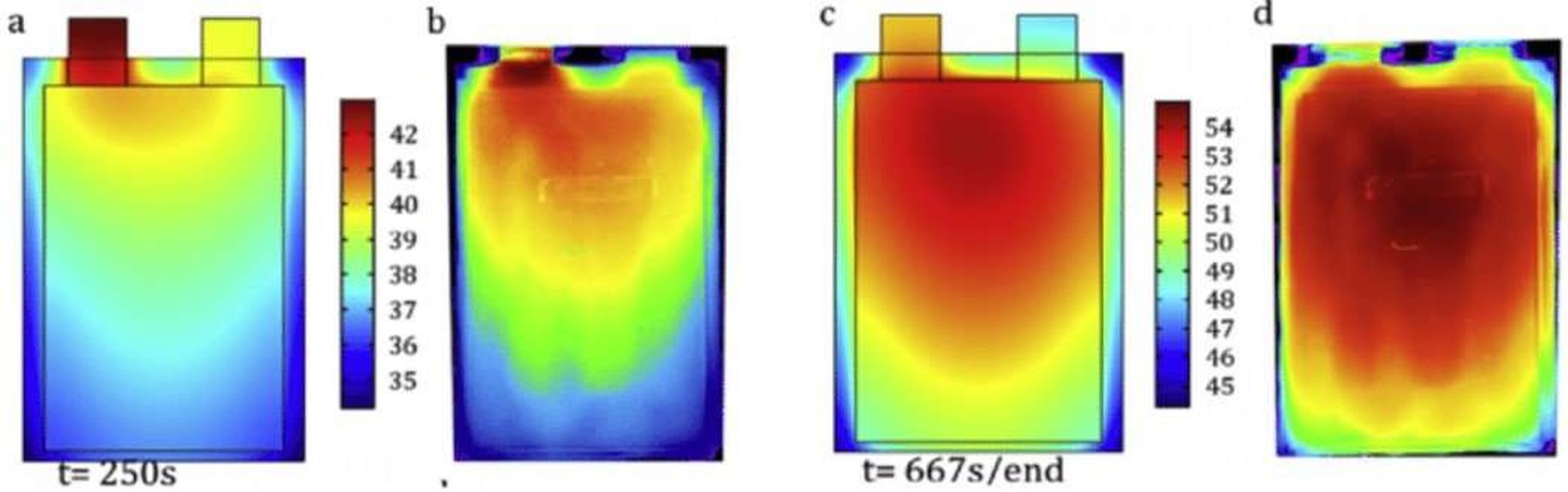
Figure 2: Visual Representation of a Pouch Cell Temperature Gradient. Uneven temperature distribution can lead to accelerated degradation.
The Role of Battery Thermal Management Systems (BTMS)
Effective BTMS are crucial for maintaining the battery within its optimal temperature range and minimizing gradients. These systems can use various cooling methods, including air, liquid, or phase change materials (PCM). FEM plays a vital role in designing and optimizing these systems by simulating heat transfer efficiency and identifying optimal cooling strategies. For example, FEM can predict the thermal heat flux distribution in an EV battery pack, helping to ensure uniform temperature distribution.
Advancements in Battery Technology and Future Outlook
The field of EV battery technology is continuously evolving, with ongoing research focused on new chemistries and designs that promise improved performance, cost-efficiency, and safety. These advancements further highlight the need for sophisticated modeling and optimization techniques.
Emerging Battery Chemistries and Formats
While lithium-ion batteries currently dominate, research into new chemistries is gaining momentum. Companies are developing lithium manganese-rich (LMR) prismatic cells, which promise reduced costs and increased range. Other promising technologies include:
- Solid-State Batteries: These batteries replace the liquid electrolyte with a solid one, offering higher energy density, faster charging, and improved safety by mitigating the risk of thermal runaway. Companies like Solid Power Inc. and QuantumScape are actively developing these.
- Lithium-Sulfur Batteries: With a high theoretical energy density, Li-S batteries could potentially offer several times the energy capacity of traditional Li-ion batteries, making them a promising option for future EV applications despite current challenges in cycle life and stability.
- Sodium-Ion Batteries: These present a cost-effective alternative due to the abundance of raw materials, though they currently have lower energy density.
- Cobalt-Free Batteries: Companies are manufacturing cobalt-free batteries with higher energy density, aiming for longer vehicle ranges.
Beyond chemistry, battery cell formats—cylindrical, prismatic, and pouch—also influence thermal characteristics and packaging efficiency. Each format presents unique challenges and opportunities for thermal management, requiring tailored FEM-based optimization approaches.
Integration of AI and Machine Learning
The complexity of multi-objective optimization in battery design is increasingly being tackled with artificial intelligence (AI) and machine learning (ML) algorithms. These technologies can rapidly process vast amounts of simulation data, identify optimal design parameters, and even predict battery degradation patterns with greater accuracy. AI-powered thermal management systems can dynamically adjust cooling strategies based on real-time data, further enhancing battery performance and longevity. The combination of FEM with neural network models promises to enhance battery performance and lifespan.
Comparative Analysis of Battery Design Parameters
To illustrate the complexities of multi-objective optimization, a radar chart can effectively visualize the trade-offs between different battery design objectives. This hypothetical analysis compares different battery design strategies, highlighting their strengths and weaknesses across key performance indicators.
This radar chart illustrates the hypothetical performance of different EV battery design strategies across various critical metrics. The "Standard Li-ion (Baseline)" represents the current state of commercial lithium-ion batteries. The "Optimized via FEM+MOO" dataset demonstrates the potential improvements achievable by applying integrated Finite Element Method and Multi-Objective Optimization techniques, showing enhanced performance across all indicators, especially in lifespan and thermal uniformity. The "Experimental Solid-State" dataset highlights the aspirational targets for next-generation solid-state batteries, particularly excelling in energy density, fast charging, and safety, though potentially at a higher cost initially. This chart visually conveys the trade-offs and the benefits of a holistic design approach.
Summary of Battery Design and Optimization Considerations
Effective EV battery design requires a comprehensive approach that considers various interconnected factors, from material selection to structural integrity and thermal management. The table below summarizes key considerations and how FEM and multi-objective optimization contribute to addressing them.
| Design Aspect | Key Considerations | Role of FEM & MOO |
|---|---|---|
| Thermal Management | Temperature distribution, heat generation, cooling efficiency, thermal runaway prevention. | FEM predicts temperature profiles and hot spots; MOO optimizes cooling system design and cell spacing for uniform temperatures. |
| Mechanical Integrity | Crashworthiness, vibration resistance, durability, structural safety of battery pack components. | FEM simulates impact scenarios and structural stresses; MOO optimizes material selection and structural geometry for crash resistance and lightweighting. |
| Electrochemical Performance | Energy density, power density, charging/discharging rates, cycle life, calendar life. | FEM models coupled with electrochemical models predict performance degradation; MOO balances these conflicting objectives for optimal battery design. |
| Cost & Manufacturing | Material costs, manufacturing complexity, assembly efficiency. | MOO considers cost as an objective function, finding solutions that meet performance targets while minimizing expenses; FEM aids in optimizing manufacturing processes. |
| Safety | Prevention of short circuits, thermal runaway, hazardous substance release. | FEM simulates abuse conditions to identify critical failure points; MOO integrates safety as a primary constraint in the design process. |
Conclusion
The integration of Finite Element Method (FEM) with multi-objective optimization techniques represents a powerful and essential approach to addressing the complex challenges in Electric Vehicle (EV) battery design. By enabling precise temperature prediction and comprehensive performance trade-offs, this methodology facilitates the development of safer, more efficient, and longer-lasting battery systems. As the EV industry continues its rapid evolution, further research in advanced modeling techniques, novel battery chemistries, and the synergistic application of AI and machine learning will be crucial for pushing the boundaries of what is possible in electric mobility. This robust framework provides the foundation for engineers to innovate and deliver next-generation EV batteries that meet the demanding requirements of a sustainable transportation future.
Frequently Asked Questions
Recommended Further Reading
- Explore the latest innovations in thermal management systems for optimal EV battery performance.
- Investigate how emerging battery chemistries are set to transform EV range and affordability.
- Discover how AI is revolutionizing battery management and extending the useful life of EV power sources.
- Delve into the critical safety aspects and structural design principles for EV battery packs.
References
Last updated May 21, 2025