
Unraveling Evidentiary Admissibility: Why Constitutional Errors Can Taint Evidence Irreversibly
A Deep Dive into the Complexities of Evidence Law and Constitutional Safeguards
Key Insights into Evidence Admissibility and Constitutional Rights
- Constitutional Violations are Paramount: Evidence obtained in violation of a defendant's constitutional rights, such as those under the Fourth, Fifth, or Sixth Amendments, is generally inadmissible. This principle often outweighs other considerations for admissibility.
- The Exclusionary Rule's Role: The "exclusionary rule" is a critical doctrine that prevents the use of illegally obtained evidence in court, serving as a deterrent against unlawful police conduct. Even if the evidence is highly relevant, its illicit origin renders it unusable.
- No "Cure" for Fundamental Errors: While certain procedural errors might be remedied, a fundamental constitutional error in obtaining evidence typically cannot be "cured" by subsequent actions, such as the identification of an individual or other forms of corroboration, making the evidence permanently inadmissible.
The sentence "The introduction of ORF’s identification of Mr. Robas does not serve to cure the constitutional error such that the State can use otherwise clearly inadmissible evidence" points to a critical principle in legal evidence: the inadmissibility of evidence obtained through constitutional violations. This principle is a cornerstone of fair trials and protects individual rights against governmental overreach. To improve this sentence, we must articulate more clearly the legal doctrines at play and emphasize the enduring impact of constitutional errors on evidentiary admissibility. The core issue revolves around whether the identification of Mr. Robas, even if seemingly compelling, can override the fundamental taint of a prior constitutional violation that led to the discovery or collection of the evidence.
Understanding the Foundations of Admissible Evidence
For evidence to be admissible in court, it generally must satisfy several criteria: relevance, reliability, and lawful acquisition. Relevant evidence has a tendency to make a fact of consequence more or less probable than it would be without the evidence. Reliability pertains to the trustworthiness of the evidence, often requiring proper authentication or foundational testimony. Most crucially, evidence must be obtained legally, without violating the constitutional rights of individuals.
The Indispensable Role of Constitutional Rights
The United States Constitution, particularly the Fourth, Fifth, and Sixth Amendments, establishes vital protections that directly impact evidence admissibility. The Fourth Amendment safeguards against unreasonable searches and seizures, requiring probable cause for law enforcement actions. The Fifth Amendment protects against self-incrimination, while the Sixth Amendment ensures the right to counsel. When evidence is procured in violation of these fundamental rights, it is typically deemed inadmissible, regardless of its probative value.
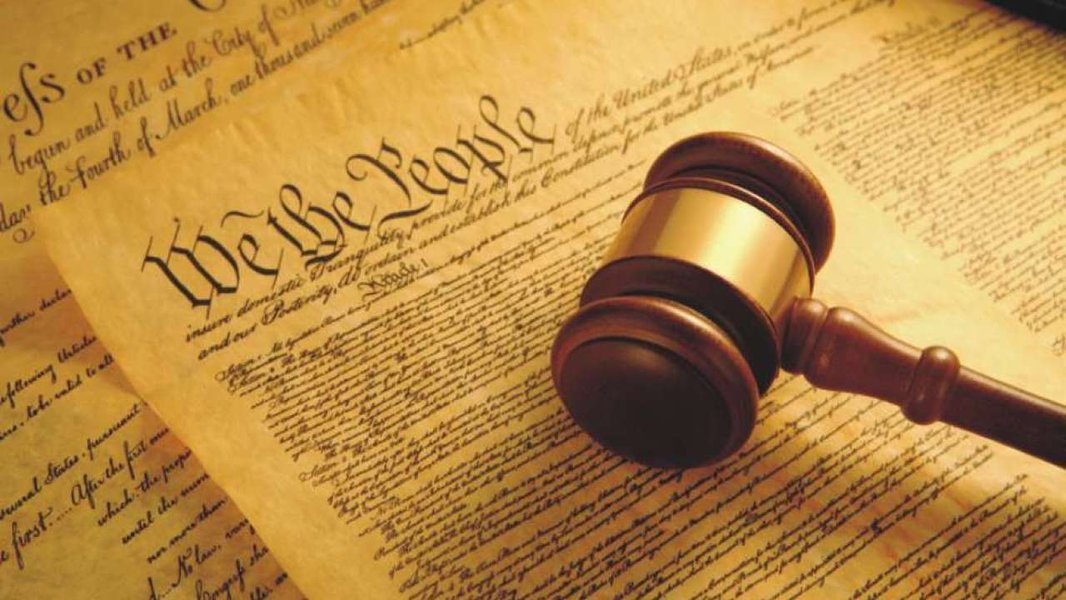
A gavel symbolizing judicial authority resting on the U.S. Constitution, underscoring the foundational role of constitutional rights in legal proceedings.
The Exclusionary Rule: A Shield Against Illegality
Central to the concept of constitutionally tainted evidence is the exclusionary rule. This judicial doctrine prohibits the use of evidence obtained in violation of a defendant's constitutional rights. Its purpose is to deter illegal police conduct and uphold the integrity of the judicial system. Landmark Supreme Court cases like Weeks v. United States (1914) and Mapp v. Ohio (1961) established and incorporated this rule, making evidence obtained through warrantless searches and seizures inadmissible at both federal and state levels.
Hearsay and Character Evidence: Other Common Pitfalls
Beyond constitutional violations, other common reasons for evidence to be inadmissible include hearsay and improper character evidence. Hearsay is generally defined as an out-of-court statement offered in court to prove the truth of the matter asserted. While numerous exceptions exist, the general rule is against its admissibility due to concerns about reliability and the inability to cross-examine the original declarant. Character evidence, which aims to prove a person's conduct on a particular occasion by showing their propensity to act in a certain way, is also generally inadmissible, with exceptions for specific purposes like impeachment of a witness's credibility or proving motive, opportunity, or intent.
The Irreversibility of Constitutional Errors
The original sentence highlights that the "introduction of ORF’s identification of Mr. Robas does not serve to cure the constitutional error." This points to a crucial legal principle: a constitutional error in the procurement of evidence is often seen as a fundamental flaw that cannot be rectified by subsequent events or additional evidence. If the initial evidence (e.g., the basis for identifying Mr. Robas) was obtained unlawfully, any derivative evidence (like the identification itself) might also be tainted under the "fruit of the poisonous tree" doctrine.
The "Fruit of the Poisonous Tree" Doctrine
The "fruit of the poisonous tree" doctrine is an extension of the exclusionary rule. It holds that evidence derived from an illegal search, arrest, or interrogation is inadmissible. The "tree" is the illegally obtained evidence, and the "fruit" is any evidence subsequently discovered as a result of that illegality. Even if Mr. Robas was later positively identified, if that identification stemmed directly from an initial constitutional violation—for example, an illegal detention or an improperly conducted lineup—the identification itself could be suppressed.
This video discusses how constitutional issues relate to eyewitness identification, reinforcing the importance of legal procedures in gathering evidence.
This video titled "How Do Constitutional Issues Relate To Eyewitness Identification" provides critical context. It emphasizes that the admissibility of eyewitness identifications, a common form of evidence, is heavily scrutinized through the lens of constitutional rights. If the "ORF's identification of Mr. Robas" refers to an eyewitness identification, the video directly addresses the procedural safeguards and Supreme Court precedents (like Manson v. Brathwaite) that dictate whether such identifications can be admitted when there's a suggestion of constitutional impropriety during the identification process. The core takeaway is that the reliability of an identification, while important, does not automatically overcome a constitutional violation if the process itself was flawed.
The Concept of "Curing" an Error
In legal terms, "curing" an error usually refers to remedial actions taken to fix a procedural mistake, allowing evidence to be admitted. However, constitutional errors are typically so fundamental that they cannot be easily "cured." For instance, if a confession is obtained in violation of Miranda rights, simply getting a later, properly obtained confession might not cure the original constitutional flaw if the later confession is still influenced by the first. The same logic applies to physical evidence or identifications: if the initial discovery or process violated rights, subsequent corroboration might still be deemed insufficient to wash away the original taint.
Contextualizing ORF and Mr. Robas: Hypothetical Scenarios
Without specific details about "ORF" (which could refer to Open Reading Frame in a biological context or a hypothetical organization/entity in a legal context) and "Mr. Robas," we can explore hypothetical scenarios where this sentence would apply. If "ORF" refers to a scientific identification technique (like DNA analysis or biological markers), the sentence implies that even advanced scientific identification cannot validate evidence collected unconstitutionally. Similarly, if "ORF" is an organizational entity responsible for an identification, their involvement does not negate prior illegal actions.
The Role of the Judge as Gatekeeper
In any trial, the presiding judge acts as the "gatekeeper" of evidence. It is their responsibility to determine what evidence is admissible or inadmissible based on the rules of evidence and constitutional principles. When an attorney objects to evidence, the judge hears arguments from both sides regarding its admissibility and makes a ruling. This role is crucial in upholding the integrity of the judicial process and protecting the rights of the accused.
A judge's gavel, representing the judiciary's power to determine evidence admissibility and ensure fair trials.
Comparing Admissible and Inadmissible Evidence Considerations
The following table outlines the key considerations that judges weigh when determining whether evidence is admissible or inadmissible in court. This distinction is vital for maintaining the fairness and integrity of legal proceedings.
| Factor | Admissible Evidence Characteristics | Inadmissible Evidence Characteristics |
|---|---|---|
| Relevance | Directly affects facts at issue; makes a fact more or less probable. | Does not pertain to the case's facts; lacks probative value. |
| Reliability | Trustworthy, authentic, and verifiable; proper chain of custody. | Untrustworthy, unverified, or speculative; may be hearsay (unless exception applies). |
| Lawful Acquisition | Obtained without violating constitutional rights (e.g., 4th, 5th, 6th Amendments). | Obtained illegally (e.g., unlawful search, coerced confession, un-Mirandized statements); "fruit of the poisonous tree." |
| Prejudice vs. Probative Value | Probative value outweighs potential for unfair prejudice, confusion, or misleading the jury. | Likely to create unfair prejudice, confuse issues, mislead the jury, or cause undue delay. |
| Form & Presentation | Conforms to rules for expert testimony, documents, or physical objects. | Improper character evidence, privileged communications (e.g., attorney-client), or lack of proper foundation. |
Evaluating the Impact of Evidentiary Rulings
The decision to admit or exclude evidence can profoundly influence the outcome of a trial. In criminal cases, the exclusion of key evidence obtained unconstitutionally can severely weaken the prosecution's case, potentially leading to dismissal or acquittal. Conversely, the improper admission of inadmissible evidence can constitute a reversible error on appeal, meaning the case could be sent back for a new trial. This underscores the critical importance of defense attorneys who are adept at challenging and suppressing inadmissible evidence.
The Defense's Strategic Approach
Defense attorneys frequently leverage rules of evidence to protect their clients. They can file motions to suppress evidence prior to trial, arguing that it was obtained unlawfully or is otherwise inadmissible. During trial, they can object to the introduction of evidence, forcing the judge to rule on its admissibility. Their expertise in evidence law is vital in ensuring that only legally sound and properly obtained information is considered by the jury or judge.
Measuring the Strength of Evidentiary Admissibility Arguments
To better understand the various factors influencing evidence admissibility, let's consider a radar chart representing the perceived strength of arguments for admitting or excluding evidence in a hypothetical case. This chart illustrates how different legal principles interact.
This radar chart visually represents the interplay of factors that influence evidence admissibility. The 'Strength of Admissibility Argument' dataset shows, hypothetically, that while evidence might be highly relevant and reliable, a significant constitutional error in its acquisition (low 'Lawful Acquisition' score) can dramatically undermine its overall admissibility. Conversely, the 'Strength of Inadmissibility Argument' dataset highlights how a strong constitutional challenge (high 'Lawful Acquisition' score for inadmissibility) can render otherwise relevant evidence unusable. This demonstrates why the identification of Mr. Robas, if stemming from a constitutional error, cannot "cure" the fundamental flaw.
Frequently Asked Questions (FAQ)
What does "inadmissible evidence" mean?
What are common reasons evidence is deemed inadmissible?
Can illegally obtained evidence ever be used in court?
Who determines whether evidence is admissible?
Conclusion
The sentence "The introduction of ORF’s identification of Mr. Robas does not serve to cure the constitutional error such that the State can use otherwise clearly inadmissible evidence" powerfully conveys a core tenet of modern evidence law. It underscores that evidence obtained through a violation of constitutional rights is fundamentally tainted and cannot be made admissible simply by subsequent corroboration, such as an identification. The exclusionary rule and the "fruit of the poisonous tree" doctrine are designed to ensure that the government adheres to constitutional safeguards when collecting evidence. The judicial system prioritizes the integrity of the process and the protection of individual liberties over the mere probative value of evidence, ensuring that justice is not only served but also seen to be served through lawful means.
Recommended Further Reading
- Understanding the Fourth Amendment and the Exclusionary Rule
- The Fruit of the Poisonous Tree Doctrine in Criminal Law
- Hearsay Evidence and Its Exceptions in Court
- The Role of Judges as Gatekeepers of Evidence Admissibility