
Evolution vs. Creation: Unpacking the Science and the Debate
Delving into the evidence for natural selection and its complex relationship with creationist perspectives.
The theory of evolution by natural selection, foundational to modern biology, proposes that life diversifies over vast timescales through natural processes. Simultaneously, theories of creation posit origins rooted in divine action. Understanding the evidence for evolution and how these concepts relate requires exploring scientific findings and differing worldviews.
Highlights: Key Insights
- Overwhelming Evidence: The theory of evolution by natural selection is supported by extensive, converging evidence from diverse scientific fields, including paleontology, genetics, anatomy, and biogeography.
- Science vs. Faith: Evolution is a scientific theory grounded in observable, testable evidence and natural mechanisms, while creationism is primarily a faith-based perspective derived from religious texts and beliefs about supernatural intervention.
- Complex Relationship: While often contrasted, the relationship isn't always mutually exclusive for individuals. Some reconcile religious faith with evolutionary science (theistic evolution), while others (like young-earth creationists) see a direct conflict based on literal interpretations of scripture.
Is the Theory of Evolution by Natural Selection True? The Scientific Evidence Speaks
A Mountain of Corroborating Data
Yes, based on the overwhelming weight of scientific evidence gathered over more than 150 years, the theory of evolution by natural selection is considered a cornerstone of modern biology and the most robust scientific explanation for the diversity of life on Earth. It's not merely a hypothesis but a well-substantiated theory, meaning it's supported by vast amounts of data and has significant predictive power. Multiple independent lines of evidence converge to support it.
The Fossil Record: A Window into Deep Time
Fossils provide tangible evidence of past life and document the historical progression of evolution. By dating and analyzing fossils found in different geological strata, scientists can reconstruct evolutionary lineages and observe gradual changes over millions of years.
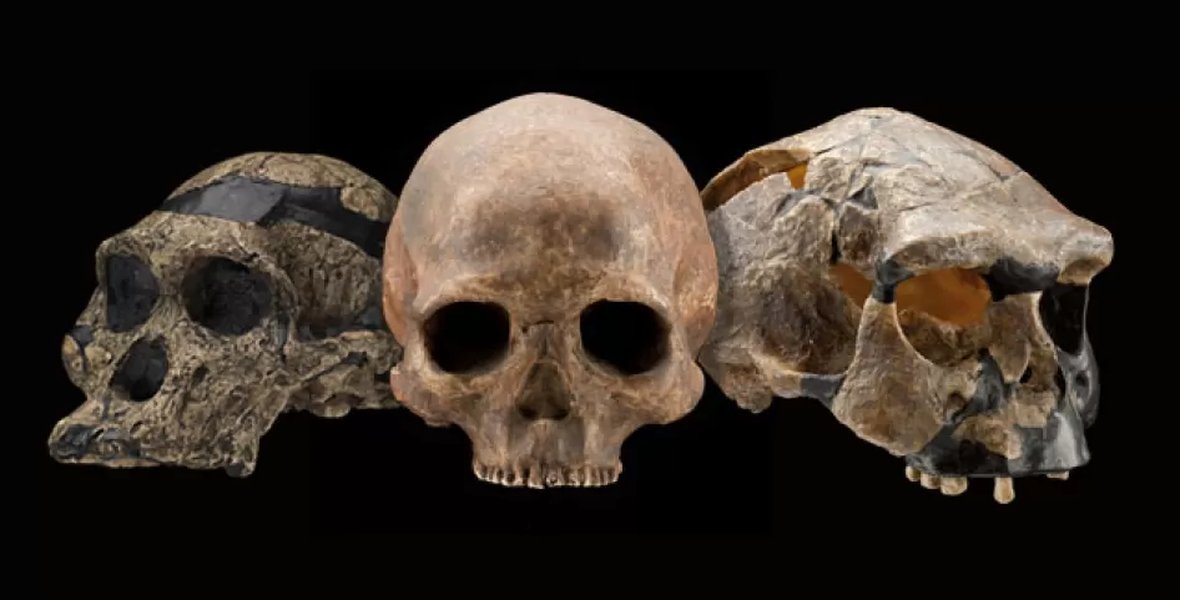
A collection of hominid fossils showing evolutionary changes over time.
- Transitional Forms: Fossils like Archaeopteryx (linking reptiles and birds) and Tiktaalik (linking fish and early tetrapods) show intermediate characteristics between major groups, demonstrating evolutionary transitions.
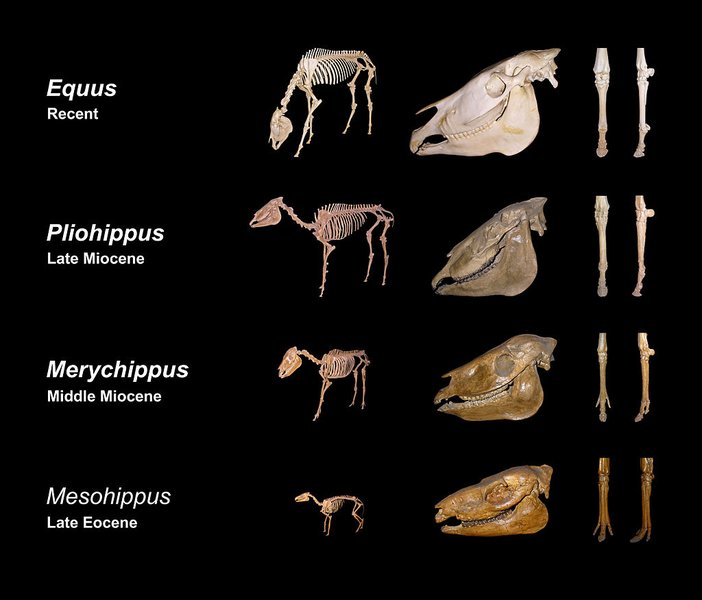
- Lineage Documentation: The evolution of specific groups, such as hominids (human ancestors) and horses, is exceptionally well-documented through series of fossils showing changes in skeletal structure, size, and adaptation over time.
- Predictive Consistency: The fossil record consistently aligns with evolutionary predictions; for example, simpler organisms are found in older rock layers, and more complex ones appear in younger layers. No fossils have been found that fundamentally contradict the expected evolutionary sequence (like the proverbial "Precambrian rabbit").
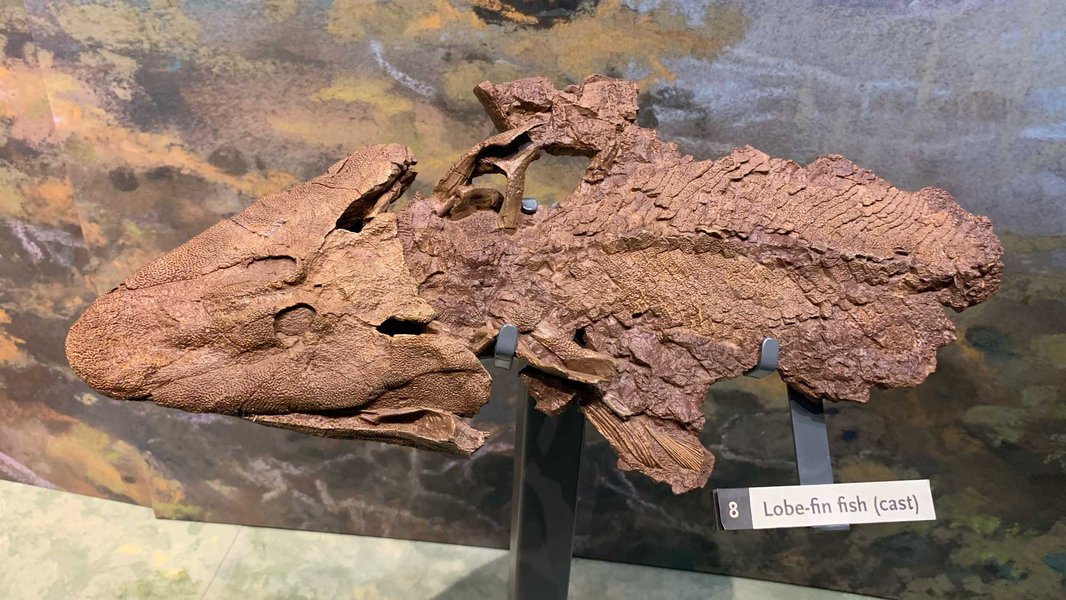
Reconstruction of Tiktaalik roseae, a key transitional fossil between fish and land-dwelling animals.
Comparative Anatomy: Clues in Structure
Comparing the anatomy of different organisms reveals evidence of shared ancestry and evolutionary modification.
Homologous structures: The forelimbs of humans, cats, whales, and bats share a common underlying bone structure despite different functions, indicating descent from a common ancestor.
- Homologous Structures: These are anatomical features shared by related species because they were inherited from a common ancestor. The forelimbs of humans, bats, whales, and birds, though adapted for different functions (grasping, flying, swimming, flying), share the same basic bone arrangement, pointing to common descent.
- Vestigial Structures: These are reduced or non-functional remnants of organs or structures that were functional in an ancestor. Examples include the pelvic bones in whales (remnants of hind limbs from their terrestrial ancestors) and the human appendix.
Embryology: Developmental Similarities
The study of embryonic development reveals similarities between related species that may not be apparent in adults. Early embryos of different vertebrates (like fish, reptiles, birds, and humans) exhibit striking similarities, such as gill slits and tails, suggesting a shared evolutionary heritage. These structures often disappear or are modified later in development.
Biogeography: The Geography of Life
The geographic distribution of species provides strong evidence for evolution. Organisms tend to be more closely related to other species from the same geographic area than to species with similar ways of life in different areas. Island biogeography is particularly illustrative: islands often host unique species that are most closely related to species on the nearest mainland, reflecting processes of migration, isolation, and adaptation (like Darwin's finches in the Galápagos).
Molecular Biology and Genetics: The DNA Evidence
Perhaps the most compelling modern evidence comes from genetics and molecular biology. DNA sequences provide a record of evolutionary history.
- Universal Genetic Code: All known life uses fundamentally the same DNA/RNA genetic code, a powerful indicator of common ancestry.
- Sequence Similarities: Comparisons of DNA and protein sequences reveal degrees of relatedness. Species considered closely related based on fossils and anatomy also show greater similarity in their DNA sequences (e.g., humans and chimpanzees share approximately 98-99% of their coding DNA).
- Genomic Data: The advent of genomics has provided vast datasets ("trillions of pieces of evidence," as some sources describe it) that overwhelmingly confirm evolutionary relationships and mechanisms like mutation and gene duplication driving evolutionary change.
Observed Evolution: Evolution in Action
Evolution isn't just something that happened in the distant past; it can be observed happening today.
- Antibiotic Resistance: Bacteria rapidly evolve resistance to antibiotics through natural selection. When antibiotics are used, susceptible bacteria are killed, while resistant mutants survive and reproduce, leading to resistant populations.
- Pesticide Resistance: Similarly, insects evolve resistance to pesticides over time.
- Experimental Evolution: Scientists observe evolution in controlled laboratory experiments, often using organisms with short generation times like bacteria or fruit flies.
Visualizing the Lines of Evidence
The different streams of evidence for evolution are interconnected and mutually reinforcing. This mindmap illustrates the major categories supporting the theory:
Assessing the Strength of Evidence
While all lines of evidence contribute significantly, some are often cited as particularly compelling or direct. This chart provides a conceptual overview comparing different evidence types based on factors like the volume of data, directness, and contribution to scientific consensus (based on synthesis of provided materials, not hard quantitative data).
The Connection Between Evolution and Creation
Navigating Science, Faith, and Origins
The theory of evolution and concepts of creation address the origins and development of life, but from fundamentally different perspectives. Evolution is a scientific framework explaining the how of life's diversification through natural, observable, and testable processes. Creationism typically addresses the why and who of origins, often relying on divine revelation and sacred texts, placing it primarily within the realm of religion and theology, not empirical science.
Contrasting Frameworks
The primary connection arises from the historical and ongoing debate between scientific findings and certain religious interpretations of origins.
- Evolution: Relies on the scientific method – observation, hypothesis testing, empirical evidence, peer review. It describes natural processes like mutation, variation, inheritance, and natural selection acting over millions of years.
- Creationism: Relies on interpretations of religious texts (like Genesis in the Bible). It often involves belief in a supernatural creator who brought life into existence, sometimes depicted as happening relatively recently and suddenly.
Differing Views within Creationism
It's important to note that "creationism" isn't monolithic. There are varying views on how creation relates to scientific findings:
- Young-Earth Creationism (YEC): Interprets religious texts literally, asserting that the Earth and life were created by God in their present forms roughly 6,000-10,000 years ago. This view directly conflicts with overwhelming scientific evidence from geology, physics, and biology for an ancient Earth (approx. 4.5 billion years) and gradual evolution. YEC often involves rejecting or reinterpreting scientific data to fit a specific theological framework.
- Old-Earth Creationism (OEC): Accepts the scientific consensus on the age of the Earth and universe but posits that God created life in stages over geological time (e.g., "progressive creationism") or set up the initial conditions and laws ("day-age" interpretations). While accepting an old Earth, OEC typically rejects macroevolution – the idea that all species descended from a common ancestor through purely natural processes.
- Theistic Evolution (Evolutionary Creation): This view sees no inherent conflict between evolutionary science and religious belief. Proponents accept the scientific consensus on evolution fully but believe that God used evolution as the mechanism for creation. They see science and faith as addressing different kinds of questions (how vs. why/who).
Scientific Standing
From a scientific perspective, evolution by natural selection is the only empirically supported explanation for the diversity of life. Attempts to present creationism (especially "creation science" or "intelligent design") as scientific alternatives have been rejected by the mainstream scientific community. These concepts are generally considered pseudoscience because they rely on supernatural explanations that are not testable or falsifiable, and they often involve misrepresenting or ignoring established scientific evidence.
Comparing the Concepts
This table summarizes the key differences between the scientific theory of evolution and the general concept of creationism:
| Feature | Theory of Evolution by Natural Selection | Theory of Creation (General Concept) |
|---|---|---|
| Basis | Empirical evidence (fossils, genetics, anatomy, etc.), observation, experimentation | Religious texts, faith, spiritual revelation, philosophical arguments |
| Methodology | Scientific method (hypothesis testing, falsifiability, peer review) | Interpretation of scripture, theological reasoning (not empirically testable/falsifiable in a scientific sense) |
| Explanation of Life's Diversity | Gradual change over millions of years via mutation, variation, inheritance, natural selection, common descent | Divine action/intervention; species created separately or through guided processes (views vary significantly) |
| Timescale | Billions of years for life's history | Varies widely: ~6,000 years (YEC) to billions of years (OEC, Theistic Evolution) |
| Nature of Explanation | Naturalistic (explains via natural laws and processes) | Often Supernaturalistic (invokes divine or non-natural agency) |
| Scientific Standing | Core, well-established scientific theory | Religious/philosophical belief system; considered pseudoscience when presented as a scientific alternative to evolution |
Perspectives on Evidence
Understanding the evidence used to support evolution is crucial. This video provides an overview of key pieces of evidence described by scientists.
This video by Paul Andersen explains some of the foundational evidence Charles Darwin used, such as observations from his voyages, and how they support natural selection. While modern evidence (like genetics) provides even stronger confirmation, understanding the historical basis is also important. It illustrates how scientific theories are built upon observation and testing.
Frequently Asked Questions (FAQ)
Isn't evolution "just a theory"?
In science, a "theory" is not just a guess or hunch. It's a well-substantiated explanation of some aspect of the natural world, based on a body of facts that have been repeatedly confirmed through observation and experiment. Theories like gravity, atomic theory, and evolution are foundational concepts in science, supported by vast evidence. Evolution is as well-established as any major scientific theory.
Are there "gaps" in the fossil record that disprove evolution?
The fossil record is not perfectly complete, as fossilization is a rare event. However, it is remarkably rich and provides abundant evidence for evolutionary change and transitional forms. Scientists do not expect a perfect, gapless record. Importantly, the fossils that have been found consistently support evolutionary relationships. New discoveries continue to fill in details, strengthening the theory rather than undermining it. The existence of gaps doesn't invalidate the vast positive evidence.
Can someone believe in God and accept evolution?
Yes, many people of faith around the world accept the scientific evidence for evolution. Perspectives like Theistic Evolution (or Evolutionary Creation) propose that God used the natural process of evolution to bring about the diversity of life. They see science and faith as compatible ways of understanding different aspects of reality (the natural world vs. spiritual meaning and purpose). Major religious denominations and theologians have stated that evolutionary science does not necessarily conflict with their core beliefs.
Why is creationism not taught as science in public schools?
Public school science education focuses on teaching scientific concepts supported by evidence and the scientific method. Creationism and Intelligent Design are primarily religious beliefs, not scientific theories, as they invoke supernatural explanations that cannot be scientifically tested or falsified. US courts have repeatedly ruled that teaching creationism as science in public schools violates the Establishment Clause of the First Amendment, which prohibits government endorsement of religion.
References
- What is the evidence for evolution? - BioLogos
- Evidence for evolution (article) - Khan Academy
- 15 Answers to Creationist Nonsense - Scientific American
-
Lines of evidence: The science of evolution - Understanding Evolution (Berkeley)
- What is the evidence for evolution? - Earth@Home: Evolution
- Controversy of Evolution: How Evolution Works - Live Science
- Creationism - Stanford Encyclopedia of Philosophy
- Science And Creation: Different Views - The Witness BCC
Recommended

Last updated April 15, 2025