
Evolution by Natural Selection: Fact or Fiction, and Its Link to Creation?
Unpacking the science behind life's diversity and exploring its relationship with creation theories.
The theory of evolution by natural selection, famously associated with Charles Darwin, stands as a cornerstone of modern biology. But how robust is the evidence supporting it, and how does this scientific explanation intersect with beliefs about creation? Let's delve into the vast evidence for evolution and examine the complex relationship between these two major concepts.
Highlights: Understanding Evolution and Creation
- Evolution by natural selection is a well-substantiated scientific theory, supported by overwhelming evidence from fossils, genetics, anatomy, embryology, and biogeography.
- Natural selection is the primary mechanism driving evolution, favoring traits that enhance survival and reproduction, leading to adaptation over generations.
- Evolution and creation represent different explanatory frameworks; while science explains the 'how' through natural processes, creation often addresses the 'why' through divine action, leading to varied perspectives on their compatibility.
Unearthing the Evidence: How We Know Evolution Happens
The Scientific Foundation of Evolutionary Theory
The theory of evolution isn't just a guess; it's a robust scientific framework explaining the diversity of life on Earth. It's supported by multiple independent lines of evidence gathered over more than a century, painting a consistent picture of life changing over vast timescales.
Homologous structures, like the similar bone patterns in the forelimbs of humans, cats, whales, and bats, point to a shared ancestry.
Whispers from the Past: The Fossil Record
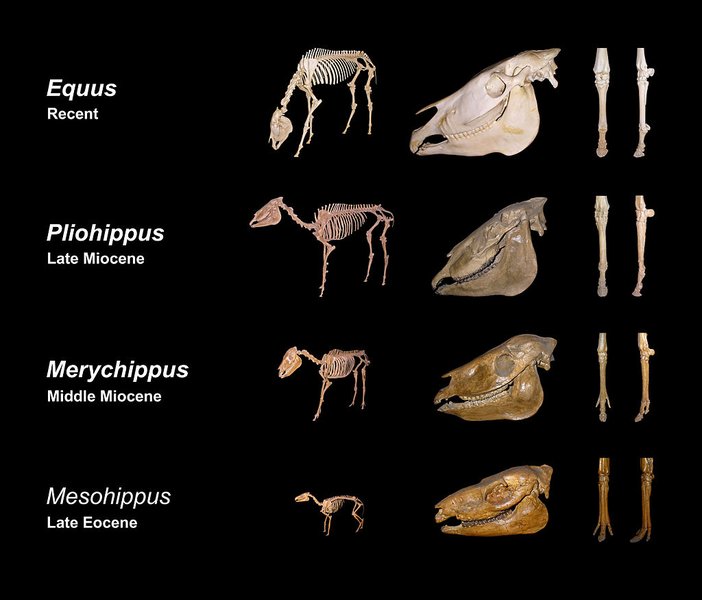
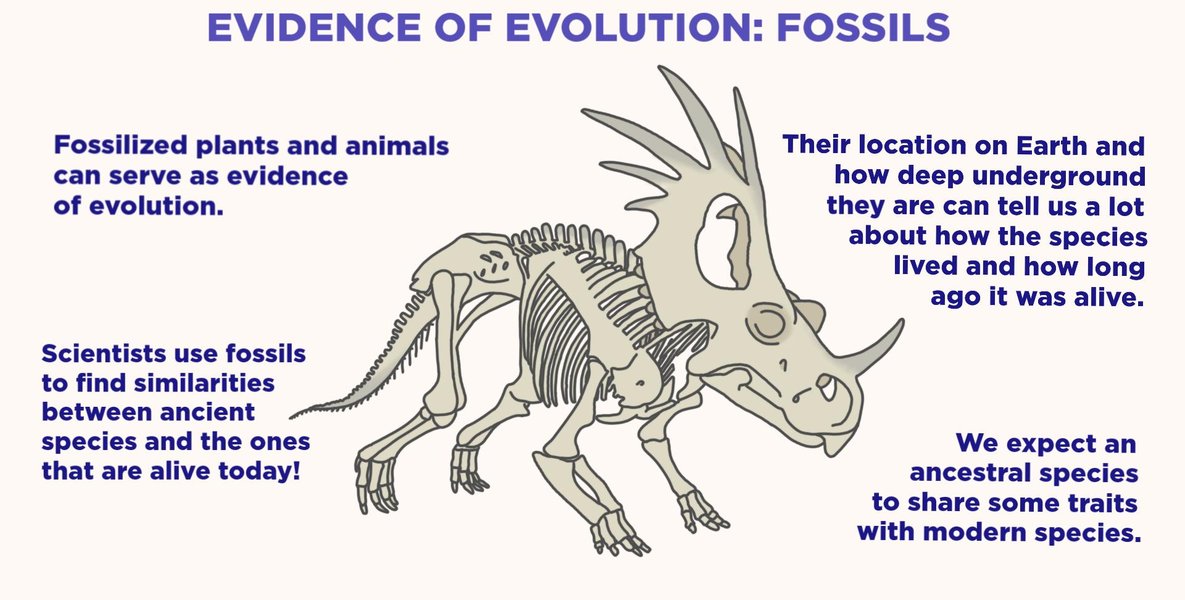
Fossils provide a tangible history of life, preserved in layers of rock. By dating these rocks, scientists can establish a timeline showing how organisms have changed over millions of years. The fossil record reveals:
- Progression of Forms: Simpler organisms are found in older rock layers, while more complex ones appear in younger layers, indicating a historical progression.
- Transitional Fossils: Fossils like Archaeopteryx (linking dinosaurs and birds) or early whale ancestors like Pakicetus (showing transition from land to water) demonstrate evolutionary links between different groups. These finds showcase organisms with intermediate traits between ancestral and descendant forms.
- Extinction: The record shows that many species that once existed are now extinct, consistent with the idea that species change and sometimes disappear over time.
Fossil evidence, like these ammonites and trilobites, provides a window into past life forms and evolutionary changes.
Blueprints of Life: Comparative Anatomy
Comparing the physical structures of different organisms reveals deep evolutionary connections:
- Homologous Structures: These are features shared by related species because they have been inherited from a common ancestor. Even if the structures serve different functions now (like the bones in a human arm, a bat wing, and a whale flipper), their underlying similarity points to shared ancestry.
- Vestigial Structures: These are reduced or non-functional structures that were functional in ancestral species. Examples include the pelvic bones in some snakes and whales (remnants of hind limbs) or the human appendix. Their presence only makes sense in an evolutionary context.
Developmental Clues: Embryology
Studying how organisms develop from embryos provides further evidence. Early embryos of different vertebrates (like fish, reptiles, birds, and mammals) often exhibit striking similarities, such as gill slits and tails. These shared developmental stages reflect common ancestry. For instance, whale embryos initially develop hind limb buds, which later regress, supporting their evolution from four-legged terrestrial ancestors.
The Genetic Code: Molecular Biology
Perhaps the strongest evidence comes from genetics. All life shares the same fundamental genetic material (DNA) and uses a similar genetic code. Comparing DNA sequences allows scientists to precisely measure how related different species are.
- Shared Genes: Organisms inherit genes from their ancestors. The more closely related two species are, the more similar their DNA sequences will be. Humans share approximately 98-99% of their DNA with chimpanzees, reflecting a recent common ancestor.
- Genetic Mutations: DNA sequencing reveals patterns of mutations and gene duplications that track evolutionary history, acting like independent tests confirming evolutionary relationships derived from fossils or anatomy.
Life's Distribution: Biogeography
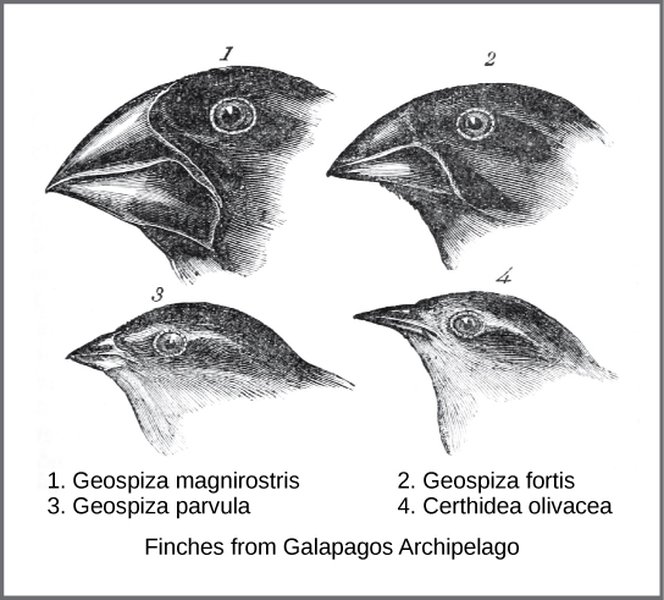
The geographical distribution of species provides compelling evidence. Organisms found in particular regions often share similarities, suggesting they evolved from common ancestors present in that area. Island biogeography is particularly insightful; species on islands often resemble those on the nearest mainland but possess unique adaptations suited to their isolated environment (like Darwin's finches on the Galápagos Islands). This pattern is best explained by migration followed by evolutionary divergence.

The diverse beak shapes of Darwin's finches on the Galápagos Islands are a classic example of adaptive radiation driven by natural selection.
Natural Selection: The Engine of Evolution
How Life Adapts and Changes
Natural selection is the core mechanism proposed by Charles Darwin to explain how evolution occurs. It's a process driven by the interaction between organisms and their environment. The key steps are:
- Variation: Individuals within a population naturally exhibit variations in their traits (size, color, behavior, etc.). This variation arises primarily from random mutations in DNA.
- Inheritance: Many of these traits are heritable, meaning they can be passed down from parents to offspring.
- Differential Survival and Reproduction: In any given environment, some traits will be more advantageous than others, increasing an organism's chances of surviving, finding mates, and reproducing. Organisms with less advantageous traits are less likely to survive and reproduce.
- Adaptation: Over generations, advantageous traits become more common in the population because individuals possessing them leave more offspring. This leads to the population becoming better adapted to its environment.
Natural selection doesn't create variation; it acts upon existing variation. It's not a random process regarding adaptation—it consistently favors traits that improve fitness in a specific context. This can lead to remarkable adaptations, like the camouflage of an insect or the speed of a predator.
An illustration showing how natural selection might favor green beetles over brown ones in a green environment due to predation pressure.
Visualizing the Strength of Evolutionary Evidence
A Comparative Look at Different Lines of Evidence
While all lines of evidence contribute to our understanding of evolution, they differ in their scope and the specific insights they provide. Genetics and molecular biology, for example, offer incredibly detailed and quantifiable data about relationships and the mechanisms of change, while the fossil record provides the crucial dimension of deep time. This chart offers a perspective on the relative impact and conclusiveness of these major lines of evidence as perceived within the scientific community.
This visualization suggests that while all evidence types are significant, genetic and molecular data often provide the most detailed and quantitatively rigorous support for evolutionary relationships and mechanisms, complementing the historical narrative provided by fossils and the comparative insights from anatomy and biogeography.
Evolution and Creation: Bridging the Divide?
Exploring the Relationship Between Scientific Theory and Belief
The theory of evolution describes a natural process supported by scientific evidence. The theory of creation, in its various forms, typically attributes the origin of life and the universe to a supernatural entity or divine action, often based on religious texts or beliefs. The relationship between these two concepts is complex and viewed differently by various groups.
Distinct Frameworks
From a purely scientific standpoint, evolution by natural selection operates within the realm of observable, testable, natural phenomena. It provides explanations for the diversification and adaptation of life based on empirical evidence. Creationism, relying on divine intervention, falls outside the scope of scientific methodology, which is limited to natural explanations. Therefore, many scientists and philosophers view them as fundamentally different kinds of explanations that address different questions (the 'how' vs. the 'why' or 'who').
Points of Contention
Direct conflicts arise particularly with literal interpretations of creation accounts (like Young Earth Creationism) which contradict the vast timescales indicated by geology and cosmology, and the common ancestry central to evolution. These views often reject macroevolution (the evolution of new species from common ancestors) and the idea that humans evolved from other primates.
Areas of Potential Compatibility
However, not all perspectives see an inherent conflict:
- Theistic Evolution: Many religious individuals and theologians accept the scientific findings of evolution but believe that the process itself was initiated, guided, or ordained by God. In this view, evolution is the *mechanism* God used to bring about the diversity of life.
- Natural Selection as Adaptation: Some creationist viewpoints accept natural selection as a real process but limit its scope. They may see it as a mechanism for adaptation *within* originally created "kinds" of organisms, allowing them to diversify slightly and adapt to different environments, but not as a force capable of generating entirely new kinds or complex features from simpler ancestors. They might view it as a "God-ordained" process for maintaining fitness within created boundaries.
Mapping the Concepts: Evolution and Creation Perspectives
This mind map illustrates the core concepts of evolution by natural selection and the different ways its relationship with creation theories is perceived.
Descent with Modification"] id1b["Mechanism:
Natural Selection"] id1b1["Variation"] id1b2["Inheritance"] id1b3["Differential Survival/Reproduction"] id1c["Evidence"] id1c1["Fossils"] id1c2["Anatomy (Homology, Vestigiality)"] id1c3["Embryology"] id1c4["Genetics/Molecular Bio"] id1c5["Biogeography"] id2["Theory of Creation"] id2a["Core Concept:
Divine Origin of Life"] id2b["Basis:
Often Religious Texts/Beliefs"] id3["Relationship Perspectives"] id3a["Conflict/Incompatibility"] id3a1["Literal Creationism (e.g., Young Earth)"] id3a2["Rejection of Common Ancestry"] id3a3["Rejection of Natural Origins"] id3b["Compatibility/Integration"] id3b1["Theistic Evolution
(God guides/uses evolution)"] id3b2["Natural Selection as Limited Adaptation
(Within 'kinds')"] id3b3["Separate Domains
(Science explains 'how',
Religion explains 'why')"]
Ultimately, whether one views evolution and creation as connected depends heavily on individual philosophical and theological perspectives. Scientifically, evolution stands on its own based on empirical evidence, while its intersection with faith involves interpretation and diverse viewpoints.
Visual Learning: Evidence for Evolution Explained
A Video Overview of Key Evidence
For a dynamic explanation of the evidence supporting evolution and the process of natural selection, the following video provides a concise overview. It covers key concepts like fossils, homologous structures, and embryology, illustrating how Charles Darwin used various lines of evidence to develop his groundbreaking theory.
This video, presented by Paul Andersen, effectively summarizes the multiple strands of evidence that converge to support the theory of evolution by natural selection, reinforcing the concepts discussed earlier.
Comparing Evidence Types
A Summary Table
Different lines of evidence contribute uniquely to our understanding of evolution. This table summarizes the key types of evidence and what they demonstrate:
| Evidence Type | Description | Key Examples | What it Demonstrates |
|---|---|---|---|
| Fossil Record | Preserved remains or traces of ancient organisms. | Transitional fossils (Archaeopteryx, whale ancestors), sequential layers showing change over time. | Life has changed over vast periods; links between different groups; extinction. |
| Comparative Anatomy | Comparing physical structures of different species. | Homologous structures (vertebrate limbs), vestigial structures (whale pelvis, human appendix). | Common ancestry; descent with modification from ancestral forms. |
| Embryology | Comparing developmental stages of embryos. | Similar early stages in vertebrate embryos (gill slits, tails); temporary structures (whale hind limbs). | Shared developmental pathways reflecting common ancestry. |
| Biogeography | Study of the geographic distribution of species. | Unique island species resembling mainland relatives (Darwin's finches); continental drift patterns. | How species diversify geographically; adaptation to local environments from common ancestors. |
| Genetics & Molecular Biology | Comparing DNA, RNA, and protein sequences. | Universality of genetic code; DNA sequence similarities reflecting relatedness; gene duplication and mutations. | Precise measurement of relatedness; mechanism for variation and inheritance; confirmation of evolutionary trees. |
| Direct Observation | Observing evolutionary change in real-time. | Antibiotic resistance in bacteria; pesticide resistance in insects; beak size changes in finches due to drought. | Natural selection and adaptation happening now. |
Together, these diverse lines of evidence provide a cohesive and compelling case for the theory of evolution by natural selection as the primary scientific explanation for the history and diversity of life on Earth.
Frequently Asked Questions (FAQ)
+ Is evolution by natural selection 'just a theory'?
+ What is the difference between evolution and natural selection?
+ Can a person believe in God and still accept the theory of evolution?
+ Does evolution explain the origin of life itself?
+ How does creationism view natural selection?
References
- What is the Evidence for Evolution? - BioLogos
- 15 Answers to Creationist Nonsense - Scientific American
- Evidence for evolution (article) | Khan Academy
-
Lines of evidence: The science of evolution - Understanding Evolution (Berkeley)
- What is Darwin's Theory of Evolution? - Live Science
- Natural Selection - Answers in Genesis
-
What is natural selection? - Got Questions?
Recommended Reading
Last updated April 15, 2025