
Evolution of Ethics in Western Philosophy
A comprehensive journey through ethical thought from ancient times to today
Highlights
- Foundational Thought: Ancient debates laid the groundwork with virtue ethics, self-examination, and the quest for objective moral ideals.
- Integration and Transformation: The Medieval synthesis of classical philosophy with Christian doctrine and the Enlightenment shift towards reason transformed ethics.
- Contemporary Perspectives: Modern challenges force a re-examination of classical ideas while addressing practical issues in applied ethics.
Introduction
Western ethics is a rich tapestry woven over centuries, characterized by constant dialogue and reexamination of what it means to live a good life, achieve moral virtue, and organize societies. The evolution of ethics in this tradition begins with the systematic inquiry of the ancient Greeks and extends through the Medieval period, the rigorous rationalism of the Modern era, and into the multifaceted, applied discussions of contemporary times.
Ancient Foundations
Greek Origins
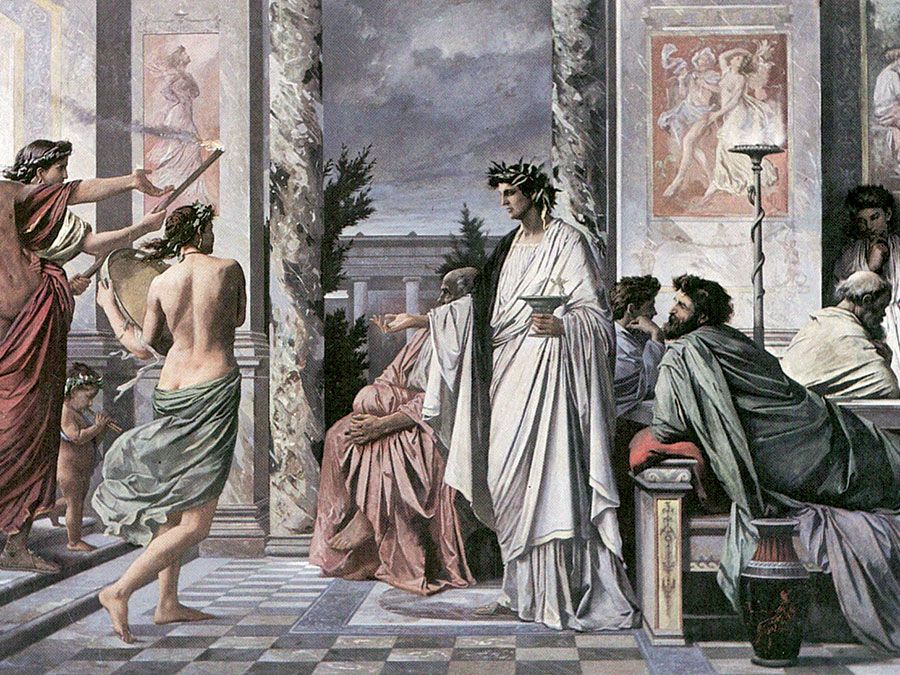
The intellectual journey of Western ethics is often considered to have begun in ancient Greece. Philosophers such as Socrates, Plato, and Aristotle pioneered discussions on morality and the ethical life.
Socrates and the Moral Quest
Socrates is revered for his method of systematic questioning, which challenged individuals to examine their own beliefs and ideas. Zealously pursuing the truth, he engaged in conversations that questioned established norms. This Socratic method laid the intellectual foundation for critical self-reflection and moral reasoning.
Plato and Objective Ideals
Plato, a devoted student of Socrates, built on these ideas by constructing a philosophy that searched for objective moral truths. In his seminal work, "The Republic," Plato introduced the notion of an abstract "form of good" that stands as the ultimate standard of morality. His ideas helped establish a vision of ethics that looks toward a perfect realm of immutable ideas, influencing subsequent ethical theories.
Aristotle and Virtue Ethics
Aristotle, Plato’s prominent student, elaborated on these discussions by connecting ethics directly with human flourishing. He introduced the concept of eudaimonia (often translated as "the good life") and argued that moral virtue is attained by following a path of moderation – famously encapsulated in his Doctrine of the Mean. Aristotle’s emphasis on character and habitual practice in achieving virtue remains influential in modern ethical discourse.
Hellenistic and Medieval Synthesis
Stoicism and the Rise of Rationality
Moving beyond the classical period, the Hellenistic era introduced schools of thought like Stoicism. Stoicism promoted the idea that living in accordance with nature and reason is essential, and emphasized resilience in the face of external challenges. This perspective fostered the development of ideas regarding the unity of reason and the natural order – a viewpoint that later influenced both secular and religious ethical systems.
Medieval Ethics: Faith and Reason
The Middle Ages witnessed ethics closely entwined with religious doctrine. The Christian tradition, in particular, played a pivotal role in shaping ethical thought. Thinkers such as Augustine of Hippo and Thomas Aquinas strove to reconcile classical philosophy with Christian teachings.
Augustine and the Synthesis of Faith
St. Augustine integrated Platonic concepts with Christian theology, tackling profound questions about free will, the nature of good and evil, and the role of divine grace. His insights contributed to an understanding of morality that underscored the significance of divine order and salvation.
Thomas Aquinas and Natural Law
Thomas Aquinas offered a systematic synthesis by blending Aristotelian ethics with Christian doctrine. His natural law theory proposed that there are objective moral principles derived from human nature, which reason can discern. Aquinas’ work provided a robust framework for ethical reasoning that continues to influence contemporary debates about moral order and human rights.
Modern Ethical Transformations
The Enlightenment and the Emphasis on Reason
The Enlightenment era heralded a sharp turn towards rational and empirical approaches to understanding morality. This period questioned traditional authority and posed new ideas about individual freedom and reason as the cornerstones of ethical thought.
Deontological Ethics and Kant
Immanuel Kant emerged as a towering figure during this period, formulating deontological ethics which stressed the intrinsic worth of moral intentions over the outcomes of actions. Kant’s concept of the categorical imperative argued that morality should be rooted in universal principles, rather than contingent consequences. This framework underscored the importance of duty and the inviolability of moral laws.
Utilitarianism: Maximizing Happiness
In contrast to Kant’s rule-based ethics, utilitarian philosophers like Jeremy Bentham and John Stuart Mill advanced a consequentialist approach. Their utilitarian perspective judged actions based on their capacity to promote happiness or mitigate suffering. The “greatest happiness principle” became a touchstone of modern ethical inquiry, influencing debates in political theory, economics, and social policy.
19th and Early 20th Century Developments
The nuances of modern ethics were further enriched during the 19th century and early 20th century, a period marked by vibrant intellectual ferment and the emergence of new ethical schools of thought. Philosophers like Friedrich Nietzsche challenged traditional morality, urging a re-evaluation of established values. His critique often centered on the perceived constraints imposed by conventional moral standards, advocating instead for the affirmation of individual creativity and strength.
Contemporary and Applied Ethics
Renewed Interest and Expanded Horizons
In the contemporary era, ethics has grown into a broad, interdisciplinary field that engages with both abstract moral principles and concrete real-world issues. Themes ranging from metaethics—the study of the nature of moral judgments—to applied ethics in fields such as medical, environmental, and business ethics illustrate the diversity of modern ethical inquiry.
Virtue Ethics Revival
While modern ethics diversified into various branches, a renewed interest in virtue ethics has emerged in recent decades. Building upon classical ideas, contemporary scholars like Philippa Foot and Alasdair MacIntyre have urged a return to the focus on character and the cultivation of virtues as central to ethical living. This revival emphasizes the holistic development of an individual’s moral character rather than merely adhering to abstract rules.
Applied Ethics in Practice
Applied ethics has taken center stage in addressing practical dilemmas faced by modern societies. Issues such as bioethics—concerning medical practices and technologies—environmental ethics—dealing with sustainability and climate change, and business ethics—focusing on corporate accountability and social responsibility, demonstrate how ethical theory intersects with everyday challenges. Contemporary debates also consider the implications of technological advancements, privacy rights, and global justice, urging societies to balance progress with ethical integrity.
Chronological Overview in Table Format
| Period | Key Figures | Main Contributions |
|---|---|---|
| Ancient Greece | Socrates, Plato, Aristotle |
Socratic method of questioning, Plato's ideal forms and the concept of the "form of good", Aristotle's virtue ethics and the Doctrine of the Mean. |
| Hellenistic Period | Stoic Philosophers |
Emphasis on reason, living according to nature, and resilience in the face of external events. |
| Medieval Period | Augustine, Thomas Aquinas |
Synthesis of classical philosophy with Christian theology, natural law theory, exploration of free will and divine morality. |
| Modern Period | Kant, Bentham, Mill |
Deontological ethics and the categorical imperative; consequentialism and the greatest happiness principle; the rise of rational and empirical approaches. |
| Contemporary | Various Modern Ethicists |
Development of metaethics, revival of virtue ethics, emergence of applied ethics in bioethics, environmental issues, and business practices. |
Cross-Cutting Themes in Western Ethics
The Role of Reason and Moral Inquiry
From the inception of ethical thought in ancient Greece to the modern formulations by Kant and Mill, reason has consistently been viewed as central to ethical inquiry. Intellectuals have argued that moral reasoning – underpinned by logic and empirical observation – is essential for discerning right from wrong. Whether through systematic questioning or methodical analysis of consequences, ethics in the Western tradition has maintained an unwavering commitment to the pursuit of rational truth.
The Tension Between Universality and Relativism
Throughout its historical progression, Western ethical thought has also grappled with the tension between universal moral principles and particularistic or contextual considerations. Early philosophers envisioned ideal forms of morality, while later thinkers such as existentialists and some contemporary scholars question whether moral truths can be universally applicable. This juxtaposition continues to stimulate debates on whether ethics should be grounded in immutable absolutes or should adapt to cultural, social, and individual contexts.
Ethics in the Face of Modern Challenges
With rapid technological advancements and increasing global interconnectedness, ethical inquiry has expanded to accommodate complex modern dilemmas. Issues like bioethical challenges in genetics and medicine, electronic privacy concerns in the digital age, and corporate social responsibility highlight the enduring relevance of ethical thought. These practical applications of ethics underscore the necessity of a robust moral framework that evolves in tandem with the challenges of modern society.
References
- History of Ethics - Encyclopedia Britannica
- History of Ethics - Wikipedia
- The History of Western Ethics - Encyclopedia Britannica
- Evolution of Western Philosophy - Philosophy Institute
- History of Western Ethics - Rosen Publishing
Recommended Queries
 amazon.com
Last updated March 19, 2025