
Evolution of REM Sleep: A Comprehensive Analysis
Tracing the Origins and Divergence of Rapid Eye Movement Sleep Across Species
Key Takeaways
- Common Ancestry: REM sleep likely originated in a shared ancestor of birds and mammals, indicating a common evolutionary root.
- Convergent Evolution in Cephalopods: The presence of REM-like sleep in cephalopods suggests an independent evolutionary pathway driven by similar selective pressures.
- Ongoing Research: The precise timeline and evolutionary mechanisms behind the diversification of REM and NREM sleep remain active areas of scientific investigation.
Origins of REM Sleep
Early Evolution: Sleep in Simple Organisms
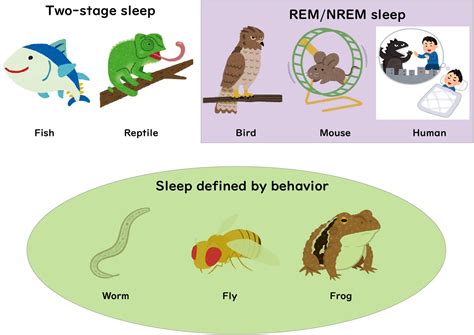
Sleep, as a fundamental biological process, is observed across a wide array of organisms, including simple life forms such as jellyfish. These early life forms exhibit basic sleep-like states, suggesting that the capacity for restful states is an ancient trait. However, these states lack the complexity seen in higher organisms, particularly the differentiation into distinct sleep phases like REM and NREM sleep.
Emergence of REM and NREM Sleep in Vertebrates
The differentiation of sleep into REM and NREM stages appears to have evolved later, specifically within vertebrates. Mammals and birds are the primary groups where clear patterns of REM and NREM sleep are observed. This specialization likely provided evolutionary advantages, such as enhanced brain plasticity, memory consolidation, and overall neural maintenance. The exact timeline of this evolution is still under investigation, with current evidence placing the emergence of these sleep stages around the divergence of major vertebrate lineages.
Evolution of REM Sleep in Birds and Mammals
Shared Ancestry vs. Convergent Evolution
The presence of REM sleep in both birds and mammals has sparked debates regarding its evolutionary origins. One prevailing theory suggests that REM sleep evolved in a common ancestor of these two groups, implying a shared evolutionary heritage. This is supported by the similarities in sleep architecture and physiological characteristics observed in both birds and mammals.
Conversely, some researchers propose that REM sleep may have arisen independently in birds and mammals through convergent evolution. This perspective is based on the significant differences in brain structures between the two groups, despite functional similarities in their sleep patterns. For instance, mammals utilize the neocortex for coordinating aspects of sleep, whereas birds have homologous yet distinct brain regions serving similar functions.
While both theories have supporting evidence, the consensus leans towards a common ancestral origin due to the striking similarities in REM sleep patterns. However, the possibility of convergent evolution cannot be entirely dismissed, especially considering the divergent evolutionary paths of birds and mammals.
Brain Structures and Sleep Architecture
In mammals, the neocortex plays a crucial role in managing REM sleep, coordinating neural activities that facilitate dreaming and memory consolidation. Birds, on the other hand, possess homologous regions that, while structurally different, perform analogous functions during REM sleep. This functional convergence suggests that while the underlying brain structures may differ, the selective pressures favoring REM sleep led to similar physiological adaptations.
The sleep architecture in both birds and mammals includes cycles of REM and NREM sleep, characterized by distinct brain wave patterns and physiological responses. These cycles are essential for various biological processes, including synaptic plasticity, energy conservation, and neural repair mechanisms.
REM-like Sleep in Cephalopods
Characteristics of Cephalopod Sleep
Cephalopods, such as octopuses and cuttlefish, exhibit sleep-like states that bear resemblance to REM sleep. During these states, cephalopods display rapid changes in skin color and texture, twitching of their bodies and eyes, and oscillating patterns of eye movements. Approximately 7% of their sleep time is spent in this active sleep state, which includes both quiet and highly active phases.
These REM-like states in cephalopods are marked by increased brain activity that parallels the wakefulness patterns seen during REM sleep in vertebrates. However, the underlying neurological mechanisms differ significantly due to the distinct evolutionary pathways of cephalopods compared to vertebrates.
Independent Evolution of REM-like States
The emergence of REM-like sleep in cephalopods is considered a prime example of convergent evolution. Cephalopods are evolutionarily distant from vertebrates, belonging to a completely different lineage. The similarities in their sleep patterns to REM sleep in birds and mammals suggest that similar ecological and neurological pressures led to the independent development of these sleep characteristics.
This independent evolution underscores the fundamental biological importance of sleep for neural maintenance and cognitive functions. The fact that both cephalopods and vertebrates developed similar sleep architectures independently highlights the universal need for such physiological processes across diverse life forms.
Comparative Overview
| Feature | Mammals | Birds | Cephalopods |
|---|---|---|---|
| Presence of REM-like Sleep | Yes, characterized by rapid eye movements and vivid dreaming. | Yes, featuring rapid eye movements and muscle twitches. | Yes, includes rapid skin color changes and eye twitching. |
| Evolutionary Origin | Likely evolved in a common ancestor with birds or convergently. | Likely evolved in a common ancestor with mammals or convergently. | Independently evolved through convergent evolution. |
| Brain Structures Involved | Neocortex coordinates sleep activities. | Homologous regions to the neocortex manage sleep. | Distinct neural systems unique to cephalopods. |
| Functional Similarities | Memory consolidation, neural maintenance. | Memory consolidation, neural maintenance. | Potentially similar functions, though mechanisms differ. |
Conclusion and Future Directions
The evolution of REM sleep is a complex and multifaceted subject that spans various branches of the animal kingdom. The presence of REM sleep in both birds and mammals suggests a shared evolutionary origin, likely stemming from a common ancestor. However, the significant differences in their brain structures leave room for the possibility of convergent evolution, where similar selective pressures led to the independent development of similar sleep patterns.
In cephalopods, the existence of REM-like sleep states provides compelling evidence for convergent evolution, highlighting the universal importance of sleep for cognitive and neural functions across diverse life forms. The independent emergence of such sleep patterns in cephalopods underscores the fundamental biological necessity of sleep and its role in maintaining brain health and functionality.
Future research is essential to unravel the precise timeline and evolutionary mechanisms that led to the diversification of sleep into REM and NREM states. Advances in neuroscience and evolutionary biology will continue to shed light on how these complex sleep patterns evolved and their significance in different species. Understanding the evolution of REM sleep not only provides insights into the biological underpinnings of sleep but also informs broader discussions on consciousness, cognition, and the fundamental processes that sustain life.
References
Last updated January 20, 2025