
Unlocking Growth: Exploring Examples of Equity Mutual Funds in 2025
Discover diverse equity fund options designed for various investment goals and risk appetites.
Equity mutual funds represent a cornerstone of many investment portfolios, offering a pathway to participate in the growth potential of the stock market without needing to pick individual stocks. These funds pool money from numerous investors to purchase shares (equities) in a diverse range of companies. Let's delve into what they are and explore some concrete examples available as of April 2025.
Highlights
- Diversification Power: Equity mutual funds invest across various companies and sectors, spreading risk more effectively than investing in single stocks.
- Variety of Options: Funds cater to different strategies, including large-cap, mid-cap, small-cap, growth, value, domestic, and international focuses.
- Professional Management: Experienced fund managers handle research, stock selection, and portfolio adjustments, aiming to achieve the fund's objectives.
What Exactly Are Equity Mutual Funds?
Equity mutual funds are investment vehicles where a fund manager pools capital from multiple investors and invests it primarily in the equity shares (stocks) of various companies. By investing in an equity fund, you essentially become a part-owner of the companies included in the fund's portfolio. The primary objective is usually long-term capital appreciation, although the level of risk and potential return varies significantly depending on the fund's specific strategy and the underlying market conditions.
Key Benefits
Diversification
Instead of putting all your eggs in one basket, equity funds invest in dozens or even hundreds of stocks. This diversification across different companies, industries, and sometimes geographies helps mitigate the impact if any single investment performs poorly.
Professional Management
Each fund is managed by a professional fund manager or a team responsible for researching companies, analyzing market trends, and making investment decisions aligned with the fund's stated objective. This expertise can be invaluable, especially for investors who lack the time or knowledge to manage their own stock portfolio.
Accessibility and Liquidity
Mutual funds typically have relatively low minimum investment amounts (sometimes starting from ₹100 via SIP or around $1,000-$5,000 lump sum), making them accessible. Furthermore, mutual fund units can generally be bought or sold on any business day at the prevailing Net Asset Value (NAV), offering good liquidity.
Potential for Growth
Historically, equities have offered the potential for higher returns compared to other asset classes like debt or cash over the long term, although this comes with higher volatility and risk.
Types of Equity Mutual Funds & Examples
Equity funds are not monolithic; they come in various flavors, categorized based on factors like market capitalization, investment style, geographic focus, or sector concentration.
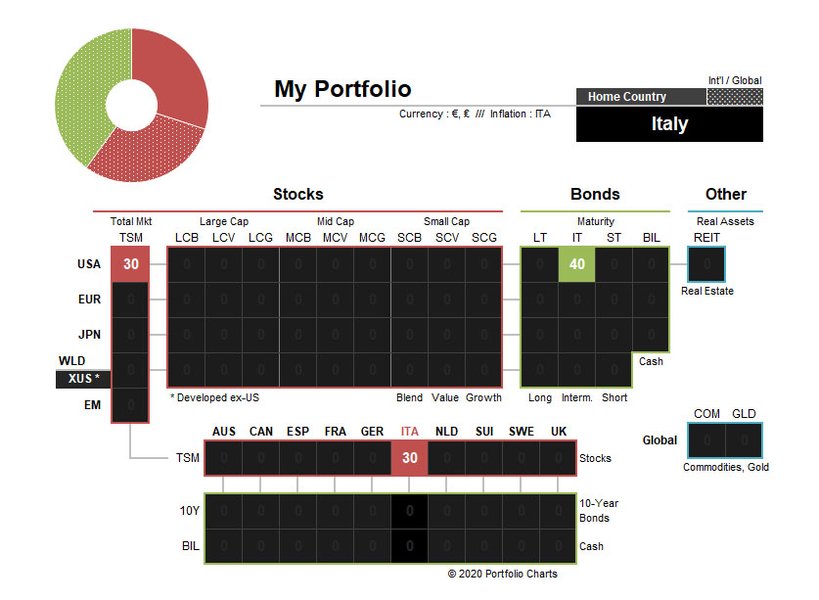 Visualizing portfolio allocation helps in understanding fund composition.
Based on Market Capitalization
These funds invest based on the size of the companies (Market Cap = Share Price x Number of Outstanding Shares).
- Large-Cap Funds: Invest primarily in companies with large market capitalizations (typically the top 100 companies in a market). These are generally considered more stable and less volatile than smaller companies.
- Example (India): Mirae Asset Large Cap Fund - Focuses on established blue-chip companies.
- Example (US): Fidelity 500 Index Fund (FXAIX) - Tracks the S&P 500 Index, comprising 500 of the largest U.S. companies. Often noted for its very low expense ratio (around 0.015%) and solid long-term performance (approx. 15% 5-year annualized return as of early 2025).
- Example (US): Vanguard S&P 500 Index Fund (VFIAX) - Another popular S&P 500 tracker.
- Mid-Cap Funds: Invest in medium-sized companies. These offer a balance between the growth potential of small-caps and the stability of large-caps, but carry moderate risk.
- Example (India): Axis Midcap Fund or Kotak Emerging Equity Fund - Known for targeting companies with significant growth potential.
- Example (India): Motilal Oswal Midcap Fund - Highlighted for strong performance (approx. 22% 5-year annualized return as of April 2025).
- Example (US): Fidelity Mid Cap Value K6 (FCMVX)
- Small-Cap Funds: Focus on smaller companies with high growth potential but also higher risk and volatility.
- Example (India): Tata Small Cap Fund - Requires a minimum investment of ₹5,000 lump sum or ₹100 via SIP.
- Example (US): Ancora Microcap Fund I (ANCIX)
- Multi-Cap/Flexi-Cap Funds: Invest across large, mid, and small-cap stocks, offering diversification within market caps. Flexi-cap funds have more freedom in allocation compared to multi-cap funds which often have mandated minimums for each cap size.
- Example (India): Funds in this category offer managers flexibility to shift allocations based on market outlook.
Based on Investment Style
These funds follow specific philosophies in selecting stocks.
- Growth Funds: Focus on companies expected to grow earnings at an above-average rate. These may not pay significant dividends.
- Example (US): Amana Trust Growth Fund (AMAGX) - Focuses on high-potential growth stocks, often with an ethical/ESG overlay (approx. 18% 5-year annualized return).
- Example (US): Vanguard Growth Index Fund (VIGRX)
- Value Funds: Invest in stocks that the fund manager believes are currently undervalued by the market, expecting their price to rise eventually.
- Example (US): Fidelity Contrafund (FCNTX) - A well-known fund investing in undervalued companies (approx. 17% 5-year return).
- Example (US): Huber Select Large Cap Val Inv (HULIX)
- Contra Funds: A type of value investing where managers take a contrarian view, investing in stocks that are currently out of favor.
- Example (India): SBI Contra Fund
- Dividend Yield / Income Funds: Focus on stocks of companies that pay regular dividends, aiming for income generation alongside potential capital appreciation.
- Example (US): Fidelity Equity-Income (FEQIX)
- Example (US): Vanguard High Dividend Yield Index Fund (VHYAX)
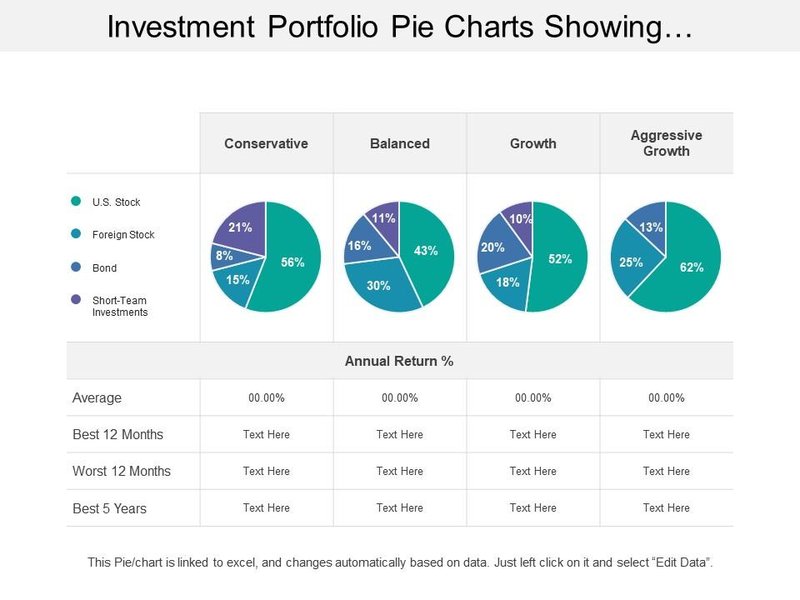 Portfolio allocation varies significantly between conservative, balanced, and growth-focused funds.
Based on Geographic Focus
- Domestic Funds: Invest in stocks of companies within the investor's home country.
- Example (US): Vanguard Total Stock Market Index Fund (VTSAX / VSMPX) - Covers the entire US stock market across all cap sizes (approx. 0.02% expense ratio, ~14% 5-year return). A core holding for many US investors.
- International/Global Funds: Invest in stocks of companies outside the investor's home country (International) or across the globe including the home country (Global). These provide geographic diversification.
- Example (Accessed from India): Mirae Asset S&P 500 Top 50 ETF FoF Direct (G) - Invests in the top 50 companies of the S&P 500, offering focused US exposure (approx. 14.8% 3-year return).
- Example (Accessed from India): Bandhan US Equity FoF Direct (G) - A fund of funds investing in US equities (approx. 11.7% 3-year return).
- Example (US Focus): Fidelity International Small Cap Fund (FISMX) - Focuses on small companies outside the US.
Specialized Funds
- Sector Funds: Concentrate investments in a specific industry or sector, such as technology, healthcare, energy, or infrastructure. These carry higher concentration risk.
- Example (India): ICICI Prudential Infrastructure Fund - Focused on infrastructure companies (strong 3-year return of ~26.3%).
- Example (US): Putnam Global Technology Fund (PGTAX)
- Example (US): Vanguard Energy Inv (VGENX)
- Thematic Funds: Invest based on specific investment themes, like ESG (Environmental, Social, Governance), artificial intelligence, or renewable energy.
- Focused Funds: Hold a concentrated portfolio of a limited number of stocks (e.g., 20-30), aiming for high conviction bets.
- Equity-Linked Savings Schemes (ELSS): (Specific to India) Offer tax benefits under Section 80C of the Income Tax Act, with a mandatory lock-in period of 3 years.
- Example (India): Quant ELSS Tax Saver Fund
- Hybrid Funds: While not purely equity, these funds blend equity and debt instruments. Aggressive hybrid funds maintain a higher equity allocation (e.g., 65-80%).
- Example (India): SBI Equity Hybrid Fund or Mirae Asset Hybrid Equity Fund - Balance equity exposure with debt.
Visualizing Fund Characteristics
Different types of equity mutual funds exhibit varying characteristics in terms of potential growth, risk, income generation, and cost. The radar chart below offers a visual comparison based on generally accepted profiles for these fund categories. Note that these are generalized characteristics and specific funds within each category can vary.
This chart helps visualize the trade-offs: for instance, Mid-Cap Growth funds score high on Growth Potential but also on Risk Level, while Large-Cap Index funds offer strong Diversification and lower costs (represented by a high score on the inverted Expense Ratio axis) but potentially moderate Growth Potential compared to smaller caps.
Equity Fund Landscape Mindmap
To better understand the relationships between different types of equity funds, here is a mindmap illustrating the main categories and sub-types:
This mindmap shows how equity funds can be classified based on the size of companies they invest in (Market Cap), their investment philosophy (Style), their geographic reach, or their focus on specific sectors or themes.
Summary Table of Equity Fund Examples
This table summarizes some of the key fund types discussed, along with representative examples and general characteristics:
| Fund Category | Primary Focus | Example Fund (Illustrative) | General Risk Profile | General Return Potential |
|---|---|---|---|---|
| Large-Cap | Top 100-500 largest companies | Fidelity 500 Index (FXAIX) / Mirae Asset Large Cap | Moderate | Moderate-High |
| Mid-Cap | Medium-sized companies | Axis Midcap Fund / Motilal Oswal Midcap | Moderately High | High |
| Small-Cap | Smaller companies | Tata Small Cap Fund / Ancora Microcap (ANCIX) | High | Very High |
| Growth Style | Companies with high growth prospects | Amana Trust Growth (AMAGX) | Varies (often High) | High |
| Value Style | Undervalued companies | Fidelity Contrafund (FCNTX) / SBI Contra | Varies (often Moderate-High) | Moderate-High |
| International | Companies outside home country | Mirae Asset S&P 500 Top 50 FoF / Bandhan US Equity FoF | Varies (Moderate-High) | Varies (Moderate-High) |
| Sectoral | Specific industry (e.g., Tech, Infra) | ICICI Pru Infrastructure / Putnam Global Tech (PGTAX) | High (Concentration Risk) | Varies (Potentially Very High) |
| Index Fund (Broad Market) | Tracking a market index (e.g., Total Market) | Vanguard Total Stock Market (VTSAX) | Moderate | Moderate-High |
Note: Risk and return profiles are generalizations. Past performance is not indicative of future results. Always consult fund documents for specific details.
Understanding Equity Funds Further
For a deeper dive into the basics of equity mutual funds, how they function, and why they are a popular investment choice, the following video provides a helpful overview:
This video explains the core concepts, different types of equity funds available, and their suitability for various investors, complementing the examples provided here.
Frequently Asked Questions (FAQ)
What is the main difference between an equity fund and a debt fund?
Equity funds primarily invest in stocks (shares of companies), aiming for capital growth, but carry higher market risk. Debt funds primarily invest in fixed-income securities like bonds and government securities, aiming for stable income and lower risk compared to equity funds.
Are equity mutual funds risky?
Yes, equity mutual funds are subject to market risk, meaning their value can fluctuate significantly based on stock market movements, economic conditions, and company performance. The level of risk varies depending on the type of equity fund (e.g., small-cap funds are generally riskier than large-cap funds).
What is an Index Fund?
An index fund is a type of equity mutual fund (or ETF) that aims to replicate the performance of a specific market index, like the S&P 500 or the Nifty 50. Instead of actively picking stocks, it passively holds all (or a representative sample) of the securities in the index. They are often favored for their broad diversification and typically lower expense ratios compared to actively managed funds.
How do I choose the right equity fund?
Choosing the right fund depends on your individual financial goals (e.g., retirement, buying a house), investment horizon (how long you plan to invest), and risk tolerance (how comfortable you are with potential losses). Consider the fund's objective, historical performance (though not a guarantee of future results), expense ratio, fund manager's track record, and how it fits into your overall portfolio diversification strategy.
References
- Top 5 Best Equity Oriented Mutual Funds 2025-2026 - Fincash
- Equity Mutual Fund - Types and Benefits of Equity Funds in India - Groww
-
Equity Funds - Meaning, Best Performing Schemes in 2025 - ET Money
- Top 10 best performing mutual funds for April 2025 - Economic Times
- US Equity Mutual Funds - Scripbox
-
Top 25 Mutual Funds - MarketWatch
-
Mutual Funds - U.S. News & World Report
Recommended
Last updated April 13, 2025