
Unveiling Forex Titans: Which Currency Pairs Are Primed for Explosive Short-Term Moves?
An expert's take on two major pairs coiled for significant shifts, backed by current market dynamics as of May 19, 2025.
In the dynamic world of forex trading, identifying currency pairs on the cusp of significant short-term movements requires a keen eye for market catalysts, a deep understanding of economic indicators, and a pulse on geopolitical undercurrents. As a seasoned analyst with a track record of pinpointing such opportunities, I've distilled current market intelligence to spotlight two major currency pairs that exhibit strong potential for explosive directional moves in the immediate future. This analysis is based on a confluence of factors including divergent central bank policies, prevailing risk sentiment, and critical economic data releases.
Key Highlights: Short-Term Forex Opportunities
- GBP/JPY (British Pound / Japanese Yen): Poised for a potential upside movement, driven by stark monetary policy differences and risk appetite dynamics.
- EUR/USD (Euro / US Dollar): Exhibiting a bias towards a downside trajectory, influenced by anticipated Federal Reserve actions versus European Central Bank strategies and comparative economic outlooks.
- Strategic Holding Period: These opportunities are targeted for short-term engagement, generally ranging from a few days to a couple of weeks, to capitalize on initial momentum bursts.
In-Depth Analysis: The Pairs to Watch
The foreign exchange market is a complex arena, but careful analysis can reveal high-probability setups. The following two pairs are currently presenting compelling cases for significant short-term activity.
1. GBP/JPY (British Pound / Japanese Yen) - The Volatility Virtuoso
The GBP/JPY pair, often referred to as the "Dragon" or "Geppy," is renowned for its volatility, making it a perennial favorite for traders seeking substantial price swings. Current conditions in 2025 amplify its potential for a notable move.
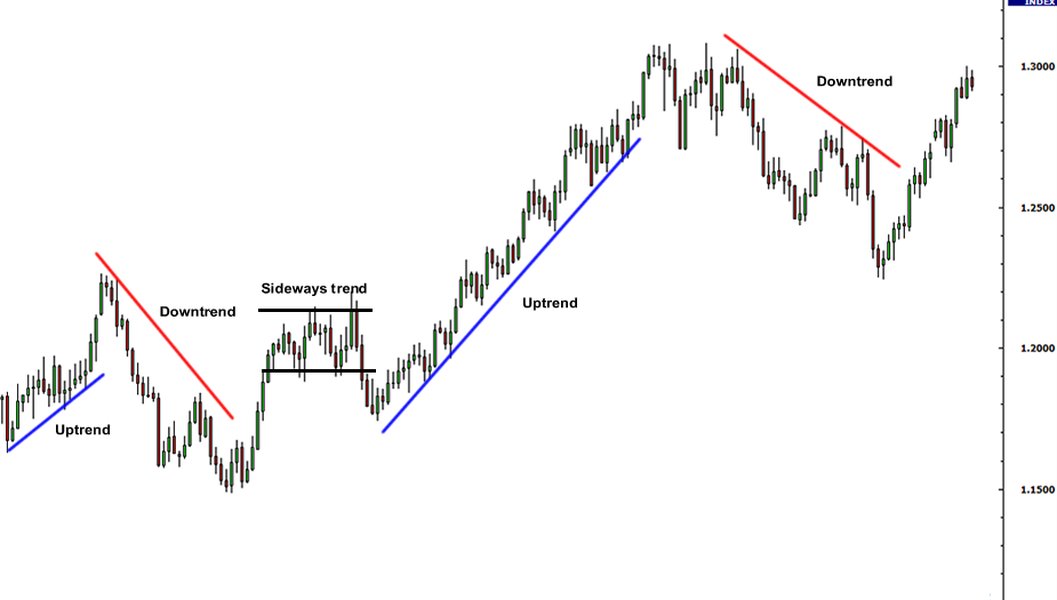
Illustrative example of trend analysis in forex charts, crucial for identifying directional bias.
Primary Drivers for GBP/JPY:
- Monetary Policy Divergence: This is the cornerstone of the current outlook. The Bank of England (BoE) has adopted a relatively more aggressive stance in adjusting interest rates compared to the Bank of Japan (BoJ), which continues to maintain its ultra-loose monetary policy. This significant contrast creates a fundamental imbalance that can fuel strong trends. The interest rate differential makes holding GBP more attractive than JPY, particularly in certain market environments.
- Risk Sentiment: GBP/JPY is highly sensitive to global risk appetite. During periods of positive risk sentiment ("risk-on"), investors often favor higher-yielding currencies like the Pound over the lower-yielding, safe-haven Yen. This can lead to an influx into "carry trades," where traders borrow in a low-interest-rate currency (JPY) to invest in a higher-interest-rate currency (GBP), pushing the pair upwards. Conversely, "risk-off" sentiment typically sees the Yen strengthen.
- Economic Data: Releases from both the UK and Japan, particularly inflation figures, employment data, and GDP growth, can trigger sharp movements. Any surprises in these releases can quickly alter short-term expectations.
Directional Lean and Holding Period:
My current analysis points to an upside (bullish) lean for GBP/JPY. The pronounced interest rate differential strongly favors the Pound. While market sentiment can be fickle, the underlying policy divergence provides a robust bullish impetus for the short term. The anticipated holding period for this potential move ranges from a few days to a couple of weeks, aiming to capture the initial burst of momentum typical of this pair.
2. EUR/USD (Euro / US Dollar) - The Global Bellwether
As the most traded currency pair globally, EUR/USD reflects the economic health and monetary policies of the world's two largest economic blocs: the Eurozone and the United States. Its high liquidity makes it an ideal candidate for capturing significant moves when catalysts align.

The EUR/USD pair is heavily influenced by central bank policies and economic indicators from both the Eurozone and the U.S.
Primary Drivers for EUR/USD:
- Central Bank Policies: The interplay between the Federal Reserve's (Fed) interest rate policies and the European Central Bank's (ECB) inflation control measures is paramount. Any perceived divergence in their hawkishness/dovishness, or their responses to inflation and growth data, can trigger sharp directional moves. Market participants scrutinize statements, meeting minutes, and forward guidance from both central banks.
- Economic Indicators: Key data releases such as Non-Farm Payrolls (NFP) from the US, inflation (CPI), retail sales, manufacturing and services PMIs, and GDP growth figures from both economies are critical. Stronger US data relative to Eurozone data, or vice-versa, can significantly impact the pair.
- Geopolitical Developments: Events impacting either the Eurozone or the US can affect currency strength. Stability or instability in these regions plays a role in capital flows and currency valuation.
- Relative Economic Growth: Comparisons in economic growth trajectories between the US and the Eurozone are a long-term driver, but significant short-term revisions to growth forecasts can also induce volatility.
Directional Lean and Holding Period:
For EUR/USD, the current assessment leans towards a downside (bearish) move. While both the Fed and ECB are navigating complex inflationary environments, recent economic indicators and potential shifts in forward guidance suggest a possibility of renewed Dollar strength in the near term, especially if the Fed maintains a more resolute stance on inflation or if US economic data outperforms. The targeted holding period for this EUR/USD outlook is also short-term, likely within a one to three-week timeframe, focusing on capturing a decisive move driven by evolving policy expectations and key economic data releases.
Comparative Analysis: GBP/JPY vs. EUR/USD
To visualize the differing characteristics and potential of these two currency pairs for short-term trading, the following radar chart provides a comparative overview based on several key trading attributes. This is an interpretative assessment based on current market conditions and historical behavior.
This chart illustrates that while GBP/JPY scores higher on volatility and direct impact from divergent monetary policy, EUR/USD boasts superior liquidity. Both are highly sensitive to economic data, and both present significant short-term directional potential based on the analysis.
Mindmap: Factors Influencing Key Forex Pairs
The following mindmap offers a visual breakdown of the primary catalysts and characteristics for the GBP/JPY and EUR/USD pairs, providing a quick reference to the complex interplay of forces shaping their potential short-term movements.
(May 2025)"] GBP/JPY ["GBP/JPY (Lean: Bullish)"] Drivers id1["Monetary Policy Divergence
(BoE vs. BoJ)"] id2["Interest Rate Differential
(Favors GBP)"] id3["Global Risk Sentiment
(Risk-on favors GBP/JPY up)"] id4["UK & Japan Economic Data"] Characteristics id5["High Volatility"] id6["Carry Trade Appeal"] id7["Sensitivity to Yields"] EUR/USD ["EUR/USD (Lean: Bearish)"] Drivers id8["Central Bank Policies
(Fed vs. ECB)"] id9["US & Eurozone Economic Data
(Inflation, NFP, GDP)"] id10["Relative Economic Growth Outlooks"] id11["Geopolitical Factors"] Characteristics id12["High Liquidity (Most Traded)"] id13["Reflects Major Economic Blocs"] id14["Sensitive to Policy Surprises"]
This mindmap encapsulates the core elements driving the potential for these pairs. Understanding these drivers is key to navigating their short-term dynamics.
Understanding Currency Pair Dynamics: Strong vs. Weak Analysis
Selecting the right currency pairs is fundamental to successful forex trading. One common approach involves identifying strong currencies to buy and weak currencies to sell. The video below provides valuable insights into methodologies for picking strong versus weak currency pairs, a crucial skill for capitalizing on directional moves.
This video, titled "STEP BY STEP - How to Pick Strong vs. Weak Pairs. The One ...", discusses how to analyze and master strong versus weak currency analysis. This complements the pair-specific insights provided, as identifying broader currency strength or weakness can confirm or provide context to individual pair setups like GBP/JPY or EUR/USD.
Summary Table: Expert's Short-Term Forex Picks
For a quick overview, the table below summarizes the key aspects of the two currency pairs identified for potential significant short-term directional moves:
| Currency Pair | Directional Lean | Key Drivers | Anticipated Holding Period | Primary Risk Factors |
|---|---|---|---|---|
| GBP/JPY | Bullish (Upside) | BoE/BoJ monetary policy divergence, risk sentiment, interest rate differentials. | Few days to 2 weeks | Sudden shifts in risk appetite, unexpected central bank communications, UK/Japan specific economic shocks. |
| EUR/USD | Bearish (Downside) | Fed/ECB policy expectations, comparative economic data (US vs. Eurozone), US Dollar strength. | 1 to 3 weeks | Unexpected dovish Fed signals, surprisingly strong Eurozone data, geopolitical events impacting USD. |
It is crucial to remember that forex trading involves significant risk. Always employ robust risk management strategies, including appropriate stop-loss orders and position sizing, especially when dealing with volatile pairs.
Expert's Take: The Tweet-Sized Summary
Distilling this analysis into the concise format of a social media update, here's the expert take:
🔥 Expert Forex Alert! 📈 #GBPJPY poised for UPTICK: BoE/BoJ policy divergence + risk-on mood. Holding: days-2wks. 📉 #EURUSD leaning DOWN: Fed vs ECB dynamics + data suggest USD strength. Holding: 1-3wks. Big moves ahead! #ForexTrading #FXExpert #ShortTerm #MarketAnalysis
This brief message encapsulates the core calls, intended for traders looking for quick, actionable insights while understanding that deeper due diligence is always necessary.
Frequently Asked Questions (FAQ)
What makes GBP/JPY a particularly volatile currency pair?
GBP/JPY's high volatility stems from several factors:
- Interest Rate Differentials: Significant differences in interest rates between the UK (historically higher) and Japan (historically very low) can lead to large capital flows, especially during "carry trade" periods.
- Risk Sensitivity: The Japanese Yen is a traditional safe-haven currency, while the British Pound is often considered a riskier asset. Shifts in global risk appetite can cause rapid and substantial re-pricing of the pair.
- Economic Leverage: Both economies are significant, but changes in their respective economic outlooks or unexpected data can have an amplified effect on this cross rate.
- Lower Liquidity (vs. Majors like EUR/USD): While still liquid, it's less so than pairs like EUR/USD, meaning larger orders can sometimes move the price more significantly.
How do central bank policies from the Fed and ECB impact the EUR/USD pair?
The Federal Reserve (Fed) and the European Central Bank (ECB) are the primary drivers of EUR/USD movements through their monetary policies:
- Interest Rate Decisions: Changes or anticipated changes in benchmark interest rates directly affect currency attractiveness. Higher rates (or expectations of higher rates) tend to strengthen a currency.
- Quantitative Easing/Tightening (QE/QT): Asset purchase programs (QE) or their unwinding (QT) influence money supply and can devalue or strengthen a currency, respectively.
- Forward Guidance: Statements about future policy intentions are heavily scrutinized. A more "hawkish" (inclined to tighten policy/raise rates) stance from the Fed relative to the ECB typically strengthens the USD against the EUR, and vice-versa for a "dovish" (inclined to loosen policy/lower rates) stance.
- Inflation Targets and Responses: How each bank addresses inflation (e.g., its tolerance levels and policy tools) creates divergences that traders exploit.
What is a "carry trade" and how does it apply to GBP/JPY?
A carry trade is a strategy where a trader borrows a currency with a low interest rate (the funding currency) and uses the proceeds to invest in a currency with a high interest rate (the investment currency). The trader aims to profit from the interest rate differential, known as the "carry."
In the context of GBP/JPY:
- The Japanese Yen (JPY) has historically had extremely low, sometimes negative, interest rates, making it a common funding currency.
- The British Pound (GBP) has generally offered higher interest rates compared to the JPY.
- A carry trader might borrow JPY, convert it to GBP, and invest in GBP-denominated assets to earn the higher interest. This act of buying GBP with JPY can drive the GBP/JPY exchange rate up.
- Carry trades are most popular during periods of low market volatility and strong risk appetite, as traders are less concerned about adverse exchange rate movements wiping out their interest gains.
Why is a short-term holding period generally recommended for these types of "explosive move" trades?
Short-term holding periods (e.g., a few days to a couple of weeks) are often recommended for trades targeting "explosive moves" for several reasons:
- Capturing Initial Momentum: Explosive moves are often characterized by a sharp, initial burst of price action driven by a specific catalyst (e.g., data release, policy shift). The goal is to capture this primary impulse.
- Avoiding Reversals/Consolidation: After a strong move, markets often enter a period of consolidation, profit-taking, or even partial reversal. A shorter holding period aims to exit before these phases dilute profits.
- Event-Driven Nature: Many such moves are tied to discrete events. Once the market has priced in the event, the directional impetus may wane.
- Managing Risk: Volatile pairs can experience rapid swings. Longer holding periods increase exposure to unforeseen events or shifts in sentiment that could quickly erase gains. Short-term trading allows for more nimble risk management.
- Compounding Opportunities: Successfully capturing short-term moves allows capital to be redeployed to new opportunities more quickly.
Recommended Further Exploration
To deepen your understanding of the concepts discussed and the current forex market landscape, consider exploring these related queries:
- Explore detailed strategies for trading GBP/JPY based on interest rate differentials and risk sentiment.
- Learn how to analyze Federal Reserve and European Central Bank monetary policy statements for EUR/USD trading signals.
- What are the most effective risk management techniques for trading highly volatile forex pairs like GBP/JPY?
- Understand the impact of major economic data releases (e.g., NFP, CPI) on short-term currency movements.
References
The insights and analysis presented are informed by a synthesis of information from reputable financial sources and market data. For further reading, consider these references:
Last updated May 19, 2025