
Unlocking Explosive Forex Moves: An Expert's Take on Today's Top Currency Pairs
Identifying two major currency pairs primed for significant short-term directional shifts, with insights into their drivers, leanings, and optimal holding periods.
Highlights: Decoding Potential Market Fireworks
- Focus on High-Volatility Pairs: Certain currency pairs, driven by unique economic and policy factors, are currently signaling potential for substantial, rapid price movements.
- Central Bank Divergence is Key: The contrasting monetary policies of major central banks remain a primary catalyst for explosive directional trades in the forex market.
- Strategic Short-Term Holds: The calls emphasize capturing swift momentum, with holding periods designed for agility in a fast-moving market environment.
Navigating Forex Volatility: The Expert's Playbook for Short-Term Gains
In the dynamic world of foreign exchange, identifying currency pairs poised for significant, rapid movements requires a keen understanding of macroeconomic trends, central bank policies, and market sentiment. An expert forex strategist focuses on pairs where a confluence of factors suggests an imminent breakout or a strong directional trend. These "explosive moves" offer opportunities for substantial gains, provided traders employ rigorous analysis and disciplined risk management. Today, two major pairs stand out for their potential in the short-term horizon.
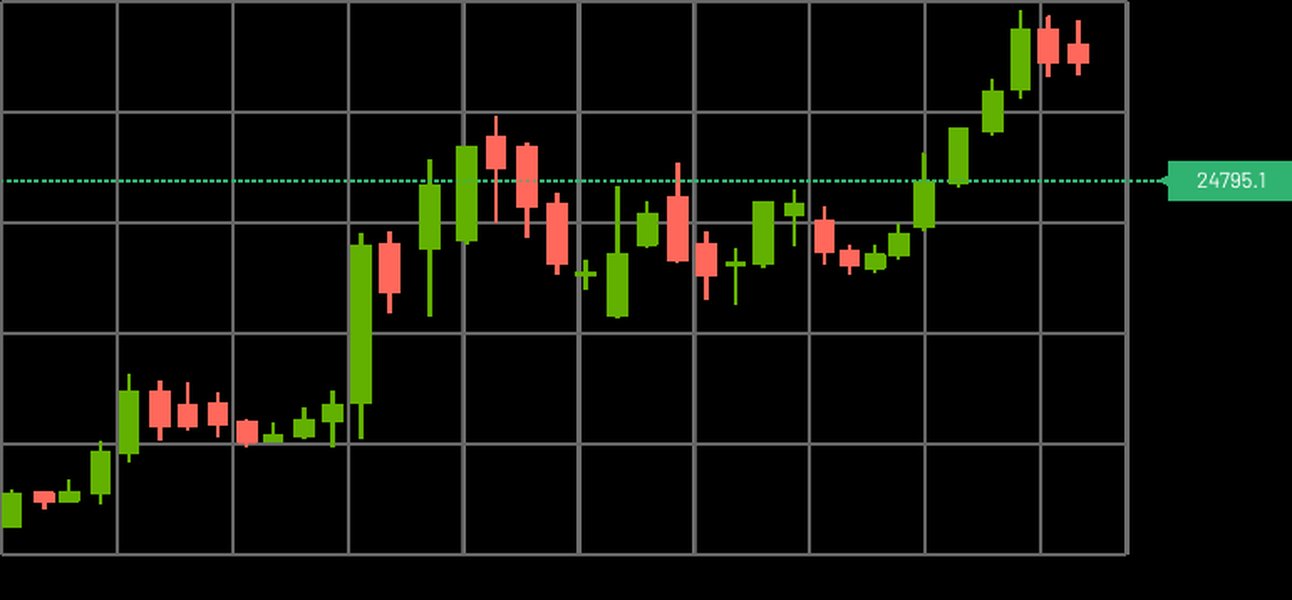
Candlestick charts are a vital tool for forex traders to analyze price movements and identify potential trading opportunities.
Focus Pair 1: GBP/JPY – Riding "The Dragon's" Momentum
The British Pound versus the Japanese Yen (GBP/JPY), often nicknamed "The Dragon" or "Geppy" for its wild swings, is a perennial favorite for volatility traders. Its price action is a complex interplay of UK economic performance, Bank of England (BoE) monetary policy, and the Japanese Yen's status as a safe-haven currency, heavily influenced by Bank of Japan (BoJ) policies and global risk appetite.
Why GBP/JPY? The Confluence of Catalysts
GBP/JPY is renowned for its high daily trading range, making it susceptible to sharp, swift moves. Key drivers include:
- Monetary Policy Divergence: The differing stances of the BoE and BoJ are critical. If the BoE adopts a more hawkish tone (e.g., to combat inflation) relative to the BoJ's historically ultra-loose or cautious stance, it can create strong directional pressure.
- Economic Data Surprises: Key releases from the UK (like GDP, CPI, employment figures) or Japan can trigger significant volatility.
- Risk Sentiment: As a "risk-on" currency, GBP often strengthens when global market sentiment is positive, while the JPY, a "safe-haven," tends to attract flows during uncertainty. Shifts in this sentiment can rapidly move GBP/JPY.
- Carry Trade Interest: Historically, interest rate differentials have made GBP/JPY a candidate for carry trades (borrowing in low-yielding JPY to invest in higher-yielding GBP assets), which can also influence flows.
Directional Lean: Leaning Bullish (Long GBP)
Currently, the analysis leans towards a bullish stance on GBP/JPY (Long GBP). This is predicated on expectations that:
- The Bank of England may maintain a relatively tighter monetary policy stance or signal concerns about inflation that are perceived as more aggressive than the Bank of Japan's approach.
- Positive surprises in UK economic data could bolster the Pound.
- A stable or improving global risk sentiment might diminish the Yen's safe-haven appeal relative to the Pound's prospects.
However, this call is dynamic and responsive to incoming data and central bank rhetoric.
Optimal Holding Window: Nimble and Reactive
For capturing explosive moves in GBP/JPY, a short-term holding period is essential. The recommendation is typically from intraday up to one week. This allows traders to capitalize on bursts of volatility following specific catalysts while managing risk associated with the pair's notorious swings.
Focus Pair 2: USD/JPY – The Policy Divergence Power Play
The US Dollar versus the Japanese Yen (USD/JPY), often called "The Ninja," is under intense scrutiny due to the stark contrast in monetary policy directions between the U.S. Federal Reserve (Fed) and the Bank of Japan (BoJ). This divergence is a powerful fundamental driver for sustained directional moves.
Why USD/JPY? A Tale of Two Central Banks
The primary engine for USD/JPY's potential explosive moves is:
- Monetary Policy Chasm: The Federal Reserve's approach to managing inflation and employment (potentially hawkish or indicating higher rates for longer) often stands in sharp contrast to the Bank of Japan's long-standing commitment to ultra-loose monetary policy and yield curve control. This creates a fundamental impetus for USD strength against JPY.
- Interest Rate Differentials: The widening or narrowing gap between U.S. and Japanese interest rates directly impacts USD/JPY. Higher U.S. yields typically attract capital, boosting the dollar.
- Economic Data Impact: Key U.S. economic indicators (e.g., Non-Farm Payrolls, CPI, retail sales) can significantly sway the pair, as they inform Fed policy expectations.
- Safe-Haven Dynamics: While the JPY is a traditional safe-haven, the USD also benefits from flight-to-safety flows during times of extreme global stress. The interplay between these can create complex movements, but the policy divergence often dominates.
Directional Lean: Leaning Bullish (Long USD)
The current expert assessment points towards a bullish outlook for USD/JPY (Long USD). This is based on the assumption that:
- The Federal Reserve will maintain a relatively more hawkish stance compared to the Bank of Japan, or market expectations will continue to price in such a divergence.
- U.S. economic data will support the narrative of a resilient economy, potentially leading to sustained or further policy tightening by the Fed.
- The interest rate differential will continue to favor the USD.
A key level to watch might be a psychological or technically significant resistance, where a breakout could confirm the upward thrust.
Optimal Holding Window: Riding the Trend
Given the strong fundamental underpinnings, the holding period for USD/JPY can be slightly longer to capture a developing trend, yet still remain short-term. A window of a few days up to two weeks is often appropriate, allowing traders to benefit from reactions to major economic releases or central bank communications that reinforce the policy divergence theme.
Visualizing Market Dynamics: A Comparative Look
Key Attributes of GBP/JPY vs. USD/JPY
To better understand the characteristics of these two currency pairs, the following radar chart visualizes their relative strengths across several key trading attributes. The scale runs from 6 (moderate) to 10 (very high), highlighting how each pair responds to different market forces and their potential for short-term trading strategies. This illustrates why they are currently in focus for explosive moves.
This chart highlights GBP/JPY's superior inherent volatility and strong influence from risk sentiment, while USD/JPY scores highest on direct monetary policy impact. Both show high potential for short-term profits.
Mapping the Strategy: Key Influencers on Forex Moves
Understanding the Drivers Behind Potential Trades
The decision to focus on specific currency pairs for explosive moves isn't arbitrary. It's based on a web of interconnected factors. The mindmap below illustrates the primary drivers for GBP/JPY and USD/JPY, showcasing the elements an expert analyst constantly monitors.
Forex Moves"] id1["GBP/JPY (The Dragon)"] id1_1["Key Drivers"] id1_1_1["Bank of England Policy
(Inflation, Rates)"] id1_1_2["Bank of Japan Policy
(Yield Curve Control, QE)"] id1_1_3["UK Economic Data
(GDP, CPI, Jobs)"] id1_1_4["Global Risk Sentiment
(Risk-On/Risk-Off)"] id1_1_5["Carry Trade Dynamics"] id1_2["Directional Lean: Long GBP"] id1_3["Holding Period:
Intraday to 1 Week"] id2["USD/JPY (The Ninja)"] id2_1["Key Drivers"] id2_1_1["Federal Reserve Policy
(Inflation, Rates, QT)"] id2_1_2["Bank of Japan Policy
(Persistent Easing)"] id2_1_3["US Economic Data
(NFP, CPI, Retail Sales)"] id2_1_4["Interest Rate
Differentials (US vs. JP)"] id2_1_5["Yen Safe-Haven Status
(vs. USD Strength)"] id2_2["Directional Lean: Long USD"] id2_3["Holding Period:
Days to 1-2 Weeks"]
This mindmap provides a quick overview of the core catalysts influencing the short-term outlook for these two highly watched currency pairs.
The Expert's Toolkit: Decoding Volatile Pairs
Successful short-term forex trading, especially in volatile pairs, demands a robust analytical framework and access to reliable information. The modern forex expert combines fundamental analysis, technical charting, and real-time news flow to make informed decisions.
A professional trading setup allows for efficient monitoring of multiple markets and data streams.
Comparative Characteristics of Selected Currency Pairs
The table below offers a comparative glance at the chosen pairs alongside another highly volatile pair, USD/TRY, to illustrate diverse characteristics within the forex market. Understanding these nuances is crucial for tailoring trading strategies.
| Feature | GBP/JPY | USD/JPY | USD/TRY (Illustrative Exotic) |
|---|---|---|---|
| Common Nicknames | "The Dragon", "Geppy" | "Ninja" | N/A |
| Typical Volatility Profile | Very High | High | Extremely High (Often event/crisis-driven) |
| Primary Driver Category | Monetary Policy Divergence, Risk Sentiment, UK/JP Specifics | Monetary Policy Divergence (Fed vs. BoJ), Yields | Turkish Domestic Economic & Political Stability, CBRT Policy |
| Key Central Banks | Bank of England (BoE), Bank of Japan (BoJ) | U.S. Federal Reserve (Fed), Bank of Japan (BoJ) | Central Bank of the Republic of Turkey (CBRT), Fed (via USD) |
| Major Influencing Factors | UK & Japanese economic data, global risk appetite, BoE/BoJ forward guidance | US & Japanese economic data, interest rate differentials, Fed/BoJ statements | Turkish inflation, interest rates, political developments, current account balance |
| Typical Trader Profile | Experienced traders comfortable with high risk and rapid moves | Traders of all levels, popular major pair, requires understanding of policy | Highly specialized traders with extreme risk tolerance and deep local knowledge |
| Suitability for Short-Term Explosive Moves | Excellent | Excellent | Excellent (but demands extreme caution and expertise) |
Video Deep Dive: Understanding Forex Volatility
Exploring the Most Volatile Currency Pairs
To gain further insight into what makes certain currency pairs more volatile than others and how traders approach them, the following video offers a valuable overview. It discusses factors contributing to volatility and lists some of the pairs known for their significant price swings, which aligns with our focus on identifying opportunities for explosive moves.
This video, titled "10 most volatile forex pairs to trade," provides context on measuring forex volatility and identifies currency pairs that frequently exhibit large movements, reinforcing the importance of understanding market dynamics when targeting short-term opportunities.
Social Media Snapshot: Expert Forex Calls
The Expert's View in Brief
Here's how a top-tier forex expert might summarize these calls for a social media audience, capturing the essence of the opportunities:
ForexPro_Insights @FXExpertAlerts · May 19, 2025
🔥 FX WATCHLIST UPDATE! Two major pairs primed for EXPLOSIVE short-term moves:
1️⃣ $GBPJPY (Long GBP): "The Dragon" looks set to soar! Eyeing upside on BoE/BoJ policy divergence & risk sentiment. Target: significant swing. Hold: Intraday to 1 week. #Forex #GBPJPY #TradingCall
2️⃣ $USDJPY (Long USD): Fed hawkishness vs. BoJ easing = clear path higher. US data supporting. Watch for breakout! Hold: Days to 1-2 weeks. #USDJPY #FX #MarketAnalysis
Stay nimble, manage risk! Volatility is opportunity. #ForexTrading
Frequently Asked Questions (FAQ)
What makes a currency pair "explosive"?
An "explosive" currency pair is one that has the potential for rapid, large-scale price movements over a short period. This is often due to a combination of factors such as high liquidity enabling large trades, significant sensitivity to economic news or central bank announcements, and underlying market conditions like strong trends or sharp divergences in economic fundamentals or monetary policies between the two countries whose currencies form the pair.
How crucial is understanding central bank policy for these trades?
It's extremely crucial. Central bank policies, particularly regarding interest rates, inflation targets, and quantitative easing/tightening programs, are primary drivers of currency valuations. Divergences in policy between two central banks (e.g., one tightening while the other is easing) can create strong, sustained directional moves in their currency pair, which is exactly what these types of short-term explosive calls aim to capture.
Are these calls suitable for beginner traders?
Trading highly volatile pairs for short-term explosive moves carries significant risk and is generally more suited to experienced traders. Beginners should focus on understanding market fundamentals, technical analysis, and robust risk management principles, perhaps starting with less volatile pairs or using demo accounts, before attempting to trade such setups. The potential for rapid losses is as high as the potential for gains.
What are the main risks in trading high-volatility pairs?
The main risks include:
- Slippage: Prices can move so quickly that orders may be filled at a worse price than anticipated.
- Wider Spreads: Brokers may widen spreads during high volatility, increasing trading costs.
- Rapid Losses: The same volatility that offers profit potential can lead to swift and substantial losses if the market moves against your position.
- Emotional Trading: Fast-paced environments can trigger emotional decision-making, deviating from a trading plan.
How does geopolitical news affect these currency pairs?
Geopolitical news can significantly impact currency pairs, especially those involving safe-haven currencies like the JPY or USD, or currencies of countries heavily involved in or affected by geopolitical events. Unexpected geopolitical developments can cause sudden flights to safety, increased risk aversion, or disruptions to trade and capital flows, leading to sharp, unpredictable movements in pairs like GBP/JPY and USD/JPY. For example, heightened global tensions might strengthen the JPY and USD due to their safe-haven status, potentially altering existing trends.
Recommended Further Exploration
- How do central bank interest rate decisions impact forex pair volatility?
- What are the key differences in trading strategies for major vs. exotic currency pairs?
- Explore risk management techniques for trading high-volatility assets like GBP/JPY.
- Analyze the historical impact of US Non-Farm Payrolls data on USD/JPY movements.
References
Last updated May 19, 2025