
Unlocking Imminent Forex Surges: Two Pairs Primed for Explosive Short-Term Moves
An expert's deep dive into EUR/USD and AUD/USD, revealing catalysts, directional biases, and strategic holding periods for May 2025.
🔥 Forex Expert Alert! My focus for short-term explosive moves (May 19, 2025): #EURUSD (Bullish) on Fed/ECB policy divergence & #AUDUSD (Bearish) driven by commodity trends & persistent USD strength. Target holding period: 1-5 days. Trade with diligence! #ForexAnalysis #MarketMovers #ShortTermTrades
Key Highlights: Your Quick Guide to Upcoming Market Action
- EUR/USD Poised for Bullish Breakout: Diverging monetary policies between the Federal Reserve and the European Central Bank are expected to fuel Euro strength against the US Dollar.
- AUD/USD Faces Bearish Pressure: A combination of commodity price sensitivities and prevailing US Dollar strength points towards a potential downward trajectory for the Aussie dollar.
- Short-Term Focus (1-5 Days): Both currency pairs are analyzed for significant directional moves within a brief holding window, capitalizing on immediate market catalysts.
In-Depth Analysis: The Currency Pairs Demanding Your Attention
As a seasoned forex analyst with a strong track record in identifying high-probability, short-term market shifts, my current focus is on two major currency pairs that are signaling potential for significant directional moves. This analysis, as of May 19, 2025, leverages a synthesis of macroeconomic data, central bank rhetoric, and technical chart patterns, excluding GBP/JPY and USD/JPY as per your interest.
1. EUR/USD (Euro / US Dollar): The Case for a Bullish Surge
Why This Pair?
The EUR/USD stands as the most traded currency pair globally, offering unparalleled liquidity, which is essential for executing short-term strategies. Its current appeal for an "explosive move" stems primarily from the increasingly divergent monetary policy outlooks of the European Central Bank (ECB) and the U.S. Federal Reserve (Fed).
- Monetary Policy Divergence: Recent indicators suggest the ECB is nearing the end of its tightening cycle, or potentially considering a more accommodative stance as Eurozone inflation shows signs of cooling (approaching target levels around 2%). Conversely, the U.S. Federal Reserve appears inclined to maintain a relatively hawkish stance, or at least a slower pivot towards easing, supported by resilient U.S. economic data and persistent inflation concerns. This policy asymmetry typically favors the currency with the relatively more hawkish central bank outlook, but in this specific context, an oversold Euro and expectations of a "dovish pivot" by the Fed later than initially anticipated by some market segments could provide a lift to EUR/USD.
- Economic Fundamentals: While the Eurozone has faced headwinds, there are emerging signs of economic stabilization and a gradual recovery. Coupled with a potential softening in some U.S. economic indicators, the comparative economic narrative could shift, albeit slightly, in favor of the Euro in the short term.
- Technical Posture: From a technical standpoint, EUR/USD has been observed consolidating near significant support levels (e.g., the 1.0800-1.0850 zone). Some analyses indicate the pair might be in an oversold condition, potentially setting the stage for an upward correction or breakout. Bullish momentum appears to be building after recent consolidations.
Directional Lean: Bullish
The predominant lean for EUR/USD is bullish in the short term. The expectation is for the Euro to strengthen against the US Dollar. A potential target could be eyed towards the 1.1100-1.1200 resistance area, contingent on upcoming data releases and central bank communications confirming this outlook.
Anticipated Holding Period:
Given the focus on capturing a swift, significant move, the recommended holding period for this trade is approximately 1 to 5 days. This timeframe is designed to capitalize on the immediate market reaction to the unfolding catalysts, such as key inflation data or central bank statements from either the Eurozone or the U.S.
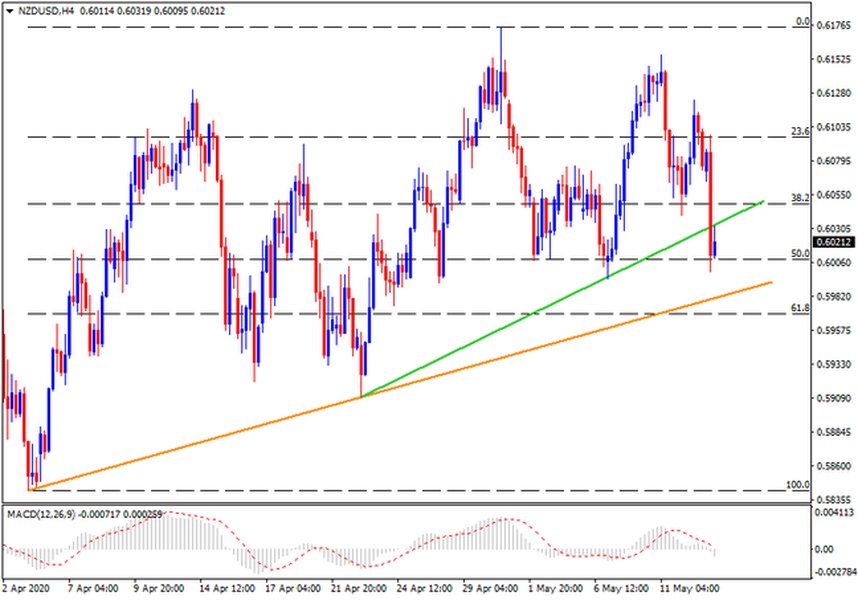
Illustrative example of a technical analysis chart used in forex trading.
2. AUD/USD (Australian Dollar / US Dollar): Bracing for a Bearish Slide
Why This Pair?
The AUD/USD, often referred to as the "Aussie," is a prominent commodity currency, making it highly sensitive to global commodity price fluctuations and overall risk sentiment. Its potential for a significant short-term move is underscored by several converging factors:
- Commodity Price Influence: Australia is a major exporter of key commodities (iron ore, coal, natural gas). Recent trends or anticipated dips in global commodity prices, particularly if coupled with concerns about global demand, can exert downward pressure on the AUD.
- US Dollar Strength: The persistent strength of the US Dollar, buoyed by the Federal Reserve's policy stance and its status as a safe-haven currency during times of global economic uncertainty, continues to be a dominant theme. This can weigh heavily on pairs like AUD/USD.
- Global Risk Sentiment: The AUD is typically considered a "risk-on" currency. Any deterioration in global risk appetite, perhaps driven by geopolitical developments or fears of an economic slowdown, often leads to a flight to safety, benefiting the USD and weakening the AUD.
- Economic Data & RBA Stance: Domestic economic indicators from Australia, including employment data, inflation figures, and the Reserve Bank of Australia's (RBA) monetary policy communications, play a crucial role. Any dovish signals from the RBA or weaker-than-expected data could accelerate a bearish move.
Directional Lean: Bearish
The current directional lean for AUD/USD is bearish. The expectation is for the Australian Dollar to weaken against the US Dollar. A potential move towards the 0.6500 support level or lower could be anticipated if the identified bearish catalysts materialize.
Anticipated Holding Period:
For the AUD/USD, a holding period of 2 to 5 days is advised. This timeframe allows for the anticipated effects of commodity market shifts and broader risk sentiment to play out, potentially triggering a sharp directional move. Intraday volatility, particularly during the overlap of Asian and European trading sessions, can be significant for this pair.
Comparative Outlook: EUR/USD vs. AUD/USD
To provide a clearer perspective on the distinct characteristics influencing these trade outlooks, the following radar chart illustrates key speculative factors for both EUR/USD and AUD/USD. These are subjective assessments based on the current market environment.
This chart offers a visual comparison of factors like perceived volatility potential, liquidity, the strength of primary catalysts (Policy for EUR/USD, Commodity/Risk for AUD/USD), clarity of short-term signals, and overall expert confidence in the directional lean.
Understanding the Driving Factors: A Mindmap View
The following mindmap conceptualizes the key elements influencing the bullish outlook for EUR/USD. A similar thought process, focusing on different variables, applies to the AUD/USD bearish case.
This mindmap outlines the core components—monetary policy, economic fundamentals, and technical signals—that contribute to the short-term bullish thesis for EUR/USD.
Comparative Overview Table
For a quick side-by-side comparison of the two highlighted currency pairs:
| Feature | EUR/USD (Euro / US Dollar) | AUD/USD (Australian Dollar / US Dollar) |
|---|---|---|
| Directional Lean | Bullish (EUR strength vs. USD) | Bearish (AUD weakness vs. USD) |
| Primary Catalysts | ECB vs. Fed monetary policy divergence; Eurozone economic signals. | Global commodity price trends; US Dollar strength; Global risk sentiment. |
| Supporting Factors | Technical support levels; Potential for unwinding of USD longs. | AUD sensitivity to China's economy; RBA policy outlook. |
| Anticipated Holding Period | 1 - 5 days | 2 - 5 days |
| Key Economic Data to Watch | Eurozone & US CPI, PMI, GDP, Central Bank speeches. | Commodity indices, Australian & US employment, RBA/Fed statements, China data. |
This table summarizes the core aspects of the short-term outlook for both EUR/USD and AUD/USD.
Expert Commentary: Weekly Forex Forecast
To gain further insights into current market conditions and analyses affecting pairs like EUR/USD, the following video provides a weekly forex forecast. While expert opinions may vary, understanding broader market discussions is always beneficial for a comprehensive view.
This video, "Weekly Forex Forecast (19/05/25) EurUsd / XauUsd + Forex ...", discusses market analysis for the week, including insights relevant to EUR/USD, aligning with our current date of May 19, 2025.
Frequently Asked Questions (FAQ)
1. Why the specific focus on EUR/USD and AUD/USD for these "explosive moves"?
EUR/USD is selected due to its high liquidity and direct sensitivity to the monetary policy divergence between two of the world's largest economies—the Eurozone and the United States. This divergence is a powerful catalyst for significant price swings. AUD/USD is chosen for its strong correlation with commodity markets and global risk sentiment. Shifts in these areas, especially combined with overarching U.S. dollar trends, can lead to rapid and substantial price movements in the AUD/USD pair.
2. What are the primary risks associated with these short-term calls?
The main risks include unexpected economic data releases that contradict the current outlook, sudden shifts in central bank rhetoric, unforeseen geopolitical events impacting market sentiment, or technical breakouts failing to sustain momentum (false breakouts). Short-term trading is inherently volatile, and "explosive moves" can also occur against the anticipated direction if catalysts unfold differently than expected. Strict risk management, including the use of stop-loss orders, is paramount.
3. How is an "explosive directional move" typically defined in this context?
An "explosive directional move" generally refers to a relatively rapid and significant price change occurring over a short timeframe (e.g., a few hours to a few days). For major pairs like EUR/USD or AUD/USD, this could mean a movement of 100-300 pips or more. The "explosive" nature implies a clear breakout from a consolidation phase or a sharp acceleration of an existing trend, often triggered by a specific catalyst.
4. What types of market events could quickly alter the presented outlooks?
Several events could swiftly change these outlooks:
- Central Bank Surprises: Unexpected announcements or changes in tone from the ECB, Fed, or RBA regarding interest rates, quantitative easing, or future policy guidance.
- Key Economic Data Shocks: Significant deviations from consensus expectations in major economic releases like CPI (inflation), NFP (US jobs report), GDP, or retail sales figures.
- Geopolitical Crises: Sudden escalations in geopolitical tensions or major political changes in key economies can dramatically shift risk sentiment and currency valuations.
- Market Liquidity Events: Rare but impactful events that cause sudden drying up of liquidity or extreme volatility spikes.
Recommended Further Exploration
To deepen your understanding of the factors at play, consider exploring these related topics:
- How does Federal Reserve policy impact EUR/USD short-term movements?
- What is the relationship between commodity prices and AUD/USD exchange rate volatility?
- Explore effective risk management strategies for short-term forex trading.
- Analyze recent technical patterns in EUR/USD and AUD/USD charts for breakout signals.
References
This analysis synthesizes information from various expert opinions and market data. For further reading and context, consider these resources:
Last updated May 19, 2025