
Unveiling an Expert's Top Forex Plays: Which Currency Pairs Show Explosive Potential Right Now?
Get an inside look at a seasoned forex guru's short-term outlook for major currency pairs, pinpointing high-probability setups.
Navigating the fast-paced foreign exchange market requires keen insight and a sharp eye for opportunity. Imagine having access to the thoughts of a highly respected forex financial expert, one known for accurately predicting significant, rapid directional shifts in major currency pairs. Below, we simulate such an expert's current perspective as of May 19, 2025, identifying two key pairs on their watchlist, their reasoning, directional bias, and anticipated holding period.
Highlights: Today's Forex Hotlist
- EUR/USD Bullish Call: Expectations of US dollar weakness and Eurozone resilience point towards potential upward movement for the Euro against the US Dollar.
- USD/JPY Bearish Stance: Diverging monetary policies between the Bank of Japan and the Federal Reserve, alongside broader USD trends, suggest a possible decline for the US Dollar against theJapanese Yen.
- Short-Term Focus: Both identified opportunities are geared towards ultra-short to short-term holding periods, aiming to capitalize on imminent market volatility and data releases.
The Expert's Take: A Social Media Snapshot
Simulated Forex Expert Tweet
Top Forex Strategist @ForexProInsights · May 19, 2025
🔥 Explosive moves on the horizon! My focus for big short-term plays:
1️⃣ #EURUSD: Leaning BULLISH 🐂. USD weakness & EZ data support an upside push above 1.1200. Aiming for a 1-5 day hold.
2️⃣ #USDJPY: Eyeing a BEARISH 🐻 move. BoJ/Fed policy divergence is key. Expecting volatility; 1-3 day hold.
Stay agile, traders! Key data incoming. #ForexTrading #MarketAnalysis #CurrencyPlays
Deep Dive: Currency Pairs Poised for Action
Let's unpack the rationale behind these expert selections, exploring the fundamental and technical drivers that suggest these pairs could experience significant short-term directional moves.
1. EUR/USD (Euro / US Dollar): The Bullish Case
Why EUR/USD?
The EUR/USD is the most traded currency pair globally, representing the world's two largest economic blocs. Its immense liquidity and consistent volatility make it a prime candidate for traders seeking short-term opportunities. The pair is highly sensitive to monetary policy decisions from the European Central Bank (ECB) and the U.S. Federal Reserve (Fed), as well as key economic data releases from both regions.
Rationale for a Bullish Stance
The expert's bullish outlook on EUR/USD is underpinned by several converging factors:
- Anticipated US Dollar Weakness: A prevailing theme is the expectation of a softer US dollar. This is partly due to projections of Federal Reserve rate cuts throughout 2025, driven by potentially softening U.S. economic indicators. Such a scenario typically boosts the EUR/USD pair.
- Eurozone Economic Resilience: Improving economic data from the Eurozone, coupled with optimism around potential stimulus measures, could provide further support for the Euro. Recent analyses suggest a constructive sentiment for EUR/USD, with the pair showing resilience around key technical levels, such as the 1.1200 mark.
- Technical Posturing: The pair has been observed trading near critical resistance levels. A decisive breakout above these levels, potentially triggered by upcoming economic news or central bank commentary, could initiate a sharp upward movement.
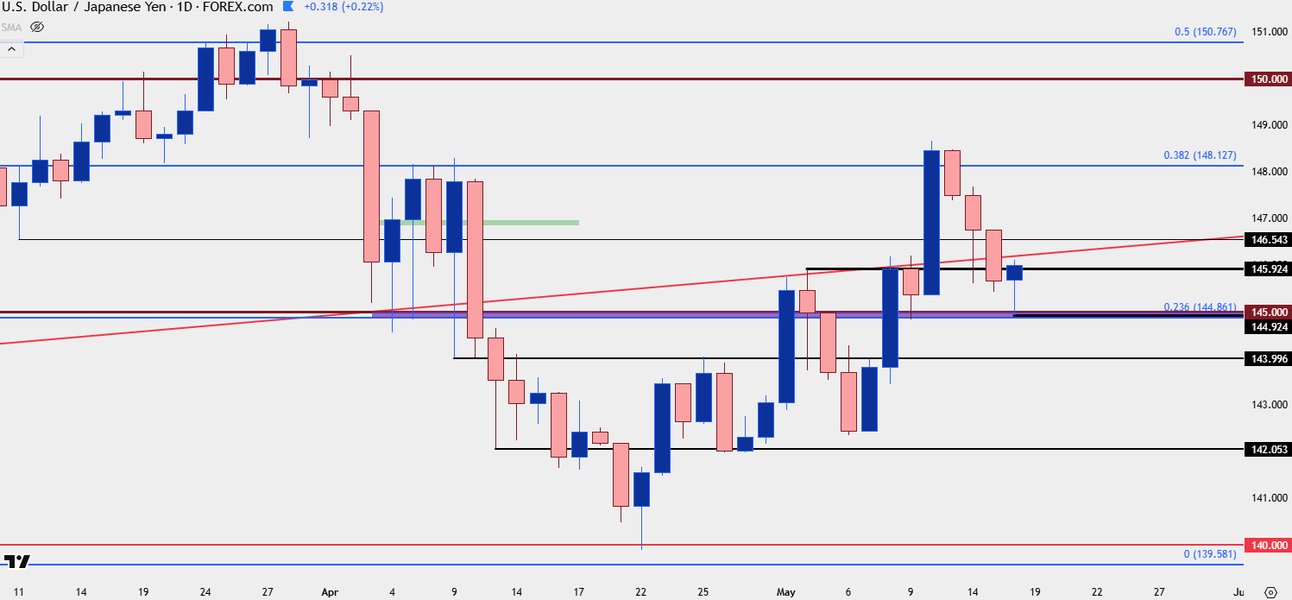
A chart depicting recent price action setups for major pairs including EUR/USD, highlighting key technical levels.
Holding Period
The suggested holding period for this bullish EUR/USD trade is 1 to 5 days. This timeframe is designed to capture swift momentum following anticipated catalysts, such as major data releases (e.g., Non-Farm Payrolls, inflation figures) or shifts in central bank rhetoric.
2. USD/JPY (US Dollar / Japanese Yen): The Bearish Outlook
Why USD/JPY?
Known as "the Gopher," USD/JPY is the second most traded currency pair and is renowned for its sensitivity to interest rate differentials and central bank policies, particularly those of the Fed and the Bank of Japan (BoJ). Its susceptibility to shifts in global risk sentiment also contributes to its potential for significant moves.
Rationale for a Bearish Stance
The expert's bearish inclination for USD/JPY is primarily driven by:
- Monetary Policy Divergence: A key factor is the contrasting monetary policy stances. While the Bank of Japan has maintained a generally dovish approach, any further indications of Fed easing (rate cuts) or a perception of slowing U.S. economic momentum could weaken the USD relative to the JPY. This divergence can exert considerable downward pressure on the pair.
- Impact of US Economic Data: Upcoming U.S. economic data, especially employment figures and inflation reports, will be closely watched. Weaker-than-expected data could solidify expectations for Fed rate cuts, further weighing on USD/JPY.
- Sensitivity to Yields and Risk Appetite: Changes in global bond yields and shifts in investor risk appetite can significantly impact USD/JPY. A "risk-off" environment often sees flows into the safe-haven Japanese Yen, potentially driving the pair lower.
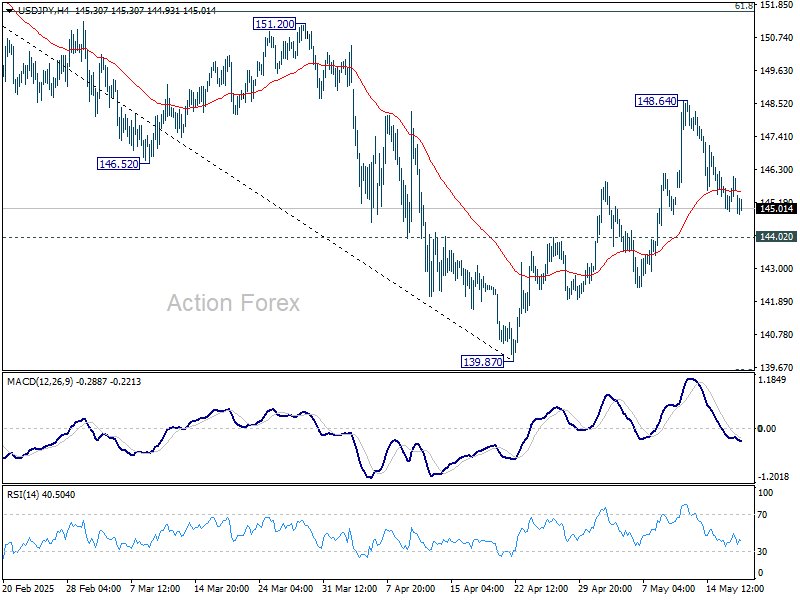
A daily outlook chart for USD/JPY as of May 19, 2025, indicating recent trends and technical analysis.
Holding Period
For the USD/JPY bearish play, the recommended holding period is 1 to 3 days. This ultra-short timeframe reflects the pair's potential for rapid adjustments in response to central bank news and key data releases, aiming to capitalize on immediate market reactions.
Visualizing Key Forex Pair Attributes
Comparative Analysis Radar Chart
The radar chart below offers a visual comparison of EUR/USD and USD/JPY across several key attributes relevant to short-term trading. These are opinionated assessments reflecting the current market analysis for May 19, 2025. The scores range from a minimum of 3 to a maximum of 10, where higher scores generally indicate a stronger presence of the attribute or a greater potential impact.
This chart highlights that while both pairs offer significant short-term opportunities, they differ in their specific sensitivities. EUR/USD shows high impact from US data and excellent liquidity, while USD/JPY demonstrates higher volatility potential and central bank sensitivity. The "Clarity of Short-Term Direction" reflects the expert's current confidence level based on available information.
Mapping the Influences: Factors Driving Short-Term Forex Moves
Mindmap of Expert Considerations
To further understand the expert's perspective, the following mindmap illustrates the interconnected factors considered when identifying these short-term, high-potential currency pair movements. It emphasizes the multifaceted analysis that underpins such calls, moving beyond single indicators to a holistic view of the market landscape.
This mindmap shows that the expert's analysis is a blend of evaluating specific pair dynamics (like driver analysis for EUR/USD and USD/JPY) and considering broader macroeconomic influences. The strategy emphasizes major pairs for their liquidity, aiming to capture quick profits from volatile moves based on a synthesis of data.
Summary of Expert's Short-Term Calls
The table below provides a concise summary of the expert's current high-conviction short-term trade ideas for EUR/USD and USD/JPY as of May 19, 2025.
| Currency Pair | Directional Lean | Primary Rationale | Key Influencing Factors | Holding Period | Expert Confidence (Subjective) |
|---|---|---|---|---|---|
| EUR/USD | Bullish | Anticipated USD weakness & Eurozone resilience | Fed/ECB policies, US economic data (NFP, inflation), Eurozone data, technical level 1.1200 | 1-5 days | Moderately High |
| USD/JPY | Bearish | BoJ/Fed monetary policy divergence & potential USD decline | Fed/BoJ policies, interest rate differentials, global risk sentiment, US economic data | 1-3 days | Moderate |
This table encapsulates the core aspects of the expert's outlook, offering a quick reference for the potential trades. The "Expert Confidence" is a subjective assessment based on the clarity of signals and prevailing market conditions.
Insights on Capturing Market Dynamics
Understanding Explosive Forex Moves
The following video delves into analyzing major currency pairs and identifying setups for potentially significant market movements. While not specific to the exact calls detailed above, it provides valuable context on the types of analyses traders use to spot opportunities for "explosive moves" in the forex market, which aligns with the expert's focus.
This video, "Explosive Forex Moves Ahead: Top Trading Setups for Next Week," discusses in-depth analysis of major currency pairs. Such analyses often involve looking at technical patterns, upcoming economic events, and central bank stances to forecast periods of heightened volatility and directional clarity – much like the expert approach simulated in this response.
Frequently Asked Questions (FAQ)
What makes a currency pair "major"?
Major currency pairs are those that are traded in the highest volumes globally and involve the US dollar (USD) on one side. Examples include EUR/USD, USD/JPY, GBP/USD, and USD/CHF. Their high liquidity generally translates to tighter bid-ask spreads and more readily available market analysis.
How do central bank policies affect forex pairs?
Central bank policies, particularly interest rate decisions and quantitative easing programs, are primary drivers of currency values. Higher interest rates (or expectations thereof) tend to attract foreign capital, strengthening the currency. Conversely, lower rates or dovish policies can weaken a currency. Announcements and forward guidance from central banks like the Fed, ECB, and BoJ can cause significant volatility.
What are common risks in short-term forex trading?
Short-term forex trading, while offering quick profit potential, comes with risks. High volatility can lead to rapid losses if the market moves against a position. Slippage (orders filled at a different price than expected) can occur during fast markets. Additionally, the leverage often used in forex can amplify both gains and losses. Proper risk management, including stop-loss orders and position sizing, is crucial.
Why is the US Dollar so influential in the Forex market?
The US Dollar is the world's primary reserve currency and is involved in the vast majority of global foreign exchange transactions. Its status is due to the size and strength of the U.S. economy, the depth and liquidity of U.S. financial markets, and its role in international trade and finance (e.g., many commodities are priced in USD). Consequently, U.S. economic data and Fed policy have a far-reaching impact on nearly all currency pairs.
Recommended Further Exploration
Deepen Your Forex Knowledge
- Explore how Federal Reserve monetary policy specifically impacts the EUR/USD exchange rate.
- Discover the key technical indicators that forex experts commonly use for short-term trading decisions.
- Analyze the historical impact of Bank of Japan interventions on the USD/JPY currency pair.
- Learn about essential risk management strategies for trading highly volatile currency pairs.
References
Sources for Further Reading
Last updated May 19, 2025