
Unlock Your Data's Hidden Potential: Mastering Autoencoders for Innovation and Efficiency
A comprehensive guide to understanding autoencoders technically and pitching their value effectively to any audience.
Key Insights: Your Autoencoder Cheat Sheet
- Core Function: Autoencoders are neural networks that excel at unsupervised learning by compressing data into an essential summary (encoding) and then accurately reconstructing it (decoding).
- Versatile Applications: They are powerful tools for a wide array of tasks including dimensionality reduction, anomaly detection, data denoising, feature extraction, and even generating new, synthetic data, offering significant business value.
- Customer Appeal: Easily explained using analogies like a "smart data shrinker and restorer," autoencoders promise tangible benefits such as cost savings through data compression, improved data quality via denoising, and enhanced insights from complex datasets, all without needing manually labeled data.
Unveiling the Power of Autoencoders: A Deep Dive for Your Understanding
To effectively advocate for autoencoders, it's crucial to first grasp their underlying mechanics. This section provides a technical breakdown of how these fascinating neural networks operate.
What Exactly is an Autoencoder?
An autoencoder is a type of artificial neural network designed for unsupervised learning. This means it learns patterns and representations from data without requiring explicit labels or predefined categories. Its primary objective is twofold: first, to compress input data into a lower-dimensional, efficient representation, and second, to reconstruct the original data from this compressed form with minimal loss of information. Essentially, it learns to copy its input to its output, but with constraints that force it to learn meaningful properties of the data.
The Architectural Blueprint: Encoder, Bottleneck, and Decoder
A standard autoencoder architecture is composed of three main parts:
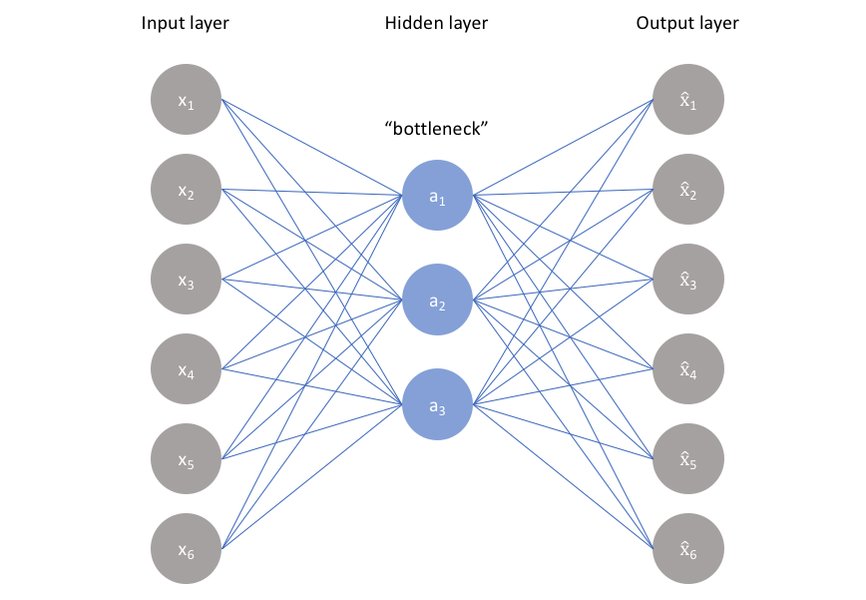
A typical autoencoder architecture: Input data is compressed by the encoder into a latent space representation (bottleneck) and then reconstructed by the decoder.
The Encoder: Compressing Intelligence
The encoder is the first half of the autoencoder. It takes the high-dimensional input data (e.g., an image, a vector of sensor readings) and maps it to a lower-dimensional representation. This process involves passing the data through a series of layers (often fully connected or convolutional) that progressively reduce the dimensionality. The encoder learns to capture the most salient and important features of the input, discarding noise and redundancy.
The Bottleneck (Latent Space or Code): The Essence Captured
The bottleneck, also known as the latent space or code, is the layer with the smallest number of neurons in the network. It represents the most compressed form of the input data. The dimensionality of this layer is a critical hyperparameter; if it's too small, the autoencoder might lose too much information, and if it's too large, it might simply learn to copy the input without extracting useful features (overfitting). This compressed representation contains the "essence" or the distilled information of the input.
The Decoder: Reconstructing Knowledge
The decoder is the second half of the autoencoder. It takes the compressed representation from the bottleneck layer and attempts to reconstruct the original input data as accurately as possible. Its architecture is typically a mirror image of the encoder, with layers that progressively increase in dimensionality, culminating in an output layer with the same dimensions as the original input. The decoder learns to "undo" the compression performed by the encoder.
The Learning Journey: Training an Autoencoder
Autoencoders are trained to minimize the difference between the original input and the reconstructed output.
The Role of Reconstruction Loss
The core of the training process revolves around a reconstruction loss function. This function quantifies how different the reconstructed output is from the original input. Common loss functions include:
- Mean Squared Error (MSE): Often used for continuous input data, like pixel intensities in images. It calculates the average squared difference between the original and reconstructed values. \[ \text{MSE} = \frac{1}{n} \sum_{i=1}^{n} (x_i - \hat{x}_i)^2 \] where \(x_i\) is the original input and \(\hat{x}_i\) is the reconstructed input.
- Binary Cross-Entropy (BCE): Suitable for input data where values are in the range [0, 1], such as binary images or normalized data. \[ \text{BCE} = - \sum_{i=1}^{n} [x_i \log(\hat{x}_i) + (1 - x_i) \log(1 - \hat{x}_i)] \]
The network's weights and biases are adjusted during training using optimization algorithms like gradient descent and backpropagation to minimize this reconstruction error.
Unsupervised Learning in Action
Since the autoencoder learns to reconstruct its own input, it doesn't require externally provided labels. The input data itself serves as the target for the output. This unsupervised nature makes autoencoders highly valuable for domains where labeled data is scarce or expensive to obtain. The constraint imposed by the bottleneck (i.e., making it smaller than the input dimension) is crucial; it forces the network to learn a compressed and meaningful representation rather than just memorizing the input (the identity function).
Visualizing Autoencoder Strengths and Versatility
Autoencoders are not a one-size-fits-all solution; different variants excel in different areas. The radar chart below provides a comparative overview of the typical strengths of various autoencoder types across key capabilities. This visualization helps in understanding which type of autoencoder might be most suitable for a specific task. For instance, while standard autoencoders are good for dimensionality reduction, Variational Autoencoders (VAEs) shine in generative tasks, and Denoising Autoencoders are specifically built to handle noisy data.
The chart scores each autoencoder type from 2 to 10 on different capabilities, where a higher score indicates greater strength. This is an opinionated analysis for illustrative purposes.
Diverse Flavors: Exploring Types of Autoencoders
The basic autoencoder architecture has inspired several variants, each tailored for specific tasks or to overcome particular limitations. Understanding these variations can help you select the most appropriate model for a given problem.
Standard (Undercomplete) Autoencoders: The Foundation
This is the simplest form, where the bottleneck layer has a smaller dimension than the input layer. They are primarily used for dimensionality reduction and feature learning by forcing the network to capture the most important correlations in the data.
Denoising Autoencoders: Filtering Out the Noise
Denoising Autoencoders (DAEs) are trained to reconstruct a clean, original input from a corrupted or noisy version of it. During training, noise (e.g., Gaussian noise, salt-and-pepper noise) is intentionally added to the input data. The DAE then learns to remove this noise and output the underlying clean signal. This makes them robust and useful for tasks like image restoration or cleaning sensor data.
A Denoising Autoencoder learns to reconstruct clean data from corrupted input. (Image source: V7 Labs)
Sparse Autoencoders: Learning Specialized Features
Sparse Autoencoders introduce a "sparsity constraint" on the activations of the hidden layers, typically the bottleneck layer. This means that only a small number of neurons are allowed to be active (i.e., have non-zero output) at any given time. This encourages the network to learn more specialized and distinct features, even if the bottleneck layer is not strictly smaller than the input layer. They can be useful for feature extraction where interpretability of features is desired.
Variational Autoencoders (VAEs): The Generative Powerhouses
Variational Autoencoders are a more advanced, generative type of autoencoder. Instead of encoding an input as a single point in the latent space, a VAE learns the parameters of a probability distribution (typically a Gaussian distribution, defined by a mean and a variance) that describes the latent space. During decoding, a point is sampled from this distribution to generate a new output. This stochastic nature allows VAEs to generate new data instances that are similar to the training data, making them popular for tasks like image generation, drug discovery, and creative content generation.
Convolutional Autoencoders: Masters of Visual Data
When dealing with image data or other data with strong spatial hierarchies (like time series), Convolutional Autoencoders (CAEs) are often preferred. They use Convolutional Neural Network (CNN) layers in the encoder (for downsampling and feature extraction) and deconvolutional (or transpose convolutional) layers in the decoder (for upsampling and reconstruction). CAEs are effective because convolutional layers are adept at capturing local patterns and spatial relationships in images, leading to better performance in tasks like image compression, denoising, and feature learning for images.
Comparative Overview of Autoencoder Variants
The table below summarizes the key characteristics and typical applications of these common autoencoder types:
| Autoencoder Type | Key Characteristic | Primary Use Case(s) | Example Application |
|---|---|---|---|
| Standard (Undercomplete) | Bottleneck layer smaller than input. | Dimensionality reduction, feature learning. | Compressing high-dimensional sensor data. |
| Denoising Autoencoder (DAE) | Trained with corrupted input to reconstruct clean output. | Noise reduction, data cleaning. | Restoring old, noisy photographs. |
| Sparse Autoencoder | Sparsity constraint on hidden layer activations. | Feature extraction, learning disentangled representations. | Identifying distinct features in biological data. |
| Variational Autoencoder (VAE) | Learns a probability distribution in latent space; generative. | Data generation, probabilistic modeling. | Creating synthetic images of faces. |
| Convolutional Autoencoder (CAE) | Uses convolutional layers for spatial data. | Image compression, image denoising, image feature learning. | Segmenting medical images. |
Autoencoders in Action: Real-World Applications
The theoretical underpinnings of autoencoders translate into a wide range of practical applications across various industries. Their ability to learn efficient data representations without supervision makes them invaluable for tackling complex data challenges. The mindmap below illustrates the diverse landscape of autoencoder applications, showcasing their versatility from data preparation to generative tasks.
for Machine Learning Models"] id1_2["Data Visualization
(e.g., t-SNE on latent space)"] id2["Anomaly Detection"] id2_1["Fraud Detection
in Financial Transactions"] id2_2["Network Intrusion Detection
by identifying unusual traffic"] id2_3["Manufacturing Defect Detection
on production lines"] id2_4["Medical Anomaly Detection
in scans or patient data"] id3["Data Denoising"] id3_1["Image Restoration
(removing grain, blur)"] id3_2["Audio Signal Processing
(removing background noise)"] id3_3["Cleaning Sensor Data
from imperfections"] id4["Data Compression"] id4_1["Efficient Image and Video Compression"] id4_2["Reducing Storage Costs
and Transmission Bandwidth"] id5["Generative Modeling (especially VAEs)"] id5_1["Synthetic Data Generation
for training other models"] id5_2["Image Generation and Manipulation
(e.g., creating new artwork)"] id5_3["Drug Discovery
by generating novel molecular structures"] id6["Natural Language Processing (NLP)"] id6_1["Text Compression and Summarization"] id6_2["Semantic Hashing for
fast document retrieval"] id6_3["Learning Word Embeddings"] id7["Recommendation Systems"] id7_1["Learning latent features
of users and items"] id7_2["Collaborative Filtering
based on reconstructed preferences"]
Each branch of the mindmap highlights a key area where autoencoders provide significant value, demonstrating their broad impact on data-driven problem-solving.
Explaining Autoencoders to Your Customer: The Simple Pitch
Now that you have a solid technical understanding, let's focus on how to communicate the value of autoencoders to a non-technical audience, such as a potential customer. The key is to use simple language, relatable analogies, and focus on the benefits.

Autoencoders help turn complex data into actionable insights. (Image source: EdgeIR)
The Core Idea: Smart Data Condensing and Rebuilding
You can start by explaining the fundamental concept in simple terms:
"Imagine you have a huge amount of data – like thousands of images, customer records, or readings from machinery. An autoencoder is like a super-smart data compressor and restorer. First, it looks at all this complex data and learns how to shrink it down to its absolute essentials, like creating a concise summary of a very long book. This summary is much smaller but still holds the most important information. Then, whenever you need the original data, it can take that short summary and rebuild the data almost perfectly, like re-expanding the summary back into the full story."
Another useful analogy: "Think of it as an intelligent librarian for your data. This librarian takes a messy pile of information, neatly summarizes the key points onto a small note card, and can then use that note card to perfectly recreate the original information pile whenever needed."
Why Should Your Customer Care? Tangible Benefits
Focus on how autoencoders can solve their problems and deliver value:
- Efficiency and Cost Savings: "By compressing data intelligently, we can significantly reduce storage space and the bandwidth needed to send it. This means lower costs for data management."
- Improved Data Quality: "If your data is noisy or has imperfections – like blurry security footage or inconsistent sensor readings – autoencoders can act like an automatic filter, cleaning it up to give you clearer, more reliable information to work with."
- Enhanced Anomaly Detection: "This system is fantastic at learning what 'normal' looks like in your data. So, if something unusual happens – like a fraudulent transaction, a machine about to fail, or a network security breach – it stands out because the autoencoder can't reconstruct it well. This allows for early detection of critical issues."
- Better Insights from Complex Data: "When you have very complex data with many variables, it's hard to see the wood for the trees. Autoencoders can simplify this by extracting the most meaningful patterns and features. This makes it easier for your analysts or other systems to understand the data and make smarter decisions, faster."
- Automation and Self-Learning: "The great thing is, this system learns these valuable skills directly from your data itself. You don't need to manually label everything or tell it exactly what's important or what's noise. It adapts and learns on its own."
Key Phrases to "Sell" the Idea
Here are some impactful phrases you can weave into your conversation:
- "It's like teaching a machine to summarize and recreate your data, so you can work smarter, not harder."
- "Autoencoders help you find the 'essence' of your data, filtering out the noise and keeping what truly matters."
- "Unlock hidden patterns and insights that were previously buried in complexity."
- "This technology can give you a competitive edge by making your data operations more efficient and intelligent."
- "It enables proactive problem-solving by spotting anomalies before they become major issues."
- "Minimal loss of important details, maximum efficiency."
By focusing on these benefits and using clear, non-technical language, you can effectively communicate the power and potential of autoencoders to your customers, helping them understand how this technology can address their specific business needs and drive positive outcomes.
Autoencoders Explained Visually
Sometimes, a visual explanation can be incredibly helpful. The following video provides a clear and concise overview of what autoencoders are and how they work, which can be a great supplement to your verbal explanation. It touches upon the core concepts of encoding, decoding, and their applications in an accessible manner.
Video by IBM explaining the fundamentals of autoencoders.
This video effectively breaks down the concept of autoencoders, highlighting their unsupervised nature and their utility in tasks like dimensionality reduction and anomaly detection. It reinforces the idea of compressing data to its essential features and then reconstructing it, which is the cornerstone of how autoencoders function and provide value.
Frequently Asked Questions (FAQ)
What is unsupervised learning, and why is it important for autoencoders?
Unsupervised learning is a type of machine learning where the algorithm learns patterns from data that has not been labeled or classified. Autoencoders are a prime example of unsupervised learning because they learn to reconstruct their input data without needing explicit labels telling them what the "correct" output for a given input feature is. The target is the input itself. This is powerful because it allows us to leverage vast amounts of unlabeled data, which is far more abundant than labeled data, to discover underlying structures, reduce dimensionality, or detect anomalies.
How is an autoencoder different from PCA (Principal Component Analysis)?
Both autoencoders and PCA are used for dimensionality reduction, but they differ significantly. PCA is a linear transformation technique that identifies principal components (directions of highest variance) in the data. Autoencoders, being neural networks, can learn more complex, non-linear transformations. A simple autoencoder with a single linear hidden layer can, in theory, learn a representation similar to PCA. However, deep autoencoders with non-linear activation functions can capture much richer and more intricate structures in the data, often leading to better compressed representations than PCA, especially for complex datasets.
Can autoencoders be used for any type of data?
Autoencoders are quite versatile and can be applied to various types of data, including images (using Convolutional Autoencoders), time-series data, tabular data, and even text (though often requiring specific preprocessing like word embeddings). The architecture of the autoencoder (e.g., types of layers, activation functions, loss function) needs to be adapted to the specific characteristics of the data. For instance, convolutional layers are suitable for image data due to their ability to capture spatial hierarchies, while recurrent layers might be used for sequential data.
What are the main challenges when implementing autoencoders?
Challenges include:
- Hyperparameter Tuning: Finding the right architecture (number of layers, neurons per layer), size of the bottleneck, learning rate, and regularization can be time-consuming.
- Avoiding Overfitting/Underfitting: If the bottleneck is too large, the autoencoder might learn the identity function (just copying input to output) without learning useful features. If it's too small, it might lose too much information (underfitting).
- Training Complexity: Deep autoencoders can be computationally expensive to train, requiring significant data and processing power.
- Interpreting Latent Space: While autoencoders learn useful representations, interpreting exactly what each dimension in the latent space represents can be difficult.
How do I know if an autoencoder is performing well?
Performance can be assessed in several ways:
- Reconstruction Loss: A low reconstruction error (e.g., MSE or BCE) on a validation set indicates that the autoencoder can effectively reconstruct the input data.
- Visual Inspection: For image data, visually comparing the original and reconstructed images can provide qualitative assessment of performance.
- Downstream Task Performance: If the latent representation is used for a subsequent task (e.g., classification, clustering), the performance on that task can serve as an indirect measure of the quality of the learned features.
- Anomaly Detection Efficacy: If used for anomaly detection, its ability to correctly identify known anomalies (and not flag normal data) is a key metric.
Recommended Further Exploration
To deepen your understanding or explore related concepts, consider these queries:
- How do Variational Autoencoders (VAEs) enable data generation?
- What are the practical differences between using an autoencoder and Principal Component Analysis (PCA) for dimensionality reduction?
- Can you provide examples of using autoencoders for anomaly detection in cybersecurity?
- What are the best practices for training and tuning Convolutional Autoencoders for image denoising tasks?
References
The information presented here is synthesized from various authoritative sources. For further reading, please refer to:
Last updated May 13, 2025