
Unlock the Secrets to Explaining Anything: Your Guide to Crystal-Clear Understanding!
Master the art of transforming intricate ideas into simple, digestible insights, no matter your starting point.
Navigating complex subjects can often feel like trying to find your way through a dense fog. But what if you had a reliable compass and a clear map? This guide is designed to equip you with proven strategies to dissect, understand, and explain even the most daunting topics with ease and confidence. Whether you're learning for yourself or aiming to enlighten others, these techniques will empower you.
Essential Highlights for Effective Explanation
- Break It Down: The cornerstone of understanding complexity lies in deconstructing large ideas into smaller, more manageable components. Think of it as assembling a puzzle piece by piece.
- Relate and Illustrate: Using analogies, real-world examples, and storytelling creates powerful connections between new information and existing knowledge, making abstract concepts tangible.
- Clarity is Key: Employing plain language, defining key terms, and providing step-by-step guidance ensures your explanation is accessible and easy to follow, fostering genuine comprehension.
The Foundation: Understanding Your Learner
Before diving into any explanation, the first crucial step is to consider who you're communicating with. Assuming limited prior knowledge is a safe and effective starting point. This approach ensures that you build understanding from the ground up, leaving no one behind. Tailoring your language and examples to suit an audience new to the topic will make your explanation far more impactful.
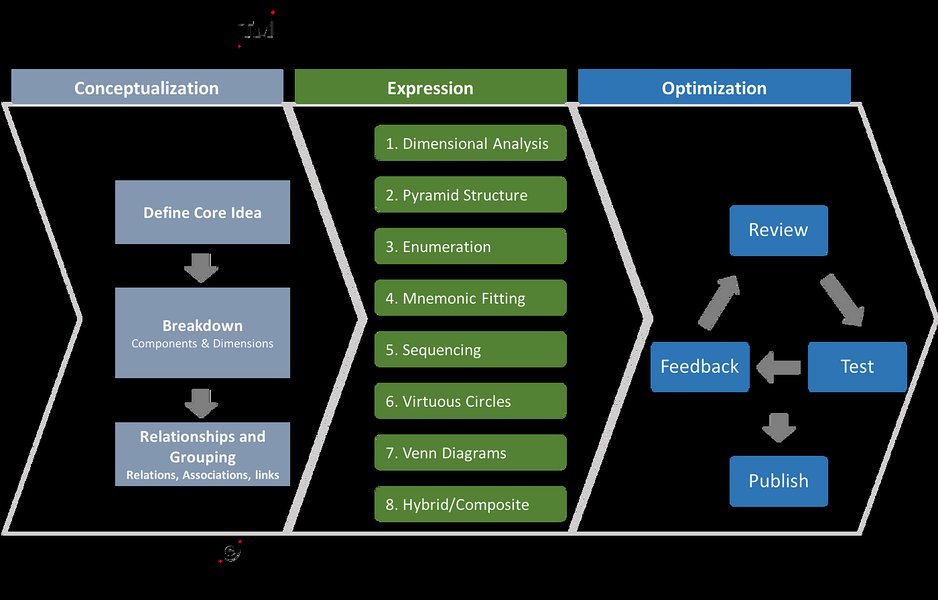
Visualizing how ideas connect can aid understanding, much like how a well-structured explanation builds knowledge.
Core Techniques for Simplifying Complexity
Explaining complex ideas effectively hinges on a set of core techniques. Mastering these will transform how you approach difficult subjects.
1. Deconstruct and Conquer: Breaking Down Ideas
Complex concepts are often overwhelming because they appear as large, indivisible blocks of information. The solution is to break them down into smaller, more digestible "chunks." This process, often called "chunking," allows the learner to focus on understanding one component at a time before seeing how they fit together to form the whole.
How to Break Down a Concept:
- Identify the main components or sub-topics within the larger idea.
- Address each component individually, explaining its role and function.
- Show how these components connect and interact with each other.
Imagine trying to eat a whole watermelon in one go – it's impossible! But if you slice it into manageable pieces, it becomes enjoyable. The same principle applies to learning complex information.
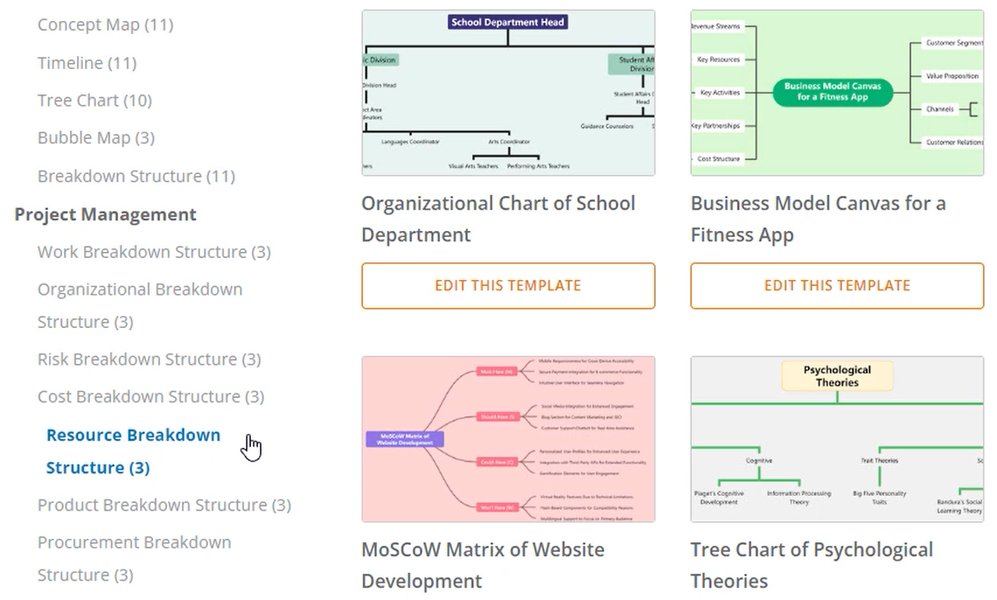
A visual breakdown structure illustrates how a larger entity can be divided into smaller, manageable parts.
2. The Power of Analogy and Real-World Examples
Abstract concepts can be difficult to grasp without a concrete reference point. Analogies and real-world examples bridge this gap by linking new, unfamiliar information to something the learner already understands.
Using Analogies Effectively:
An analogy is a comparison between two things, typically for the purpose of explanation or clarification. For example, explaining an Application Programming Interface (API) as a waiter in a restaurant:
- You (the user) give an order (a request) to the waiter (the API).
- The waiter takes your order to the kitchen (the server/system).
- The kitchen prepares your food (processes the request and retrieves data).
- The waiter brings your food back to you (the API delivers the data/response).
Leveraging Real-World Examples:
Real-world examples demonstrate the concept in action, showing its relevance and practical application. If explaining "supply and demand," you could use the example of ticket prices for a popular concert: high demand and limited supply drive prices up, while low demand or high supply can lead to lower prices.
3. Crafting a Narrative: The Art of Storytelling
Humans are wired for stories. Embedding a complex concept within a narrative can make it more engaging, memorable, and easier to understand. A story provides context and emotional connection, which can significantly aid comprehension.
4. Simplicity in Language: Avoiding Jargon
Using clear, plain language is paramount. Avoid technical jargon or, if its use is unavoidable, ensure you define it immediately and simply. The goal is to communicate, not to impress with vocabulary. Think about explaining the concept to a curious child – this often helps in simplifying your language.
Key Term Highlight:
A key term is a word or phrase that is essential to understanding a specific concept. Clearly defining these terms as they are introduced prevents confusion and builds a solid vocabulary for the learner.
- Complex Concept: An idea that is multifaceted, intricate, or abstract, often requiring simplification to be understood by a broader audience.
- Chunking: The strategy of breaking down complex information into smaller, more manageable units to make it easier to process and learn.
5. Step-by-Step Explanations for Processes
When a concept involves a sequence of actions or stages, a step-by-step explanation is invaluable. This approach guides the learner through the process logically, ensuring each stage is understood before moving to the next. This is like following a recipe: each step is clear and builds upon the last, leading to the desired outcome.
Example: How to Explain a Complex Concept (Meta-Example)
- Understand it Yourself: Deeply grasp the concept before attempting to explain it. You can't simplify what you don't fully understand.
- Know Your Audience: As mentioned, assume limited prior knowledge for general explanations.
- Identify Core Components: Break the idea down into its fundamental parts.
- Find Relatable Analogies/Examples: Connect the abstract to the concrete.
- Structure Logically: Present information in a clear, sequential flow. Start simple and gradually add complexity.
- Use Visual Aids: Diagrams, charts, or illustrations can greatly enhance understanding.
- Define Key Terms: Ensure all essential vocabulary is clear.
- Check for Understanding: If possible, ask clarifying questions or encourage the learner to rephrase the concept in their own words.
- Summarize: Briefly reiterate the main points.
Visualizing Simplification: Technique Effectiveness
Different simplification techniques offer varying strengths. The radar chart below provides an opinionated analysis of how techniques like analogies, chunking, visuals, storytelling, and plain language fare across dimensions such as engagement, clarity, memorability, accessibility to diverse learners, and the speed at which they can facilitate understanding. Understanding these nuances can help you choose the best approach for a given concept or audience.
This chart suggests that while all techniques are valuable, visual aids and plain language excel in clarity and accessibility, storytelling and analogies boost engagement and memorability, and chunking is fundamental for managing complexity and ensuring clear, rapid understanding.
Mapping the Path to Clarity
To further illustrate how these strategies interrelate, the mindmap below provides a visual overview of the key elements involved in explaining complex concepts simply. It branches out from the central goal, showcasing the primary techniques and considerations for achieving clarity and understanding.
This mindmap serves as a quick reference, reinforcing the multifaceted yet interconnected nature of effective explanation.
Comparing Simplification Techniques
Each method for simplifying complex topics has its own strengths and is best suited for different situations. The table below offers a comparison of some common techniques, their pros and cons, and ideal use cases to help you select the most effective approach.
| Technique | Description | Pros | Cons | Best Use Cases |
|---|---|---|---|---|
| Analogies | Comparing an unfamiliar concept to a familiar one. | Highly relatable, aids intuition, memorable. | Can oversimplify or mislead if not chosen carefully. | Abstract concepts, introducing new paradigms. |
| Breaking Down (Chunking) | Dividing a large topic into smaller, manageable parts. | Reduces overwhelm, allows focused learning, builds understanding incrementally. | May obscure the "big picture" if connections aren't made clear. | Highly complex systems, multi-step processes, dense information. |
| Real-World Examples | Illustrating concepts with practical applications or scenarios. | Makes concepts tangible, shows relevance, aids application. | Examples might be too specific or not universally relatable. | Theoretical concepts, scientific principles, economic models. |
| Storytelling | Framing information within a narrative structure. | Highly engaging, improves retention, provides context. | Can be time-consuming to develop, may not suit all technical topics. | Historical events, ethical dilemmas, illustrating impact. |
| Visual Aids (Diagrams, Charts) | Representing information graphically. | Clarifies relationships, simplifies data, appeals to visual learners. | Poorly designed visuals can confuse; may require explanation. | Data representation, system structures, spatial relationships. |
| Plain Language | Avoiding jargon and using simple, clear vocabulary. | Maximizes accessibility, reduces cognitive load, ensures broad understanding. | May lose some nuance for expert audiences. | All explanations, especially for non-expert audiences or foundational learning. |
| Step-by-Step Guides | Explaining a process in a sequential manner. | Provides clear direction, easy to follow, ensures all stages are covered. | Can be rigid, less suitable for non-linear concepts. | Procedures, algorithms, historical timelines, how-to instructions. |
Expert Insights: Learning to Explain
Understanding how to explain complex topics is a skill that can be learned and refined. The following video offers practical steps and insights into how professionals approach this challenge. It emphasizes structuring your explanation, knowing your audience, and using effective communication techniques to convey information clearly.
This video provides a 3-step approach to explaining complex topics effectively, a valuable skill in many fields.
Watching experts discuss their methods can provide new perspectives and reinforce the strategies outlined here. The key is often a combination of thorough understanding, empathy for the learner, and practice in applying these simplification techniques.
Summary: Your Toolkit for Clarity
Mastering the art of explaining complex concepts simply is an invaluable skill. To recap the main strategies discussed:
- Assume Limited Knowledge: Start with the basics to ensure your explanation is accessible.
- Break Down Ideas: Divide complex topics into smaller, more manageable parts (chunking). This makes them less intimidating and easier to understand individually.
- Use Analogies and Real-World Examples: Connect abstract concepts to familiar, concrete experiences. This bridges the gap between the known and the unknown.
- Provide Step-by-Step Explanations: For processes or sequential information, guide the learner through each stage logically.
- Highlight Key Terms: Define essential vocabulary clearly to build a solid foundation of understanding. Avoid unnecessary jargon.
- Employ Visuals: Use diagrams, charts, and illustrations to represent information graphically, appealing to different learning styles.
- Tell Stories: Narratives can make information more engaging and memorable.
- Suggest Resources for Further Learning: Point towards additional materials if the learner wishes to delve deeper.
Remember, patience and encouragement are key, both for yourself as you learn to explain, and for those you are explaining to. Every complex idea was once new to someone. With these tools, you are well-equipped to navigate and illuminate even the most challenging subjects. Don't hesitate to ask if you have a specific topic you'd like broken down!
Frequently Asked Questions (FAQ)
How do I know if my analogy is a good one? ▼
A good analogy makes the complex concept clearer without introducing new confusion. It should be familiar to your audience and accurately reflect the core aspects of the idea you're explaining. Test it: Does it simplify, or does it require more explanation itself? If the latter, it might not be the best fit. For example, comparing an API to a waiter is effective because most people understand a waiter's role.
What's the biggest mistake people make when explaining complex topics? ▼
One of the most common mistakes is overestimating the audience's prior knowledge or using too much jargon without explanation. Another is not breaking the concept down enough, leading to cognitive overload. Starting simple and building up complexity gradually is usually more effective.
How can I practice explaining complex things simply? ▼
Try explaining a concept you know well to someone completely unfamiliar with it, perhaps a friend or family member (or even a child, adapting the complexity). Pay attention to their questions and where they get confused. You can also write out explanations or create short presentations. The Feynman Technique is also excellent: teach it to a child (or pretend to), identify gaps in your explanation, and simplify further.
Are visual aids always necessary? ▼
While not always strictly necessary, visual aids (like diagrams, charts, or simple illustrations) can significantly enhance understanding for many complex concepts, especially those involving relationships, structures, or data. They cater to visual learners and can often convey information more efficiently than words alone. Simple, clear visuals are usually better than overly complex ones.
Recommended Further Exploration
If you found this guide helpful, you might be interested in exploring these related topics:
- How can I use the Feynman Technique to learn difficult subjects?
- What are some common logical fallacies to avoid when explaining ideas?
- How does active listening improve my ability to explain concepts to others?
- Can you provide examples of effective visual storytelling for complex data?
References
Last updated May 8, 2025