
Exploring eQSat: Bridging Digital Divides and Combating Censorship
An in-depth look at eQualitie's innovative satellite datacasting system for resilient content delivery.
In an increasingly connected world, access to information is paramount. However, many regions still face significant challenges due to limited or non-existent internet connectivity, as well as the pervasive issue of internet censorship and surveillance. Addressing this critical gap is eQualitie, a not-for-profit organization dedicated to developing technologies that promote digital and community resilience. One of their key initiatives is eQSat, an emergency datacasting system designed to deliver digital content to areas without global internet connectivity and to circumvent censorship.
Key Highlights of eQSat
- Resilient Content Delivery: eQSat utilizes satellite communication technologies to provide a robust method for delivering digital content, even in environments where traditional internet infrastructure is unavailable or restricted.
- Combating Censorship: By broadcasting digital content masquerading as a television signal, eQSat offers a novel approach to bypassing internet censorship and providing access to uncensored information.
- Empowering Users: eQSat, in conjunction with tools like the Ceno Browser, aims to democratize access to information, support freedom of expression, and enhance digital literacy in underserved or controlled regions.
Understanding eQSat's Core Functionality
eQSat operates on the principle of datacasting, a technique that involves transmitting digital data over broadcast signals, typically satellite or television. This approach is particularly effective in situations where land-based internet infrastructure is damaged, unavailable, or intentionally blocked. eQualitie's implementation leverages low-cost, easily accessible satellite communication technologies.
How eQSat Works: A Technical Overview
The fundamental concept behind eQSat is to package digital content, such as websites, videos, and software downloads, into a format that can be broadcast via satellite. This broadcast is designed to appear as a standard television signal. In regions targeted by eQSat, special receiving machines equipped with satellite dishes and compatible receivers are deployed. These machines are capable of:
Receiving the Satellite Broadcast
The receiving machines are tuned to the eQSat satellite signal. Currently, eQtv, a component of eQSat focused on digital security content, broadcasts across Europe, North Africa, the Middle East, and a significant portion of Russia using the Hot Bird 13G satellite.
Extracting the Embedded Digital Content
Within the satellite broadcast, the digital content is embedded in a way that is not immediately apparent to standard television receivers. The specialized eQSat machines are designed to detect and extract this hidden data payload.
Distributing the Content Locally
Once the digital content is extracted, it is made available to local users. This distribution can happen through various means, including local networks, Wi-Fi hotspots, or even physical transfer methods akin to a 'sneakernet' concept, where data is physically carried from the receiving machine to users.
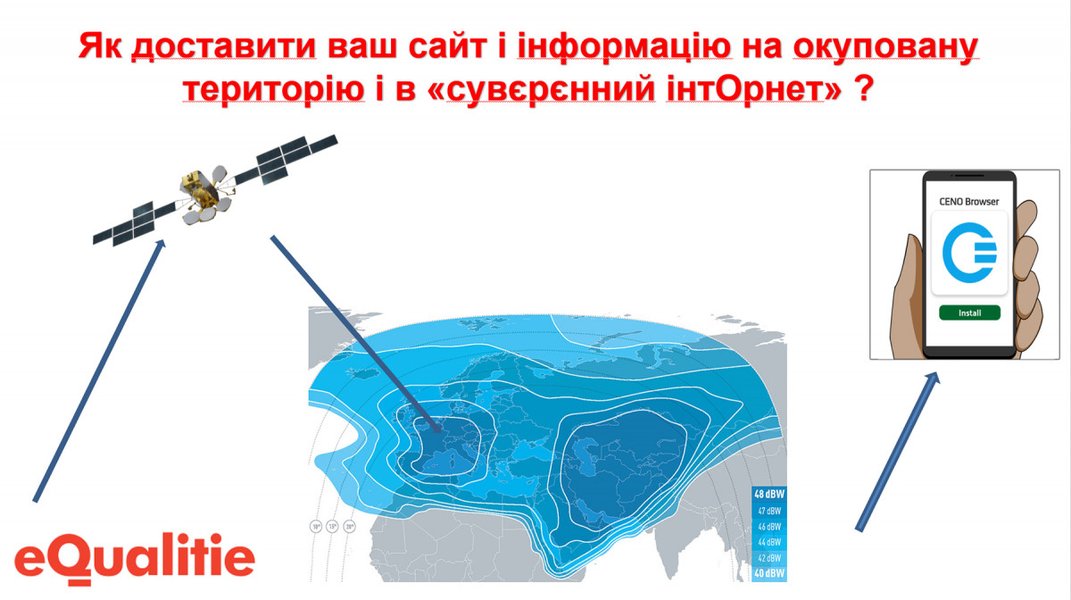
An illustration depicting the eQSat system with a satellite dish.
This method allows eQSat to bypass traditional internet infrastructure and deliver information directly to users, even in areas experiencing internet blackouts or severe censorship.
eQSat in Action: Use Cases and Impact
The applications of eQSat are particularly relevant in contexts where access to independent information is crucial. eQualitie highlights several key use cases for their system:
Providing Information in Censored Environments
In regions where governments or authorities heavily censor the internet, eQSat offers a lifeline to uncensored news and information. By delivering content via satellite, it becomes significantly more difficult for censors to block access.
Case Study: Accessing Ukrainian Websites in Occupied Territories
A notable example of eQSat's potential is its ability to help residents in occupied territories access Ukrainian websites without relying on VPNs or being affected by potential internet disconnections by occupying forces. This demonstrates eQSat's role in maintaining access to independent media and information.

A diagram illustrating how eQSat can deliver content in areas with restricted internet access.
Emergency Datacasting
In times of crisis, such as natural disasters or conflicts, traditional communication infrastructure can be severely damaged. eQSat serves as an emergency datacasting system, capable of delivering vital information, aid instructions, and communication tools to affected populations.
Supporting Digital Literacy and Access to Resources
Beyond news, eQSat can deliver a wide range of digital content, including educational materials, software, and other resources. This capability supports digital literacy initiatives and provides access to tools that can empower communities.
eQualitie: The Organization Behind eQSat
eQSat is a project of eQualitie, a Canadian not-for-profit organization. eQualitie is dedicated to developing open and reusable systems with a focus on privacy, online security, and information management. Their work promotes digital and community resilience, particularly in environments where digital rights are threatened.
eQualitie's Broader Mission
eQualitie's mission extends beyond eQSat. They are involved in several initiatives aimed at creating a more equitable internet, including:
-
Deflect.ca: A website protection service designed to defend independent media and civil society organizations from online attacks.
-
Ceno Browser: A mobile web browser that leverages a distributed network to help users bypass internet censorship.
-
Educational Programs: Collaborating with community organizations globally to build local capacity in digital security and open-source technologies.
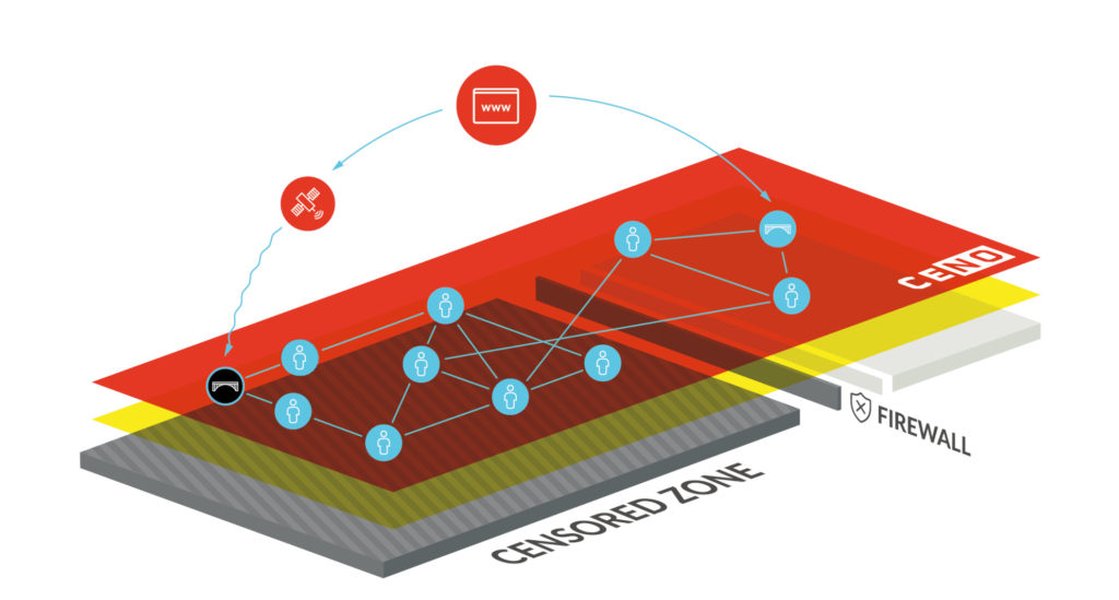
An infographic illustrating the decentralized network of the Ceno Browser, another eQualitie project.
Technology and Reach
eQSat's technology is designed to be both effective and accessible. By utilizing readily available satellite communication technology, eQualitie aims to keep the costs of deployment and operation relatively low.
Satellite Technology and Coverage
The use of satellites like Hot Bird 13G provides eQSat with a broad coverage area, capable of reaching millions of users across continents. The required receiving equipment, such as a 60-100 cm satellite dish and a compatible receiver, is relatively common and affordable in many parts of the world.
Integration with Other Technologies
eQSat can be seen as complementary to other censorship circumvention tools and digital resilience efforts. It provides a unique "last mile" solution for content delivery when traditional internet pathways are blocked.
Comparing eQSat's Approach
While there are other methods for accessing information in restricted environments, eQSat's satellite-based datacasting offers distinct advantages. The following table provides a simplified comparison:
| Method | Technology Used | Pros | Cons |
|---|---|---|---|
| Traditional Internet | Fiber Optic Cables, DSL, Mobile Networks | High speed, widespread availability (where infrastructure exists) | Vulnerable to censorship, infrastructure damage, and surveillance |
| VPNs | Internet Protocols, Encryption | Can bypass some censorship, provides privacy | Can be blocked by advanced firewalls, requires existing internet connection |
| Tor Network | Distributed Network of Relays | Strong anonymity, bypasses censorship | Slow speeds, can be blocked, requires existing internet connection |
| eQSat | Satellite Datacasting | Bypasses internet infrastructure and censorship, resilient | One-way communication for content delivery, requires specialized receiving equipment |
Challenges and the Future of eQSat
Like any innovative technology, eQSat faces challenges. The need for specialized receiving equipment is a hurdle, although eQualitie focuses on using readily available and low-cost components. Scaling the deployment of these receivers to reach a large number of users is an ongoing effort that relies on partnerships and community engagement.
Building Partnerships and Community Resilience
eQualitie emphasizes collaboration with community organizations to deploy eQSat receiving stations and distribute the content locally. This community-centric approach is crucial for the sustainability and impact of the project.
Expanding Content and Reach
The future of eQSat likely involves expanding the range of content delivered and increasing its geographical reach. As censorship and internet restrictions evolve, eQSat's ability to adapt and continue providing access to information will be key.
Frequently Asked Questions about eQSat
What kind of content does eQSat deliver?
eQSat is designed to deliver a variety of digital content, including websites, articles, videos, and software downloads. The specific content is curated to be relevant and valuable to users in areas with limited or censored internet access, often focusing on independent news and digital security information.
How can I access content delivered by eQSat?
Accessing eQSat content requires being in a region covered by the satellite broadcast and having access to a specialized eQSat receiving machine. These machines receive the satellite signal and make the content available locally, often through a local network or storage device.
Is eQSat a replacement for the internet?
No, eQSat is not intended to be a full replacement for the internet. It is a one-way datacasting system primarily focused on delivering essential digital content in situations where traditional internet access is compromised. It complements other tools and methods for online access and communication.
How can I support eQSat or eQualitie?
eQualitie is a not-for-profit organization. Support can come in various forms, including volunteering, partnering, or potentially through donations. More information can typically be found on the eQualitie and eQSat websites.
Relevant Video Resources
While there isn't a specific video directly demonstrating eQSat's satellite broadcasting in action among the provided sources, the following video from eQualitie's eQtv project offers insight into their focus on digital security and bypassing internet blockages, which is directly relevant to the goals of eQSat.
This video, "Equality and Human Rights in Northern Ireland after Brexit" by the Equality Commission, while not specifically about eQSat, touches upon themes of equality and access to information, which align with eQualitie's broader mission.
References
Last updated April 30, 2025