
The Enigma of Existence: Unraveling the Multifaceted Meaning of Life
A journey through philosophical, psychological, and personal perspectives on one of humanity's oldest questions.
The question "What is the meaning of life?" has echoed through centuries, pondered by philosophers, theologians, scientists, artists, and every individual introspecting on their existence. It's a query that delves into the core of human consciousness, seeking purpose, significance, and understanding in the grand tapestry of the universe. There is no single, universally accepted answer; rather, the "meaning of life" is a deeply personal and evolving concept, shaped by diverse cultural, intellectual, and experiential lenses.
Essential Insights: Key Takeaways
- No Universal Blueprint: The quest for meaning does not yield a one-size-fits-all answer. Its definition is profoundly subjective, varying significantly from one individual to another and across different cultures and belief systems.
- Meaning is Actively Forged: Many philosophical and psychological perspectives suggest that meaning is not a pre-existing truth to be discovered, but rather something that individuals actively create and cultivate through their values, choices, actions, relationships, and goals.
- A Mosaic of Perspectives: A comprehensive understanding of life's meaning emerges from exploring a rich mosaic of viewpoints, including ancient and modern philosophy, psychological research, diverse spiritual traditions, scientific inquiry into life's origins, and deeply personal narratives.
Philosophical Explorations of Meaning
Philosophy has long grappled with the concept of meaning, offering a spectrum of interpretations that challenge and guide our understanding.
Existentialism and the Embrace of Absurdity
Crafting Purpose in a Purposeless Universe
Existentialist thinkers like Jean-Paul Sartre famously argued that "existence precedes essence," meaning that individuals are born without a predetermined purpose and must define their own meaning through their choices and actions. There is no inherent script to follow. Albert Camus, often associated with absurdism, highlighted the tension between humanity's innate desire for meaning and an apparently indifferent or irrational universe. His response was not despair, but a courageous embrace of the absurd, living life passionately and authentically despite its inherent lack of ultimate meaning.
Subjective vs. Objective Meaning
Is Meaning Found or Made?
The debate continues whether meaning is objective (existing independently of human perception, perhaps divinely ordained, as thinkers like Aquinas might suggest) or subjective (created by individuals). Many contemporary philosophers focus on "meaning in life" rather than "the meaning of life," exploring what makes a particular life feel significant to the person living it. This often involves concepts of coherence (life making sense), purpose (having goals), and significance (feeling one's life matters).
Eudaimonia: The Pursuit of Flourishing
Aristotle's Vision of the Good Life
The ancient Greek philosopher Aristotle proposed that the ultimate aim of human life is eudaimonia, often translated as "happiness," "flourishing," or "living well." For Aristotle, this wasn't mere fleeting pleasure but a state achieved through the cultivation of virtues (like courage, wisdom, and temperance) and the active exercise of reason. A meaningful life, in this view, is one lived in accordance with one's highest potential.
This video explores Aristotle's influential ideas on the purpose of life, centering on the concept of eudaimonia, or human flourishing, achieved through virtuous activity.
The Centrality of Love and Connection
Finding Meaning in Relationships
Many philosophical and humanistic traditions emphasize the profound role of love, compassion, and social connection in a meaningful life. Bertrand Russell, an atheist mathematician and philosopher, famously stated, "The good life is one inspired by love and guided by knowledge." For many, deep relationships with family, friends, and community form the bedrock of a purposeful existence.
Authenticity and Self-Discovery
Living in Accordance with One's True Self
Philosophers like Martin Heidegger suggested that a meaningful life involves living authentically, in tune with one's own being and understanding of the world. This often entails a continuous process of self-reflection, self-discovery, and aligning one's actions with deeply held values, even in the face of societal pressures.
Psychological Frameworks for Meaning
Psychology offers valuable insights into how individuals experience and cultivate meaning in their lives, focusing on subjective well-being and mental health.
The Triad of Meaning: Coherence, Purpose, and Significance
Modern psychological research often defines a meaningful life through three key components:
- Coherence: The feeling that one's life makes sense, that experiences and events fit together into a comprehensible narrative.
- Purpose: Having valued goals and a sense of direction; actively pursuing objectives that are personally fulfilling.
- Significance (or Mattering): The belief that one's life and contributions are valuable and make a difference, both to oneself and to others.
Viktor Frankl's Logotherapy: The Will to Meaning
Viktor Frankl, a psychiatrist and Holocaust survivor, developed logotherapy, a school of psychotherapy based on the idea that the primary human drive is not pleasure (as Freud argued) or power (as Adler proposed), but the "will to meaning." Frankl asserted that life can have meaning even in the most miserable circumstances, and that individuals can find this meaning through their actions, by experiencing values (such as love), and by the attitude they take toward unavoidable suffering.
Positive Psychology: Cultivating a Fulfilling Life
Positive psychology focuses on the strengths and virtues that enable individuals and communities to thrive. It suggests that a meaningful life often involves engaging one's signature strengths, fostering positive emotions, building strong relationships, finding engagement (flow) in activities, and contributing to something larger than oneself. Identifying and living by one's core values is seen as crucial for sustained happiness and satisfaction.
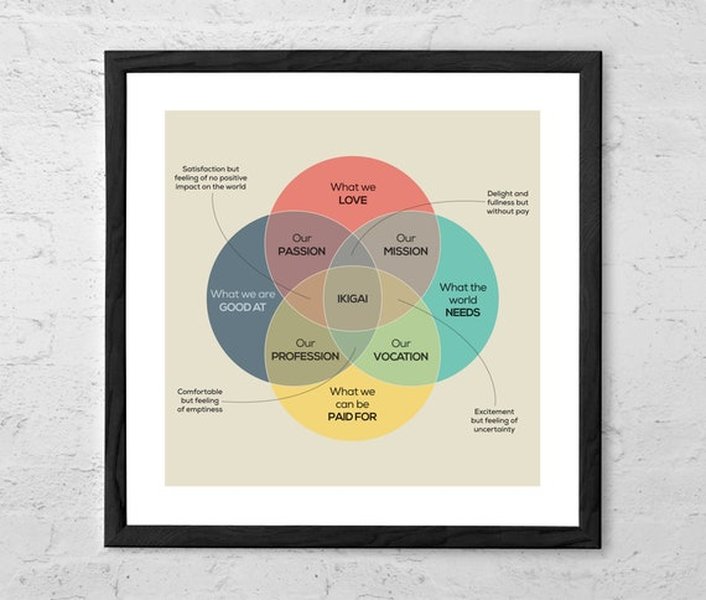
The Japanese concept of "Ikigai" (生き甲斐), often translated as "a reason for being," illustrates a way to find personal meaning at the intersection of what you love, what you are good at, what the world needs, and what you can be compensated for.
Comparative Emphasis on Sources of Meaning: A Visual Exploration
Different philosophical outlooks, spiritual paths, or life approaches may emphasize various sources of meaning to different degrees. The following chart offers an illustrative comparison of how some generalized perspectives might prioritize aspects like purpose, connection, personal growth, contribution to others, understanding the world, and achieving happiness. These are not definitive scores but rather a way to visualize varying tendencies.
Religious and Spiritual Dimensions of Meaning
For billions across the globe, religious and spiritual frameworks provide profound answers to the question of life's meaning.
Divine Design and Higher Purpose
Many religions posit that human life is part of a divine plan, with a purpose given by a higher power or God. This purpose often involves serving and glorifying the divine, adhering to moral and spiritual laws, striving for spiritual growth, and preparing for an afterlife or a transformed state of being. For example, in Christianity, a central theme is serving God and others, aiming for salvation and eternal life. The Baháʼí Faith emphasizes spiritual development and contributing to the unity and progress of humanity.
Pathways to Spiritual Awakening
Spiritual traditions often describe life as a journey of awakening or liberation. Hinduism, for instance, offers a multifaceted approach through the pursuit of dharma (righteous duty), artha (prosperity and worldly success), kama (pleasure and enjoyment), and ultimately moksha (liberation from the cycle of rebirth). These paths suggest that meaning is found in fulfilling one's role in the cosmic order and progressing spiritually.
Scientific and Evolutionary Insights
While science primarily describes the "how" of life rather than prescribing a "why," it offers perspectives that can inform our understanding of purpose from a naturalistic viewpoint.
The Biological Imperative: Survival and Reproduction
From an evolutionary biology perspective, the "purpose" of any life form, including humans, is fundamentally to survive and reproduce, passing on genetic material to future generations. This doesn't negate personal or subjective meaning but provides a biological foundation upon which more complex human needs for purpose are built.
The Social Animal: Collaboration and Consciousness
Humans are inherently social creatures. The development of our complex brains and consciousness is closely linked to the need for social interaction, cooperation, and the formation of communities. Building relationships, contributing to society, and engaging in collaborative endeavors can be seen as evolutionary successful strategies that also provide a deep sense of meaning and belonging.
A Universe Without Inherent Intent?
Some scientific and philosophical viewpoints suggest that the universe itself, and life within it, does not possess an inherent, preordained purpose in the way a human-made tool does. From this perspective, nature operates according to physical laws without a "plan." This doesn't necessarily lead to nihilism; rather, it can empower individuals to create their own meaning within this natural framework.
Interconnected Pathways to Understanding Life's Meaning
The search for meaning is not confined to a single domain but often involves an interplay of various perspectives. The mindmap below illustrates how different areas of human thought and experience contribute to the multifaceted understanding of life's purpose.
(Sartre, Camus)"] Subjective_Objective["Subjective vs. Objective Meaning"] Eudaimonia["Eudaimonia (Aristotle)"] Love_Connection["Love & Connection (Russell)"] Authenticity["Authenticity (Heidegger)"] Psychological_Frameworks["Psychological Frameworks"] Triad_Meaning["Coherence, Purpose, Significance"] Logotherapy["Logotherapy (Viktor Frankl)"] Positive_Psychology["Positive Psychology"] Ikigai["Ikigai (Japanese Concept)"] Religious_Spiritual["Religious & Spiritual Dimensions"] Divine_Purpose["Divine Design & Higher Purpose"] Spiritual_Awakening["Spiritual Awakening & Growth"] Specific_Faiths["Specific Faith Traditions
(e.g., Hinduism, Christianity, Baháʼí)"] Scientific_Evolutionary["Scientific & Evolutionary Insights"] Biological_Imperative["Survival & Reproduction"] Social_Collaboration["Social Collaboration & Consciousness"] Naturalistic_View["Naturalistic View (No inherent cosmic intent)"] Personal_Creation["Personal Creation of Meaning"] Values_Goals["Through Values & Goals"] Relationships_Experiences["Through Relationships & Experiences"] Contribution_Legacy["Through Contribution & Legacy"] Self_Reflection["Through Self-Reflection & Growth"]
Summary of Key Perspectives on Life's Meaning
The diverse approaches to understanding the meaning of life can be broadly categorized. The table below offers a simplified summary of some central tenets from different viewpoints. It's important to remember that these are not always mutually exclusive, and many individuals draw from multiple perspectives.
| Perspective | Core Idea Regarding Meaning | Source of Meaning | Key Emphasis |
|---|---|---|---|
| Existentialism | Meaning is not inherent but created by the individual. | Personal choices, actions, freedom, responsibility. | Authenticity, living despite absurdity. |
| Aristotelian Virtue Ethics | Meaning is found in living a virtuous life and achieving eudaimonia (flourishing). | Cultivation of virtues, rational activity, fulfilling human potential. | Excellence, reason, the good life. |
| Logotherapy (Psychology) | Primary human drive is the "will to meaning." | Discovering meaning through deeds, experiencing values (e.g., love), attitude towards suffering. | Purpose, responsibility, resilience. |
| Positive Psychology | Meaning arises from engagement, relationships, purpose, achievement, and positive emotions. | Aligning actions with strengths and values, contributing to well-being. | Flourishing, well-being, fulfillment. |
| Many Theistic Religions | Meaning is derived from a divine plan and relationship with a higher power. | Serving God/divinity, following sacred teachings, spiritual growth, afterlife. | Faith, devotion, moral conduct, salvation/liberation. |
| Evolutionary Biology | Biological "purpose" is survival and reproduction of the species. | Natural selection, adaptation, continuation of genetic lineage. | Survival, procreation (as a foundational aspect, not precluding other meanings). |
| Secular Humanism | Meaning is created by humans through reason, ethics, and compassion. | Human welfare, social justice, knowledge, personal growth, relationships. | Reason, empathy, human agency, progress. |
Frequently Asked Questions (FAQ)
Is there one correct answer to the meaning of life?
How can I find my own meaning in life?
Does science provide an answer to the meaning of life?
What role do relationships play in finding meaning?
Conclusion: An Ongoing Personal Journey
The quest for the meaning of life is not a problem to be solved with a definitive answer, but rather a profound and ongoing personal journey. It is an invitation to explore our deepest values, to connect with others and the world around us, to find purpose in our actions, and to cultivate a sense of significance in our unique existence. Whether through philosophical inquiry, psychological growth, spiritual seeking, scientific understanding, or creative expression, the meaning of life is ultimately what we, individually and collectively, make it to be—a dynamic tapestry woven from our choices, experiences, and aspirations in an ever-unfolding universe.
Recommended Further Exploration
- Explore philosophical theories on happiness and eudaimonia.
- Learn about psychological approaches to purpose, well-being, and Viktor Frankl's logotherapy.
- Compare different religious and spiritual views on the purpose of human existence.
- Investigate how individuals create personal meaning and legacy in everyday life.
Referenced Search Results
 amazon.com