
Unlock the Quirky Universe Within: What Are Random Thoughts Telling You?
Dive into the fascinating world of spontaneous ideas, from the hilarious to the profound, that pop into your mind unexpectedly.
Ever been brushing your teeth or waiting for the bus when a completely unrelated, sometimes bizarre, idea flashes through your mind? "If I weigh 99 pounds and eat a pound of nachos, am I 1% nacho?" or "Fire trucks are actually water trucks." These are classic examples of random thoughts – those spontaneous, often amusing or thought-provoking mental nuggets that appear without warning or clear purpose.
Essential Insights into Random Thoughts
- Spontaneous & Unplanned: Random thoughts arise involuntarily, often during routine activities or moments of mental downtime when your brain isn't focused on a specific task.
- Diverse Nature: They span a wide spectrum, ranging from laugh-out-loud funny observations and paradoxes to deeply philosophical questions about life, existence, or peculiar scientific facts.
- A Normal Cognitive Feature: Experiencing these mental pop-ups is a universal and perfectly normal aspect of human consciousness, reflecting the brain's natural tendency to wander and make novel connections.
What Exactly Are Random Thoughts?
Defining the Mind's Unpredictable Musings
Random thoughts are essentially ideas, questions, observations, or images that surface in your conscious awareness without deliberate effort or a clear logical sequence leading up to them. They often feel disconnected from your current activity or train of thought. Think of them as mental "brain feeds" or "pops" that spontaneously occur.
These thoughts frequently emerge when the mind is in a relaxed state, such as during:
- Showering (giving rise to the popular term "shower thoughts")
- Walking or commuting
- Performing mundane chores
- Moments just before falling asleep or upon waking

Random thoughts can range from fleeting curiosities to deep, introspective questions.
Why Does Our Brain Generate Random Thoughts?
The Cognitive Science Behind the Sparks
While the exact mechanisms aren't fully understood, cognitive science offers some explanations for why random thoughts occur:
- Default Mode Network (DMN): When your brain isn't focused on an external, goal-oriented task, a network of brain regions known as the DMN becomes more active. This network is associated with mind-wandering, self-reflection, recalling memories, and envisioning the future. Random thoughts often arise from this state of relaxed, inward-focused attention.
- Free Association: The brain is constantly making connections between concepts, memories, and stimuli. Sometimes, these connections happen in unexpected or non-linear ways, leading to thoughts that seem random or out of context. This process is also linked to creativity, as it allows the brain to explore novel combinations of ideas.
- Mental Clutter & Processing: Random thoughts might sometimes represent the brain's way of processing background information, unresolved issues, or snippets of recently encountered stimuli that weren't fully processed consciously.
The Spectrum of Random Thoughts
Random thoughts aren't monolithic; they come in various flavors. Understanding these categories helps appreciate the breadth of these mental phenomena.
Funny & Absurd Thoughts
These are often the most shared and enjoyed types of random thoughts. They frequently involve wordplay, logical twists, humorous paradoxes, or pointing out the silliness in everyday life.
- Example: "If you drop soap on the floor, is the floor clean or is the soap dirty?"
- Example: "Go to bed; you'll feel better in the morning' is the human version of 'Did you turn it off and turn it back on again?'"
- Example: "Candles are how we keep fires as pets."
These thoughts entertain by challenging conventional logic and language, offering a lighthearted perspective on the world.
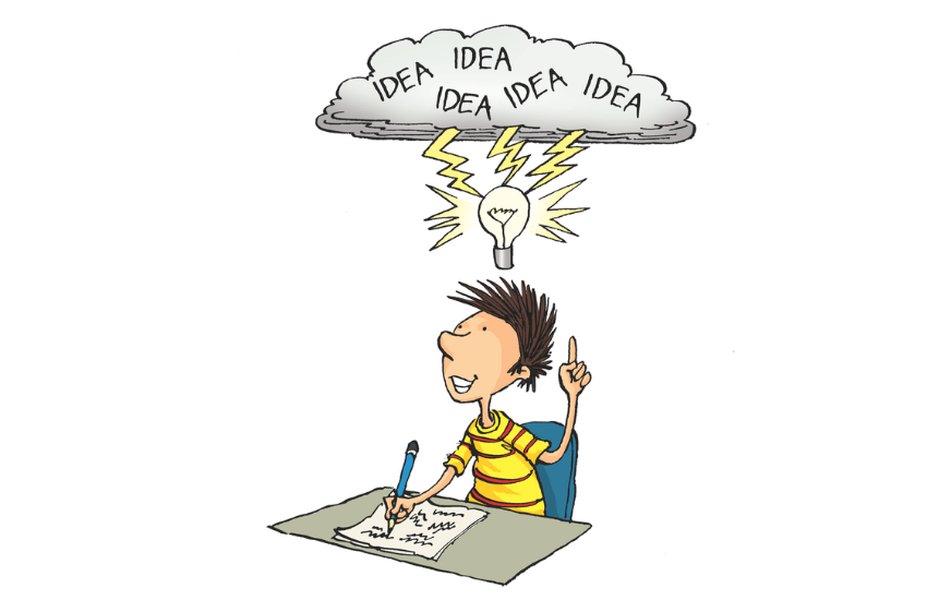
Random thoughts often fuel creativity and humor, much like brainstorming sessions.
Deep & Philosophical Thoughts
Sometimes, random thoughts take a more profound turn, prompting reflection on existence, society, ethics, or the nature of reality. They might blend humor with introspection.
- Example: "A shark could swim faster than me, but I could probably run faster than a shark. So in a triathlon, it would all come down to the bike." (Humorously exploring relative strengths).
- Example: "At age 30, you've spent a month having birthdays." (Quantifying life events to highlight the passage of time).
- Example: "Why is a moment both fleeting and yet so memorable?"
These thoughts encourage deeper consideration of life's big questions and our place within the universe.
Weird & Curious Observations
This category includes strange musings, peculiar questions about how things work, or observations that don't fit neatly into "funny" or "deep" but are nonetheless intriguing.
- Example: "If bats are the carriers of so many viruses, how are they all still alive in such large numbers?" (Sparking curiosity about biology and ecology).
- Example: "Why doesn't McDonald's sell hotdogs?" (A simple, unanswered question about consumer culture).
- Example: "Every fire truck is actually a water truck." (Reframing a common object based on its function).
These thoughts often highlight the oddities of the world or gaps in our everyday knowledge, prompting us to look closer or simply marvel at the strangeness of things.
Visualizing Random Thought Characteristics
While subjective, we can visualize the perceived characteristics of different types of random thoughts. This radar chart attempts to map dimensions like humor, insightfulness, absurdity, relatability, and how often people might experience each type. The scores are illustrative opinions rather than precise data.
This chart illustrates how different types of random thoughts might excel in certain characteristics. For instance, funny thoughts score high on humor and absurdity, while deep thoughts score high on insightfulness. Weird/Curious thoughts rank highly on absurdity and frequency, and observational thoughts are very relatable and frequent but less extreme in other dimensions.
Mapping the Landscape of Random Thoughts
This mindmap provides a visual overview of the key aspects surrounding random thoughts, connecting their definition, types, origins, and the reasons people engage with them.
or questions"] id1b["Occur involuntarily"] id1c["Often during routine
or idle moments"] id2["Types"] id2a["Funny / Humorous"] id2a1["Wordplay, Paradoxes"] id2b["Deep / Philosophical"] id2b1["Existential questions,
Life insights"] id2c["Weird / Absurd"] id2c1["Strange observations,
Curiosities"] id2d["Observational"] id2d1["Everyday notices,
Reframing objects"] id3["Potential Origins"] id3a["Mind Wandering"] id3b["Default Mode Network (DMN)"] id3c["Relaxed Brain State"] id3d["Free Association"] id4["Sharing & Community"] id4a["Online Platforms (Reddit, Blogs)"] id4b["Social Connection (Humor, Relatability)"] id4c["Expression & Creativity"] id5["Significance"] id5a["Normal Cognitive Function"] id5b["Source of Humor"] id5c["Spark for Creativity"] id5d["Prompt for Reflection"]
The mindmap highlights the interconnectedness of these concepts, showing how a simple random thought can be categorized, potentially explained by brain activity, shared within communities, and hold various forms of significance for individuals.
Sharing and Celebrating Randomness
Why We Share and Where
Humans are social creatures, and sharing thoughts—even the random ones—is a way to connect. People share random thoughts for several reasons:
- Humor and Entertainment: Funny thoughts are inherently shareable and can lighten the mood.
- Relatability: Discovering that others have similarly strange or insightful thoughts can create a sense of connection and validation ("You think that too?!").
- Sparking Discussion: Deeper or more curious thoughts can initiate interesting conversations or debates.
- Creative Outlet: For some, random thoughts serve as prompts for writing, art, or comedy.
- Mental Decluttering: Simply articulating a fleeting thought can feel satisfying.
Online platforms have become major hubs for sharing these musings:
- Reddit: Subreddits like r/RandomThoughts and r/Showerthoughts are dedicated communities where users post their spontaneous ideas.
- Blogs: Many personal blogs are dedicated entirely to documenting the author's random thoughts and life observations.
- Social Media: Platforms like Twitter or Tumblr often feature #randomthoughts or similar hashtags.
- Websites and Compilations: Numerous websites curate lists of the funniest, deepest, or weirdest random thoughts shared online.
Embracing Your Inner Randomness
Instead of dismissing these fleeting ideas, embracing them can be beneficial. They can:
- Provide moments of amusement throughout the day.
- Offer unexpected perspectives on problems.
- Serve as seeds for creative projects.
- Simply remind us of the wonderfully quirky nature of the human mind.
Exploring Randomness Online
The internet is full of weird and wonderful corners, including websites dedicated to or born from random thoughts and shower thoughts. This video explores some intriguing websites, touching upon the kind of content that often stems from these spontaneous mental sparks, like the mention of shower thought collections.
This video explores various websites, including those related to shower thoughts, showcasing the online footprint of random musings.
Exploring such sites can be a fun way to see the collective output of human randomness and perhaps find kindred spirits who ponder the same peculiar questions you do.
Categorizing Random Thoughts: A Summary Table
To consolidate the different types of random thoughts discussed, here's a table summarizing their key characteristics and providing an example for each category.
| Type of Thought | Description | Key Characteristics | Example |
|---|---|---|---|
| Funny / Humorous | Thoughts that evoke laughter through absurdity, wordplay, or paradox. | High humor, often absurd, highly relatable/shareable. | "Is letting your cat walk on your keyboard CTRL + ALT + DELete?" |
| Deep / Philosophical | Thoughts that prompt introspection about life, existence, or abstract concepts. | High insightfulness, moderate relatability, lower humor. | "We strive for uniqueness but find comfort in shared experiences." |
| Weird / Curious | Strange observations or questions about the world that defy easy categorization. | High absurdity/strangeness, sparks curiosity, moderate frequency. | "Beanbags are just boneless sofas." |
| Observational | Simple, often mundane observations reframed or noticed in a new light. | High relatability and frequency, often straightforward, moderate insight. | "Every time you clean something, you just make something else dirty." |
Frequently Asked Questions about Random Thoughts
Are random thoughts normal?
Yes, absolutely. Experiencing random thoughts is a universal aspect of human cognition. It's a sign of a brain that is active, making connections, and wandering naturally. Everyone has them, though the frequency and content vary.
What causes random thoughts?
They often arise when the brain is in a relaxed state and the Default Mode Network (DMN) is active. This occurs during mind-wandering, routine activities, or when not focused on a specific task. They can result from free association, where the brain makes unexpected connections between ideas, memories, or stimuli.
Can random thoughts be useful?
Yes, they can be surprisingly useful. Random thoughts can spark creativity by offering novel connections or perspectives. They can provide moments of humor and stress relief. Sometimes, a seemingly random thought can lead to an unexpected insight or solution to a problem (an "aha!" moment). At the very least, they make life more interesting!
What's the difference between random thoughts and intrusive thoughts?
While both are spontaneous, random thoughts are typically neutral, amusing, or curious and don't usually cause distress. Intrusive thoughts, often associated with conditions like OCD or anxiety, are unwanted, distressing, and repetitive thoughts or images that can be disturbing or conflict with one's values. If thoughts are causing significant distress, it's important to consult a mental health professional.
Recommended Further Exploration
If you're intrigued by the world of random thoughts, you might find these related queries interesting:
- What are "shower thoughts" and why do we have our best ideas in the shower?
- How can embracing mind wandering actually boost your creativity and problem-solving skills?
- What does psychology say about the brain's Default Mode Network and its connection to random thoughts?
- Can you share more examples of deep or philosophical random thoughts that make you question reality?
References
 randomthoughtonlineblog.wordpress.com
Last updated May 4, 2025