
Unpacking Digital Ripples: How Contagion Theory Explains Viral Trends on Facebook
Exploring the mechanisms behind the spread of emotions, behaviors, and information across the world's largest social network.
Contagion theory, in the context of social sciences, posits that ideas, emotions, and behaviors can spread through a population much like an infectious disease. When applied to Facebook, this theory helps us understand how various forms of content and user expressions propagate across the vast network of interconnected users. It's not just about what you see, but how what others post, share, and express can subtly or overtly influence your own feelings, actions, and beliefs.
Key Insights into Facebook Contagion
Essential Takeaways
- Emotional Echoes: Facebook users' emotional states can be influenced by the aggregate emotional tone of content in their News Feeds. Exposure to more positive or negative posts can lead to corresponding shifts in users' own expressions.
- Behavioral Mimicry: Observing the actions and disclosures of others on Facebook can shape perceived social norms, prompting users to adopt similar behaviors, from sharing personal information to engaging with specific types of content.
- Information Cascades: Information, including misinformation, spreads rapidly on Facebook, often driven by emotional engagement and the platform's algorithmic prioritization of highly interactive content.
The Core of Contagion: How It Works on Facebook
Understanding the Spread
At its heart, contagion theory on Facebook describes the process by which individuals tend to imitate or adopt the behaviors, emotions, and ideas they observe in their social network. This isn't necessarily a conscious decision; often, it's a subtle influence. When you scroll through your News Feed, you are exposed to a curated stream of posts, likes, shares, and comments from your friends, followed pages, and groups. This digital environment becomes a fertile ground for contagion.
Social signals such as likes, shares, and comments provide social proof, encouraging further adoption and spread of particular content or sentiments. If many people in your network are discussing a particular topic or expressing a certain emotion, you might be more inclined to engage with it or feel similarly.
Emotional Contagion: Feeling Through the Feed
The Landmark Facebook Experiment
One of the most widely discussed applications of contagion theory to Facebook is in the realm of emotional contagion. A significant, albeit controversial, large-scale experiment conducted by Facebook researchers in collaboration with Cornell University and the University of California, San Francisco, published in 2014, provided direct evidence for this phenomenon.
In this study, researchers manipulated the News Feeds of nearly 700,000 unwitting users for one week. They algorithmically reduced the amount of either positive emotional content or negative emotional content shown to these users.
Key Findings of the Emotional Contagion Study:
- Users exposed to fewer positive expressions in their News Feed produced fewer positive posts and more negative posts themselves.
- Conversely, users exposed to fewer negative expressions produced more positive posts and fewer negative posts.
- These effects were observed even without any direct, in-person interaction or non-verbal cues, suggesting that emotional states can be transferred purely through digital text-based expressions.
- The study also noted a "withdrawal effect," where users exposed to fewer emotional posts (either positive or negative) were less expressive overall in the following days.
This experiment demonstrated that the emotions expressed by others on Facebook significantly influence an individual's own emotional state and subsequent expressions on the platform. It confirmed that emotional contagion can occur on a massive scale through social networks. Positive posts appeared to be slightly more influential in their contagious effect than negative posts.
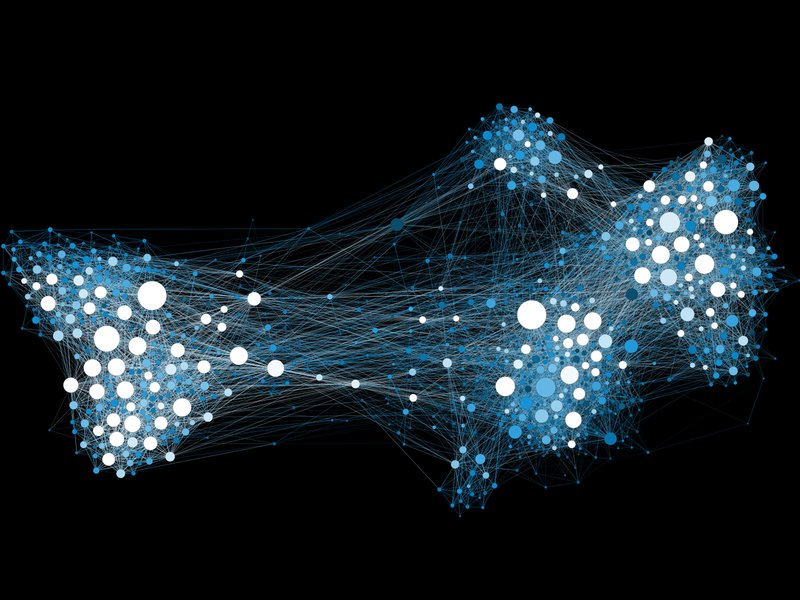
A visual representation of interconnected nodes, analogous to how users and content are linked on Facebook, facilitating contagion.
Mechanisms of Emotional Spread
Emotional contagion on Facebook is thought to occur through an "imitation-feedback loop." When users see emotional content, they might subconsciously mimic the emotion, which in turn affects their own feelings and subsequent posts. The sheer volume and constant exposure to friends' emotional expressions on the News Feed can create a cumulative effect, subtly shaping the collective emotional landscape of a user's network.
This video discusses Facebook's emotional contagion experiment, providing further context on the study and its implications regarding how emotions can be influenced through social media platforms.
Behavioral Contagion: Following the Digital Crowd
The Influence of Perceived Norms
Beyond emotions, contagion theory also applies to behaviors on Facebook. Users' actions can be significantly influenced by the perceived social norms within their online communities. If a critical mass of users starts sharing a particular type of content (e.g., vacation photos, political opinions, participation in a viral challenge), others may perceive this as normative behavior and feel inclined, or even pressured, to do the same.
Examples of Behavioral Contagion:
- Self-Disclosure: The amount and type of personal information users share can be influenced by how much their friends share. If open sharing is common in one's network, an individual might become more comfortable disclosing more themselves.
- Posting Frequency and Style: How often people post, the tone they adopt, and the types of media they use (e.g., text, images, videos) can spread as users observe and emulate those within their network.
- Participation in Trends: Viral challenges, memes, and fads often spread through behavioral contagion, as users see their friends participating and decide to join in.
Facebook's design, which makes behaviors highly visible through likes, shares, and comments, amplifies these effects. The platform essentially showcases what others are doing, reinforcing certain behaviors and potentially marginalizing others.
Information and Misinformation: The Viral Spread
How Content Travels on Facebook
Contagion theory is critically relevant to understanding how information—both factual and false—spreads on Facebook. The platform's architecture and algorithms can act as powerful engines for viral dissemination.
Factors Driving Information Contagion:
- Algorithmic Amplification: Facebook's News Feed algorithm is designed to prioritize content that is likely to generate engagement (likes, comments, shares). Emotionally charged content, whether positive or negative, often garners high engagement, leading to wider and faster spread.
- Emotional Triggers: Misinformation, in particular, often spreads rapidly because it is designed to evoke strong emotional responses such as fear, anger, or excitement. These emotions make users more likely to share the content without critical evaluation. Studies have shown misinformation can receive significantly more engagement than factual news.
- Network Effects: Information shared by friends or trusted sources is often perceived as more credible, even if it's false. This creates "information cascades" where content rapidly disseminates through interconnected social circles.
- Visual Content: Images and videos are particularly potent vectors for contagion. They are often more persuasive, memorable, and shareable than plain text, making visual misinformation especially pernicious.
- Habitual Sharing: The platform's design can encourage habitual sharing, where users reshare content they see in their feed with little scrutiny, especially if it aligns with their pre-existing beliefs or comes from their network.
The speed and reach of misinformation on Facebook are significant societal concerns, with implications for public opinion, political discourse, and public health.
Relative Contagiousness on Facebook
The following radar chart provides a conceptual illustration of the relative contagiousness of different types of content and expressions on Facebook, based on general observations and research findings. The scores are indicative and aim to compare the propensity of these elements to spread through the network. A higher score suggests a greater tendency for contagion.
This chart suggests that highly emotional content, particularly misinformation designed to evoke strong reactions, tends to be very contagious. Positive and negative emotions also show significant potential for spread, while factual, neutral information may spread less aggressively without an emotional or engagement-driving component. New behaviors and complex ideas fall somewhere in between, their contagiousness often depending on how they are framed and presented.
Network Dynamics, Platform Design, and Ethical Considerations
The Interplay of Factors
The way contagion unfolds on Facebook is not random; it's shaped by several interconnected factors:
Network Structure and Influence
Facebook's structure, consisting of friends, groups, pages, and complex interconnections, forms the pathways for contagion. Highly connected individuals ("influencers") or tightly-knit communities can act as "super-spreaders" or, conversely, as buffers against certain types of contagion. The position of a message or post in a user's News Feed—largely determined by the algorithm—significantly affects its visibility and thus its potential for contagion.
Platform Design and Interface Effects
Facebook's design choices, from the layout of the News Feed to the prominence of interaction buttons (like, share, comment), inherently influence contagion. Features that encourage quick reactions and sharing can amplify the spread of content. Algorithmic curation, while intended to show users relevant content, can also create filter bubbles or echo chambers where certain emotions, behaviors, or viewpoints are continuously reinforced, enhancing their contagious effect within those bubbles.
Ethical Dimensions
The application of contagion theory to Facebook, especially demonstrated by the emotional contagion experiment, sparked significant ethical debate. Concerns were raised about:
- Informed Consent: Users in the experiment were not explicitly informed they were part of a study manipulating their emotional exposure.
- Potential Harm: Manipulating users' emotions, even subtly, carries the risk of psychological impact.
- Platform Responsibility: There is ongoing discussion about Facebook's (and other social media platforms') responsibility in managing the spread of harmful content, such as misinformation or hate speech, and mitigating negative emotional contagion.
Mindmap: Contagion Theory on Facebook
This mindmap illustrates the multifaceted nature of contagion theory as applied to Facebook, highlighting the types of contagion, the mechanisms through which they operate, influencing factors, and notable outcomes or implications.
Summary Table: Key Aspects of Facebook Contagion
The table below summarizes the primary ways contagion theory manifests on Facebook, along with key mechanisms and examples.
| Type of Contagion | Description | Primary Mechanisms | Examples on Facebook |
|---|---|---|---|
| Emotional Contagion | Spread of emotional states (positive or negative) among users. | Exposure to emotional expressions in News Feed, subconscious mimicry, algorithmic filtering. | Feeling happier after seeing friends' joyful posts; feeling more anxious after exposure to negative news shared by network. |
| Behavioral Contagion | Adoption of behaviors observed in others. | Perceived social norms, visibility of actions (likes, shares), imitation of peers. | Joining a viral challenge, changing privacy settings based on friends' behavior, adopting new slang or posting styles. |
| Information Contagion | Rapid dissemination of information, including news, rumors, and misinformation. | Algorithmic prioritization of engaging content, emotional triggers, network sharing, echo chambers. | Viral news articles, spread of unverified rumors, rapid dissemination of memes or political propaganda. |
| Misinformation Contagion | A subset of information contagion specifically referring to the spread of false or misleading content. | Often leverages strong emotional responses (fear, anger), confirmation bias, rapid sharing within like-minded groups, algorithmic amplification. | Fake news stories about elections or health, manipulated images/videos, conspiracy theories. |
Frequently Asked Questions (FAQ)
Recommended Further Exploration
- What were the ethical implications of the Facebook emotional contagion study?
- How do Facebook's algorithms contribute to the spread of viral content?
- What are the differences between emotional contagion and behavioral contagion on social media?
- What strategies can be used to combat the spread of misinformation on Facebook?
References
Last updated May 9, 2025