
Factor Investing: Unpacking the Blueprint for Smarter Portfolio Returns
Beyond the hype, a disciplined look at how targeting specific market drivers is reshaping modern investment strategy.
In an investment landscape constantly seeking an edge, factor investing has emerged not as a fleeting fad, but as a robust, evidence-backed strategy. Grounded in decades of academic research and increasingly accessible to everyday investors, this approach systematically targets specific characteristics, or "factors," that have historically driven returns. As of May 6, 2025, its principles continue to resonate, offering a structured path to potentially enhance portfolio performance, improve diversification, and manage risk more effectively than traditional methods alone.
Key Highlights: What Factor Investing Delivers
- Evidence-Backed Returns: Factor investing is built on rigorous academic research identifying persistent drivers of return like value, momentum, quality, size, and low volatility.
- Enhanced Diversification & Risk Management: By targeting factors with low or negative correlations to each other and the broader market, portfolios can achieve better risk-adjusted returns and resilience.
- Systematic & Transparent Approach: Unlike discretionary active management, factor investing employs clear, rule-based methodologies, often leading to lower costs and greater transparency for investors.
The Bedrock: Understanding Factor Investing
At its heart, factor investing is a strategy that moves beyond traditional market-cap weighting or individual stock picking. Instead, it focuses on identifying and capturing broad, persistent drivers of returns. These "factors" are quantifiable characteristics of assets that have historically been associated with higher returns or reduced risk. Think of them as the DNA of investment performance – distinct attributes that explain why some assets outperform others over time.
Factors can generally be categorized into two main types:
- Macroeconomic Factors: These capture broad risks across asset classes, such as economic growth, inflation rates, interest rates, and credit spreads.
- Style Factors (or Risk Premia): These relate to characteristics within asset classes. Common equity style factors include:
- Value: Investing in stocks that appear cheap relative to their fundamental value (e.g., low price-to-book ratio).
- Size: Investing in smaller companies, which have historically outperformed larger ones over the long term.
- Momentum: Investing in stocks that have shown strong recent price performance, based on the idea that trends tend to persist.
- Quality: Investing in companies with strong balance sheets, stable earnings, and high profitability.
- Low Volatility (or Minimum Volatility): Investing in stocks that have historically exhibited lower price fluctuations than the overall market.
- Yield (or Carry): Investing in assets that provide higher income, such as high-dividend stocks or bonds with higher coupon payments.
The core premise is that by systematically tilting a portfolio towards these proven factors, investors can potentially achieve superior risk-adjusted returns compared to a broad market index.
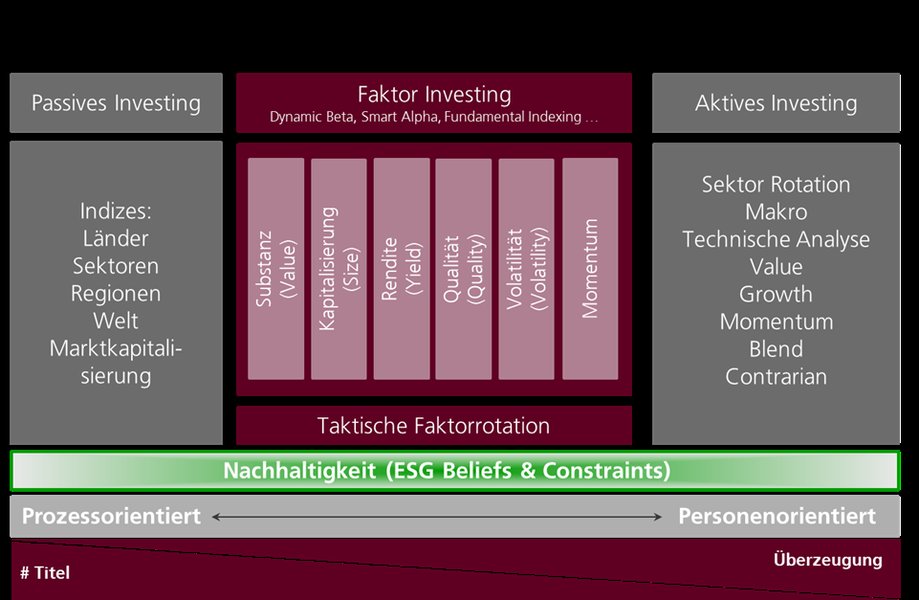
An overview of common investment factors and their interplay.
What Factor Investing Gets Right: A Closer Look
1. Evidence-Based Foundation and Historical Outperformance
One of the most compelling aspects of factor investing is its strong empirical backing. Decades of academic research, including seminal works by Nobel laureates, have identified and validated various factors that have delivered persistent return premiums across different markets and time periods. Studies covering over a century of data in some cases reinforce that these relationships are not fleeting anomalies but rather enduring features of market behavior. For example, factors like value, size, and momentum have historically shown the ability to generate returns exceeding traditional market benchmarks after accounting for risk. This robust, research-driven approach provides a solid foundation for investment decisions, moving away from gut feelings or short-term market noise.
The Power of Long-Term Data
The longevity of observed factor premiums suggests they are not simply a result of data mining but reflect underlying economic rationales or behavioral biases. For instance, the value premium might exist because investors tend to overpay for "glamour" stocks and undervalue less exciting but fundamentally sound companies. The momentum premium could be driven by investors' underreaction to new information or herd behavior. This historical persistence gives investors confidence in the long-term viability of factor-based strategies.

Historical data illustrating the long-term performance trends of various investment factors.
2. Enhanced Diversification and Superior Risk Management
Factor investing offers a more nuanced approach to diversification than simply spreading investments across asset classes or geographies. By focusing on factors that often have low or even negative correlations with each other, investors can build portfolios that are more resilient across different market environments. For example, during periods of economic stress, low volatility and quality factors might perform well, while in a recovery, value and size factors could lead. This multi-faceted diversification can help smooth out portfolio returns and reduce overall volatility.
Beyond Traditional Asset Allocation
Traditional diversification often relies on the assumption that different asset classes (stocks, bonds, etc.) will behave differently. Factor investing takes this a step further by looking at the underlying drivers of return within and across these asset classes. This allows for a more precise calibration of risk. For instance, a portfolio might be diversified across stocks, but if all those stocks are heavily exposed to a single factor (e.g., growth), the portfolio might still be vulnerable if that factor underperforms. Factor investing helps to deconstruct and manage these exposures more explicitly, potentially mitigating risks like concentration or sector risk.
3. Transparency, Systematic Discipline, and Cost-Effectiveness
Factor investing strategies are typically rule-based and transparent. The methodologies for selecting securities based on specific factors are clearly defined and replicable. This contrasts sharply with some traditional active management approaches that can be opaque, relying on a "black box" or the intuition of a fund manager. The systematic nature of factor investing also enforces discipline, helping investors stick to their long-term strategy and avoid making emotional, ill-timed decisions based on market sentiment.
Accessibility and Lower Fees
The rise of factor-based Exchange Traded Funds (ETFs) and other passive or smart-beta products has democratized access to these strategies. Retail investors can now easily and cost-effectively gain exposure to various factors or multi-factor portfolios. These products often come with significantly lower expense ratios compared to traditional actively managed funds, allowing investors to keep more of their returns. Multi-factor ETFs, which combine several factors in one product, offer an additional layer of convenience and potential diversification, reducing the need for investors to manage and rebalance multiple single-factor exposures themselves.
This video provides a foundational explanation of what factor investing entails, discussing how factors represent sources of risk and return that have historically contributed to asset performance.
4. Integration of Technology and Data-Driven Insights
The evolution of factor investing has been significantly aided by advancements in technology and data analytics. Modern quantitative techniques allow for the efficient processing of vast amounts of market data to identify and refine factor exposures. The increasing use of AI-based tools is further enhancing the implementation of factor investing. These tools can quickly and accurately collect real-time data from diverse sources, including financial statements, market prices, investor sentiment, and even social media, to evaluate factors affecting asset values. This allows for more dynamic and responsive portfolio adjustments, potentially improving the efficacy of factor strategies.
Addressing Behavioral Biases Systematically
Factor investing can also be seen as a way to systematically capitalize on well-documented behavioral biases that affect markets. For example, the value premium may partly arise from investors' tendency to overreact to negative news, pushing stock prices below their intrinsic worth. Similarly, the momentum effect might be driven by investors' initial underreaction to positive news followed by herding behavior. By adopting a rule-based approach, factor investing aims to exploit these persistent market inefficiencies in a disciplined manner, sidestepping emotional decision-making that can often detract from performance.
Comparing Key Investment Factors
Factor investing involves choosing exposures to various characteristics that drive returns. The radar chart below provides an illustrative comparison of common equity style factors across several dimensions. These dimensions include potential for historical alpha (excess returns), diversification benefits when combined with other assets, risk reduction capabilities, cost-efficiency of implementation (often through ETFs), and the strength of academic backing. Note that these are generalized assessments, and actual outcomes can vary.
This chart helps visualize how different factors might align with an investor's specific goals. For instance, an investor prioritizing capital preservation might lean towards Low Volatility, while someone seeking higher growth might consider Momentum or Size, understanding the associated risk profiles.
Mapping the Landscape of Factor Investing
To better visualize the interconnected concepts within factor investing, the mindmap below outlines its core components, common factors, benefits, and important considerations. This structure helps to understand how different elements of the strategy relate to one another, from its theoretical underpinnings to its practical application.
Strategy targeting specific
drivers of return"] id2["Types of Factors"] id2a["Macroeconomic
(e.g., Inflation, Interest Rates)"] id2b["Style / Risk Premia"] id2b1["Value
(Cheap vs. Expensive)"] id2b2["Momentum
(Recent Performance Trends)"] id2b3["Quality
(Strong Fundamentals)"] id2b4["Size
(Small-Cap vs. Large-Cap)"] id2b5["Low Volatility
(Lower Price Swings)"] id2b6["Yield / Carry
(Income Generation)"] id3["Key Benefits"] id3a["Enhanced Returns
(Potential for Alpha)"] id3b["Improved Diversification
(Low Factor Correlations)"] id3c["Risk Management
(Targeted Risk Exposure)"] id3d["Transparency & Rules-Based
(Systematic Approach)"] id3e["Cost-Effectiveness
(e.g., Factor ETFs)"] id3f["Addresses Behavioral Biases
(Systematic Exploitation)"] id4["Implementation"] id4a["Single-Factor Products"] id4b["Multi-Factor Products"] id4c["Quantitative Screening"] id4d["ETFs & Mutual Funds"] id5["Important Considerations"] id5a["Factor Cyclicality
(Periods of Underperformance)"] id5b["Factor Timing Risk
(Difficult to Predict Short-Term)"] id5c["Factor Crowding
(Reduced Efficacy if Overused)"] id5d["Data Mining Concerns
(Ensuring Robustness of Factors)"]
This mindmap illustrates that factor investing is a multi-faceted strategy. It begins with understanding what factors are, explores the various types like Value and Momentum, highlights the significant benefits such as potentially higher returns and better risk control, and also acknowledges practical aspects like implementation methods and potential challenges to be aware of.
A Summary of Common Investment Factors
Factor investing relies on identifying and targeting specific characteristics of securities. The table below summarizes some of the most well-documented and widely utilized investment factors, providing a brief description and insights into their historical behavior and rationale. Understanding these factors is crucial for constructing a diversified and effective factor-based portfolio.
| Factor | Description | Historical Rationale / Insight |
|---|---|---|
| Value | Stocks that are inexpensive relative to their fundamental metrics (e.g., earnings, book value, cash flow). | Historically, undervalued stocks have tended to outperform overvalued (glamour) stocks over the long run, possibly due to investor overreaction or behavioral biases. |
| Momentum | Stocks that have performed well in the recent past (e.g., 3-12 months) tend to continue performing well, and vice-versa for underperformers. | Attributed to investors' initial underreaction to new information and subsequent herding behavior. This factor tends to be less correlated with Value. |
| Quality | Stocks of companies with strong financial health, characterized by stable earnings, low debt, high profitability (e.g., high return on equity), and good governance. | High-quality companies are often seen as more resilient, especially during economic downturns. Investors may be willing to pay a premium for stability and predictability. |
| Size (Small-Cap) | Stocks of companies with smaller market capitalizations. | Historically, smaller companies have outperformed larger companies over long periods, potentially due to higher growth potential, less analyst coverage leading to inefficiencies, or a liquidity premium. |
| Low Volatility (Minimum Volatility) | Stocks that have exhibited lower price fluctuations (standard deviation of returns) compared to the broader market. | Paradoxically, less risky stocks have sometimes provided similar or even better risk-adjusted returns than riskier stocks, challenging the traditional risk-return tradeoff assumption. This may be due to leverage constraints or behavioral preferences. |
| Yield (or Dividend Yield / Carry) | Stocks that pay higher dividends relative to their share price, or bonds offering higher yields. | Provides a component of return through income. For equities, it can also be a signal of company maturity and financial stability. For bonds, it reflects compensation for credit or duration risk. |
While these factors have demonstrated historical efficacy, it's important to remember that past performance is not indicative of future results, and factors can experience prolonged periods of underperformance. A multi-factor approach is often advocated to mitigate the risk of any single factor struggling.
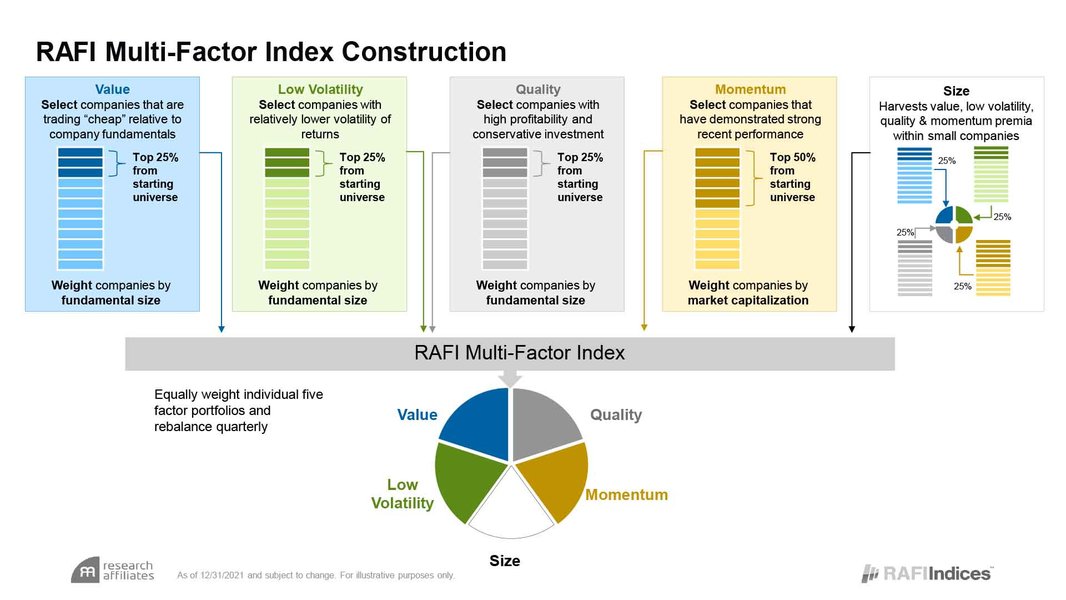
An illustration of a typical investment process for constructing multi-factor indices.
Acknowledging the Nuances
While factor investing presents a compelling, evidence-based approach to portfolio construction, it's crucial to acknowledge that it is not a panacea. Factors can go through extended periods of underperformance, and predicting which factor will outperform in the short term is notoriously difficult (factor timing risk). Additionally, as factors become more widely known and utilized, there is a risk of "factor crowding," where increased capital flows could potentially diminish future premiums. Rigorous research, careful implementation, and a long-term perspective are essential for successfully harnessing the benefits of factor investing. Despite these challenges, its systematic nature, potential for improved returns, diversification benefits, and risk management capabilities make it a significant and evolving strategy in the investment landscape.
Frequently Asked Questions (FAQ)
What is factor investing in simple terms?
Factor investing is an investment strategy where you choose assets based on specific characteristics, or "factors," that have historically been linked to higher returns or lower risk. Instead of just picking individual stocks, you're focusing on broader attributes like whether a stock is "cheap" (value factor) or has been rising in price (momentum factor).
How does factor investing differ from active or passive investing?
Factor investing sits somewhere between traditional active and passive investing.
Passive investing typically involves tracking a broad market index (like the S&P 500).
Active investing involves a fund manager making specific decisions to try and beat the market.
Factor investing is systematic and rule-based like passive investing, but it aims to outperform standard market-cap weighted indexes by targeting specific factors, making it more "active" than pure passive strategies. It's often referred to as "smart beta."
What are the main benefits of factor investing?
The main benefits include:
- Potential for Enhanced Returns: Targeting factors with historical outperformance.
- Improved Diversification: Factors often have low correlations with each other, reducing overall portfolio risk.
- Risk Management: Allows investors to target specific risk characteristics (e.g., lower volatility).
- Transparency: Strategies are typically rule-based and easy to understand.
- Cost-Effectiveness: Often implemented via lower-cost ETFs compared to traditional active funds.
Are there any downsides to factor investing?
Yes, factor investing is not without challenges:
- Factor Cyclicality: Factors can underperform the broader market for extended periods.
- Factor Timing: It's difficult to predict which factor will perform best in the short term.
- Factor Crowding: If too many investors chase the same factors, their effectiveness might diminish.
- Complexity: While more transparent than some active strategies, understanding and combining factors can still be complex for some investors.
Can I combine multiple factors in my portfolio?
Yes, and it's often recommended. Multi-factor investing involves combining exposure to several factors (e.g., value, momentum, and quality) within a single portfolio. This approach can provide better diversification because different factors tend to perform well at different times in the economic cycle, potentially leading to smoother overall returns.
Recommended Further Exploration
- How can investors implement a multi-factor investing strategy in their portfolios?
- What is the historical performance of different investment factors across various market cycles?
- Are there specific risks associated with factor crowding and how can they be mitigated?
- How does factor investing apply to asset classes beyond equities, such as fixed income or commodities?
References
Last updated May 6, 2025