
Unlocking the Fair Value of Fannie Mae (FNMA) Stock: A Comprehensive Analysis
Navigating the Complexities of Valuation in a Dynamic Housing Market
Determining the "fair value" of Fannie Mae (FNMA) stock is a multifaceted endeavor, influenced by a blend of financial projections, market sentiment, regulatory considerations, and the unique position Fannie Mae holds within the U.S. housing finance system. While recent market activity shows a significant increase in FNMA's stock price, analysts offer a range of perspectives on its intrinsic worth. This analysis delves into the various factors that contribute to Fannie Mae's valuation, drawing insights from its financial performance, future market forecasts, and the ongoing debate surrounding its conservatorship status.
Key Insights into Fannie Mae's Valuation Landscape
- Diverse Valuation Perspectives: Analyst price targets for Fannie Mae (FNMA) vary significantly, with a median target of $2.42 and a high estimate of $4.00, contrasting sharply with its recent trading price of approximately $7.45 - $7.63. This divergence underscores the speculative nature and differing interpretations of its future prospects.
- Strong Financial Health and Capital Build: Fannie Mae reported a net income of $3.7 billion for Q1 2025, and its net worth increased by 19.9% year-over-year to $98.31 billion as of March 31, 2025. This robust financial performance and capital build are critical factors in intrinsic valuation models.
- Impact of Conservatorship and Privatization Hopes: The ongoing conservatorship and the potential for privatization significantly influence FNMA's valuation. Many investors believe that an end to the Treasury sweep of profits would unlock substantial value for shareholders, driving the stock price dramatically higher than current levels.
Understanding Fannie Mae's Core Business and Financial Strength
Fannie Mae, officially the Federal National Mortgage Association, plays a pivotal role in the U.S. housing market by providing liquidity to the mortgage market. Established in 1938, it helps make the 30-year fixed-rate mortgage and affordable rental housing accessible to millions of Americans. Its primary activities include mortgage securitization, investing in mortgage-backed securities (MBS), and providing credit enhancement for housing bonds.
Recent Financial Performance: A Solid Foundation
Fannie Mae has demonstrated strong financial health. In the first quarter of 2025, the company reported a net income of $3.66 billion. While this represents a 15.3% decrease from the same period last year, it still signifies significant profitability. The company's net worth has seen a substantial increase, reaching $98.31 billion as of March 31, 2025, up 19.9% from $82.01 billion a year earlier. This capital accumulation is crucial for its stability and future operations.
The company's stable net interest income, despite market challenges, indicates operational resilience. Credit quality across both its single-family and multifamily portfolios remains strong. For single-family loans, the weighted average FICO credit score was 753, with a mark-to-market loan-to-value (LTV) ratio of 50%. In the multifamily segment, the weighted average original LTV was 63%, and the debt service coverage ratio stood at 2.0.
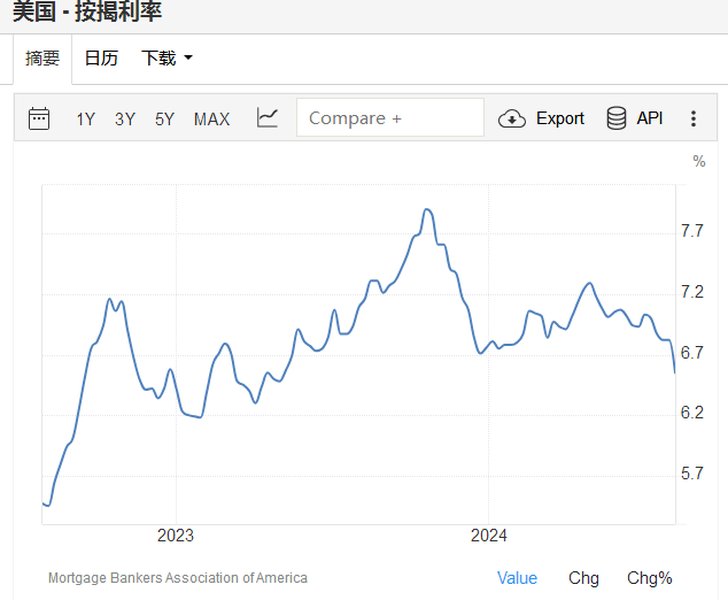
An illustrative chart depicting historical housing market trends and mortgage rate movements, influencing Fannie Mae's financial outlook.
Mortgage Market Forecasts for 2025 and Beyond
Fannie Mae's Economic & Strategic Research (ESR) Group provides valuable forecasts for the housing and mortgage finance markets, which directly impact the company's future earnings and, consequently, its valuation. Here are some key projections:
Mortgage Rates: Expected Declines
The 30-year fixed-rate mortgage rate is projected to end 2025 at 6.1% and further decline to 5.8% by the end of 2026. This modest decline from previous projections (6.2% for end-2025 and 6.0% for end-2026) suggests a potentially more favorable environment for borrowers and, by extension, for mortgage originations.
Mortgage Originations: Anticipated Growth
Mortgage originations are forecast to rise to $1.99 trillion in 2025 and $2.38 trillion in 2026. This represents an upward revision from earlier forecasts, indicating building momentum in the mortgage market. Purchase volumes are expected to grow by 10% year-over-year in 2025 to $1.4 trillion.
Home Sales: Modest Increases
Total single-family home sales are anticipated to reach 4.92 million units by the end of 2025, with existing home sales accounting for 4.24 million units. This marks a 4.8% increase in existing home sales from 2024 estimates, though still below 2019 levels. New construction is also projected to increase.
Home Price Growth: Moderation Expected
A panel of housing experts forecasts home price growth to average 3.4% in 2025 and 3.3% in 2026. This signifies a deceleration from the estimated 5.8% growth in 2024, as measured by the Fannie Mae Home Price Index (FNM-HPI). While growth is slowing, prices are still expected to increase, supporting collateral values.
Valuation Methodologies for FNMA Stock
Valuing Fannie Mae stock is particularly complex due to its unique status as a government-sponsored enterprise (GSE) under conservatorship. Traditional valuation methods like Discounted Cash Flow (DCF) and Relative Valuation are used, but they must be applied with a keen awareness of the regulatory and political landscape.
Current Market Price vs. Analyst Estimates
As of May 21, 2025, FNMA's stock price has shown significant volatility and growth, with a 351.52% increase over the last year and a 172.3% increase since the beginning of 2025, trading around $7.45 - $7.63. However, analyst consensus price targets are notably lower, with a median target of $2.42, a high estimate of $4.00, and a low estimate of $1.25. This discrepancy often points to differing assumptions about the company's future, particularly regarding its conservatorship.
Some analyses suggest FNMA is currently overvalued, with a "Real Value" of $2.43 and a "Hype Value" of $3.44, while other perspectives suggest it's undervalued with a "Real Value" of $20.57 and a "Hype Value" of $19.41. These varying "Real Value" and "Hype Value" assessments from different sources highlight the subjective nature of valuation when external factors heavily influence it.
The Impact of Conservatorship and Privatization Hopes
A significant driver of Fannie Mae's potential "fair value" is the prospect of an end to its conservatorship and a return to private status. Since the 2008 financial crisis, Fannie Mae's profits have largely been swept by the U.S. Treasury. Many investors and analysts believe that if this profit sweep were to end, and Fannie Mae could retain its earnings or distribute them to common shareholders, its per-share value would be dramatically higher.
Prominent investors like Bill Ackman have publicly discussed the potential for significant upside in FNMA shares upon privatization, with some speculative valuations suggesting a value of $150 or even $300 per share if government interference is removed and profits are fully realized by shareholders. This "Trump Trade" perspective, as some call it, emphasizes the asymmetric reward-to-risk profile if the political environment becomes conducive to ending the conservatorship.
The company's strong financial health, with consistent net income generation and capital buffer rebuilding, bolsters the argument for a higher valuation if it were to operate freely without the Treasury sweep. This fundamental strength, combined with the political discourse around its future, creates a highly speculative but potentially lucrative investment opportunity for those betting on privatization.
Fannie Mae's Valuation Modernization Initiatives
Fannie Mae is also implementing significant updates to its property valuation methods, aiming to enhance efficiency, accuracy, and impartiality in the appraisal process. These changes, part of its "Valuation Modernization" efforts, are set to roll out in early 2025 and are designed to protect the integrity of the collateral valuation process while managing risk for lenders, investors, and borrowers.
Expanded Value Acceptance (Appraisal Waivers)
Fannie Mae is expanding eligibility for "Value Acceptance," its term for appraisal waivers, by raising the loan-to-value (LTV) threshold from 80% to 90% for primary and secondary homes. This change aims to make home valuation easier and more cost-effective for qualified borrowers by reducing the need for traditional appraisals in certain scenarios. The process involves lenders assessing loan qualifications based on factors like property type, LTV ratio, and borrower profile.
Property Data Collection and API
A key component of this modernization is the "Value Acceptance + Property Data" (VA + PD) program. This new option utilizes property data collected by a third party, who conducts interior and exterior data collection, which is then used in a proprietary automated valuation model (AVM) to validate the property's value. Fannie Mae has established a standardized property data set (Uniform Property Dataset) and an API to collect data and images consistently, ensuring data integrity and facilitating a more efficient, understandable, and impartial valuation system.
These initiatives streamline the mortgage origination process, potentially saving time and money for borrowers and lenders. While not directly impacting FNMA's stock price on a daily basis, they reflect Fannie Mae's ongoing efforts to adapt to market needs and improve its operational efficiency, which can contribute to long-term stability and profitability.
The Spectrum of Fannie Mae Valuation Factors
The fair value of Fannie Mae is not a single, fixed number but rather a range influenced by various interconnected factors. A radar chart can effectively visualize the relative importance and perceived strength of these factors, from an investor's perspective.
The radar chart above illustrates how different factors weigh on Fannie Mae's valuation. "Conservatorship Status & Privatization Hopes" is shown to have the highest "Impact on Share Price," reflecting the market's strong focus on this unresolved issue. Meanwhile, "Financial Performance & Profitability" underpins "Investor Confidence," indicating a solid operational foundation. The "Valuation Modernization Impact" is perceived as having a moderate impact currently but contributing to long-term efficiency.
Summary of Key Financial and Market Metrics for FNMA
To provide a clearer picture of Fannie Mae's current financial standing and market perception, here is a consolidated table of relevant metrics:
| Metric | Value/Outlook (as of May 2025) | Source/Context |
|---|---|---|
| Current Stock Price (approx.) | $7.45 - $7.63 | WSJ, MarketWatch, StockInvest.us |
| Net Income (Q1 2025) | $3.66 Billion | Fannie Mae Q1 2025 Financials |
| Net Worth (March 31, 2025) | $98.31 Billion | Fannie Mae Q1 2025 Financials |
| 30-Year Fixed Mortgage Rate (End 2025 Forecast) | 6.1% | Fannie Mae May 2025 Economic Forecast |
| Mortgage Originations (2025 Forecast) | $1.99 Trillion | Fannie Mae May 2025 Economic Forecast |
| Home Price Growth (2025 Average Forecast) | 3.4% | Fannie Mae Q1 2025 Expert Panel Survey |
| Total Single-Family Home Sales (2025 Forecast) | 4.92 Million Units | Fannie Mae May 2025 Economic Forecast |
| Analyst Median Price Target | $2.42 | Markets.businessinsider.com |
| Analyst High Price Target | $4.00 | MarketWatch, TradingView |
| 52-Week High Stock Price | $8.00 | Barron's, Markets.businessinsider.com |
| 52-Week Low Stock Price | $0.94 | Markets.businessinsider.com |
| Market Capitalization | $8.63 Billion - $8.84 Billion | Yahoo Finance, Advfn.com |
| P/E Ratio (ttm) | 2865.38 (QB) / N/A (Forbes) | Advfn.com, Forbes.com |
This table highlights the significant gap between current market trading prices and analyst consensus targets, largely driven by the ongoing conservatorship and the potential for a privatization catalyst.
Navigating the Future: Potential for FNMA
The future valuation of Fannie Mae hinges significantly on external factors, particularly government policy regarding its conservatorship. Should the political landscape shift towards privatization, the perceived fair value of FNMA stock could dramatically increase, potentially aligning with the much higher speculative valuations mentioned by some investors. The company's underlying financial strength and its essential role in the U.S. mortgage market provide a robust foundation for such a revaluation.
The following video provides further context on the discussions surrounding Fannie Mae's future and its stock performance:
This video discusses the recent surge in Fannie Mae (FNMA) and Freddie Mac (FMCC) shares in 2025, breaking down the factors contributing to their performance amidst leadership changes and the ongoing debate surrounding their future status.
Without a clear path to privatization, however, the stock is likely to remain influenced by its current status, where its profits are largely remitted to the Treasury. Investors are keenly watching political developments and any announcements that might signal a change in the conservatorship status. The narrative around FNMA's valuation is less about its day-to-day operations and more about the resolution of its conservatorship, which could unlock substantial value for shareholders.
Frequently Asked Questions
What is Fannie Mae's current stock price?
What are analysts' price targets for Fannie Mae (FNMA)?
How does conservatorship affect Fannie Mae's stock valuation?
What are Fannie Mae's financial results for Q1 2025?
What is Fannie Mae's forecast for mortgage rates in 2025?
What is "Valuation Modernization" at Fannie Mae?
Conclusion
The fair value of Fannie Mae (FNMA) stock is currently a subject of considerable debate, primarily due to its unique status under government conservatorship. While traditional analyst estimates often hover around the low single digits, the market has seen FNMA trade significantly higher, driven by the speculative hope of privatization. The company's underlying financial strength, as evidenced by its robust net income and growing net worth in Q1 2025, along with its stable outlook for the housing market, provides a strong fundamental basis. However, the ultimate "fair value" remains largely tied to a potential resolution of its conservatorship, which, if it leads to the retention of profits by the company or their distribution to shareholders, could unlock substantial value far exceeding current trading prices.
Recommended Further Exploration
- How would Fannie Mae's privatization impact its stock price and the broader mortgage market?
- What were the key takeaways from Fannie Mae's Q1 2025 earnings report and what do they signal for investors?
- What are Fannie Mae's latest housing market forecasts for 2025, particularly regarding home prices and mortgage rates?
- How will Fannie Mae's valuation modernization efforts benefit homebuyers and the real estate industry?