
Unveiling the Speed Champions: Which TypeScript Backend Reigns Supreme in 2025?
Discover the frameworks and runtimes delivering peak performance for your TypeScript applications, from raw speed to balanced scalability.
Key Highlights: The Fastest Lane for TypeScript Backends
- Encore.ts: Emerging as a top contender, offering exceptional raw speed (reportedly up to 9x faster than Express.js) combined with end-to-end type safety and ergonomic APIs specifically for TypeScript.
- Bun (Runtime) with frameworks like Elysia: The Bun runtime significantly boosts TypeScript execution speed (benchmarked up to 4x faster than Node.js), making frameworks like Elysia, which are optimized for it, extremely performant.
- NestJS: While not always the leader in raw requests-per-second, NestJS provides a mature, highly scalable, and well-architected solution with strong TypeScript integration, offering a great balance of performance and developer experience for enterprise applications.
Choosing the right backend framework is crucial for building efficient, scalable, and maintainable applications. When TypeScript is your language of choice, leveraging its strong typing and modern features can significantly enhance code quality and reduce runtime errors. In 2025, the landscape of TypeScript backend frameworks offers several compelling options, particularly when raw speed and low latency are top priorities. Let's delve into the front-runners.
The Velocity Vanguard: Frameworks Setting Speed Records
For developers prioritizing sheer throughput and rapid response times, a few frameworks and runtimes have distinguished themselves with impressive benchmark results.
Encore.ts: The TypeScript Speedster
Encore.ts has rapidly gained attention for its blazing-fast performance specifically tailored for TypeScript backend development. It's engineered to provide end-to-end type safety and ergonomic APIs without compromising on speed. Several sources highlight its impressive benchmark figures:
- Reportedly up to 9 times faster than Express.js in handling requests per second.
- Approximately 2 times faster than Fastify.
- Around 3 times faster than other modern, performance-focused frameworks like Elysia and Hono in some tests.
Encore.ts achieves this performance through a combination of optimized architecture, efficient asynchronous programming, and minimal overhead, making it a prime candidate for performance-critical applications requiring robust type safety.
A deep dive into Encore.ts, showcasing its features and potential as a high-performance TypeScript backend framework.
Bun Runtime: Turbocharging TypeScript Execution
Bun is a modern JavaScript runtime built from the ground up with speed as a core design principle. It offers native support for TypeScript, JSX, and provides a built-in bundler, test runner, and package manager. Its performance impact on TypeScript backends is significant:
- Benchmarks indicate Bun can be up to 4 times faster than Node.js and approximately 2.5 times faster than Deno for simple applications like an Express "Hello World" server.
- It boasts lower CPU and memory consumption, contributing to its efficiency.
Frameworks like ElysiaJS, which are designed with developer ergonomics and performance in mind, can leverage Bun's speed to deliver exceptionally fast backends. Elysia, a TypeScript-first framework, emphasizes minimal overhead and full type inference, making it a potent combination with Bun for developers seeking both speed and a great development experience.
Established Performers: Balancing Speed with Robustness
While raw speed is a critical factor for some, many projects also require maturity, extensive ecosystems, and proven scalability. In this category, certain frameworks offer a compelling blend.
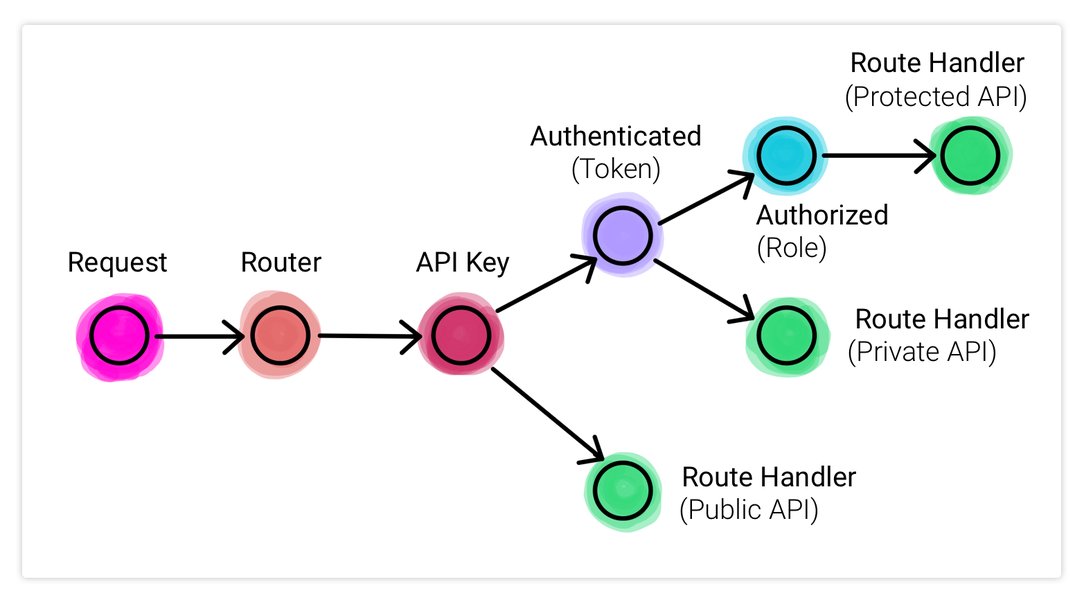
Illustrative diagram of a structured Node.js backend using TypeScript, showcasing modular components often found in frameworks like NestJS.
NestJS: The Architect's Choice for Scalable TypeScript Backends
NestJS is arguably the most mature and widely adopted TypeScript backend framework. Built on Node.js (and compatible with Fastify as an underlying HTTP server option for enhanced performance), it provides a robust, out-of-the-box application architecture inspired by Angular. Key strengths include:
- Modular Design: Encourages a well-organized codebase through modules, controllers, and services.
- Strong TypeScript Integration: Leverages decorators, static typing, and modern JavaScript features extensively.
- Scalability: Suitable for building complex, enterprise-level applications and microservices.
- Developer Experience: Offers excellent tooling, documentation, and a large community.
While NestJS might not top every raw speed benchmark against more minimalistic frameworks, its performance is generally very good, especially for real-world applications with complex logic. It excels in scenarios where maintainability, scalability, and a structured approach are paramount alongside solid performance.
Fastify: Lean and Mean for Node.js APIs
Fastify is a Node.js web framework known for its high performance and low overhead. It's designed to be one of the fastest Node.js frameworks available, focusing on efficient JSON schema validation and request handling. When used with TypeScript, Fastify offers:
- Speed: Optimized for handling a large volume of requests with low latency.
- Extensibility: A rich plugin ecosystem allows for adding functionality as needed.
- Developer-Friendly: Provides good TypeScript support and clear documentation.
Fastify is an excellent choice for building fast APIs within the Node.js ecosystem, especially when you need more control than a highly opinionated framework might offer, but still desire strong performance and TypeScript compatibility.
Comparative Glance: TypeScript Backend Frameworks
To better understand the landscape, the following radar chart provides a visual comparison of selected TypeScript backend options across several key metrics. These scores are opinionated interpretations based on synthesized information and community perception, intended to illustrate relative strengths rather than absolute, definitive rankings.
This chart aims to provide a relative snapshot. "Raw Speed" refers to benchmark performance, "Developer Experience" to ease of use and tooling, "Type Safety" to how well TypeScript is integrated, "Scalability" to architectural support for large applications, "Ecosystem & Maturity" to community support and stability, and "Learning Curve" where lower scores indicate an easier learning path.
Performance Considerations and Other Notables
When evaluating the "fastest" backend, several factors come into play beyond just the framework itself.
Runtime Environment
As seen with Bun, the underlying JavaScript/TypeScript runtime plays a pivotal role. While Node.js remains the dominant runtime, alternatives like Bun and Deno (known for its security features and native TypeScript support) are pushing the boundaries of performance. Deno, while generally faster than Node.js in some aspects, has been benchmarked as slower than Bun in direct "Hello World" type comparisons.
Framework Architecture and Philosophy
Minimalist frameworks often achieve higher raw speeds due to less overhead. Frameworks like Hono, known for being lightweight and fast, also benefit from runtimes like Bun. Other TypeScript-first frameworks like TSED (built on Express.js/Koa) and Typetron (a modern beta-stage framework) aim to balance performance with developer productivity, though they may be less mature than options like NestJS.
Benchmarking Nuances
While benchmarks provide valuable insights, it's essential to consider that real-world application performance can vary based on specific workloads, database interactions, I/O operations, and code complexity. Always aim to test in an environment that closely mirrors your production setup.
Beyond TypeScript: Extreme Performance Needs
For scenarios demanding the absolute pinnacle of raw speed and memory efficiency, languages like Rust (with frameworks like Actix) or Go (with frameworks like Gin) are often considered. These compiled languages can offer performance advantages over JIT-compiled languages like TypeScript, but come with a different development paradigm and ecosystem.
TypeScript Backend Ecosystem Mindmap
This mindmap illustrates the interconnected landscape of TypeScript backend development, showing the relationship between TypeScript itself, various runtime environments, and prominent frameworks categorized by their primary strengths.
Strong Typing, Modern JS"] Runtimes BunJS["Bun.js
Ultra-Fast Runtime
Native TS/JSX Support
Integrated Tooling"] NodeJS["Node.js
Mature & Widely Adopted
Vast Ecosystem (npm)"] Deno["Deno
Secure by Default
Native TS Support
Modern Toolchain"] High-Performance Frameworks id1["Encore.ts
Leading Raw Speed
End-to-End Type Safety
Ergonomic for TS"] id2["ElysiaJS
Fast & Ergonomic
Optimized for Bun
Full Type Inference"] id3["Fastify
Low Overhead (Node.js)
Fast JSON Validation
Plugin Architecture"] id4["Hono
Lightweight & Fast
Multi-Runtime (Bun, Deno, Node)"] Balanced & Scalable Frameworks id5["NestJS
Enterprise-Ready
Modular Architecture (Angular-like)
Strong Ecosystem, Good Performance"] Emerging & Specialized id6["TSED
On Express.js/Koa
TypeScript-First Focus"] id7["Typetron
Modern, Beta-Stage
Focus on Scalability"]
The mindmap highlights how TypeScript serves as the foundation, with runtimes like Bun, Node.js, and Deno providing the execution environment. Various frameworks then build upon these, offering different balances of speed, features, and architectural patterns.
Framework Quick Comparison Table
The table below summarizes key characteristics of the discussed TypeScript backend options, focusing on their performance aspects and suitability for different scenarios.
| Framework/Runtime | Primary Strength | Performance Highlights | Key Features/Considerations |
|---|---|---|---|
| Encore.ts | Raw Speed & TS Ergonomics | Potentially 9x faster than Express; 2x faster than Fastify. | TypeScript-first, end-to-end type safety, modern, performance-critical apps. |
| Bun (Runtime) | Runtime Speed | Up to 4x faster than Node.js; significantly boosts framework performance. | Native TS/JSX, integrated tooling. Ideal with optimized frameworks like Elysia. |
| ElysiaJS (often on Bun) | Speed & Developer Experience | High performance, especially on Bun; faster than many Node.js backends. | TypeScript-first, ergonomic, full type inference, minimal. |
| NestJS | Architecture & Scalability | Good, balanced performance; handles concurrency well. Can use Fastify adapter for speed. | Mature, enterprise-grade, modular, strong TS integration, large ecosystem. |
| Fastify | Node.js API Speed | High-performance Node.js framework, low overhead, efficient JSON handling. | Plugin-based, good TS support, great for building fast APIs on Node.js. |
| Hono | Lightweight & Multi-Runtime | Very fast, especially on Bun/Deno. | Minimalist, works across various JS runtimes, good for edge functions. |
Frequently Asked Questions (FAQ)
What makes Encore.ts so fast for TypeScript backends?
Encore.ts is designed from the ground up with TypeScript performance in mind. Its speed likely stems from a combination of factors: an optimized internal architecture, efficient asynchronous request handling, minimal processing overhead per request, and potentially a highly optimized runtime or compilation strategy that leverages TypeScript's static types for better code generation or execution. It emphasizes end-to-end type safety, which can also contribute to more predictable and optimizable code paths.
How does the Bun runtime improve TypeScript backend speed?
Bun is a JavaScript runtime built with a focus on speed. It uses the JavaScriptCore engine (from WebKit), which is generally faster at startup and for many operations than V8 (used by Node.js and Deno). Bun also has native support for TypeScript and JSX, meaning it can execute these files directly without an explicit transpilation step in your build process, reducing overhead. Its internal APIs and system call implementations are optimized for performance, leading to faster I/O operations and overall quicker execution of JavaScript and TypeScript code compared to older runtimes like Node.js.
Is NestJS still considered fast enough for most applications in 2025?
Yes, NestJS offers very good performance that is more than sufficient for the vast majority of web applications, including large-scale enterprise systems. While it might not top raw "requests per second" benchmarks against more minimalistic frameworks, its architecture provides excellent scalability and maintainability. For many applications, factors like development velocity, code organization, and ease of scaling a team are as important as raw endpoint speed. NestJS can also leverage Fastify as its underlying HTTP server, which can provide a significant performance boost over the default Express adapter.
If I need the absolute fastest backend, should I look beyond TypeScript?
For applications where every microsecond counts and raw computational performance or memory efficiency is the absolute top priority (e.g., high-frequency trading, core game engines, system-level utilities), languages like Rust (with frameworks like Actix) or Go (with frameworks like Gin) often provide superior performance. These languages compile to native machine code and offer fine-grained memory control, which can lead to faster execution and lower resource consumption than JIT-compiled languages like TypeScript running on Node.js or Bun. However, modern TypeScript runtimes and frameworks are incredibly fast and suitable for almost all web application needs.
Recommended Further Exploration
- What are some detailed benchmarks and ideal use cases for Encore.ts?
- How do Bun, Node.js, and Deno compare when building large-scale enterprise applications with TypeScript?
- What are the best practices for optimizing the performance of a NestJS application?
- What are the specific scenarios or project types where ElysiaJS would be the optimal choice for a new TypeScript backend?
References
Last updated May 7, 2025