
Fehmarnbelt Tunnel: Section Joining Process
A Detailed Breakdown of the Immersed Tunnel Connection Technique
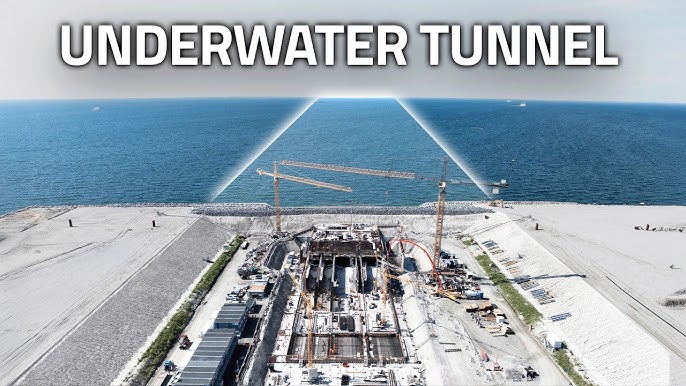
Key Highlights
- Precision Manufacturing & Transportation: Tunnel elements are manufactured in specialized facilities and transported with exceptional accuracy.
- Immersed Tunnel Technique: Prefabricated concrete sections are lowered and connected on a pre-dredged trench ensuring watertight integrity.
- Innovative Sealing Mechanisms: Advanced methods employing partial vacuum and special bulkheads guarantee durable and secure connections.
Overview of the Fehmarnbelt Tunnel Construction
The Fehmarnbelt Tunnel is one of the most ambitious infrastructure projects in Europe, designed to link the Danish island of Lolland with the German island of Fehmarn. The tunnel is constructed using the immersed tunnel technique, which involves the assembly of large prefabricated concrete tunnel elements. The joining of these tunnel sections is a complex engineering process that incorporates advanced construction methods to achieve a watertight and structurally sound connection.
Manufacturing and Preparation of Tunnel Sections
The process begins in specialized production facilities where the tunnel sections, each referred to as an element, are cast in climate-controlled environments. The manufacturing facility is vast – some reports compare its size to that of 140 football fields, underscoring the scale and precision necessary for this project.
Prefabrication Process
Each tunnel element is built from concrete and is composed of multiple segments (usually nine segments per element). The precision in casting these segments is crucial, as any misalignments could compromise the alignment once the elements are joined underwater. The production process involves:
- Segment Casting: Segments are carefully cast to required dimensions with tight tolerances ensuring millimeter precision.
- Quality Assurance: Continuous monitoring during production ensures that each segment meets strict quality standards.
- Assembly in Halls: The segments are then assembled into a complete tunnel element in large halls specifically built for this purpose. Dedicated production lines are used to expedite the process – the facility operates several lines in parallel.
These segments are then integrated into a complete element measuring approximately 217 meters long, 42 meters wide, and nine meters deep with a weight of around 73,000 tons. Such precision manufacturing is a testament to modern civil engineering and ensures that each element is uniform and ready for the next stage.
Transportation and Immersion onto the Seabed
Once the tunnel elements are completed, they must be transported from the manufacturing facility to the construction site in the Fehmarnbelt. This phase is critical, as any damage or misalignment during transportation could impact the subsequent joining process.
Dry Dock and Ballasting
The process involves placing the tunnel elements into a dry dock where they are fitted with waterproof bulkheads at both ends. Bulkheads play a vital role in ensuring that when the dry dock is flooded, the water does not compromise the integrity of the element. The steps include:
- Securing the Element: With bulkheads in place, the element is sealed and prepared for immersion.
- Flooding the Dry Dock: The dry dock is then flooded gradually. This controlled flooding allows the element to float gently without any stress on its structure.
- Towing to the Site: Specially equipped tug boats or barges tow these elements to a holding area near the predetermined immersion site in the Fehmarnbelt.
This phase ensures that the massive tunnel elements are handled carefully to maintain structural integrity and precise dimensions required for the immersion process.
Immersing the Tunnel Elements
The immersion process forms the core of the tunnel construction method. Using the immersed tunnel technique, the tunnel elements are carefully positioned on a pre-dredged trench on the seabed.
Preparation of the Seabed
Before the elements are immersed, a dredging operation is undertaken to prepare the tunnel trench. The trench is carefully planned and excavated to accommodate the massive elements. It is lined with a foundation; often, a gravel bed is laid to provide support and to assist in leveling the elements once they are placed.
Lowering and Precise Placement
Once the trench is ready, the transportation vessels position the elements above the designated location. Using advanced positioning technologies, engineers ensure that each element is aligned with millimeter precision prior to immersion.
The elements are gradually lowered into the trench by controlling the filling of ballast tanks situated within them. Ballast tanks, when filled with water, adjust the buoyancy of the element, permitting a controlled descent. This careful adjustment ensures that the tunnel elements settle evenly onto the prepared seabed.
Joining the Tunnel Elements
After an element has been precisely lowered into its position, the next step is to join it to the already placed previous elements. This joining process is critical as it must result in a continuous, watertight tunnel structure.
Aligning the Sections
Initially, the newly immersed element is aligned with the preceding one using a combination of mechanical adjustments and buoyancy controls. Special alignment mechanisms and positioning systems ensure that even slight mismatches are corrected before the final connection is made.
Sealing Mechanism and Water Removal
Once aligned, the tunnel elements are connected using a precise sealing process:
- Bulkheads and Seals: Each element is equipped with bulkheads at either end, which help in creating a sealed environment once the elements are juxtaposed.
- Ballast Tanks and Water Pumping: The water initially filling the space between the joined elements is pumped out. This pumping process creates a partial vacuum, effectively drawing the elements closer together due to the surrounding water pressure.
- Watertight Connection: The vacuum not only assists in aligning the tunnel elements but also ensures that the connections are watertight. The interface between each element is meticulously sealed to prevent any ingress of water.
- Use of Special Elements: In some cases, a special element is designed to bridge the final gap when two sections meet. This element can extend on both sides and typically holds vital equipment for tunnel operations and maintenance, ensuring that the final connection is robust and adaptable to operational needs.
This step-by-step joining method leverages the natural forces of water pressure along with engineered sealing techniques, resulting in a seamless and watertight tunnel structure.
Final Surface and Protective Measures
Once the tunnel elements are firmly joined, additional steps are taken to finalize the construction and ensure long-term durability against the marine environment. At this stage:
Installation of Infrastructure
With the physical structure of the tunnel in place, technical installations begin. Services such as rail tracks, lighting, ventilation, communication systems, and surveillance cameras are installed within the tunnel structure. These installations are designed to meet safety standards and provide reliable operation over the tunnel’s expected lifespan.
Protection Against the Marine Environment
The final connection of the elements is covered with a protective layer. This layer often comprises stones or specialized protective materials that help shield the tunnel from potential damages due to sea movements, debris, or erosion. The overlay ensures that the tunnel remains stable even in harsh maritime conditions.
Integrated Process Summary
Below is a comprehensive table summarizing the main stages involved in the joining process of the Fehmarnbelt Tunnel:
| Stage | Description | Key Mechanisms |
|---|---|---|
| Manufacturing | Tunnel segments are cast with high precision in large, specialized facilities. | Segment casting, quality control, assembly into complete elements |
| Transportation | Elements are transported from the production site in dry docks where they are prepared for immersion. | Dry dock flooding, secure bulkheads, towing to site |
| Immersion | Elements are lowered into a pre-dredged trench on the seabed using controlled ballasting. | Ballast tanks operation, dredged trench preparation, precision positioning |
| Joining | The submerged elements are aligned and connected using a partial vacuum and sealing mechanisms. | Water pumping, bulkhead sealing, special extendable elements |
| Finalization | Infrastructure and protective layers are installed to safeguard the tunnel structure. | Technical system installations, overlay with protective stones, watertight tests |
Each of these phases is critical to ensure that the overall tunnel structure not only serves its intended transportation function but also withstands the challenging marine conditions. This intricate process showcases modern engineering techniques and a high degree of coordination between design, manufacturing, transportation, and installation teams.
Technical Innovations and Their Importance
The Fehmarnbelt Tunnel joining process is notable for its innovative approaches to solving traditional engineering challenges. The use of the immersed tunnel technique facilitates the construction of infrastructure beneath water bodies where traditional tunnel boring methods might be impractical or too costly.
Advantages of the Immersed Tunnel Method
Efficient Construction: The prefabrication of tunnel elements in controlled environments allows for high quality and uniformity, significantly reducing the risks typically associated with on-site construction variables such as weather and shifting seabeds.
Precision Engineering: The use of advanced positioning systems and controlled ballasting ensures that every element is placed with millimeter precision. This is critical for achieving the watertight and structurally coherent assembly of the tunnel.
Long-Term Durability: The sealing techniques and subsequent protective measures ensure that once the tunnel is operational, it will remain safe from water ingress and environmental degradation for decades.
Structural and Operational Security
The joining of the tunnel elements not only forms the physical structure but also integrates essential functionality. The meticulous removal of water between sections creates a secure bond between the elements, while the water pressure itself aids in reinforcing this connection.
Moreover, the installation of technical systems such as rail tracks, ventilation, and communication networks within the tunnel is planned and executed after the mechanical assembly. This integrated approach guarantees that the tunnel remains operational under demanding conditions, providing a reliable and safe transportation link between Denmark and Germany.
Project Impact and Broader Implications
The construction and joining of the Fehmarnbelt Tunnel have significant implications beyond its immediate function. As an engineering marvel, the project represents the forefront of modern infrastructure design and construction. Its successful completion will not only improve connectivity between two countries but also serve as a benchmark for future underwater tunnel projects.
Economic and Social Benefits
By linking Germany and Denmark with a permanent tunnel, the project is expected to boost regional economic development, enhance tourism, and foster stronger cross-border cooperation. The engineering methods applied here have spurred advancements that can reduce construction timelines and costs in similar projects worldwide.
Additionally, the innovative joining techniques and the specialized use of prefabricated elements exemplify how modern technology can address age-old challenges in civil engineering, thereby inspiring similar future endeavors in diverse environments.
Global Engineering Significance
The precision and efficiency demonstrated in the Fehmarnbelt Tunnel construction highlight how advances in automation, monitoring systems, and material science converge to create infrastructure that is both robust and efficient. The lessons learned from this project are set to influence future projects in underwater tunnel construction and beyond, marking a paradigm shift in the way engineers approach large-scale marine infrastructure challenges.
References
- Crossing the Fehmarnbelt Strait - International Railway Journal
- Fehmarnbelt Tunnel Details - CNN
- How 73000t Elements Will Be Connected - New Civil Engineer
-
Building the Tunnel - Femern
- Production of the Concrete Elements - Tunnel Online
Recommended Further Queries
Last updated March 18, 2025