
FEISPARTIC F420 versus Desmophen NH 1420
An In-depth Analysis of Two High-Performance Aminofunctional Co-reactants
Key Highlights
- Application Similarities: Both products are formulated for high-solid, two-component polyurethane coatings and solvent-free materials.
- Technical Specifications: They exhibit comparable properties regarding viscosity, amine values, and chemical functionality, making them nearly interchangeable in many coating processes.
- Performance Benefits: Enhanced drying times, excellent mechanical strength, and adaptability when used as chain extenders in hybrid coatings.
Overview and Chemical Functionality
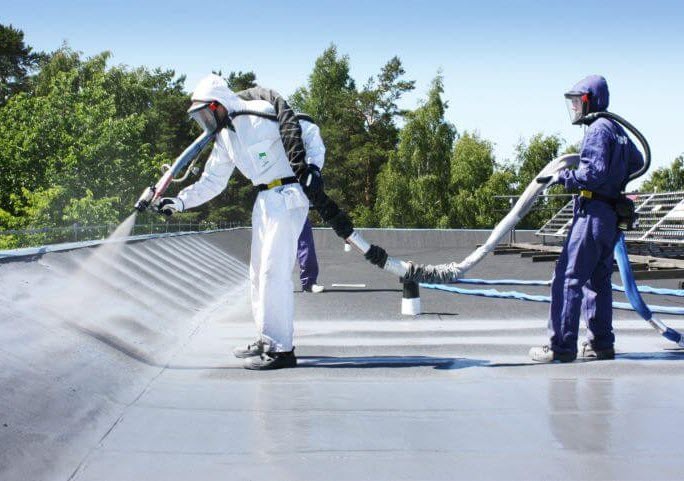
Both FEISPARTIC F420 and Desmophen NH 1420 are aminofunctional co-reactants designed to enhance the performance of polyurethane and polyurea coatings. Their primary function is to react with polyisocyanates to form high-performance coatings that offer both durability and a high level of chemical resistance. They are specifically used in applications such as waterproofing, floor coatings, and anti-corrosion coatings, where fast curing and mechanical robustness are critical.
These co-reactants are integrated within formulations to serve as chain extenders or reactive diluents. Their role is crucial in establishing the final properties of the coating system. Specifically, they aid in achieving higher solid content and reducing drying times. In addition, the chemical composition contributes significantly to the mechanical properties such as tensile strength, hardness, and flexibility which are vital in demanding industrial environments.
Detailed Technical Specifications
Key Chemical Attributes
The chemical nature of these products is rooted in their amine functionalities, where they act as curing agents reacting with isocyanates. Their formulation primarily focuses on being solvent-free and low-viscosity, facilitating better mixing and curing in high-performance applications. Both products share many technical similarities while retaining subtle differences based on manufacturer guidelines and inherent formulation characteristics.
FEISPARTIC F420
FEISPARTIC F420 is engineered as an aminofunctional co-reactant, often positioned as a direct substitute for Desmophen NH 1420 in coercive formulations. Its formulation is optimized to support solvent-free coating systems and high-solid applications. Key technical attributes of F420 include:
- Viscosity: Ranges between 800 and 2000 mPa·s, which is ideal for achieving uniform coating application and penetration.
- Amine Value: Typically around 190-210 mg KOH/g, ensuring effective reactivity with isocyanate groups.
- Solid Content: Approximately 97% ± 2%, favoring the creation of dense, high-build coatings.
- Gel Time: Around 18 minutes, supporting rapid curing requirements.
- Curing Characteristics: Provides fast drying times and higher solid content, enabling a hybrid polyurea-polyurethane network when mixed with appropriate resins.
- Storage Conditions: Best maintained in original, well-closed containers at around 25°C (77°F) to maximize shelf life, typically up to 12 months.
Desmophen NH 1420
Desmophen NH 1420, produced by a renowned chemical company, ideates a closely related chemical approach. While its fundamental role in the reactive system remains synonymous with F420, the product is recognized for its stability and slightly variable physical properties:
- Viscosity: Generally in the vicinity of 850 to 1800 mPa·s, allowing for excellent wetting properties and ease of application.
- Amine Value: Approximately 199-203 mg KOH/g, which based on application scenarios makes it effective in creating durable coatings.
- Density: Around 1.076 g/ml, which can influence the overall coating formulation's mix and spread characteristics.
- Flash Point: Rated near 100°C, ensuring safe handling under prescribed conditions.
- Curing Profile: Its formulation supports prolonged gel times in some cases, which can offer extended working times while ensuring high mechanical strength post-curing.
Application Benefits and Performance Insights
Operational Impact in Coating Systems
In industrial and decorative coating applications, performance characteristics such as drying time, corrosion resistance, tensile strength, and flexibility are paramount. Both FEISPARTIC F420 and Desmophen NH 1420 excel in these critical aspects:
- Enhanced Drying Times: The rapid curing characteristics of FEISPARTIC F420, owing to its optimized gel time, support applications where reducing downtime is essential. This fast-drying advantage is critical in high-throughput manufacturing and repair environments.
- High Solids Content: Both products contribute to achieving a high solids content in the final coating formulation. This property leads to coatings that are dense, durable, and resistant to mechanical wear.
- Flexibility and Mechanical Strength: The inherent flexibility, seen in elongation capabilities that can reach up to 400%, along with high tensile strength (approximately 25 MPa for F420), ensures that the coatings can sustain stresses without cracking or losing adhesion.
- Application Versatility: These co-reactants are adaptable to various substrate applications, including floor coatings, waterproofing systems, and anti-corrosion paints. They are also effectively used in adhesives and printing inks.
- Compatibility with Other Resins: When combined with hydroxy-functional resins such as alkyd or acrylic resins, a hybrid coating system is achieved that leverages the best attributes of both polyurethane and polyurea systems.
Differences Influencing Formulation Choices
While FEISPARTIC F420 and Desmophen NH 1420 are remarkably similar, differentiation in practical applications may arise based on their slight performance variations:
- Gel Times and Working Life: FEISPARTIC F420 is noted for its faster gel time, a benefit when minimizing downtime is critical. In contrast, Desmophen NH 1420 may offer a marginally longer pot life, which can be favorable in applications where extended working times are demanded.
- Storage and Handling: Both products require careful storage under recommended conditions. FEISPARTIC F420 should be stored at 25°C in sealed containers, ensuring its reactivity and shelf life. Desmophen NH 1420, while similarly handled, emphasizes the importance of moisture avoidance during storage.
- Manufacturing Source and Consistency: Desmophen NH 1420’s production under a reputable brand like Covestro (formerly Bayer MaterialScience) underscores its consistent quality. FEISPARTIC F420, manufactured by Shenzhen Feiyang Protech, is positioned as a cost-effective alternative that does not compromise on the performance essential for industrial applications.
Comparison Table of Critical Specifications
| Specification | FEISPARTIC F420 | Desmophen NH 1420 |
|---|---|---|
| Chemical Name | Polyaspartic Polyurea Resin | Aminofunctional Co-reactant |
| Viscosity (mPa·s) | 800 - 2000 | 850 - 1800 |
| Amine Value (mg KOH/g) | 190 - 210 | 199 - 203 |
| Solid Content (%) | 97 ± 2 | Not Explicitly Specified |
| Gel Time | Approximately 18 minutes | Slightly Extended |
| Density | 1.06 g/ml | ~1.076 g/ml |
| Flash Point | 97°C | ~100°C |
| Application | Waterproof, floor coatings, lacquers, adhesives | High-solid polyurethane coatings, adhesives, printing inks |
In-depth Analysis of Reactivity and Technical Performance
Chemical Reactivity and Curing Process
Both FEISPARTIC F420 and Desmophen NH 1420 are formulated to react with isocyanate groups in the coating formulations, which results in a polymerization process forming robust polyurethane and polyurea networks. The curing process involves the amine groups in the co-reactants reacting with the -NCO functional groups present in polyisocyanates. This reaction, typically exothermic in nature, is responsible for the formation of a dense, cross-linked network.
The reactivity and work-life of these co-reactants depend significantly on several factors such as ambient temperature, moisture content, and the compatibility of the participating resins in the formulation. Adjustments in the mixing ratios or the use of specific additives can fine-tune the curing time, which is of paramount importance in scenarios where speed or extended processing time is required. In this context, the slightly faster reaction time of FEISPARTIC F420 can be beneficial for high-volume production environments, while Desmophen NH 1420 may provide a more controlled reaction in applications demanding longer processing windows.
Impact on Final Coating Performance
The ultimate goal of incorporating either FEISPARTIC F420 or Desmophen NH 1420 into a formulation is to attain coatings with superior mechanical and chemical resistance. The final performance characteristics include:
- Mechanical Robustness: The cured coating must exhibit high tensile strength and resistance to abrasion and impact. With tensile strengths reaching approximately 25 MPa in some FEISPARTIC F420 applications, the resulting coating is more resistant to cracking even under intensive load.
- Flexibility and Elongation: Flexibility up to 400% elongation allows the coatings to absorb stresses from thermal expansion or mechanical deformation. This property is especially important when coatings are applied on substrates that experience movement or temperature fluctuations.
- Rapid Curing and Operational Efficiency: Fast curing times shorten the down-time between application and the next stage of processing or deployment, enhancing overall operational throughput. This is particularly valued in industrial floor coatings and outdoor protective layers.
- Environmental and Safety Considerations: Being solvent-free, both formulations offer a reduced level of volatile organic compounds (VOCs), which is not only beneficial from an environmental regulatory standpoint but also for the safety of the workers handling the coatings.
Storage, Handling, and Practical Considerations
Guidelines for Safe Storage and Optimal Performance
Proper storage and handling of these chemical products are essential to maintain their reactivity and overall shelf life. Manufacturers recommend strict adherence to the following guidelines:
- Temperature Management: It is recommended to store both products at controlled temperatures. FEISPARTIC F420 is best maintained at around 25°C (77°F), while Desmophen NH 1420 should be kept in cool, dry, and well-ventilated conditions, typically below 40°C (around 104°F) to prevent premature degradation.
- Container Integrity: Use the original, airtight containers to avoid exposure to moisture. Moisture can adversely react with the amine functionalities, reducing the efficacy of the curing process.
- Handling Precautions: It is important to adhere to recommended safety practices, including the use of appropriate personal protective equipment (PPE) to guard against skin contact, especially when handling products with low flash points.
- Shelf Life: Provided storage guidelines are met, FEISPARTIC F420 has a shelf life of approximately 12 months, while Desmophen NH 1420 should be similarly viable, provided the container integrity is maintained.
Practical Decision-Making in Formulation Design
Choosing Between FEISPARTIC F420 and Desmophen NH 1420
The decision on which product to utilize often hinges on the specific needs of the formulation process and the application requirements:
- Production Speed vs. Pot Life: If rapid curing is necessary to minimize production downtime, FEISPARTIC F420’s shorter gel time can be a deciding factor. Conversely, applications that require a longer working time before the coating begins to cure might benefit from the slightly extended pot life of Desmophen NH 1420.
- Cost-Effectiveness and Availability: While both products deliver high performance, procurement considerations like cost, availability, and supply chain stability can affect the final selection. FEISPARTIC F420 is often positioned as a direct substitute that maintains performance at a competitive cost.
- Application Spectrum: Coating systems deployed in high-traffic floor applications, anti-corrosion systems, or waterproofing typically require a balanced approach between rapid curing and mechanical robustness. Both products are designed to meet these criteria, ensuring that the final coating’s performance aligns with the technical demands of the substrate.
- Manufacturer Support and Technical Data: Companies preferring detailed technical support and consistency might lean towards Desmophen NH 1420, given its established profile in the market. FEISPARTIC F420, on the other hand, offers similar performance with additional attributes that favor quick processing, which is beneficial in high-production environments.
Ultimately, the optimal choice is determined after a careful evaluation of the intended application, environmental exposure conditions, and the need for specific curing dynamics. The similarities between the two mean that formulations often can be adjusted slightly to cater to the nuances of either product.
Technical Comparison and Affordability Analysis: A Summary Table
| Aspect | FEISPARTIC F420 | Desmophen NH 1420 |
|---|---|---|
| Chemical Function | Aminofunctional co-reactant for polyurea and polyurethane systems | Aminofunctional co-reactant for polyisocyanate-based coatings |
| Viscosity | 800 – 2000 mPa·s | 850 – 1800 mPa·s |
| Amine Value | 190 – 210 mg KOH/g | 199 – 203 mg KOH/g |
| Solid Content | 97 ± 2% | Not explicitly defined |
| Gel Time | ~18 minutes | Slightly longer |
| Density | 1.06 g/ml | ~1.076 g/ml |
| Flash Point | 97°C | Approximately 100°C |
| Application Areas | Floor coatings, waterproofing, adhesives, anti-corrosion coatings | High-solid polyurethane coatings, adhesives, printing inks |
| Storage Recommendations | Original container at ~25°C | Cool, dry, and airtight conditions below 40°C |
Practical Considerations for the End User
Formulation Flexibility and Future Trends
For professionals and formulation chemists choosing between these two products, several key factors should be considered. First, the minor differences in gel time and working life may allow certain adjustments in formulation protocols to match production demands. Secondly, both products offer the flexibility to mix with various hydroxyl-functional resins, creating hybrid systems that deliver rapid curing and high mechanical stability.
The industry trend towards environmentally friendly solvent-free coatings is another point of convergence. The low VOC content and superior mechanical performance of both FEISPARTIC F420 and Desmophen NH 1420 align with modern regulatory requirements and sustainability goals. As the coating market evolves with increasing emphasis on durability combined with eco-sustainability, formulations incorporating these products are likely to see further refinements to enhance curing kinetics and material performance.
From an economic standpoint, the choice can also be influenced by cost considerations. Competitive pricing on F420 may give it an edge in scenarios where budget constraints exist, while the established reputation of Desmophen NH 1420 in certain industrial sectors can justify its usage in premium applications.
Finally, research and development are continually pushing the boundaries of what can be achieved with amino-functional co-reactants. Innovations in polymer chemistry and advanced surface treatments will likely open new avenues for utilizing these products, ensuring that performance properties such as elasticity, chemical resistance, and durability continue to improve.
References
- Polyaspartic Polyurea Resin FEISPARTIC Series - Polyaspartic Resin
- FEISPARTIC F420 Polyaspartic Resin - SpecialChem
- Desmophen NH 1420 - UL Prospector
- Desmophen NH 1420 by Covestro - SpecialChem
- FEISPARTIC F420 Product Details - Feiyang
Recommended Related Queries
Last updated March 6, 2025