
Unraveling the Myth: Lisbeth Salander, Fermat's Last Theorem, and the Quest for a Simple Proof
Exploring the fascinating intersection of mathematical history, modern proof, and fictional genius.
Highlights
- Fictional Genius vs. Mathematical Reality: Lisbeth Salander's "simple proof" of Fermat's Last Theorem in Stieg Larsson's novels is a compelling plot device, but purely fictional and lacks any mathematical basis.
- Wiles's Monumental Achievement: The actual proof, delivered by Sir Andrew Wiles in 1994/1995, was a landmark theoretical accomplishment relying on deep, modern mathematical concepts, not "brute computer force."
- The Elusive Simple Proof: Despite Fermat's claim, no simple proof has ever been found, and mathematical consensus suggests that one is highly unlikely given the theorem's inherent complexity, requiring tools far beyond 17th-century mathematics.
The Enduring Enigma of Fermat's Last Theorem
First proposed by the French mathematician Pierre de Fermat around 1637, Fermat's Last Theorem stands as one of the most famous problems in the history of mathematics. It states a deceptively simple idea: no three positive integers a, b, and c can satisfy the equation:
\[ a^n + b^n = c^n \]for any integer value of n strictly greater than 2.
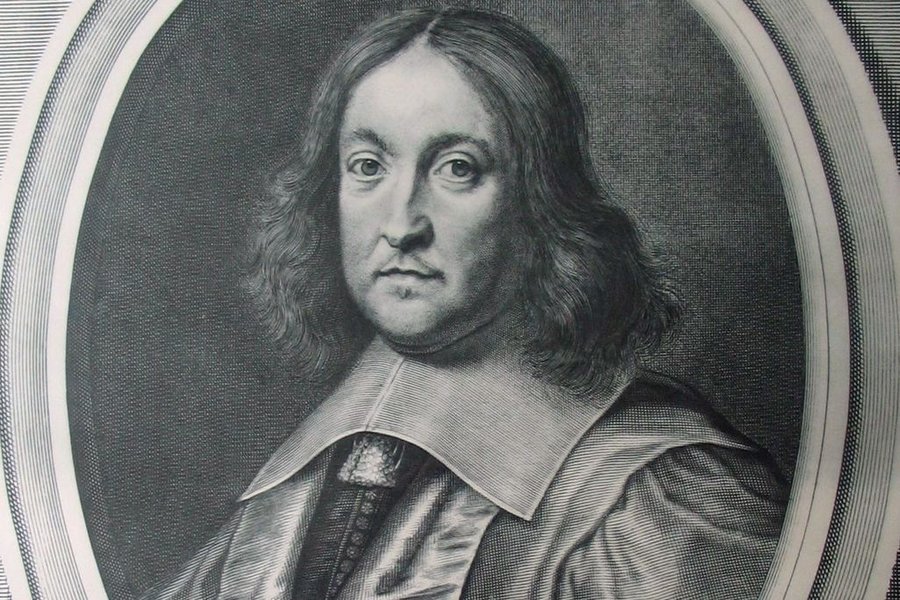
Pierre de Fermat, whose marginal note sparked centuries of mathematical pursuit.
Fermat famously scribbled in the margin of his copy of Diophantus's Arithmetica that he had discovered a "truly marvelous proof" (demonstrationem mirabilem sane detexi) which the margin was too narrow to contain. However, no such proof was found among his papers after his death. While solutions for \(n=1\) (simple addition) and \(n=2\) (Pythagorean triples, like \(3^2 + 4^2 = 5^2\)) have been known since antiquity to have infinite integer solutions, proving the statement for all \(n > 2\) proved extraordinarily difficult.
Over the centuries, mathematicians chipped away at the problem, proving it for specific exponents like \(n=3\), \(n=4\) (which Fermat himself likely proved using his method of infinite descent), \(n=5\), and many others. Ernst Kummer made significant progress in the 19th century using ideal numbers. Yet, a general proof remained elusive, fueling speculation about Fermat's claimed simple proof and challenging generations of mathematicians.
Lisbeth Salander and the Fictional Pursuit
In Stieg Larsson's novel *The Girl Who Played with Fire*, the brilliant but troubled protagonist, Lisbeth Salander, becomes fascinated with Fermat's Last Theorem. The narrative depicts her contemplating the problem and supposedly finding an elegant, "simple and obvious" proof, echoing the mystery surrounding Fermat's original claim. However, much like the fictional parallel you drew to Fermat's fate (though Fermat lived for decades after his note), Lisbeth suffers a traumatic event (being shot) shortly after her supposed breakthrough, and the details of her solution are lost.
It's crucial to understand that this storyline is a powerful narrative element designed to underscore Lisbeth's exceptional intellect and the theme of hidden or lost knowledge. It serves the plot and character development but holds no basis in mathematical reality. Literary analyses and mathematical resources confirm that Salander's proof is entirely fictional; no details are provided in the text that could constitute a mathematically valid argument, simple or otherwise.
The Actual Proof: A Triumph of Modern Mathematics
The genuine resolution to Fermat's centuries-old puzzle arrived not through a rediscovered simple insight or brute computation, but via a profound and complex theoretical proof developed by British mathematician Sir Andrew Wiles.
Debunking Misconceptions: Not Brute Force
Your query mentions a belief that the theorem was solved using "lengthy brute computer force." This is a significant misunderstanding of Wiles's work. While computers were used in *earlier* efforts by others to verify the theorem for large numbers of specific exponents (building on Kummer's work), Wiles's achievement was a general theoretical proof covering all exponents \(n > 2\). It did not involve exhaustively checking numbers with computers. Instead, it was a monumental intellectual feat spanning over 100 pages of dense mathematics, connecting previously disparate areas of number theory.
Wiles worked largely in secret for seven years before announcing his initial proof in 1993. A gap was found during the peer review process, which Wiles, with the help of his former student Richard Taylor, managed to close. The final, corrected proof was published in 1995 in the *Annals of Mathematics*.
Key Concepts Behind the Proof
Wiles's proof is built upon the **Modularity Theorem** (formerly known as the Taniyama-Shimura-Weil conjecture). This theorem establishes a deep connection between two seemingly unrelated mathematical objects:
- Elliptic Curves: These are curves defined by equations of the form \(y^2 = x^3 + ax + b\). They have rich structures studied in algebraic geometry and number theory.
- Modular Forms: These are complex analytic functions with specific kinds of symmetry, living in a different area of mathematics.
The Modularity Theorem essentially states that every (semistable) elliptic curve over the rational numbers can be associated with a unique modular form. In the 1980s, Gerhard Frey suggested that if Fermat's Last Theorem were false (i.e., if a solution \(a^n + b^n = c^n\) existed for \(n > 2\)), one could construct a specific, "strange" elliptic curve (now called the Frey curve). Ken Ribet later proved (Ribet's Theorem) that this Frey curve, if it existed, could not be modular.
Wiles's monumental task was to prove a significant part of the Modularity Theorem – specifically, that all relevant (semistable) elliptic curves *are* modular. By doing so, he showed that the Frey curve couldn't exist, which, by contradiction, means that the initial assumption (that a solution to Fermat's equation exists) must be false. Therefore, Fermat's Last Theorem must be true.
His proof involved incredibly sophisticated tools from algebraic number theory, Galois representations, Iwasawa theory, and the properties of Hecke algebras – concepts developed centuries after Fermat's time.
Why a "Simple" Proof Remains Elusive (and Likely Impossible)
Could Fermat have possessed a simple proof using only 17th-century mathematics? While tantalizing, the overwhelming consensus among mathematicians is that this is extremely unlikely. The complexity arises from the need to handle an infinite number of exponents simultaneously. While elementary methods like Fermat's own infinite descent work for \(n=4\) (and can be adapted for \(n=3\)), they fail to generalize easily.
Wiles's proof required the development of entirely new branches of mathematics and the synthesis of ideas from vastly different fields. This suggests the problem's inherent depth is far greater than what could likely be tackled with the mathematical tools available in Fermat's era. Attempts over the centuries to find an elementary proof have consistently failed or contained subtle errors.
Therefore, while Lisbeth Salander's fictional insight makes for great storytelling, it remains firmly in the realm of fiction. Postulating what her "simple solution" might have been is impossible because the mathematical reality, as revealed by Wiles's work, points towards profound complexity, not hidden simplicity.
Comparing the Claims: Fermat vs. Lisbeth vs. Wiles
This chart provides a comparative overview of the different "proofs" discussed, highlighting key attributes based on historical and mathematical context, as well as the fictional narrative. Note that values for Fermat's and Lisbeth's claims are speculative or based on their descriptions, while Wiles's reflects the established mathematical reality.
The chart visually contrasts the claimed simplicity of Fermat's and Lisbeth's approaches with the validated, high complexity of Wiles's successful proof, which required modern mathematical machinery.
Visualizing the Journey
This mindmap illustrates the key stages and concepts in the story of Fermat's Last Theorem, from its initial statement to its final proof and fictional interpretations.
\(a^n + b^n = c^n\)
No integer solutions for n > 2"] id1["Fermat's Claim (c. 1637)"] id1a["Margin Note"] id1b["'Marvelous Proof'"] id1c["Lost or Unproven"] id2["Centuries Unsolved"] id2a["Major Mathematical Challenge"] id2b["Partial Proofs
(n=3, n=4, n=5, etc.)"] id2c["Work by Euler, Germain, Kummer"] id3["Andrew Wiles's Proof (1994/1995)"] id3a["Theoretical Breakthrough"] id3b["Over 100 Pages Long"] id3c["Relies on Modern Math"] id3d["Modularity Theorem
(Taniyama-Shimura-Weil)"] id3d1["Elliptic Curves"] id3d2["Modular Forms"] id3e["Advanced Concepts"] id3e1["Galois Representations"] id3e2["Hecke Algebras"] id3f["Debunking Myths
(Not Simple, Not Brute Force)"] id4["Fictional Portrayals"] id4a["Stieg Larsson's Novels"] id4b["Lisbeth Salander"] id4c["'Simple Proof' as Plot Device"] id4d["Highlights Character Genius"]
The mindmap connects Fermat's initial conjecture, the long period of unsuccessful attempts, the complexity of Wiles's eventual proof relying on the Modularity Theorem, and the separate track of fictional adaptations like Lisbeth Salander's story.
Understanding the Equation: \(n=1, n=2, n>2\)
To better appreciate what Fermat's Last Theorem asserts, it's helpful to compare the equation \(a^n + b^n = c^n\) for different values of the exponent \(n\). The table below summarizes this:
| Exponent (n) | Equation | Positive Integer Solutions Exist? | Example | Status |
|---|---|---|---|---|
| \(n=1\) | \(a^1 + b^1 = c^1\) (i.e., \(a+b=c\)) | Yes, infinitely many | \(3 + 4 = 7\) | Trivial (Basic Addition) |
| \(n=2\) | \(a^2 + b^2 = c^2\) | Yes, infinitely many | \(3^2 + 4^2 = 5^2 \implies 9 + 16 = 25\) | Pythagorean Theorem / Triples |
| \(n > 2\) (e.g., 3, 4, 5...) | \(a^n + b^n = c^n\) | No | None exist (e.g., \(a^3+b^3=c^3\) has no positive integer solution) | Fermat's Last Theorem (Proven by Wiles) |
This table clarifies that the impossibility assertion of Fermat's Last Theorem specifically applies only when the exponent \(n\) is an integer greater than 2.
Delving Deeper with Simon Singh
For an engaging overview of Fermat's Last Theorem, its history, and the story behind Andrew Wiles's proof, watch this popular video by Simon Singh, author of the book "Fermat's Enigma" (also known as "Fermat's Last Theorem").
This video provides context on the centuries-long fascination with the problem and celebrates the dedication required to finally solve it, reinforcing the complexity involved rather than suggesting any simple solution.
Frequently Asked Questions (FAQ)
Did Fermat really have a simple proof?
While Fermat claimed he did, no evidence of it has ever been found. The vast majority of mathematicians believe it's highly unlikely he had a correct proof, especially a simple one using only 17th-century mathematics. The techniques required for the eventual proof (by Wiles) were developed centuries later. It's possible Fermat made an error or only had a proof for a specific case like n=4.
Is Lisbeth Salander's proof in the books real or valid?
No, it is entirely fictional. Stieg Larsson used Lisbeth's supposed discovery of a simple proof as a literary device to emphasize her extraordinary intelligence and to parallel the historical mystery of Fermat's claim. The books provide no mathematical details, and the concept contradicts the known complexity of the actual proof.
Was Andrew Wiles's proof achieved using computer brute force?
No, this is a common misconception. Wiles's proof was purely theoretical, based on deep connections between elliptic curves and modular forms. It involved sophisticated mathematical reasoning and logic, not brute-force computation. While computers have been used historically to check Fermat's Last Theorem for specific large exponents, they were not central to Wiles's general proof strategy.
Could a simpler proof of Fermat's Last Theorem be found in the future?
While mathematicians never say never, it is considered highly unlikely. The depth and complexity revealed by Wiles's proof, linking FLT to fundamental structures in number theory (like the Modularity Theorem), suggest that any valid proof must inherently involve sophisticated concepts. Decades after Wiles's proof, no significantly simpler approach has emerged.
Recommended Further Exploration
- What is the Modularity Theorem and how did it help prove Fermat's Last Theorem?
- Explore the history of attempts to prove Fermat's Last Theorem before Andrew Wiles.
- Who was Pierre de Fermat and what were his other mathematical contributions?
- How is Fermat's Last Theorem portrayed in other works of fiction besides Stieg Larsson's novels?
References
 mathenchant.wordpress.com
 sheopory.wordpress.com
 ilaba.wordpress.com
Last updated May 5, 2025