
Unlocking Print Perfection: Addressing Filament Brittleness in 3D Printing
A comprehensive guide to understanding, preventing, and resolving common 3D printing filament issues, tailored for optimal results.
Key Insights into Filament Brittleness and Drying
- Moisture is the Primary Culprit: Filament, especially biopolymers like GreenTEC Pro, readily absorbs moisture from the air, leading to brittle prints and compromised print quality.
- Drying is the Proven Solution: A drying cycle can effectively remove absorbed moisture, restoring the filament's original properties and improving print strength and layer adhesion.
- Optimal Drying Parameters: For GreenTEC Pro, a temperature range of 40-50°C for 4-8 hours is generally recommended, with longer durations for heavily saturated filament.
Formal Correspondence for Your Austrian Interlocutor
Crafting a precise and professional inquiry regarding your GreenTEC Pro filament.
Below is a carefully translated and adapted version of your message, designed to be clear, concise, and professionally suitable for an Austrian business context. The language maintains a formal yet direct tone, common in European business communications.
Dear Sir or Madam,

I recently purchased two spools of GreenTEC Pro filament from your company in white and blue colors. So far, I have only used the white spool and encountered significant issues with the fragility of the printed parts. Do you believe that a drying cycle could resolve this problem? If yes, what temperature and duration would you recommend?

Thank you for your attention, and best regards.
This revised text addresses the specific requirements for an Austrian audience by using "Dear Sir or Madam" for inclusivity, "from your company" for clarity, and a direct questioning style to facilitate a clear response. The closing "Thank you for your attention, and best regards" is standard and widely accepted in formal English correspondence.
Understanding Filament Brittleness in Depth
Exploring the mechanisms behind filament degradation and its impact on 3D prints.
The brittleness you're experiencing with your GreenTEC Pro filament is a common issue in 3D printing, predominantly caused by moisture absorption. Filaments, particularly hygroscopic materials like PLA and its derivatives (such as GreenTEC Pro, a high-performance biopolymer), readily absorb water from the surrounding air. When this moist filament is heated during the extrusion process in your 3D printer, the absorbed water turns into steam. This steam creates micro-bubbles within the molten plastic, leading to various printing defects.
These defects manifest as bubbling, stringing, rough print surfaces, poor layer adhesion, and, critically, reduced print strength and increased brittleness. The structural integrity of the printed part is compromised because the material's internal bonds are weakened by the presence of moisture during solidification. Extrudr GreenTEC Pro is renowned for its excellent temperature resistance (up to 160°C Vicat softening temperature), high impact resistance, and good layer adhesion, making it suitable for technical and mechanical applications. However, even with its advanced properties, it remains susceptible to moisture absorption.
This radar chart illustrates the perceived impact of various factors on 3D print quality and structural integrity. A higher value indicates a more significant impact. As you can see, "Moisture Absorption" is a major contributor to print degradation, particularly concerning "Brittleness" and "Layer Adhesion," highlighting the critical role of filament drying.
The Science of Filament Drying: Restoring Material Integrity
How proper drying techniques can rejuvenate your filament and improve print quality.
Drying filament is a crucial step in resolving moisture-related issues. The process involves applying controlled heat to the filament, which helps break the bonds between water molecules and the polymer chains. This allows the absorbed water to evaporate, effectively removing moisture from the material. A properly dried filament results in smoother prints, significantly improved layer adhesion, and stronger, more dimensionally accurate results.
For GreenTEC Pro, while specific drying guidelines from the manufacturer may vary, general recommendations for PLA and similar biopolymers can be applied. Given its higher heat resistance compared to standard PLA, a slightly elevated temperature might be safe, but it's always advisable to stay well below its glass transition temperature to prevent any deformation of the filament or the spool itself.
Recommended Drying Parameters for GreenTEC Pro
- Temperature: A common recommendation for PLA is between 40°C to 50°C (104°F to 122°F). Given GreenTEC Pro's robust properties, some users have reported success with similar materials at up to 70°C for extended periods. It is prudent to begin with a lower temperature and gradually increase it if necessary, always monitoring the filament for any signs of adverse effects like deformation.
- Duration: The drying time depends on the extent of moisture absorption. For moderately wet filament, 3-4 hours in a dedicated filament dryer or food dehydrator is often sufficient. Heavily saturated filament or high-performance materials may require 24 hours or even longer. If initial issues persist, extending the drying duration is recommended. For instance, some experiences suggest 16 hours at 70°C for carbon-filled GreenTEC Pro, though the underlying issue might sometimes relate to other factors like PTFE tube friction.
Effective Methods for Filament Drying
Choosing the right tools for optimal moisture removal.
Several methods can be employed to effectively dry your 3D printing filament. Each method has its advantages, offering varying levels of convenience and control:
| Method | Description | Advantages | Considerations |
|---|---|---|---|
| Dedicated Filament Dryer | Purpose-built devices with controlled heat and air circulation. | Precise temperature control, often allows direct printing while drying. | Requires a specific investment. |
| Food Dehydrator | A household appliance providing consistent, low heat and airflow. | Cost-effective, readily available, efficient for many filament types. | May require modification for larger spools. |
| Oven Drying | Preheating a conventional oven to a low temperature. | Common household item, simple to use. | Temperature fluctuations, risk of overheating if not monitored carefully. |
| 3D Printer Heatbed | Utilizing the heated bed of the 3D printer itself, often with a cover. | Convenient for some printers (e.g., Bambu Lab X1 Series). | Less controlled environment, may require external enclosure. |
| DIY Dry Box with Desiccant | A sealed container equipped with desiccant material (e.g., silica gel). | Good for long-term storage and moisture prevention. | Less effective for actively drying heavily saturated filament. |
Regardless of the chosen method, consistency and vigilance are key to successful filament drying.
Beyond Moisture: Other Factors Contributing to Brittle Prints
Troubleshooting additional causes of print fragility.
While moisture is a primary culprit, it's important to recognize that other factors can also contribute to brittle 3D prints. If drying your filament doesn't completely resolve the issue, consider these alternative causes:
This mindmap illustrates the various contributing factors to brittle 3D prints, categorizing them for a clearer understanding. While moisture absorption is a leading cause, addressing printing parameters, filament quality, material choice, and even hardware can be crucial for resolving persistent brittleness.
- Under-extrusion: If your printer isn't extruding enough material, layers won't bond effectively, leading to weak and brittle prints. This can appear as gaps in walls or a stringy texture.
- Printing Temperature: Both excessively high or low printing temperatures can negatively impact print strength. While very high temperatures can sometimes make PLA brittle, some argue that older filament might require slightly more heat to extrude properly.
- Low-Quality or Aged Filament: Inferior quality or improperly stored filament can absorb moisture and degrade over time, leading to inherent brittleness.
- Wrong Material for Application: PLA is naturally more brittle than materials like ABS, PETG, or Nylon. For parts requiring high impact resistance or significant mechanical stress, a different material might be more suitable.
- Insufficient Walls (Perimeters) and Infill: Too few perimeters can make parts easily snap under load. Increasing the number of walls and using denser infill patterns can significantly improve overall part strength.
- Friction in PTFE Tube: In some cases, excessive friction within the PTFE tube (between the extruder and hotend), particularly with carbon fiber-filled materials, can cause extrusion inconsistencies, leading to gaps and brittle prints.
Therefore, while a drying cycle is an essential first step for addressing brittle filament, if the problem persists, a comprehensive investigation into other printing parameters and potential hardware issues is advised.
Post-Drying Storage: Maintaining Filament Integrity
Crucial steps to prevent re-absorption of moisture after drying.
Once your filament is thoroughly dried, proper storage is paramount to prevent it from re-absorbing moisture. Filaments can quickly degrade in quality when exposed to ambient humidity, even in seemingly dry environments.
The video "How to Keep Your 3D Printing Filament Dry | Best Methods" provides valuable insights into preventing filament from absorbing moisture, demonstrating various storage solutions that are crucial for maintaining print quality.
As highlighted in the video, effective storage methods include:
- Sealed Containers with Desiccant: Airtight containers paired with desiccant packets (e.g., silica gel) create a low-humidity environment that actively prevents moisture absorption.
- Automatic Material System (AMS) Units: Advanced systems like those found with Bambu Lab printers offer integrated, controlled humidity storage, often allowing direct feeding to the printer.
- Vacuum-Sealed Bags: Ziploc bags designed for vacuum sealing, especially those with silica gel, are an economical and effective way to store filament.
In a truly dry environment (below 20% Relative Humidity), filaments might remain stable for 2 to 7 days. However, in typical indoor humidity (around 55% RH), print quality can begin to degrade within 2 to 12 hours. Implementing robust post-drying storage is therefore just as important as the drying process itself.
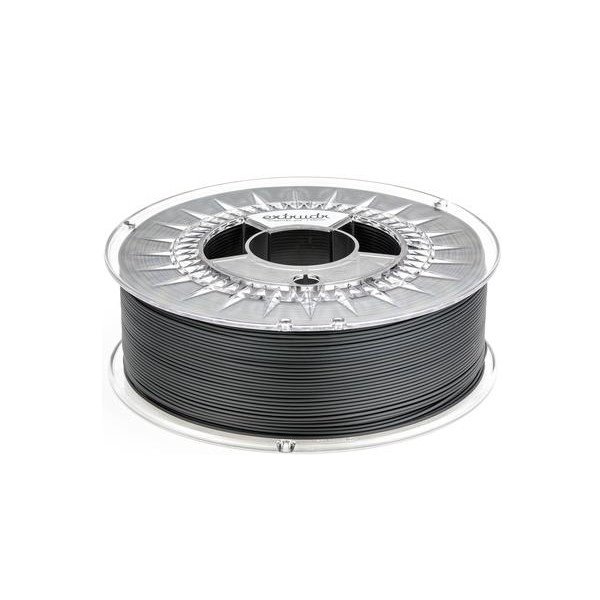
A typical spool of Extrudr GreenTEC Pro filament, which, despite its advanced properties, benefits significantly from proper drying and storage to maintain print quality.
Frequently Asked Questions (FAQ)
Why is my white GreenTEC Pro filament brittle?
Can a drying cycle truly fix brittle filament?
What temperature and duration should I use to dry GreenTEC Pro filament?
What are the signs of wet filament?
How should I store my filament after drying?
Conclusion
The issue of brittle 3D prints, particularly with advanced filaments like GreenTEC Pro, is a common challenge primarily stemming from moisture absorption. A targeted drying cycle is a highly effective and often essential first step in resolving this problem, restoring the filament's integrity and improving print quality. By understanding the optimal drying parameters (40-50°C for 4-8 hours for GreenTEC Pro) and employing suitable drying methods such as dedicated dryers or food dehydrators, you can significantly enhance the strength and finish of your prints. Furthermore, diligent post-drying storage in sealed containers with desiccant is crucial to prevent re-absorption of moisture and maintain the filament's optimal state. Should brittleness persist after drying, investigating other factors such as printing parameters, filament quality, or potential hardware issues will provide a comprehensive approach to achieving consistently high-quality 3D prints.
Recommended Further Exploration
- Explore the best filament drying techniques for 3D printing.
- Discover how to troubleshoot common 3D printing issues beyond filament quality.
- Compare various filament storage solutions for maintaining optimal print quality.
- Learn more about the advanced uses and properties of Extrudr GreenTEC Pro filament.