
Conceptual Framework for Financial Decision-Making
Understanding the Impact of Financial Knowledge on Grade 12 ABM Students
Key Highlights
- Increased Financial Literacy Empowers Effective Decision-Making
- Multiple Dimensions of Financial Knowledge Shape Budgeting, Saving, and Spending
- Research-Based Frameworks Provide Actionable Insights for Curriculum Enhancement
Introduction
In the study of financial decision-making among Grade 12 ABM (Accountancy, Business, and Management) students at Surigao del Norte National High School, examining the link between financial knowledge and decision-making is crucial. This conceptual framework is built on extensive research that demonstrates how understanding core financial concepts can empower students to make wise financial choices. In this discussion, financial knowledge is the independent variable, acting as a catalyst for better decision-making—the dependent variable.
Financial knowledge encompasses a broad array of competencies, including budgeting, saving, spending prudently, and making informed investment choices. For Grade 12 ABM students, these competencies not only serve as academic content but are practical life skills that significantly affect their personal financial management. This framework is intended to guide further research and curriculum development, ensuring that educational interventions are targeted effectively to enhance financial literacy across multiple dimensions.
Conceptual Framework: An Overview
A conceptual framework outlines the anticipated relationships between variables. In this scenario, the independent variable is financial knowledge, and the dependent variable is the overall financial decision-making skills of the students. It is hypothesized that an increase in financial knowledge leads to improved financial decision-making as students are better equipped to manage their finances with informed strategies.
Independent Variable: Financial Knowledge
Financial knowledge refers to the understanding of basic and advanced financial concepts including budgeting, saving, spending, and investing. It is composed of several critical dimensions:
Components of Financial Knowledge
The essential components include:
- Budgeting Awareness: Understanding how to create, manage, and adhere to a budget helps students allocate their resources efficiently, avoid overspending, and plan for future needs.
- Savings Practices: Knowledge about the significance of saving and various approaches to accumulate funds over time is crucial in building financial security and planning for longer-term objectives.
- Investment Understanding: An awareness of fundamental investment principles and risk management allows students to explore opportunities to grow their wealth through informed investment decisions.
- Spending Decisions: Insight into making impedance decisions while being conscious of needs versus wants helps students control impulsive expenditures and promotes economic stability.
In addition to these dimensions, financial knowledge involves understanding credit management and basic financial planning strategies. For Grade 12 ABM students, such competencies combine both theoretical concepts learned in the classroom and practical life experiences encountered outside school, making it a dynamic and comprehensive field of study.
Dependent Variable: Financial Decision-Making Skills
Financial decision-making is the process of evaluating alternatives and selecting the best course of action in managing one’s financial resources. For students, this involves:
Aspects of Financial Decision-Making
The following are key aspects which determine an individual’s financial decision-making aptitude:
- Spending Behavior: The actions and choices related to everyday expenditures, which can directly influence the financial stability of the individual.
- Savings Behavior: The discipline and strategies adopted for setting aside a portion of income as savings, essential for future financial security and emergency preparedness.
- Budgetary Practices: The capability to formulate, monitor, and adjust a budget based on current and projected financial conditions effectively.
- Investment Choices: Strategic actions regarding resource allocation for investment purposes, including an evaluation of risk versus return.
- Long-term Financial Planning: The ability to foresee financial needs and plan over an extended period, taking into account lifestyle changes and economic shifts.
Relationship Between Variables
The framework posits that enhanced financial knowledge acts as a foundation that empowers students to execute better financial decisions. As students develop a thorough understanding of financial principles, they become more adept at analyzing situations, comparing financial options, and anticipating the long-term consequences of their decisions. Through increased awareness, the students’ approach to budgeting, investing, and overall money management improves, leading to more effective financial decision-making.
This relationship is supported by several research findings. Studies have shown that financial literacy leads to positive financial behaviors among students. When students understand the importance of budgeting and saving, they exhibit greater caution in spending and are more likely to plan for future needs. In essence, financial knowledge serves as the essential building block that shapes the mindset and actions leading to sound financial decisions.
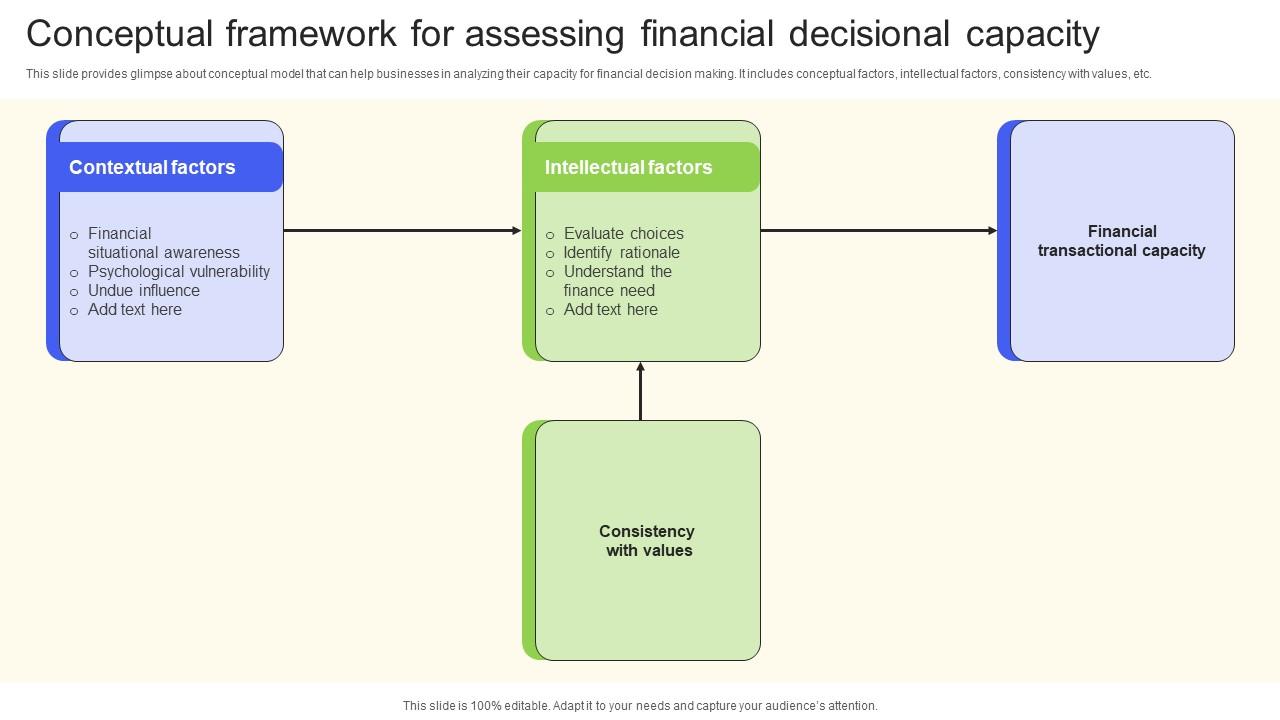
Conceptual Framework Diagram
A simplified visual depiction of this framework can be described as follows:
    Financial Knowledge (Budgeting, Savings, Spending, Investments)
                                 |
                                 v
                   Financial Decision-Making Skills
    (Spending Behavior, Savings Decisions, Budget Practices, Investment Choices)
In this diagram, the arrow indicates a direct influence of financial knowledge on financial decision-making, implying that improvements in one lead to improvements in the other.
Empirical Implications and Educational Strategies
With the conceptual framework established, empirical research can quantitatively measure the impact of financial knowledge on decision-making among Grade 12 ABM students. Educational strategies can be developed based on this framework to ensure that the curriculum adequately addresses the relevant domains of financial literacy.
Strategies for Enhancing Financial Literacy
Based on the framework, several educational strategies can be implemented:
- Interactive Financial Management Workshops: These can provide hands-on learning experiences for students, enabling them to create realistic budgets and simulate investment decisions.
- Project-Based Learning Activities: Assigning projects that incorporate real-life financial challenges fosters critical thinking and practical application of theoretical knowledge.
- Competency-Based Assessments: Evaluating students’ proficiency in budgeting, saving, and investing can help identify areas for further improvement and targeted educational interventions.
- Comparative Studies and Surveys: Research can be conducted to compare the decision-making skills of students before and after targeted financial literacy programs, thereby quantifying improvements.
Incorporating these strategies into the curriculum will likely enhance students’ confidence and ability to manage their financial resources effectively.
Table: Summary of Variables and Their Components
| Variable Type | Variable | Key Elements |
|---|---|---|
| Independent | Financial Knowledge |
|
| Dependent | Financial Decision-Making |
|
Theoretical Underpinnings and Research Support
The relationship between financial knowledge and decision-making is underpinned by several well-established theories in economics and educational psychology. The Human Capital Theory, for instance, posits that increasing an individual’s knowledge and skills can improve their economic outcomes. In the context of students, greater financial literacy translates into better financial behaviors. Moreover, the Theory of Planned Behavior also supports the idea that increased awareness and understanding can shape intentions and subsequently, actions.
Empirical studies have reinforced these theories by demonstrating that students with higher levels of financial literacy are more likely to engage in prudent financial practices. This evidence underscores the importance of integrating comprehensive financial education into the curriculum, particularly for students embarking on their journey toward independent financial management.
Practical Applications and Future Research Directions
Understanding the effect of financial knowledge on decision-making among Grade 12 ABM students not only aids in curriculum design but also paves the way for practical applications. Schools and educators can leverage this conceptual framework to:
- Identify Learning Gaps: By assessing financial literacy levels, educators can pinpoint specific areas where students require additional support, whether in budgeting techniques or saving strategies.
- Customize Financial Education Programs: Tailor teaching methods and course contents to address the diverse financial needs and learning styles of students.
- Promote Long-Term Financial Well-being: Early exposure to sound financial practices can foster responsible financial behavior, which is critical for long-term economic stability and personal financial growth.
- Implement Continuous Assessment: Ongoing evaluations through surveys and practical assignments provide feedback on the effectiveness of financial literacy programs, allowing educators to make necessary adjustments.
Future research could expand this framework by incorporating additional variables such as socio-economic factors, parental influence, and peer interactions, which might further refine understanding of how financial knowledge translates into everyday decision-making. Such comprehensive studies will contribute to developing nuanced educational programs that nurture financially savvy individuals.
References
- Financial Literacy and Budgetary Practices - Scribd
- Impact of Financial Literacy on Savings Behavior - Studocu
- Comparative Study on Financial Literacy - Academia.edu
- Conceptual Framework of Financial Literacy - ResearchGate
- Financial Knowledge & Decision-Making Skills - Consumer Finance
Recommended Queries for Further Exploration
Last updated March 9, 2025