
Modern Trends in the Development of Financial Literacy among Schoolchildren in Mathematics Classes
Integrating financial concepts with mathematical competence to empower future decision-makers
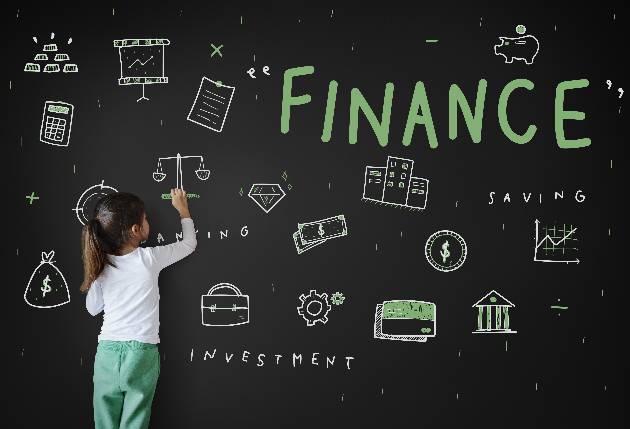
Key Takeaways
- Integration of Financial Contexts into Mathematics Curriculum: Embedding real-world problems and financial scenarios into traditional math teaching enhances both numeracy and financial decision-making skills.
- Digital Tools and Innovative Pedagogies: The use of online simulations, inquiry-based, and project-based learning methods fosters engagement and practical understanding of finance.
- Interdisciplinary and Policy-Driven Approaches: Legislative reforms and interdisciplinary curricula contribute to a comprehensive framework that addresses teacher training, resource development, and curriculum adaptation.
Abstract
In today’s rapidly evolving economic landscape, equipping schoolchildren with financial literacy is essential for nurturing responsible future citizens. Mathematics, with its inherent focus on problem-solving and analytical thinking, provides an ideal framework for the introduction of financial concepts. This article examines the modern trends of integrating financial literacy into mathematics lessons. It highlights the synergy between mathematical principles and financial decision-making, discusses current legislative trends and curricular innovations, and outlines the challenges and opportunities of implementing these educational reforms without the aid of experimental methodologies. The discussion is underpinned by recent reforms, digital tool implementations, and interdisciplinary teaching methods that collectively aim to create a robust, real-world financial learning environment.
Introduction
The global economy has become increasingly complex, with innovations in digital banking, investment products, and the proliferation of economic challenges accentuating the need for financial literacy from an early age. Recognizing that numeracy and the ability to process quantitative information are fundamental tools in managing personal finances, educational systems worldwide are integrating financial literacy into core curricula—particularly in mathematics classes. This integration does not rely on experimental research but is instead built upon theoretical frameworks, policy shifts, and a growing body of literature that supports the relationship between mathematical competence and sound financial decision-making.
Contemporary pedagogical frameworks emphasize that abstract mathematical skills, when applied to real-world financial scenarios, can transform a student’s ability to manage money, budget resources, and evaluate financial risks. By using relatable and practical contexts, mathematics educators can create learning experiences that reflect everyday financial challenges, such as computing interest rates, managing budgets, and understanding percentages. These skills not only support academic achievement but serve as life-long competencies essential for navigating modern financial landscapes.
The Role of Mathematics in Financial Literacy
Mathematics serves as the language of numbers and logical reasoning, making it an ideal medium for teaching financial concepts. Fundamental skills such as addition, subtraction, multiplication, and division are crucial for basic financial transactions. More advanced concepts—like percentages, algebraic equations, and data interpretation—enable students to grasp interest calculations, risk assessments, and financial forecasting. When these mathematical tools are directly connected with real-world financial scenarios, they become instrumental in building a solid foundation for financial literacy.
For instance, calculating the percentage discount during a sale not only reinforces multiplication and division concepts but also instills an awareness of cost-saving strategies. Similarly, solving algebraic problems that model loan repayment schedules or investment growth aids in understanding the complexities of compound interest. By aligning mathematical instruction with financial content, educators can demonstrate the practical relevance of mathematics and empower students to make informed decisions about money management.
Mathematical Concepts in Finance
Basic arithmetic operations form the cornerstone of financial calculations. Furthermore, the introduction of algebra and percentages allows students to explore financial concepts in depth. For example, the formula for compound interest,
$$A = P \times (1 + \frac{r}{n})^{n \cdot t}$$
where A represents the accumulated amount, P is the principal, r is the annual interest rate, n is the number of times interest is compounded per year, and t is time in years, provides a practical application of exponential functions and algebraic manipulation.
Integration of Financial Literacy into Mathematics Curriculum
One of the prevailing trends in modern education is the deliberate incorporation of financial education within the mathematics curriculum. This approach is not merely an addition to existing lessons; it represents a strategic integration whereby financial literacy is interwoven with mathematical content, effectively reducing the educational opportunity cost of adding separate courses.
Policy reforms in several jurisdictions have underscored the importance of financial literacy. For example, some regions now require that educators be trained and certified to incorporate financial literacy instruction in their classrooms. Such legislative moves ensure that even if specialized financial education is not offered as an independent subject, its principles permeate the standard mathematics curriculum.
Curriculum Resources and Tools
In response to these policy shifts, educators have developed and adopted a number of curriculum resources designed to integrate financial concepts with mathematics. Teaching materials now often include real-world scenarios such as budgeting exercises, interest calculations, and risk evaluations embedded within traditional math problems. Digital platforms and interactive tools further enhance the learning experience by enabling simulations of financial markets, virtual trading environments, and dynamic data analysis exercises.
Moreover, several educational organizations offer free resources, webinars, and professional development courses aimed at training teachers in this integrated approach. These initiatives promote the idea that financial education is not an ancillary subject but a fundamental competency that can be developed through routine mathematics lessons.
Digital Tools and Pedagogical Innovations
The digital revolution has transformed traditional classroom dynamics by introducing innovative teaching methods and interactive tools that enhance the learning process. In the context of financial literacy, digital platforms allow educators to simulate real-world financial scenarios in an engaging manner. These tools can provide immediate feedback, helping students understand the impact of their decisions in simulated financial environments without real-world consequences.
Interactive spreadsheets, online budgeting software, and virtual investment simulators are among the most popular digital tools being integrated into mathematics lessons. By operating within a virtual environment, students can experiment with variables such as interest rates, loan durations, and savings goals. The immediate computational feedback provided by these tools helps demystify abstract financial concepts and records progress in a format that is easily understood.
Inquiry-Based and Project-Based Learning
Another innovation in teaching financial literacy through mathematics is the use of inquiry-based and project-based learning (PBL) models. Instead of memorizing mathematical formulas, students engage in hands-on projects that require them to solve complex, real-world financial problems. In such settings, learners might be tasked with developing a personal budget, planning a small business venture, or analyzing the financial implications of everyday decisions.
These pedagogical approaches leverage active learning and critical thinking by encouraging students to analyze data, reason through problems, and collaborate on multi-disciplinary projects. The application of inquiry-based learning stimulates curiosity and provides a deeper, conceptual understanding of both mathematical and financial principles.
Interdisciplinary Curriculum Approaches
Modern educational paradigms increasingly stress the need for interdisciplinary curriculum design. Financial literacy, as a 21st-century skill, is inherently cross-disciplinary; it draws upon mathematics, economics, social studies, and even ethics. Designing a curriculum that spans these domains enables students to see the connections between numerical analysis and the socio-economic factors that influence personal finance.
Integrating financial literacy into mathematics not only reinforces mathematical concepts but also provides contextual depth by showing how these skills are applied in everyday life. For example, lessons on probability and statistics can be paired with discussions on risk management and insurance, while algebraic equations can be used to model economic behaviors such as supply-and-demand curves. This interdisciplinary approach helps to break down the barriers between traditionally siloed subjects, fostering a more holistic understanding of both mathematics and finance.
Challenges and Opportunities in Implementation
As promising as the integration of financial literacy into mathematics education may be, it is not without its challenges. One significant barrier is the lack of specialized training for mathematics teachers. Many educators find themselves under-prepared to teach complex financial concepts, which traditionally fall outside the scope of standard mathematics curricula.
Additionally, the development of curriculum materials that seamlessly integrate financial contexts with mathematical theories requires substantial time and resource investments. Schools must navigate the logistical challenges of procuring up-to-date digital tools and ensuring equitable access for all students, particularly in under-resourced areas.
Despite these challenges, the current trends offer ample opportunities for innovation. The availability of digital platforms and online resources can supplement teacher training programs and provide continuous professional development opportunities. Furthermore, the use of project-based and inquiry-based learning models offers teachers practical strategies to involve students in authentic financial decision-making processes. As educators and policymakers continue to advocate for financial literacy as a critical life skill, it is likely that enhanced collaboration and resource allocation will successfully address these implementation challenges.
Opportunities Through Interdisciplinary Collaboration
An added advantage of this integrated approach is the potential for interdisciplinary collaboration. Mathematics and economics teachers, for instance, can coordinate their lesson plans to reinforce concepts across subjects. This collaboration not only streamlines curriculum development but also creates a dynamic learning environment that emphasizes the practical application of theoretical knowledge.
Case Studies and Implementation Models
Although this article does not include experimental data, numerous case studies and theoretical models provide a strong foundation for the integration of financial literacy into mathematics education. Educators across various regions have reported success by incorporating real-life financial scenarios directly into the math curriculum, and these experiences have guided the development of best practice models.
One common model involves using everyday transactions—such as purchasing items during a sale—to teach percentages and discounts. Lessons are designed around common scenarios, such as comparing costs between in-store and online shopping, which require students to calculate tax, discount rates, and the final price. In another model, teachers use virtual simulations that mimic stock market dynamics and interest accrual to illustrate the concepts of risk, reward, and compound interest.
Teaching Methods Comparison
The following table outlines several teaching methods that have been employed to integrate financial literacy into mathematics lessons:
| Method | Description | Benefits | Challenges |
|---|---|---|---|
| Real-World Problem Solving | Incorporates everyday financial scenarios such as budgeting and discount calculation into math problems. | Enhances relevance and practical application of math skills. | Requires careful alignment with curriculum standards. |
| Digital Simulations | Uses interactive platforms to model financial systems, such as virtual trading or savings growth. | Provides immediate feedback and engages digital-native students. | Demands reliable technological infrastructure and teacher training. |
| Project-Based Learning | Students undertake projects that involve planning budgets or creating business proposals. | Encourages critical thinking and interdisciplinary collaboration. | Time intensive and requires extensive planning by teachers. |
| Inquiry-Based Learning | Students explore financial problems through guided discovery and research. | Fosters independence and deep understanding of financial concepts. | May be challenging for students who require more structured approaches. |
Bridging Mathematical and Financial Concepts
The effective bridging of mathematical and financial literacy involves not only transferring basic arithmetic skills but also deepening the understanding of more complex financial scenarios through mathematical reasoning. Topics such as ratios, percentages, algebraic modeling, and data analysis are inherently linked to everyday financial decisions. When students calculate interest rates or analyze spending patterns, they apply mathematical concepts in a context that has tangible, real-world significance.
Furthermore, the incorporation of core mathematical practices—such as problem-solving, logical reasoning, and quantitative analysis—into financial education can help demystify financial jargon and abstract concepts. This synthesis empowers students to approach financial challenges with confidence, applying a structured, analytical framework to issues ranging from personal budgeting to evaluating large-scale investment decisions.
Conclusion
The integration of financial literacy into mathematics education represents a critical evolution in contemporary pedagogy. By merging the analytical rigor of mathematics with real-world financial challenges, educators can foster a generation that is both numerically competent and financially savvy. Legislative reforms and curriculum innovations underscore the importance of this interdisciplinary approach, while digital tools and innovative teaching methods provide the practical means to implement it.
Despite challenges—such as the need for specialized teacher training and the development of cohesive curriculum resources—the inherent benefits of this integrated model are clear. By embedding financial concepts within the framework of mathematics, schools not only reinforce core academic skills but also prepare students for lifelong financial decision-making. Moving forward, continued collaboration among educators, policymakers, and technology experts will be essential to refine and expand these approaches, ensuring that financial literacy becomes a seamless and effective component of mathematical education.
References
- Financial Literacy and Mathematics Education - ERIC
- Financial Literacy in High School - Ohio Department of Education
- Financial Literacy Update - OCC
- Trends & Opportunities for Financial Literacy - EverFi
-
Teaching Kids to Manage Money Yields Big Returns - Edutopia
- 2025 Financial Education Bill Tracker - NGPF
More
Final Thoughts
In conclusion, the modern trends in developing financial literacy through mathematics classes reflect a sophisticated convergence of digital innovation, interdisciplinary curriculum design, and policy-driven reforms. By leveraging mathematical foundations to address financial concepts, educators are setting a precedent for holistic learning that equips students with essential life skills. As this integrated approach evolves, it promises to transform traditional subject boundaries and create a dynamic educational environment where theoretical knowledge meets practical application seamlessly.
Last updated February 18, 2025