
Unlock Global Trade: Your Definitive Guide to Finding the Perfect HS Code for Your Product
Navigate the complexities of international shipping with ease by accurately classifying your goods.
Determining the correct Harmonized System (HS) code for your product is a critical step for anyone involved in international trade. This standardized numerical method of classifying traded products is used by customs authorities around the world to identify products for the application of duties, taxes, and regulations. An accurate HS code ensures smoother customs clearance, correct tariff application, and compliance with international trade laws. This guide will walk you through the process of finding the specific HS code for your product.
Key Insights: Your Quick Path to HS Code Mastery
- Understand Product Details: The foundation of accurate HS code identification lies in having a comprehensive understanding of your product, including its materials, primary use, and technical specifications.
- Leverage Online Tools: Numerous official and third-party online databases exist to help you search for HS codes using product descriptions or keywords.
- Verify and Consult: Always cross-verify potential codes and, if in doubt, seek guidance from customs brokers or request a binding ruling from customs authorities.
Understanding HS Codes: The Language of International Trade
Before embarking on your search, it's essential to grasp what HS codes are and why they are so important.
What are HS Codes?
The Harmonized System (HS) is an international nomenclature for the classification of products. It allows participating countries to classify traded goods on a common basis for customs purposes. Maintained by the World Customs Organization (WCO), the HS system assigns a unique code to virtually every product involved in global commerce.
The Structure of an HS Code
An HS code is typically a six-digit number, though many countries add further digits for more detailed national classifications. The structure is hierarchical:
- Chapters (first 2 digits): Broad categories of goods (e.g., Chapter 04 for Dairy produce; birds' eggs; natural honey).
- Headings (first 4 digits): More specific product groupings within a chapter (e.g., 0407 for Birds' eggs, in shell, fresh, preserved or cooked).
- Subheadings (first 6 digits): Even more detailed classifications (e.g., 040721 for Fresh eggs of fowls of the species Gallus domesticus).
Countries may extend this to 8, 10, or even 12 digits for their own tariff and statistical needs. For instance, the United States uses a 10-digit system called the Harmonized Tariff Schedule (HTS) for imports, and Schedule B numbers (also based on HS codes) for exports.
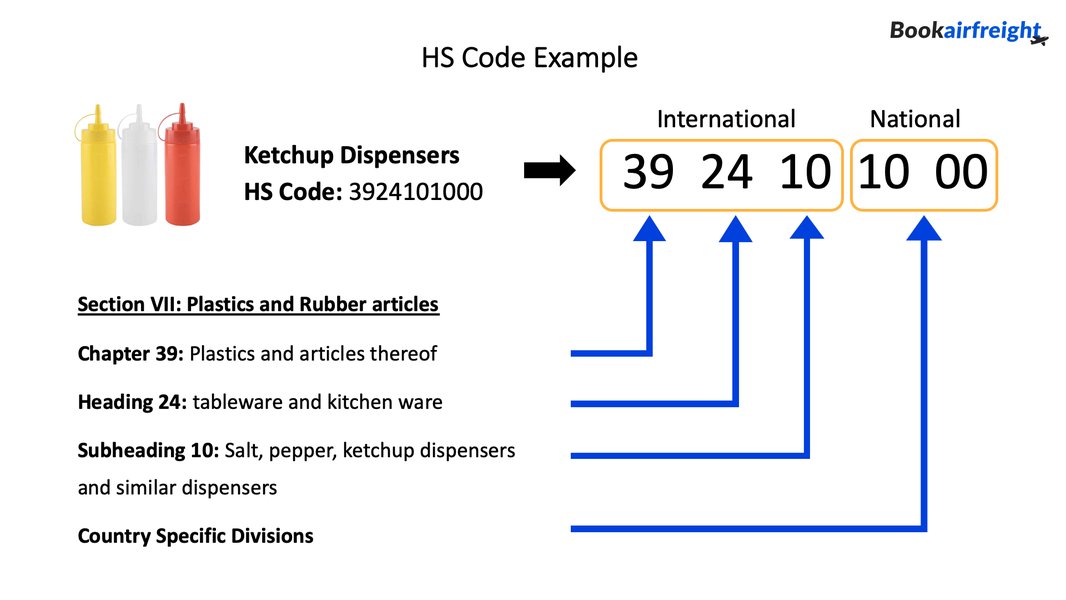
Visual representation of the Harmonized System Code structure.
Why are HS Codes Crucial?
Accurate HS codes are vital for:
- Determining import and export duties and taxes.
- Ensuring compliance with trade agreements and regulations.
- Collecting international trade statistics.
- Avoiding delays, fines, or seizure of goods at customs.
- Facilitating market research and trade negotiations.
Step 1: Gather Comprehensive Product Details
The accuracy of your HS code search heavily depends on the quality and detail of the information you have about your product. The more specific you are, the easier it will be to pinpoint the correct classification.
Key Information to Collect:
- Primary Material Composition: What is the product predominantly made of (e.g., 100% cotton, stainless steel, ABS plastic)? If it's a mix, what are the percentages?
- Intended Use and Function: What is the product designed to do? Who is the end-user (consumer, industrial)?
- Physical Form and Characteristics: Is it a raw material, a component, or a finished product? Note its state (e.g., liquid, solid, powder, gas), dimensions, weight, and any unique features.
- Technical Specifications: For machinery, electronics, or chemical products, gather technical data sheets (TDS), engineering drawings, or chemical composition (e.g., CAS numbers).
- Bill of Materials (BOM): If your product is an assembly of multiple components, a BOM can help identify the essential character of the good.
- Packaging: How is the product packaged for retail sale or transport? Sometimes packaging can influence classification.
Having this information readily available will significantly streamline your search process when using online tools or consulting with experts.
Step 2: Leverage Online Search Tools and Databases
Numerous online resources can help you identify your product's HS code. These range from official government portals to specialized third-party services.
Official Government Resources:
- U.S. International Trade Commission (USITC) HTS Search: For goods imported into the United States, the Harmonized Tariff Schedule (HTS) search tool is indispensable. You can search by keyword or browse the HTS.
- U.S. Census Bureau Schedule B Search Engine: For goods exported from the United States, the Schedule B search engine is the primary tool. Schedule B codes are U.S.-specific export codes based on the HS system.
- National Customs Websites: Most countries have their own customs agency websites that provide tariff information and HS code search capabilities. For example, the UK government provides a Trade Tariff tool.
Commercial and Third-Party Lookup Tools:
- Freightos HS Code Finder: Offers a user-friendly HS code lookup tool that searches by product description.
- USA Customs Clearance HS/HTS Lookup Tool: Provides a free search tool for HTS codes.
- FindHS.Codes: A thematic search engine designed for easy HS code classification.
- GlobalPost HS Code Lookup: Another free tool useful for international shipments.
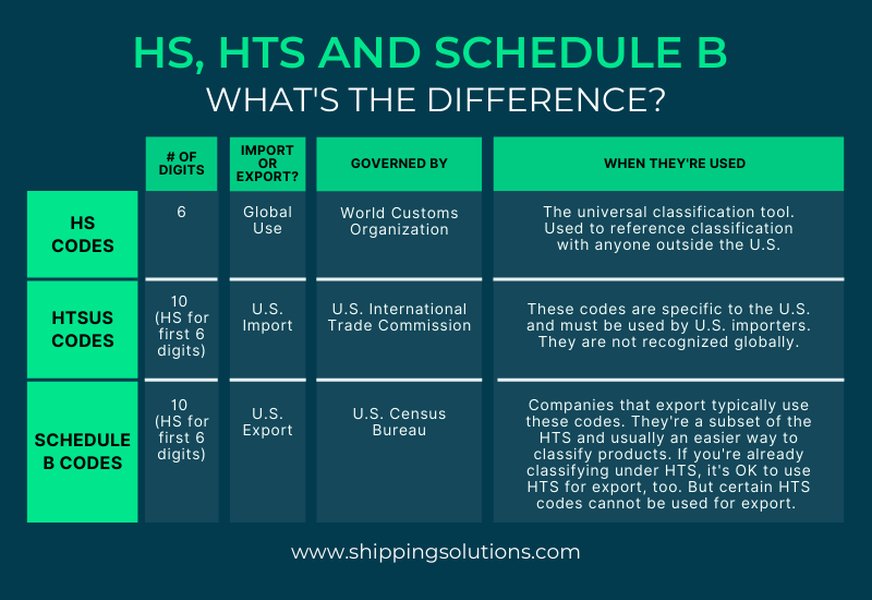
Understanding the distinctions between HS, HTS (for U.S. imports), and Schedule B (for U.S. exports) codes is crucial.
International Databases:
- World Customs Organization (WCO) Trade Tools: While the WCO develops the HS, they offer resources and tools, though direct public HS code lookup might be limited.
- Customs Info Database: Often recommended by trade authorities like the International Trade Administration, this database can assist in finding codes.
- Global Trade Helpdesk: A multi-agency initiative that includes an HS product finder.
Step 3: Master the Art of Effective Searching
Using the tools effectively is key to finding the correct code quickly.
Keyword Strategy
Start with common names for your product. If results are too broad or irrelevant, use more specific terms or synonyms. Think about how customs officials would describe your product. For instance, instead of "gadget," try "handheld electronic game" or "USB flash drive."
Navigating the Hierarchy
Many tools allow you to browse the HS chapters and headings. If you know the general category of your product (e.g., "Textiles," "Machinery," "Plastics"), you can navigate through the sections to find the most appropriate classification. Pay close attention to the section and chapter notes, as these provide legally binding rules for interpretation.
Cross-Verification is Key
Once you find a potential HS code, don't stop there. Verify it using at least one other tool or by carefully reading the official descriptions and explanatory notes associated with that code in the official tariff schedule of the importing/exporting country. Ensure the description perfectly matches your product's characteristics and intended use.
Key HS Code Resource Summary
This table summarizes some of the primary resources available for HS code lookup, highlighting their main purpose and access points. Understanding which tool to use for specific scenarios can save significant time and effort.
| Resource/Tool | Primary Purpose | Typical User | Where to Find It |
|---|---|---|---|
| USITC HTS Search | U.S. Import Classification (HTS Codes) | Importers into the U.S. | hts.usitc.gov |
| U.S. Census Bureau Schedule B Search | U.S. Export Classification (Schedule B Codes) | Exporters from the U.S. | census.gov |
| FindHS.Codes | International HS Code Search (6-digit) | General International Traders | findhs.codes |
| Freightos HS Code Finder | International HS Code Search (6-digit) | Shippers, Freight Forwarders | freightos.com |
| National Customs Websites (e.g., UK Trade Tariff) | Country-Specific Import/Export Tariffs | Traders dealing with specific countries | Respective government customs/trade portals |
| Global Trade Helpdesk | International HS Code & Trade Information | General International Traders, SMEs | globaltradehelpdesk.org |
Step 4: When to Seek Expert Guidance
While online tools are helpful, some products can be complex to classify, especially if they are new, made of multiple materials, or have multiple uses. Misclassification can lead to costly errors.
Consulting Customs Brokers and Trade Specialists
Customs brokers and trade consultants are experts in tariff classification. They can provide invaluable assistance, especially for businesses that frequently import or export a variety of goods. Their expertise can save you time and help avoid penalties.
Requesting a Binding Ruling
For maximum certainty, you can request a binding ruling from the customs authority of the importing country (e.g., U.S. Customs and Border Protection - CBP). A binding ruling is a written decision that provides the specific HS code for your product and is legally binding on customs for future importations of that product. While this process can take time, it offers the highest level of assurance. For U.S. imports, the Customs Rulings Online Search System (CROSS) database can be reviewed for existing rulings that might match your product.
Radar Chart: Key Factors Influencing HS Code Determination
The process of determining the correct HS code involves weighing several product characteristics. This radar chart visualizes the relative importance of these factors for different types of products. A higher score indicates a greater influence of that factor on the classification decision. For example, "Material Composition" is paramount for raw materials, while "Technical Functionality" might be more critical for complex machinery.
Mindmap: Navigating the HS Code Search Process
This mindmap provides a visual overview of the systematic approach to finding the correct HS code for your product, from initial preparation to final verification.
(Material, Use, Specs, BOM, TDS)"] id1b["Understand HS Code Basics
(Structure, Importance)"] id1c["Identify Country-Specific Needs
(HTS for US Import, Schedule B for US Export)"] id2["2. Research & Tools"] id2a["Official Government Tools
(USITC HTS, Census Schedule B, National Customs Sites)"] id2b["Third-Party Search Engines
(Freightos, FindHS.Codes, USA Customs Clearance)"] id2c["International Databases
(Global Trade Helpdesk, Customs Info)"] id3["3. Effective Search Strategy"] id3a["Use Specific Keywords"] id3b["Browse Hierarchical Structure
(Chapter > Heading > Subheading)"] id3c["Read Section/Chapter Notes Carefully"] id3d["Cross-Reference with Multiple Sources"] id4["4. Verification & Confirmation"] id4a["Compare Product to Code Description"] id4b["If Uncertain: Consult Experts
(Customs Broker, Trade Consultant)"] id4c["Consider Requesting a Binding Ruling"] id5["5. Application & Maintenance"] id5a["Use Correct Code on All Documents
(Invoice, Shipping Labels)"] id5b["Stay Updated on HS Code Revisions
(WCO revises periodically)"]
Country-Specific Nuances: Beyond the Global Standard
While the first six digits of an HS code are harmonized internationally, countries often add additional digits for their own statistical or tariff purposes. It's crucial to use the correct full code for the specific country of import or export.
United States: HTS and Schedule B Codes
- Harmonized Tariff Schedule (HTS) Codes: Used for importing goods into the U.S. These are 10-digit codes administered by the USITC. The first six digits are the international HS code, followed by four additional digits for U.S. specific classification and duty rates.
- Schedule B Numbers: Used for exporting goods from the U.S. These are 10-digit codes administered by the U.S. Census Bureau, also based on the international HS code. While similar to HTS codes, they can differ, so it's vital to use the correct Schedule B number for export declarations.
Always ensure you are using the correct type of code (HTS for import, Schedule B for export if in the U.S.) and the correct full-length code for the specific country involved in the transaction.
Video Guide: Visualizing the HS Code Hunt
Sometimes, seeing the process in action can be incredibly helpful. This video provides a practical overview of understanding and finding HS codes for international trade. It delves into why these codes are essential and offers insights into the classification system.
Video: Understand Your Product's Harmonized System (HS) Code by the International Trade Administration.
This video, produced by the U.S. International Trade Administration, clearly explains the significance of Harmonized System codes in global commerce. It highlights how these codes standardize product classification, facilitating customs processes and duty collection. The presenter emphasizes the importance of accuracy in code selection to avoid potential trade disruptions. While it provides a general understanding, remember to use the specific tools and steps outlined in this guide for your unique product.
Step 5: Final Verification and Application
Once you've identified a likely HS code, the process isn't quite over. Final checks and proper application are crucial.
Confirming Accuracy
Reread the official description for the chosen HS code (and any applicable national subdivisions like HTS digits). Does it perfectly align with your product's materials, form, and function? Pay attention to "essential character" rules for composite goods or sets. If there's any ambiguity, it's better to seek expert advice than risk an incorrect classification.
Integrating into Your Operations
The correct HS code must be included on all relevant shipping documents, such as the commercial invoice, packing list, and bill of lading or air waybill. Many e-commerce platforms also require HS codes for international shipments (e.g., in Shopify's customs information section for products).
Staying Current with Revisions
The Harmonized System is updated by the WCO approximately every five years to reflect changes in technology and trade patterns. National tariff schedules may be updated more frequently. It's important to periodically verify that the HS codes you use are still current, especially if your product line evolves or if significant time has passed since the last classification.
Frequently Asked Questions (FAQ)
What if my product is made of multiple materials?
If a product is made of multiple materials, it's generally classified according to the material that gives it its "essential character." The General Interpretative Rules (GIRs) of the Harmonized System provide guidance on this. If no single material defines its essential character, other rules apply, such as classification under the heading that occurs last in numerical order among those which equally merit consideration. This can be complex, and consulting an expert is often wise.
How often do HS codes change?
The World Customs Organization (WCO) reviews and updates the Harmonized System approximately every five years to accommodate new products and technological advancements. The most recent major update was in 2022. Individual countries may update their national tariff schedules (like the HTS in the U.S.) more frequently due to legislative changes or trade agreements. It's crucial to stay informed about these revisions.
What are the consequences of using an incorrect HS code?
Using an incorrect HS code can lead to several problems, including:
- Incorrect payment of duties and taxes (either overpayment or underpayment, which can lead to penalties).
- Delays in customs clearance.
- Seizure or confiscation of goods.
- Audits and fines from customs authorities.
- Damage to your business reputation.
Are HS codes the same in every country?
The first six digits of an HS code are standardized internationally and should be the same in all countries that are members of the WCO and use the Harmonized System. However, countries can add additional digits (national subdivisions) to the six-digit HS code for their own tariff or statistical purposes. This means an 8 or 10-digit code can vary from country to country. Always use the full code required by the importing/exporting country.
Recommended Further Exploration
To deepen your understanding of customs classification and international trade, consider exploring these related queries:
- How do General Interpretative Rules (GIRs) affect HS code classification?
- What is the process for obtaining a binding customs ruling for an HS code?
- How do HS codes impact free trade agreements and preferential duty rates?
- What are common mistakes to avoid when determining an HS code for e-commerce shipments?
References
 help.shopify.com
Last updated May 8, 2025