
Unlocking Your Search: Tracing Family in Germany
A Comprehensive Guide to Locating Your Stepsister's Family
Key Insights for Your Search
- Start with Existing Information: Gather as much detail as possible about your stepsister's family, including names, dates of birth, and last known towns of residence in Germany. The more specific your initial information, the higher your chances of success.
- Leverage Online Resources: Utilize online German telephone directories and genealogy websites like FamilySearch, Ancestry.com, and Genealogy.net. These platforms offer extensive databases and tools for tracing individuals and family histories.
- Contact German Authorities and Organizations: For recent residents, the local registration office (Einwohnermeldeamt) can be a key resource. For historical searches or challenging cases, organizations like the German Red Cross (Deutsches Rotes Kreuz) or the Salvation Army offer tracing services.
Embarking on a search for family members in another country can be both exciting and challenging. If you're looking to reconnect with your stepsister's family in Germany, a systematic approach combining various resources will significantly enhance your prospects. This guide will walk you through the most effective strategies, from gathering initial information to utilizing online databases, official channels, and specialized tracing services.
Laying the Groundwork: Essential Initial Steps
Gathering Vital Clues
Before you begin your active search, the most crucial step is to consolidate all available information about your stepsister's family. The more details you have, the more targeted and effective your search will be. Think of yourself as a detective assembling a dossier.
What Information to Collect?
- Full Names: Obtain their complete first and last names. Be aware of potential name changes due to marriage or other reasons.
- Date of Birth: Even an approximate birth year can be incredibly helpful for narrowing down records.
- Last Known Address/Town of Residence: Knowing the last known town or city in Germany is paramount. German record-keeping is often localized, so this detail is often the key to unlocking further information.
- Occupation/Employer: This can sometimes help differentiate individuals with common names.
- Family Stories and Anecdotes: Sometimes, seemingly minor details from family lore can provide crucial leads. For example, did they live near a distinctive landmark, or were they associated with a specific profession?
- Old Documents and Photos: Family Bibles, birth/marriage/death certificates, school records, military records, emigration records, ship passenger lists, and old city directories can be invaluable. Even photographs might contain clues about locations or dates.
Begin by contacting any relatives, even distant ones, especially the oldest family members, as they often hold a wealth of historical information. Every piece of information, no matter how small, can contribute to building a more complete picture.
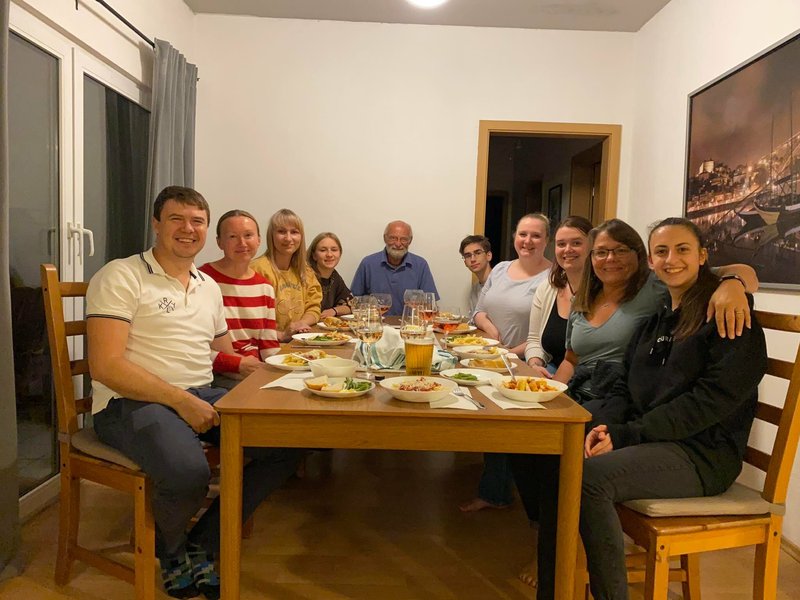
A family enjoying a meal together in Germany, representing the joy of reconnection.
Navigating Online Resources for German Family Tracing
Digital Gateways to German Records
The internet has revolutionized genealogical research, offering numerous platforms to search for individuals and delve into family histories. Many online resources are specifically tailored for German ancestry.
Online Directories and Search Engines
- German Telephone Directory (Das Telefonbuch): The online version of the German telephone directory can be a straightforward starting point if you have a name and a general location. However, privacy laws in Germany mean that individuals can opt out of being listed, making it less comprehensive than some might hope.
- General Internet Search: Simple search engine queries with the person's full name and last known German town can sometimes yield surprising results, especially if they have a public online presence.
Specialized Genealogy Websites
Several prominent genealogy websites offer extensive databases and tools for tracing German family lines. While some require subscriptions, many offer free resources or trials.
- FamilySearch.org: Operated by the Church of Jesus Christ of Latter-day Saints, FamilySearch is a vast, free resource. It includes a wiki with detailed information on German genealogical records and databases, organized by German state and city-state. You can find baptism, marriage, and death indexes, and often images of original documents.
- Ancestry.com: A popular subscription-based platform, Ancestry.com holds a wealth of German records, including historical records, family trees, and DNA testing services. It can be particularly useful for those tracing ancestors who emigrated from Germany.
- Genealogy.net (Compgen.de): This is considered one of the largest German genealogy websites, run by a computer genealogy organization in Germany. It offers user-submitted data and links to numerous other databases, providing comprehensive resources for German origin research.
- Geneanet.org: This platform allows you to build your family tree step by step and offers a search engine where you can input names and places. It has a free basic use option with a premium upgrade.
- Matricula Online: This website is invaluable for Catholic church records, providing access to registers from various German dioceses, including Münster and Paderborn.
- German Roots (germanroots.com): This site provides a categorized list of online German genealogy records and databases.
- Locate Family (locatefamily.com): While it lists millions of people, it's important to be aware that the Dutch Data Protection Authority has imposed fines on Locatefamily.com for GDPR breaches due to displaying full addresses and sometimes phone numbers without explicit consent. Use with caution and awareness of privacy implications.
This radar chart illustrates the comparative strengths and weaknesses of different approaches to finding family in Germany. Online genealogy platforms excel in comprehensiveness and accessibility for historical records, though privacy can be a concern. Official German authorities offer high reliability and cost-effectiveness for current residents but can be slower and less accessible. Humanitarian tracing services, while not always the first step, shine in privacy and success rates for complex or sensitive cases, reflecting their specialized mission. This visual representation helps in understanding which method might be best suited based on your specific needs and the information you have available.
Understanding German Privacy Laws and Record Access
Germany has strict data protection laws, particularly the General Data Protection Regulation (GDPR). This means that obtaining information on living individuals from official sources is significantly restricted due to privacy concerns. For instance, German authorities cannot generally provide information on places of residence for privacy reasons unless specific conditions are met.
Historical records are more accessible, but there are limitations. German law typically does not permit the release of census information on a person until 30 years after their death or, if the date of death is unknown, until 110 years after their birth. This often means that recent records for living individuals are harder to obtain directly from government sources.
Engaging Official Channels and Specialized Services
Leveraging German Administrative Bodies and Humanitarian Organizations
When online searches yield limited results, or for specific types of inquiries, engaging with German administrative bodies or specialized tracing services becomes necessary.
Local Registration Office (Einwohnermeldeamt)
In Germany, every resident is legally obliged to register with their local council (Einwohnermeldeamt). If you know the last town or city where your stepsister's family lived, you can inquire directly with the local Einwohnermeldeamt. You will need to provide the full name and date of birth of the person you are seeking. You must explain that your inquiry is for private reasons and provide proof. The information will only be provided if the data you supply matches a single person registered in that town. If the person has moved within Germany, the registration office might have their new address.
It's important to note that the German Embassy or Consulates are generally not in a position to assist with finding relatives due to data protection regulations.
Humanitarian Tracing Services
For more complex or sensitive cases, such as searching for persons missing due to historical events like the Second World War, the division of Germany, or resettlement, humanitarian organizations offer invaluable assistance:
- German Red Cross (Deutsches Rotes Kreuz - DRK-Suchdienst): The DRK offers tracing services, particularly for those missing due to conflict or disaster. They can be helpful for finding relatives missing in connection with WWII or the division of Germany, or those resettled to Germany.
- German Salvation Army (Heilsarmee): The Salvation Army also supports close relatives in finding missing persons in Germany.
Considerations for Historical Research
If your stepsister's family has deep roots in Germany and you are tracing ancestors rather than living individuals, the approach shifts towards historical records. While not directly about finding living relatives, understanding these resources can sometimes lead to insights about current family lines.
- Federal Archives (Bundesarchiv): This institution holds a wealth of documents related to German civilians, military personnel, and historical events. They can provide information on German civilians in former German East and Eastern European settlement regions prior to 1946, as well as personal documents of military provenance.
- Church Registers and Civil Registers: These are primary sources for historical birth, baptism, marriage, and death records. Many are digitized and available through platforms like FamilySearch and Matricula.
Strategies for Success and Overcoming Challenges
Strategic Approaches to Your Search
Finding family, especially across borders, can be a marathon, not a sprint. Persistence and a strategic approach are key.
Language Barrier
Many German records and websites are in German. If you don't speak or read German, this can pose a significant challenge. Consider using online translation tools, or if the search becomes critical, hiring a professional genealogist or translator specializing in German records.
No Central Registry
Unlike some countries, Germany does not have a single central registry for all residents. This decentralization means you often need to know the specific town or city where the person resided to initiate a search with local authorities.
DNA Testing
While not a direct method for finding addresses, DNA testing through services like AncestryDNA or 23andMe can connect you with distant relatives who have also tested. These genetic links might lead you to living family members in Germany who can provide the information you need.
Community Forums and Groups
Online genealogy forums, Reddit communities (like r/Ancestry or r/AskAGerman), and dedicated German genealogy groups (such as the German Genealogy Group - GGG) can be excellent places to ask for advice, share your search details, and potentially find individuals who can offer guidance or even direct assistance. These communities are often filled with experienced researchers eager to help.
This video, "How Can You Unlock Your German Genealogy Research?", offers valuable insights into navigating German genealogy resources, including tips for overcoming language barriers and understanding record types. It complements the advice on official channels and online platforms, providing a holistic view of the research process.
Summary of Key Resources and Their Utility
To summarize, here's a table outlining the primary resources and their typical uses when searching for family in Germany:
| Resource Type | Primary Use | Key Considerations |
|---|---|---|
| Online Genealogy Platforms (e.g., FamilySearch, Ancestry.com, Genealogy.net) | Tracing historical family lines, discovering ancestors, connecting with distant relatives via shared trees/DNA. | Access to historical records; some require subscriptions; privacy laws limit recent data; may not provide current addresses. |
| German Telephone Directories (Online) | Finding currently listed phone numbers and addresses for individuals. | Individuals can opt out of listings; less comprehensive than in some other countries due to privacy. |
| Local Registration Office (Einwohnermeldeamt) | Locating current residents if last known town and specific details (name, DOB) are known. | Requires specific information and valid private reasons; strict data protection laws apply; no central registry. |
| German Red Cross (DRK-Suchdienst) / Salvation Army | Tracing missing persons, especially in sensitive or historical contexts (e.g., WWII, resettlement). | Specialized services for challenging cases; often requires familial relationship proof; can be time-consuming. |
| Federal Archives (Bundesarchiv) | Researching historical individuals, military records, and civilian data pre-1946. | Primarily for historical research; useful for building comprehensive family trees. |
| DNA Testing Services | Identifying genetic relatives who have also tested; can lead to contact with living family members. | Indirect method; success depends on matches in the database; results may be distant relatives. |
| Online Forums and Genealogy Groups | Seeking advice, sharing search queries, connecting with experienced researchers and community members. | Community support and expertise; potential for direct leads or shared family information. |
Frequently Asked Questions (FAQ)
What is the most important piece of information needed to find family in Germany?
Can I use a private detective agency in Germany?
How do German privacy laws affect my search?
Are there any free resources available for German genealogy?
What if I don't speak German?
Conclusion
Finding your stepsister's family in Germany is a journey that requires patience, thorough research, and an understanding of German regulations and resources. By starting with comprehensive information, strategically utilizing online genealogy platforms, considering direct contact with local German administrative offices where appropriate, and leveraging the specialized services of humanitarian organizations, you significantly increase your chances of a successful reunion. Remember to respect German privacy laws and be prepared for the intricacies of cross-border research. Every small detail can be a valuable clue on your path to reconnecting with your lost family.
Recommended Further Exploration
- What are the best tips for beginning German genealogy research?
- How do German privacy laws impact genealogical searches for living relatives?
- What specific services does the German Red Cross offer for family tracing?
- How can I effectively utilize online German historical records for family research?
References
 media-index.kochava.com
Last updated May 21, 2025